
















Localada’s free Rome audio guide covers 34 stops: 16 sights, 6 places to eat, 5 shops and 7 experiences, narrated in 15 languages. Seeing all 16 sights takes roughly 16.5–22.5 hours of visiting time, before travel between them. 17 of the 34 stops come with a Localada perk, such as 5% off GetYourGuide tickets or a discount at a verified local restaurant or shop.
Opening hours, perks and visit times below come from the live Localada app and were last checked on 28 October 2026. Always confirm on the day: hours can change for holidays and prayer times.
Rome audio guide stops at a glance
| # | Stop | Type | Time to allow | Hours | Closed | Today | Nearest transport | Localada perk |
|---|---|---|---|---|---|---|---|---|
| 1 | The Colosseum | Amphitheatre | 2–3 hours | 08:30–19:15 | — | — | Metro Colosseo–Fori Imperiali · 1 min walk | 5% OFF |
| 2 | The Vatican Museums & Sistine Chapel | Museum | 3 hours | 08:00–19:00 | Sunday | — | Metro Cipro · 6 min walk | 5% OFF |
| 3 | St Peter’s Basilica & Square | Basilica | 1–1.5 hours | 07:00–19:00 | — | — | Metro Ottaviano–San Pietro · 9 min walk | 5% OFF |
| 4 | The Pantheon | Temple | 45–60 min | 09:00–19:00 | — | — | Bus stop Largo di Torre Argentina · 6 min walk | 5% OFF |
| 5 | The Trevi Fountain | Fountain | 20–30 min | Open 24 hours | — | — | Metro Barberini · 9 min walk | 5% OFF |
| 6 | Roman Forum & Palatine Hill | Archaeological site | 2–3 hours | 09:00–19:00 | — | — | Metro Colosseo–Fori Imperiali · 8 min walk | 5% OFF |
| 7 | Castel Sant’Angelo | Castle | 1–1.5 hours | 09:00–19:30 | — | — | Bus stop Traspontina · 4 min walk | 5% OFF |
| 8 | Piazza Navona | Square | 30–45 min | Open 24 hours | — | — | Bus stop Rinascimento · 2 min walk | 5% OFF |
| 9 | The Spanish Steps & Piazza di Spagna | Landmark | 30–45 min | Open 24 hours | — | — | Metro Spagna · 1 min walk | 5% OFF |
| 10 | Capitoline Museums & Piazza del Campidoglio | Museum | 1.5–2 hours | 09:30–19:30 | — | — | Bus stop Ara Coeli/Piazza Venezia · 6 min walk | 5% OFF |
| 11 | Basilica of Santa Maria Maggiore | Basilica | 45–60 min | 07:00–18:45 | — | — | Metro Termini · 8 min walk | 5% OFF |
| 12 | The Jewish Ghetto & Portico d’Ottavia | District | 45–60 min | Open 24 hours | — | — | Bus stop Piazza Monte Savello · 3 min walk | 5% OFF |
| 13 | Santa Maria in Trastevere | Basilica | 30–45 min | 07:30–20:00 | — | — | Bus stop Lungotevere Farnesina/Trilussa · 5 min walk | 5% OFF |
| 14 | The Capuchin Crypt | Crypt | 30 min | 10:00–19:00 | — | — | Metro Barberini · 2 min walk | — |
| 15 | Basilica of San Clemente | Basilica | 45–60 min | 10:00–17:30 | — | — | Metro Colosseo–Fori Imperiali · 7 min walk | 5% OFF |
| 16 | The Mouth of Truth & Santa Maria in Cosmedin | Photo spot | 20–30 min | 09:30–18:00 | — | — | Bus stop Petroselli · 3 min walk | — |
| 17 | La Taverna dei Fori Imperiali | Restaurant | 1–1.5 hours | 12:30–23:00 | Tuesday | — | Metro Cavour · 7 min walk | — |
| 18 | Testaccio Market — Mordi e Vai | Market stall | 45–60 min | 07:00–15:00 | Sunday | — | Bus stop Marmorata/Galvani · 3 min walk | — |
| 19 | Pastificio Guerra | Pasta counter | 20–30 min | 13:00–20:00 | — | — | Metro Spagna · 3 min walk | — |
| 20 | Mercato Trionfale | Market | 45–60 min | 07:00–14:00 | Sunday | — | Metro Cipro · 8 min walk | — |
| 21 | Terrazza Borromini | Restaurant | 1.5–2 hours | 12:00–00:00 | — | — | Bus stop Rinascimento · 3 min walk | — |
| 22 | Trapizzino at Piazza Trilussa | Street food | 30–45 min | 12:00–01:00 | — | — | Bus stop Lungotevere Farnesina/Trilussa · 2 min walk | — |
| 23 | Campo de’ Fiori Market | Market | 30–45 min | 07:00–14:00 | Sunday | — | Bus stop Corso Vittorio Emanuele · 7 min walk | — |
| 24 | Monti: Vintage & Artisan Shops | District | 1–1.5 hours | 10:30–20:00 | — | — | Metro Cavour · 4 min walk | — |
| 25 | Via dei Condotti & Via della Croce | District | 1–1.5 hours | 10:00–19:30 | — | — | Metro Spagna · 4 min walk | — |
| 26 | Pasta & Tiramisu Class by the Vatican | Experience | 3 hours | 09:00–22:00 | — | — | Metro Cipro · 3 min walk | — |
| 27 | Trastevere Food & Wine Walking Tour | Experience | 3 hours | 16:00–22:00 | — | — | Bus stop Induno · 4 min walk | — |
| 28 | Pasta & Limoncello Class by the Pantheon | Experience | 3 hours | 10:00–22:00 | — | — | Bus stop Largo di Torre Argentina · 4 min walk | — |
| 29 | Rome by Night E-Bike Tour | Experience | 3 hours | 18:00–23:00 | — | — | Metro Termini · 5 min walk | 5% OFF |
| 30 | Day Trip: Pompeii & Mount Vesuvius | Day trip | a full day | 07:00–20:00 | — | — | Metro Flaminio · 3 min walk | 5% OFF |
| 31 | Day Trip: Tivoli — Villa d'Este & Hadrian's Villa | Day trip | a full day | 08:00–18:00 | — | — | Metro Castro Pretorio · 2 min walk | 5% OFF |
| 32 | The Non-Catholic Cemetery | Cemetery | 45–60 min | 09:00–17:00 | — | — | Metro Piramide · 2 min walk | — |
| 33 | Volpetti | Delicatessen | 20–30 min | 09:00–20:30 | Sunday | — | Metro Piramide · 3 min walk | — |
| 34 | Antica Caciara Trasteverina | Cheese shop | 15–20 min | 07:00–20:00 | Sunday | — | Bus stop Induno · 3 min walk | — |
How much time do you need in Rome?
- Highlights only (about 6–7.5 hours): The Colosseum, The Vatican Museums & Sistine Chapel and St Peter’s Basilica & Square.
- Every sight in the guide (about 16.5–22.5 hours): all 16 sights in route order; split across 4 days at a comfortable pace.
- Add food, shopping and experiences: 18 more stops, from verified restaurants to workshops and shows, listed below.
Sights in the Rome audio guide
The Colosseum
Full The Colosseum audio guide →
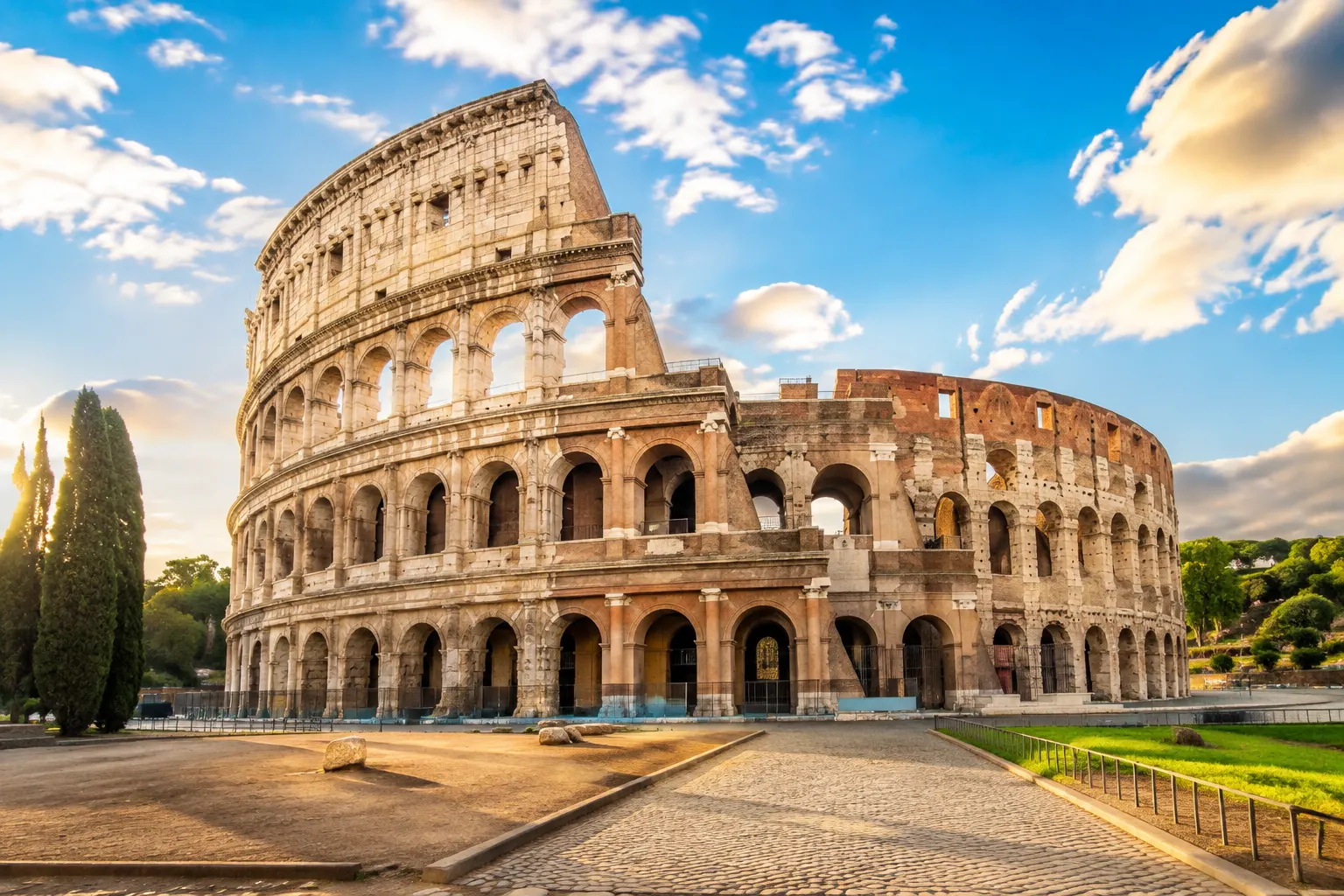
It could be flooded. That was the point.
When Vespasian broke ground here in 72 AD, he was not building a monument to himself. He was giving something back. The land had belonged to Nero, who seized it after the great fire and turned it into a private pleasure palace with an artificial lake at its centre. Vespasian drained the lake and put an amphitheatre on it, open to every citizen of Rome.
The message was not subtle.
Fifty thousand people could get in and out through eighty arches, seventy-six of them numbered in minutes. Your pottery ticket told you which arch, which stairway, which row. Senators sat at the front, close enough to be seen. Women and the poor sat at the top, closest to the sun.
- Time to allow: 2–3 hours
- Hours: 08:30–19:15 (open daily)
- Address: Piazza del Colosseo 1, 00184 Rome
- Nearest transport: Metro Colosseo–Fori Imperiali · 1 min walk (B,C)
- Localada perk: 5% OFF – Skip-the-line ticket & guided tour — book below
- One ticket covers the Colosseum, Roman Forum and Palatine Hill — valid 24h, one entry each
- Tickets are issued in your name; bring the ID you booked with
- Free on the first Sunday of every month — expect queues
- Closed 25 December and 1 January
Local tips
- Book a timed slot online — walk-up tickets are usually gone by mid-morning
- Take the first slot of the day; the arena is cooler and far emptier before 10am
- Enter the Forum from the Via di San Gregorio gate — the Colosseum-side entrance has the longest queue
- There is almost no shade inside; the drinking fountains around the square are free and safe
- Look around the metro station before you climb the stairs — it doubles as an archaeological museum
The Vatican Museums & Sistine Chapel
Full The Vatican Museums & Sistine Chapel audio guide →
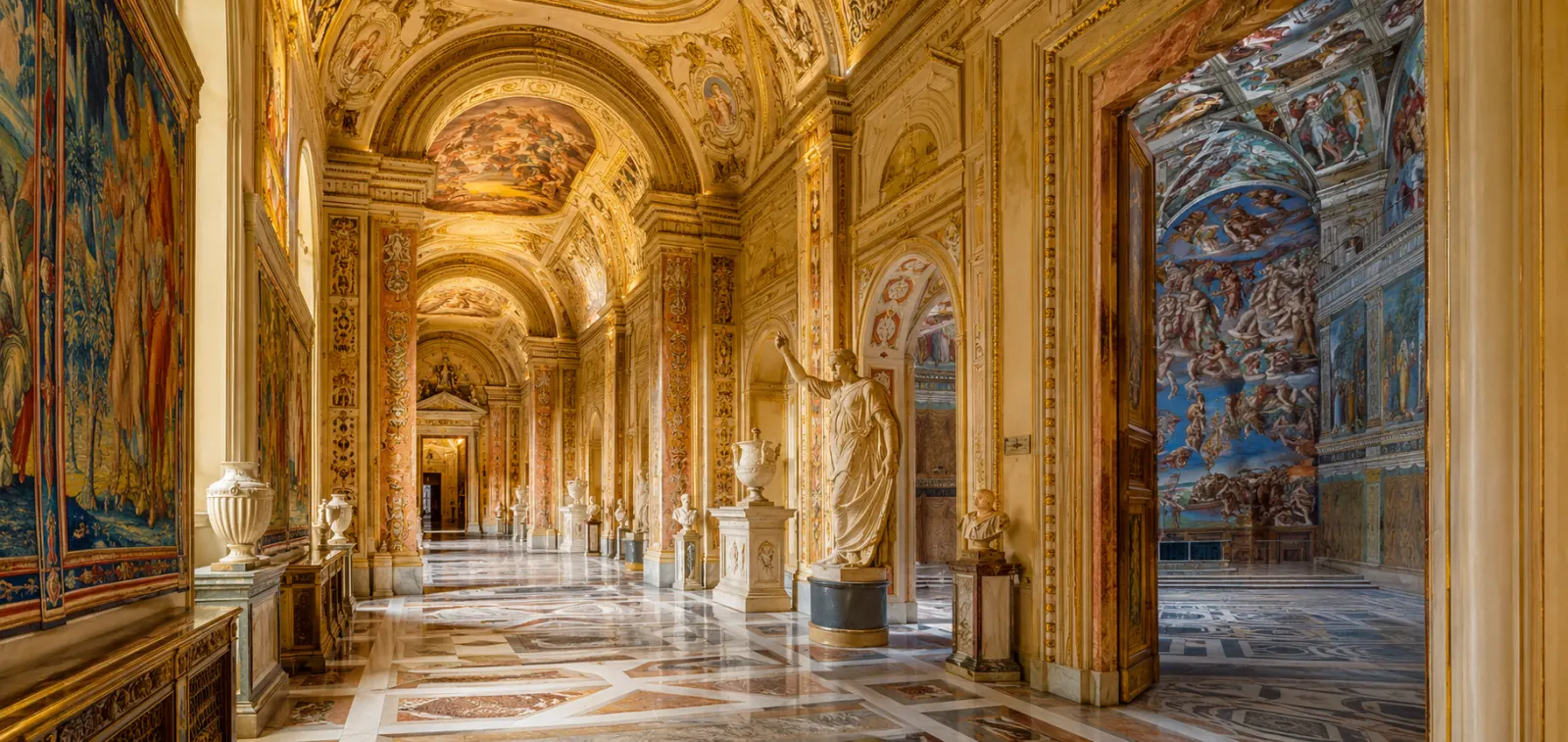
Michelangelo did not want this job.
He was thirty-three, he considered himself a sculptor, and he had been pulled off a marble commission to paint a ceiling he never asked for. He complained in letters. He complained in verse. He wrote that his beard pointed at heaven, that paint dripped onto his face, and that he was no painter at all.
He worked on it for four years, standing, head tilted back.
What you are walking toward is not one museum but a chain of them — five centuries of popes collecting, commissioning and occasionally looting, strung along seven kilometres of corridors. Egyptian mummies. Etruscan bronze. Raphael's rooms. A gallery of forty maps painted when mapping was still half guesswork.
- Time to allow: 3 hours
- Hours: 08:00–19:00 (closed Sunday)
- Address: Viale Vaticano, 00165 Rome
- Nearest transport: Metro Cipro · 6 min walk (A)
- Localada perk: 5% OFF – Skip-the-line ticket & guided tour — book below
- Book a timed entry at least a month ahead — it regularly sells out
- Closed Sundays except the last Sunday of the month, when entry is free
- Shoulders and knees must be covered or you will be turned away
- No photography in the Sistine Chapel
Local tips
- The first slot of the day is the only quiet one — by 10am the corridors are shoulder to shoulder
- Skip the audio-guide desk queue; the route to the Sistine Chapel is signposted throughout
- Look down as well as up — many of the floors are Roman mosaic originals
- The Pinacoteca wing stays half empty and holds the Raphael and the Caravaggio
- Leave by the exit toward St Peter’s; it saves a long walk back around the walls
St Peter’s Basilica & Square
Full St Peter’s Basilica & Square audio guide →
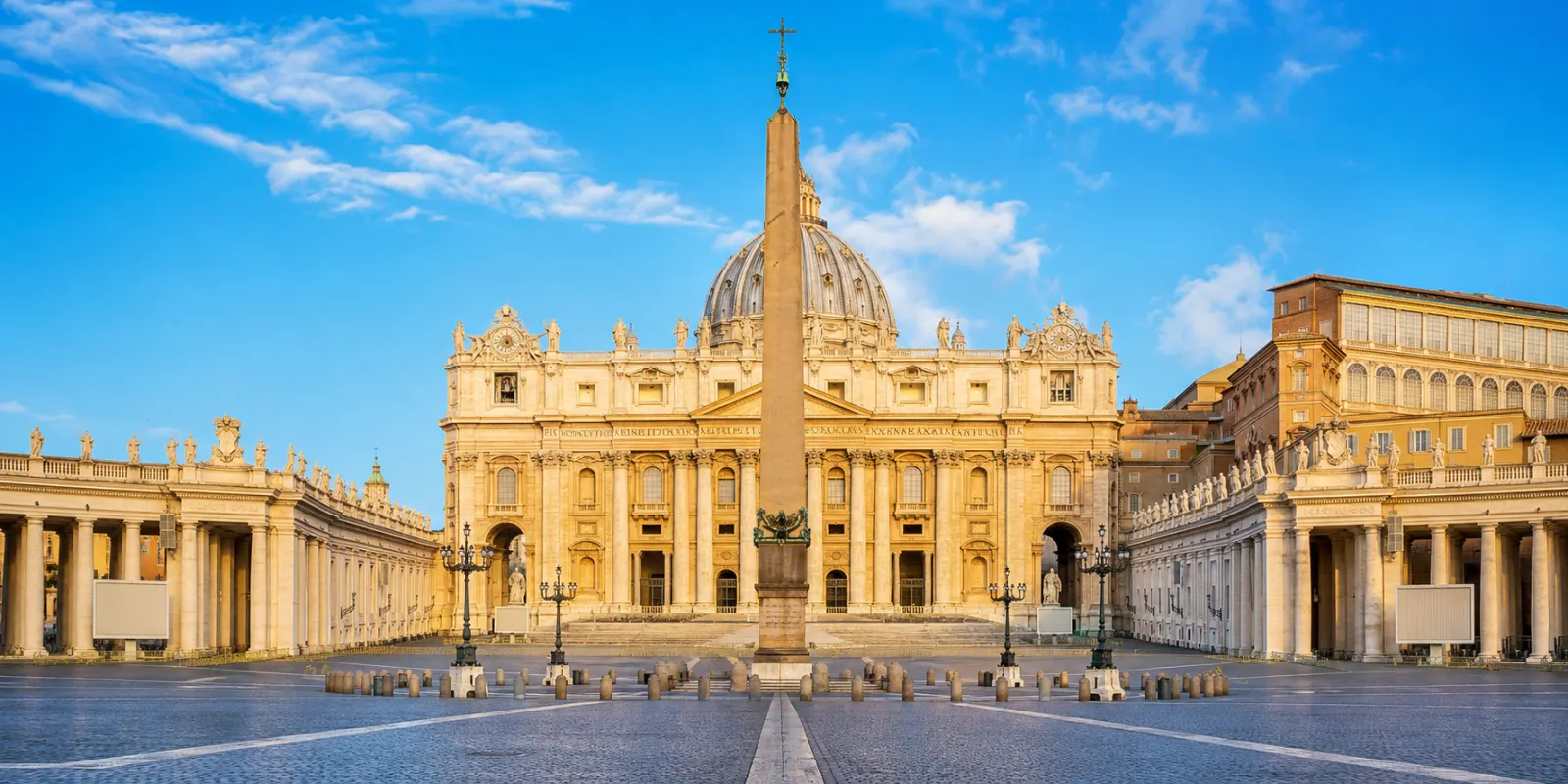
To pay for this building, the Church sold forgiveness.
The old basilica had stood over the apostle Peter’s grave for eleven hundred years and was falling down. Replacing it took a hundred and twenty years, twenty popes, and a run of architects — Bramante, Raphael, Michelangelo, Bernini — each rewriting the last one’s plan.
It also took money the papacy did not have.
So indulgences went on sale across Europe: pay, and time in purgatory is reduced. In Germany a monk named Martin Luther wrote out ninety-five objections. The Reformation began, in part, as an argument about how this roof was funded.
Walk into the square first. Bernini wrapped it in two curved colonnades he described as the arms of the Church reaching out to embrace the world. Find the round stone set into the pavement either side of the obelisk and stand on it — from there the four rows of columns line up into one.
- Time to allow: 1–1.5 hours
- Hours: 07:00–19:00 (open daily)
- Address: Piazza San Pietro, 00120 Vatican City
- Nearest transport: Metro Ottaviano–San Pietro · 9 min walk (A)
- Localada perk: 5% OFF – Skip-the-line ticket & guided tour — book below
- Free to enter; the queue is for the security check, not a ticket
- Shoulders and knees must be covered — no exceptions
- The dome climb is a separate ticket: 551 steps, or a lift plus 320
- Closed to visitors during papal ceremonies
Local tips
- Arrive before 8am or after 5pm — at midday the queue crosses the whole square
- The security queue moves far faster than it looks; it is the only queue
- Michelangelo’s Pietà is immediately on the right, behind glass since 1972
- Stand on the round porphyry stone beside the obelisk and the colonnade becomes a single row
- Climb the dome last — you come out onto the roof terrace before the final stairs
The Pantheon
Full The Pantheon audio guide →
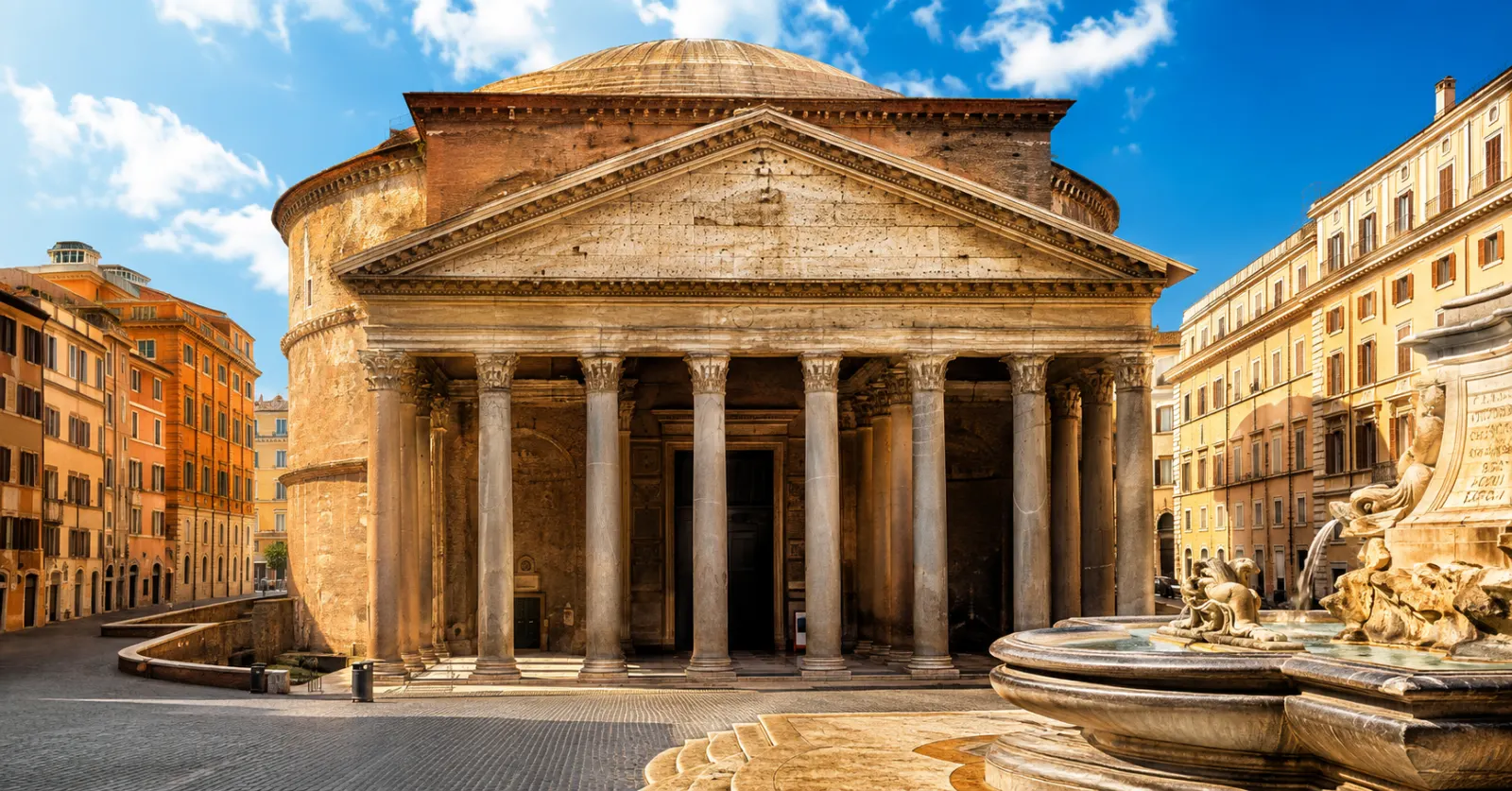
There is a hole in the roof. There has always been a hole in the roof.
Nine metres across, open to the weather, no glass, no cover. When it rains in Rome it rains inside the Pantheon, and the water runs off a floor that is very slightly domed into twenty-two drainage holes cut two thousand years ago.
Hadrian finished this building around 126 AD. It is still the largest unreinforced concrete dome on earth. Nobody has bettered it in nineteen hundred years, and for most of that time nobody knew how it was done.
The trick is that the concrete changes as it rises. Heavy travertine at the base, then brick, then volcanic tuff, and at the very top pumice — stone light enough to float. The walls are six metres thick at the bottom and one and a half at the crown.
- Time to allow: 45–60 min
- Hours: 09:00–19:00 (open daily)
- Address: Piazza della Rotonda, 00186 Rome
- Nearest transport: Bus stop Largo di Torre Argentina · 6 min walk (40,64)
- Localada perk: 5% OFF – Skip-the-line ticket & guided tour — book below
- Entry is ticketed — book online or buy at the door
- Free for under-18s and on the first Sunday of the month
- It is a working church; visits pause during services
- Rain falls straight through the oculus onto the floor
Local tips
- Go at opening or in the last hour — the midday queue wraps around the piazza
- Stand directly under the oculus and look up before you look anywhere else
- Raphael’s tomb is on the left; the Latin epitaph is worth reading
- Look down as well — the floor is slightly convex, with drains for the rain
- Sant’Eustachio, two minutes west, makes the best coffee in Rome — drink it standing at the counter
The Trevi Fountain
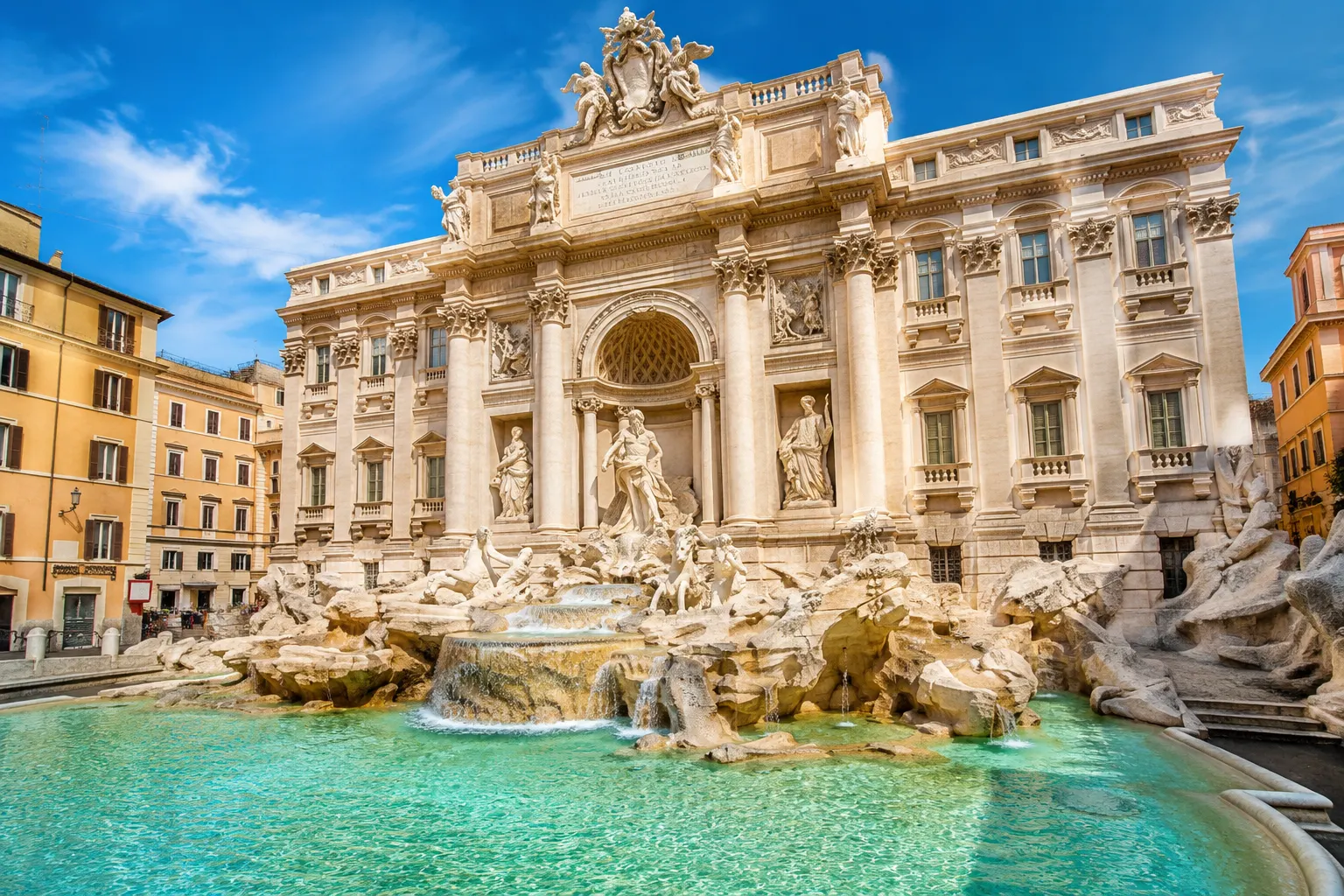
This is not really a fountain. It is the end of a pipe.
The water arrives here through the Aqua Virgo, an aqueduct finished in 19 BC and still running. Legend says a young girl showed thirsty Roman soldiers the spring it comes from — hence the name, and hence the girl carved into the right-hand relief above.
For seventeen centuries this was just the place where the water came out.
Then in 1732 a competition was held to dress it properly. Nicola Salvi won, and did something odd: instead of building a fountain in front of a palace, he made the palace itself the backdrop, and let the rock spill forward out of it as if the building were growing out of a cliff. Ocean rides through the middle on a shell chariot. One horse is calm, the other rearing — the sea in two moods.
- Time to allow: 20–30 min
- Hours: Open 24 hours
- Address: Piazza di Trevi, 00187 Rome
- Nearest transport: Metro Barberini · 9 min walk (A)
- Localada perk: 5% OFF – Guided walk & skip-the-line access — book below
- Since February 2026 there is a small charge to enter the basin viewing area
- Watching from the piazza is still free
- Free for under-5s, residents and disabled visitors with a companion
- The fountain runs day and night
Local tips
- Come before 8am or after midnight — those are the only quiet hours
- The paid slot puts you at the water; from the steps you see all of it for nothing
- Look up to the right for the relief of the girl who found the spring
- Toss with your right hand over your left shoulder, facing away — that is the actual ritual
- Vicolo del Puttarello, two streets away, has a window down onto the aqueduct itself
Roman Forum & Palatine Hill
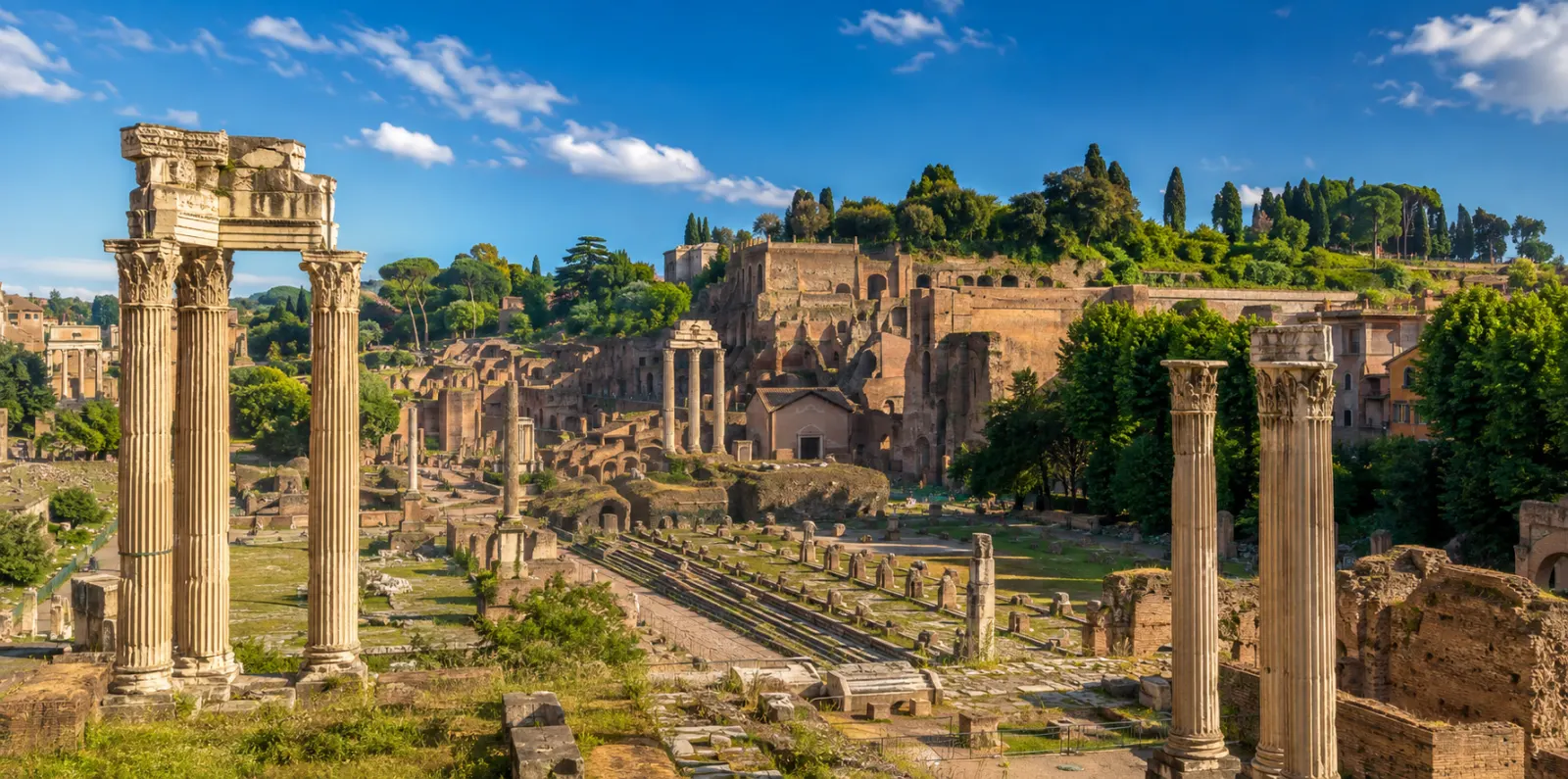
For a thousand years, cattle grazed here.
The centre of the Roman world — where the Senate met, where Caesar’s body was burned, where generals paraded their prisoners — silted up, filled with rubble, and became pasture. Romans called it Campo Vaccino, the cow field. Painters came to sketch cows standing between the tops of buried columns.
Only the highest arches still showed above ground.
Systematic digging began in the nineteenth century and went down more than ten metres in places. What you walk through now is not one city but a stack of them: temples rebuilt on temples, a paving slab from one century laid over a drain from another.
Above it rises the Palatine, the hill where Rome supposedly began and where the emperors later built. Our word palace comes from its name.
- Time to allow: 2–3 hours
- Hours: 09:00–19:00 (open daily)
- Address: Via della Salara Vecchia 5/6, 00186 Rome
- Nearest transport: Metro Colosseo–Fori Imperiali · 8 min walk (B,C)
- Localada perk: 5% OFF – Skip-the-line ticket & guided tour — book below
- Included in the Colosseum ticket — valid 24 hours, one entry
- Enter from the Via di San Gregorio gate for the shortest queue
- Almost no shade; the ground is gravel and worn stone
- Closed 25 December and 1 January
Local tips
- Start on the Palatine and walk down into the Forum — the view makes sense of the ruins first
- Go early or late; there is nowhere to hide from the sun between 11 and 4
- Find the round Temple of Vesta and the flowers still left for Caesar
- The Farnese Gardens on the Palatine are shaded, quiet and usually empty
- Wear proper shoes — the paving is original and deliberately uneven
Castel Sant’Angelo
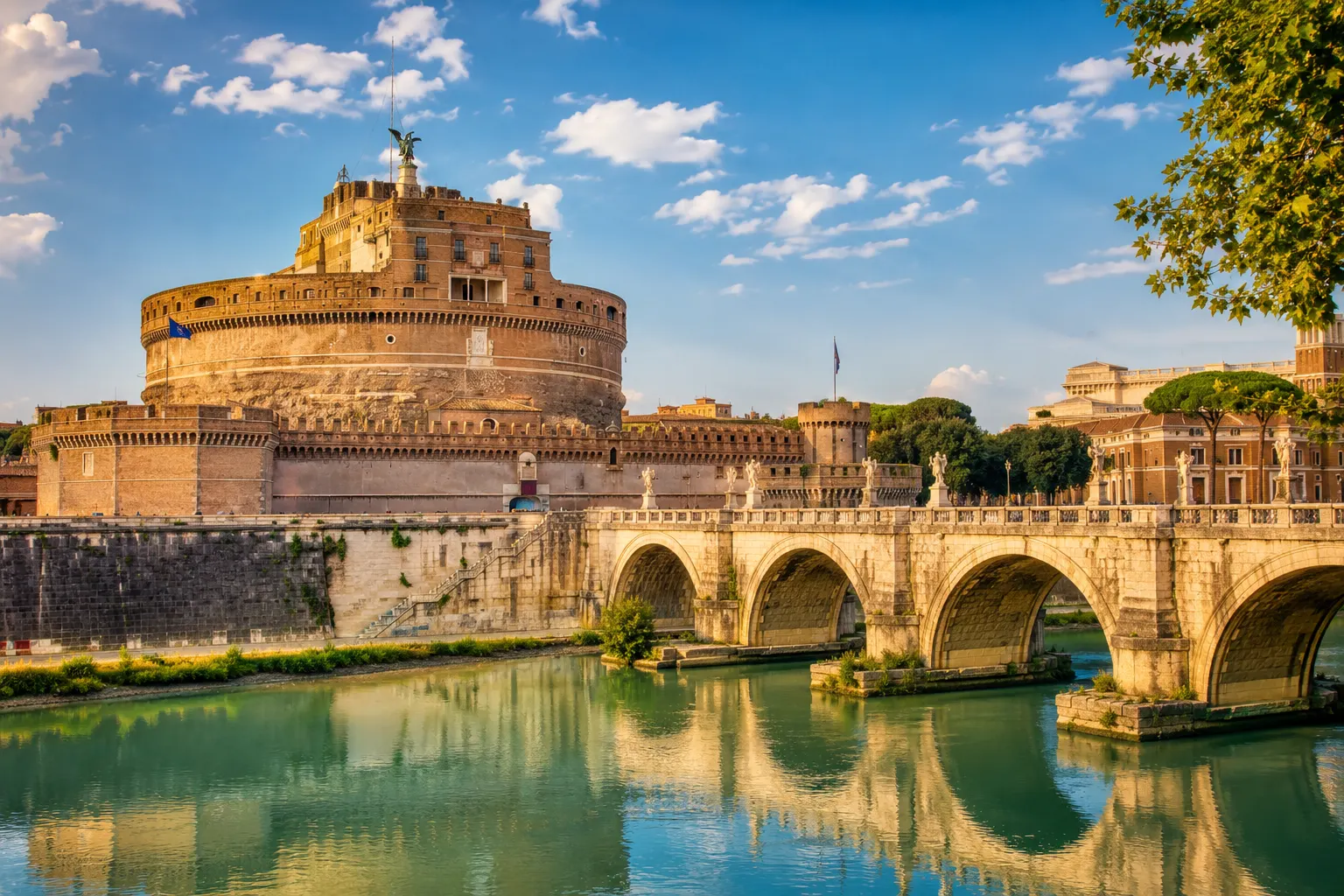
Hadrian built this as his own grave.
A drum of travertine on the Tiber, topped with a garden and a bronze chariot, holding the ashes of emperors. That lasted about a century and a half. Then the empire started losing wars, and a big round building beside a bridge stopped being a tomb and became the most useful thing in Rome: a fort.
Statues were thrown from the walls at attackers. The chariot went. The urns were scattered.
It got its name in 590, when Pope Gregory saw an archangel sheathing a sword above it — a sign that the plague was over. The bronze angel on top today is the sixth version.
Then the popes took it. They ran a covered passage from the Vatican along the wall — the Passetto — and popes fled along it at least twice: Alexander VI in 1494, and Clement VII in 1527, hurried through it in his papal robes with a cardinal's cloak thrown over him while the city was sacked below. He held out in this castle for seven months, and got out at the end of the year disguised as a pedlar.
- Time to allow: 1–1.5 hours
- Hours: 09:00–19:30 (open daily)
- Address: Lungotevere Castello 50, 00193 Rome
- Nearest transport: Bus stop Traspontina · 4 min walk (23)
- Localada perk: 5% OFF – Skip-the-line ticket & guided tour — book below
- Afternoon slots often sell out about two weeks ahead
- The spiral ramp inside is Hadrian’s original
- Ponte Sant’Angelo in front is pedestrian-only
- Closed on some public holidays
Local tips
- Go late in the day and stay for golden hour on the top terrace
- The view of St Peter's dome from the roof is the best straight-on one in the city
- Walk the Passetto route from outside — you can trace the wall back to the Vatican
- From the Vatican Museums it is a 20-minute walk down Via della Conciliazione
- Bernini's angels on the bridge are copies; his two originals are in Sant'Andrea delle Fratte, by the Spanish Steps
Piazza Navona
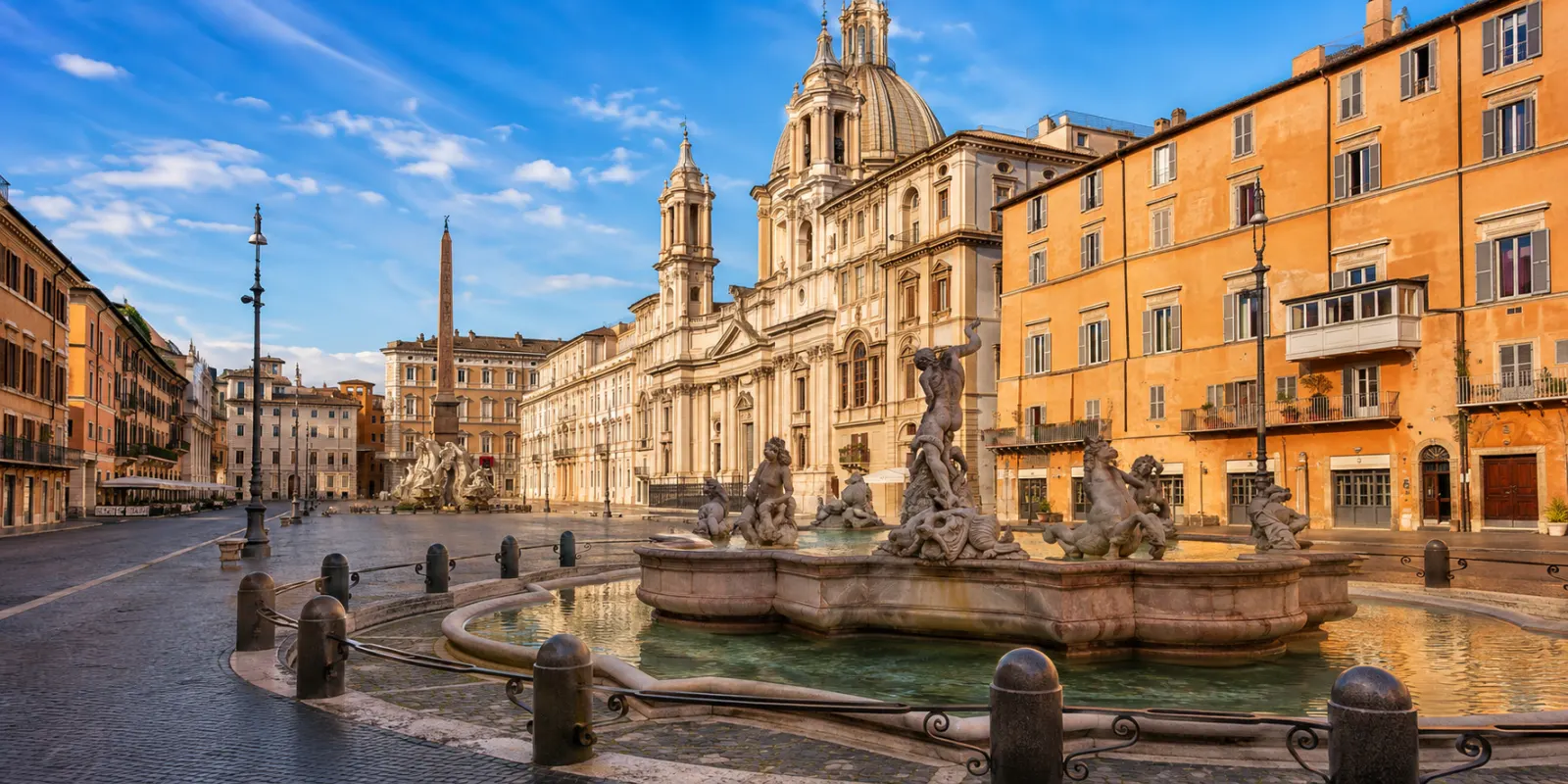
The shape is not a design choice. It is a stadium.
Domitian built an arena here in 86 AD for athletics — Greek-style running and wrestling, which Romans found slightly effete compared with the Colosseum. Thirty thousand seats. Over the centuries the seating collapsed, people built houses on the foundations, and the track in the middle stayed empty.
That is why the square is long, narrow and rounded at one end. You are walking on the running surface.
The buildings sit on the old terraces; at the north end you can go down and see the original arches under a modern street.
In the middle is Bernini’s Fountain of the Four Rivers, four giants for four continents, built around an Egyptian obelisk that Domitian brought from Aswan. The Nile figure covers his face — the story is that Bernini did it as an insult to the rival architect who designed the church opposite. It is a good story. It is not true: the church was built afterwards, and the Nile is veiled because nobody knew where its source was.
- Time to allow: 30–45 min
- Hours: Open 24 hours
- Address: Piazza Navona, 00186 Rome
- Nearest transport: Bus stop Rinascimento · 2 min walk (30,87)
- Localada perk: 5% OFF – Guided walk of the historic centre — book below
- Open all day and all night; the piazza never closes
- The three fountains run continuously
- Sant'Agnese in Agone on the west side is free to enter
- The stadium ruins below have their own entrance on Via di Tor Sanguigna
Local tips
- Come at seven in the morning; the piazza belongs to the sweepers and it is perfect
- The veiled figure on the fountain is the Nile — the story that Bernini draped him to insult the church is a myth
- Sit on the fountain steps rather than at the café tables, unless you want terrace prices
- The Pantheon is four minutes east, through Via del Salvatore
- Come back after eleven at night, when the buskers stop and the floodlights stay on
The Spanish Steps & Piazza di Spagna

Nothing about the name is right.
The square is Spanish because the Spanish embassy to the Holy See has sat here since the seventeenth century — it is still there, the oldest embassy in the world at the same address. The stairs are French: a French diplomat left the money, and they climb to a French church, Trinità dei Monti, built for a French king.
The Spanish had the square. The French had the staircase. Everyone argued for sixty years before anyone laid a step.
They finally went up in 1725 — a hundred and thirty-five steps that widen, narrow and widen again, so that walking them feels less like climbing and more like being carried. It was, and is, a place to be looked at.
- Time to allow: 30–45 min
- Hours: Open 24 hours
- Address: Piazza di Spagna, 00187 Rome
- Nearest transport: Metro Spagna · 1 min walk (A)
- Localada perk: 5% OFF – Guided walk of the Tridente — book below
- Sitting on the steps is prohibited and fined
- Free to visit, always open
- Keats-Shelley House at the foot of the steps is a small paid museum
- In spring the steps are banked with azaleas
Local tips
- Early morning is the only time the steps are nearly empty
- Climb to the terrace at the top for the view back down Via dei Condotti
- The boat fountain is drinking water — the spouts at the sides are safe
- Via Margutta, one street north, is where Fellini lived and is usually deserted
- Pastificio Guerra on Via della Croce serves pasta standing up for about €5
Capitoline Museums & Piazza del Campidoglio
In 1471 a pope gave a pile of bronze statues to the people of Rome. Not to the Church, not to a family — to the public.
That gift is why this counts as the world’s first public museum.
The hill it sits on was the religious centre of ancient Rome, the Capitol, and it had turned its back on the Forum below. Michelangelo was asked to fix the mess in 1536 and did something clever: he rotated the whole complex to face the new city and the Vatican, added a third building to close the square, and laid an oval pattern in the pavement that looks flat but is very slightly domed, like a shield.
He never saw it finished. It took four hundred years.
Inside are the objects Romans think of as their own: the she-wolf that suckled Romulus and Remus; the bronze emperor on horseback out in the square, which survived being melted down only because medieval Rome mistook him for Constantine; the marble hand and head of a colossus in the courtyard, all that is left of a twelve-metre Constantine.
- Time to allow: 1.5–2 hours
- Hours: 09:30–19:30 (open daily)
- Address: Piazza del Campidoglio 1, 00186 Rome
- Nearest transport: Bus stop Ara Coeli/Piazza Venezia · 6 min walk (40,87)
- Localada perk: 5% OFF – Skip-the-line ticket & guided tour — book below
- The square outside is free and always open
- The emperor on horseback in the square is a copy; the original is inside
- A single ticket covers both palaces, joined by an underground gallery
- Free on the first Sunday of the month
Local tips
- Go up Michelangelo’s wide ramp, not the steep steps beside it
- Head for the Tabularium gallery — the window frames the whole Forum
- The colossal hand and head are in the first courtyard, before the ticket desk
- Late afternoon is quietest; most visitors are at the Colosseum until closing
- Walk behind the right-hand palace for a free terrace over the Forum
Basilica of Santa Maria Maggiore
The story is that it snowed here on the fifth of August.
In 358, according to legend, the Virgin appeared to a Roman patrician and to the pope on the same night and told them both to build a church wherever snow fell the next morning. It was high summer. Snow fell on this hill, in the outline of a basilica.
Every year on 5 August white petals are dropped from the ceiling to repeat it.
What makes this church extraordinary is not the legend but the survival. The mosaics running along the top of the nave are from the 430s — older than almost anything else you will see in Rome, made when the empire was still standing. Nobody has ever redecorated them.
- Time to allow: 45–60 min
- Hours: 07:00–18:45 (open daily)
- Address: Piazza di Santa Maria Maggiore, 00100 Rome
- Nearest transport: Metro Termini · 8 min walk (A,B)
- Localada perk: 5% OFF – Guided visit & loggia access — book below
- Free to enter; the loggia and museum are separately ticketed
- Shoulders and knees must be covered
- It is a working basilica; visits pause during Mass
- Pope Francis's tomb is in the side aisle, near the Pauline Chapel
Local tips
- Look up along the nave — those side mosaics are from the 430s
- Pope Francis is buried here, in a plain stone tomb marked only Franciscus
- Bernini's grave is a floor slab on the right of the sanctuary, not a monument
- Come on 5 August for the petal-fall that re-enacts the snow
- Combine with San Pietro in Vincoli, ten minutes downhill, for Michelangelo's Moses
The Jewish Ghetto & Portico d’Ottavia
Jews have lived in Rome continuously for more than two thousand years — longer than in any other city in Europe. They arrived as free citizens, before the emperors, before Christianity.
In 1555 a papal decree walled them into these few streets, locked the gates at sunset, and kept them there for three hundred and fifteen years. The area flooded regularly. It was the worst land in the city.
The obligation to live inside the walls ended in 1870, and the gates themselves came down in 1888.
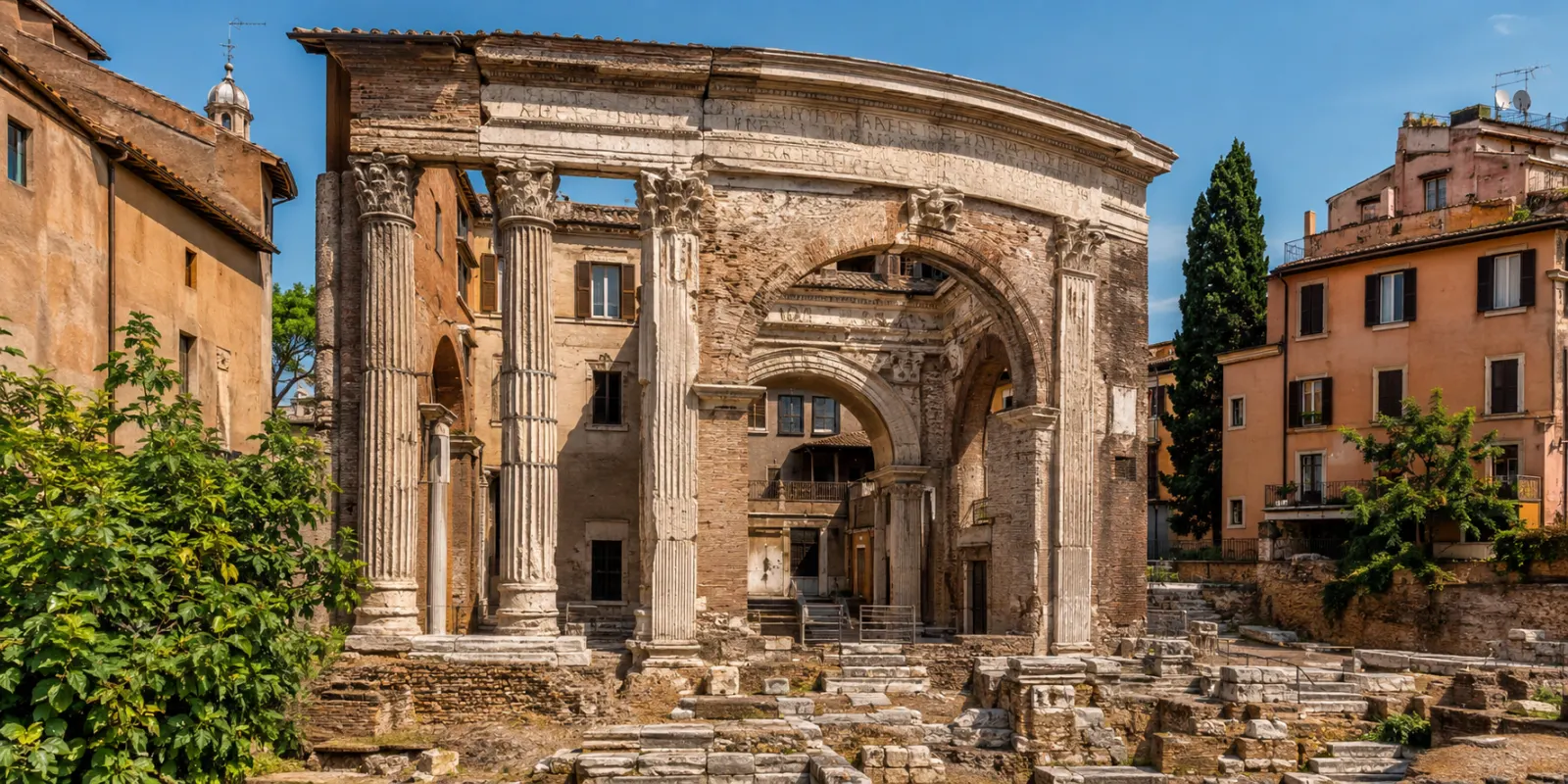
Walk to the Portico d’Ottavia, the ruined marble gateway at the end of the street. Augustus rebuilt it and named it for his sister, though the gateway standing today is a later reconstruction from around 203 AD, after a fire. For centuries it served as the entrance to the fish market — you can still read a medieval inscription about how the heads of large fish belonged to the city magistrates.
- Time to allow: 45–60 min
- Hours: Open 24 hours
- Address: Via del Portico d’Ottavia, 00186 Rome
- Nearest transport: Bus stop Piazza Monte Savello · 3 min walk (23)
- Localada perk: 5% OFF – Guided walk of the Ghetto — book below
- The streets are free and open; the synagogue and museum are ticketed
- The Jewish Museum is closed on Saturdays
- Kosher restaurants close Friday evening and reopen Saturday night
- Security checks apply around the synagogue
Local tips
- Eat carciofi alla giudia here — the fried artichoke exists nowhere else
- Sora Margherita on Piazza delle Cinque Scole is the local institution; look for the queue, not a sign
- Read the brass Stolpersteine set into the pavement as you walk
- The Portico d’Ottavia is best seen in late afternoon light
- Cross Ponte Fabricio to Tiber Island — it is the oldest bridge in Rome still in use
Santa Maria in Trastevere
Something strange happened on this spot in 38 BC, if you believe the Romans: oil welled up out of the ground and ran toward the river for a whole day.
Pagan Rome recorded it as a portent. Christians later decided it had marked the birth of Christ, and built here.
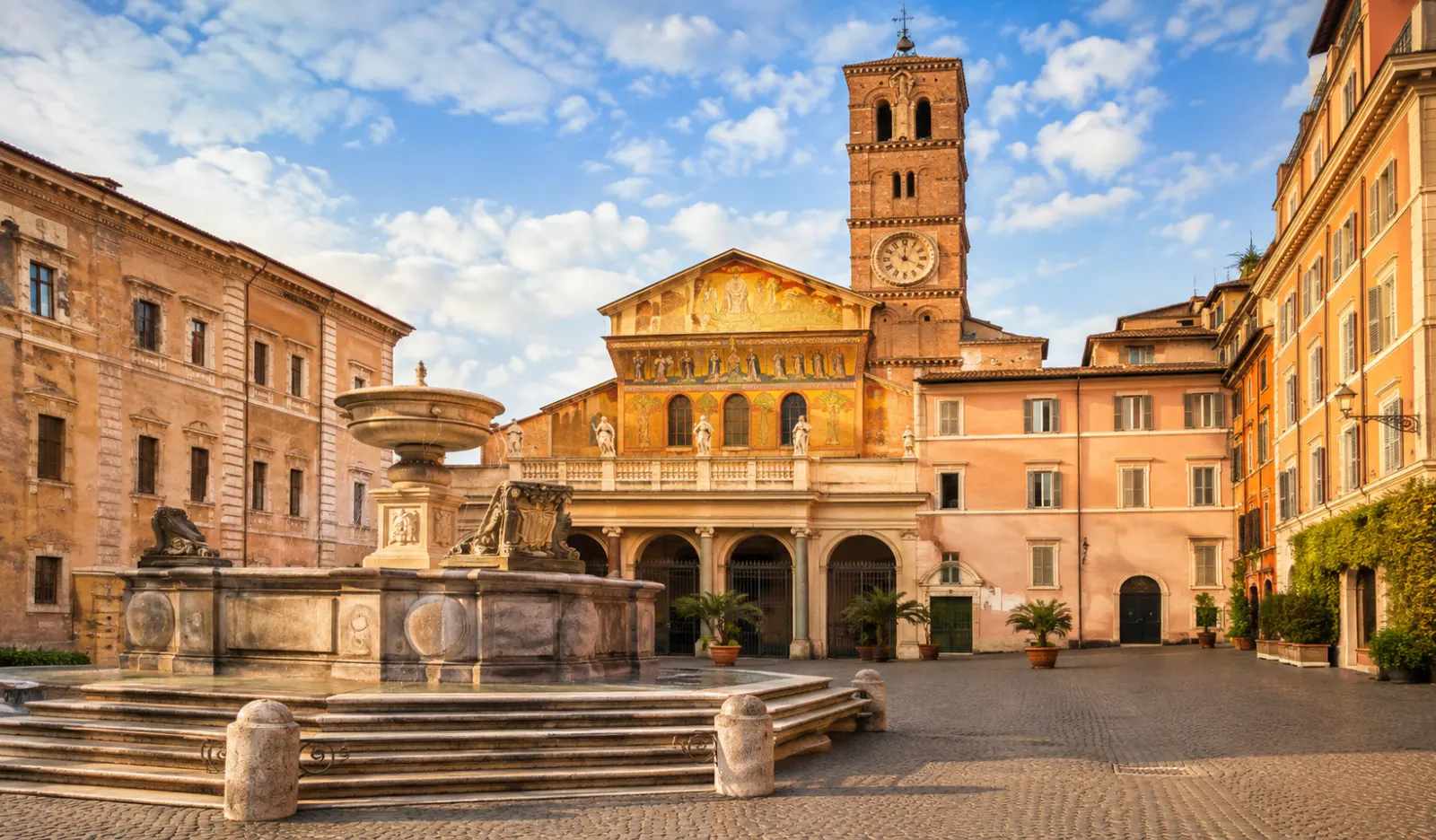
Whatever the truth, this is one of the oldest churches in the city and quite possibly the first anywhere dedicated to Mary. What you see is a rebuild from the 1140s, made mostly out of older Rome: the twenty-two granite columns down the nave were taken from ancient baths, and if you look closely at the capitals you can still make out the faces of Egyptian gods that a medieval mason did not quite chisel away.
- Time to allow: 30–45 min
- Hours: 07:30–20:00 (open daily)
- Address: Piazza di Santa Maria in Trastevere, 00153 Rome
- Nearest transport: Bus stop Lungotevere Farnesina/Trilussa · 5 min walk (23)
- Localada perk: 5% OFF – Guided walk of Trastevere — book below
- Free to enter
- Shoulders and knees must be covered
- It is a working parish church; visits pause during Mass
- The mosaics light up properly when the church lamps are on
Local tips
- Come at dusk when the apse mosaics are lit and the square fills up
- Look at the column capitals — Egyptian gods that were never fully erased
- The Cavallini strip below the gold mosaics is the part most people walk past
- Sit on the fountain steps; it is the oldest fountain in Rome and made for exactly that
- Trapizzino on Piazza Trilussa, three minutes away, is a Roman invention worth trying
Basilica of San Clemente

Rome is stacked. Nowhere lets you walk down through the layers like this.
At street level: a twelfth-century basilica with a gold mosaic of a vine spreading across the apse, curling around birds, farmers and small domestic scenes. Beautiful, and for most visitors that is the whole visit.
Buy the ticket and go down.
One floor below is the church this one was built on top of — a fourth-century basilica with faded frescoes, including one where a frustrated nobleman shouts at his servants in what is among the earliest written Italian anywhere, swear words included.
Go down again.
Now you are in the first century, in the alley between a Roman house and a public building, and the temperature drops. In one room a temple to Mithras still has its altar, showing the god killing a bull — a cult that ran alongside early Christianity and lost.
- Time to allow: 45–60 min
- Hours: 10:00–17:30 (open daily)
- Address: Via Labicana 95, 00184 Rome
- Nearest transport: Metro Colosseo–Fori Imperiali · 7 min walk (B,C)
- Localada perk: 5% OFF – Underground entry & guided visit — book below
- The upper church is free; the lower levels need a ticket
- Book the underground online — the space is small and slots fill
- The underground visit takes about 30 minutes
- It is cool below ground even in August
Local tips
- Do not stop at the ground floor — the whole point is downstairs
- On the middle level look for the fresco with the earliest written Italian on it
- Stand still in the lowest room and listen for the underground stream
- Aroma, two minutes along Via Labicana, is the terrace that looks straight into the Colosseum — book well ahead
- Bring a light layer; the bottom level stays around 15°C
The Mouth of Truth & Santa Maria in Cosmedin
Put your hand in the mouth. If you have lied, it bites it off.
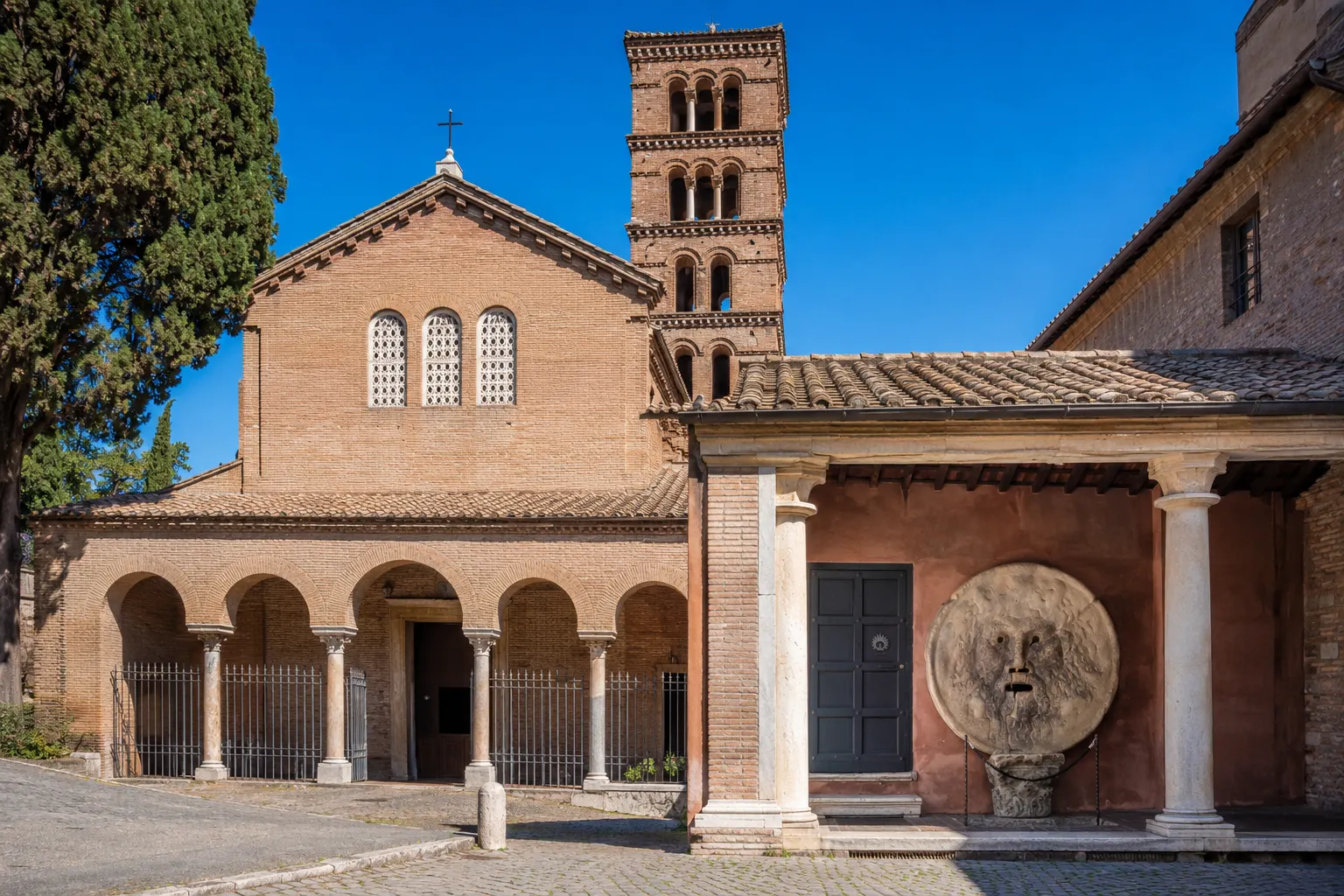
The marble disc is a bearded face with holes for eyes, nose and mouth, about one and three-quarter metres across and weighing well over a tonne. Nobody knows what it was for. The likeliest answer is disappointing and rather good: it was a drain cover. Whether it drained the Temple of Hercules Victor next door, the Cloaca Maxima, or the blood of sacrificed cattle is still argued over. The face is probably a river god, and the mouth was where the water went.
By the Middle Ages it had become a lie detector. Suspected adulterers were brought here. There is a story that a priest would hide behind the wall with a blade.
- Time to allow: 20–30 min
- Hours: 09:30–18:00 (open daily)
- Address: Piazza della Bocca della Verità 18, 00186 Rome
- Nearest transport: Bus stop Petroselli · 3 min walk (30)
- The disc is in the portico of Santa Maria in Cosmedin
- A small donation is expected for the photograph
- The church behind is free to enter
- Queues are longest between 11am and 3pm
Local tips
- Arrive at opening — the queue for a ten-second photo can reach 30 minutes
- Go into the church afterwards; almost nobody does and the floor is remarkable
- The two little temples across the road are among the oldest surviving buildings in Rome
- Look up at the bell tower; it is the tallest medieval campanile in the city
- The Circus Maximus is a five-minute walk south, and free to walk across
The Non-Catholic Cemetery
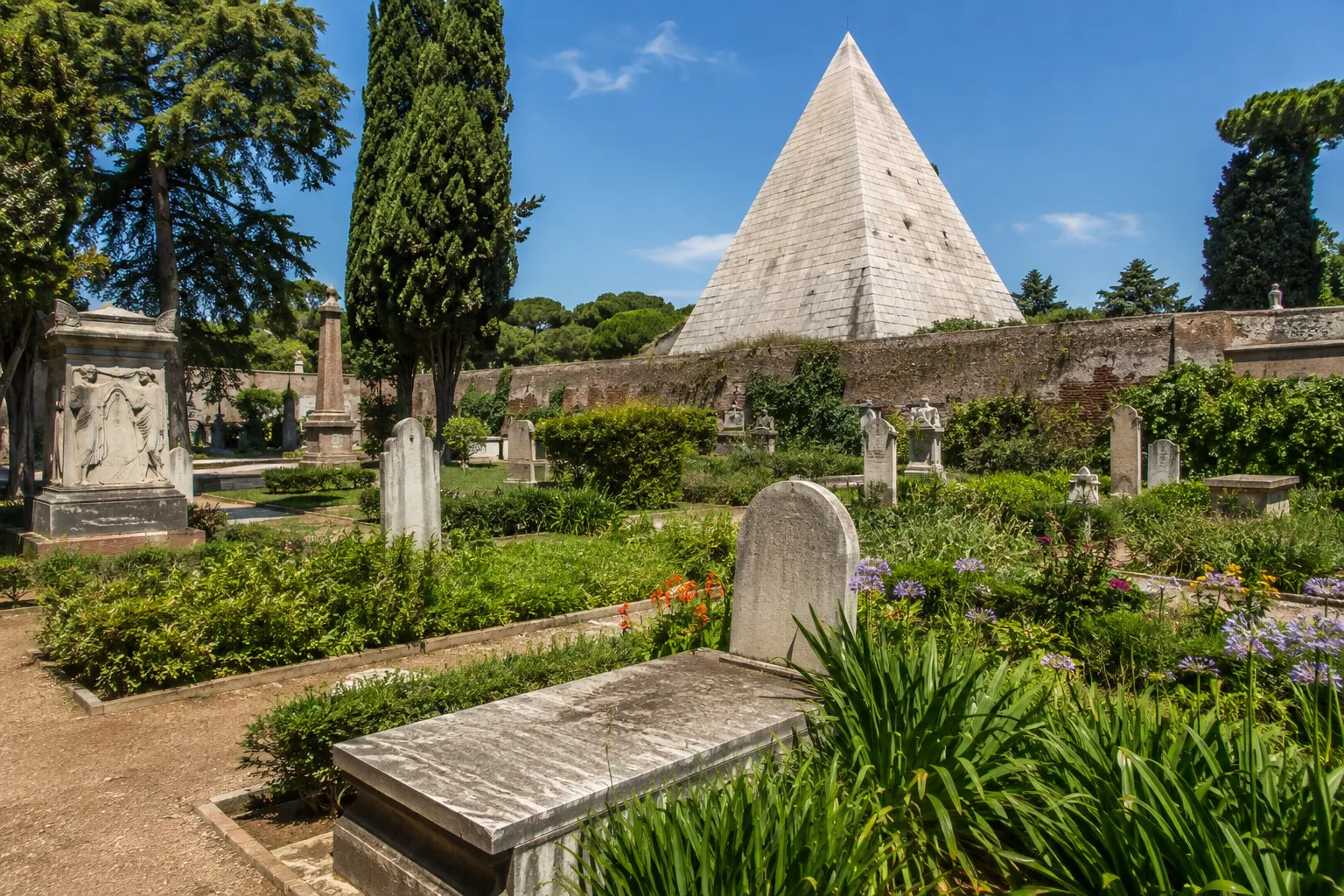
Behind the Aurelian Wall, in the shadow of a pyramid that a Roman magistrate built for himself in 12 BC, is the quietest place in the city.
The ground was set aside for people who could not be buried in Catholic soil: Protestants, Orthodox, Jews, atheists, and the foreigners who came to Rome and never left. About four thousand of them.
Two graves are why most people come. John Keats died here at twenty-five, in a room above the Spanish Steps, convinced he had failed at everything; his stone carries no name, only the line he asked for — that his name was writ in water. Shelley, who wrote that it might make one in love with death to be buried in so sweet a place, drowned the following year and lies a short walk up the slope.
- Time to allow: 45–60 min
- Hours: 09:00–17:00 (open daily)
- Address: Via Caio Cestio 6, 00153 Rome
- Nearest transport: Metro Piramide · 2 min walk (B)
- Monday to Saturday until 17:00; Sundays and holidays only until 13:00
- Entry is by donation at the gate
- Last admission is 30 minutes before closing
- Quiet is expected — it is still a working cemetery
Local tips
- Keats is in the old part on your left as you enter; Shelley is up the slope
- Ask at the gate for the map, and read the stones rather than hunting names
- The cats come out onto the graves in the late afternoon
- Volpetti and the Testaccio market are eight minutes away for lunch after
- Go on a weekday morning and you may have the whole place to yourself
Where to eat: verified local picks
La Taverna dei Fori Imperiali

Five minutes from the Forum, on a sloping street in Monti, and almost nobody walking out of the ruins finds it.
That is the whole point of this stop.
The streets immediately around the Colosseum are among the worst places to eat in Rome — laminated menus in nine languages, photographs of the food, someone outside asking where you are from. Walk uphill into Monti for ten minutes and the prices drop, the menus shorten, and the people at the next table are speaking Italian.
This is a small family taverna doing the Roman repertoire properly. Amatriciana with guanciale and pecorino, not bacon and cream. Cacio e pepe, which is three ingredients and therefore impossible to hide behind. Coratella alla romana — lamb offal with artichokes — if you want the version of Roman cooking that Romans actually grew up on.
- Time to allow: 1–1.5 hours
- Hours: 12:30–23:00 (closed Tuesday)
- Address: Via della Madonna dei Monti 9, 00184 Rome
- Nearest transport: Metro Cavour · 7 min walk (B)
- Small neighbourhood trattoria a short walk uphill from the Forum
- Closed on Tuesdays
- Reservations strongly recommended, especially for dinner
- Kitchen closes between lunch and dinner service
Local tips
- Book ahead — there are only two small rooms
- Order the amatriciana or the cacio e pepe; both are the local benchmark
- Coratella alla romana is the dish most visitors skip and most Romans order
- The house red by the carafe is good and costs a fraction of the bottles
- Walk up Via del Boschetto afterwards for the vintage shops
Testaccio Market — Mordi e Vai

Testaccio was the slaughterhouse district. For a century, workers here were paid partly in the parts of the animal nobody wanted — the fifth quarter, they called it — and Roman cooking was rebuilt around making offal delicious.
Most of what people think of as classic Roman food comes from this quarter and that arrangement.
The market moved into a modern hall in 2012, built over Roman ruins visible through the floor at one end. The stalls are the same families. The prices are what locals pay.
Box 15 is Mordi e Vai — bite and go. Sergio was a butcher for thirty years before he opened it. He takes the slow-cooked dishes of Roman home kitchens and puts them inside a split roll: allesso di scottona, beef simmered for hours until it falls apart; trippa alla romana in tomato and mint; polpette. Around five euros. You eat it standing at the counter.
- Time to allow: 45–60 min
- Hours: 07:00–15:00 (closed Sunday)
- Address: Nuovo Mercato Testaccio, Box 15, Via Beniamino Franklin, 00153 Rome
- Nearest transport: Bus stop Marmorata/Galvani · 3 min walk (23,30,75)
- The market is open mornings only and closed on Sundays
- Box 15 is Mordi e Vai; other stalls do pasta and pizza by the slice
- Cash is easiest, though cards are usually accepted
- Roman ruins are visible under glass at one end of the hall
Local tips
- Arrive around 07:30 when the stalls are setting up — after 11 it is a different place
- Order the allesso di scottona; the trippa alla romana is the braver choice
- Le Mani in Pasta and Casa Manco in the same hall are worth a second stop
- Eat standing at the counter like everyone else — there is no table service
- It is a 12-minute walk uphill to the Aventine Keyhole from here
Pastificio Guerra
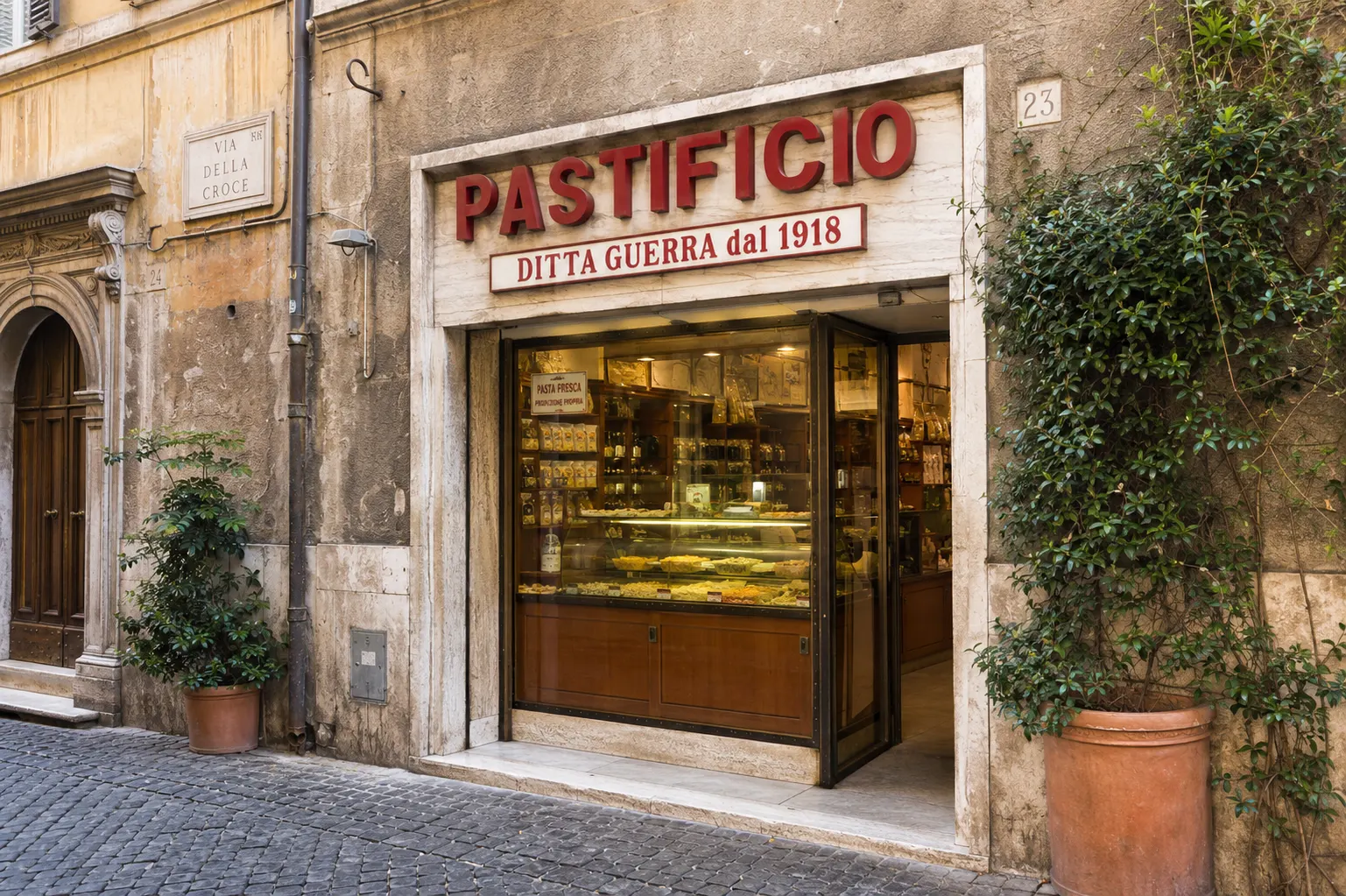
Via dei Condotti is the most expensive shopping street in Rome. Two streets over, at one o’clock, a fresh pasta shop starts serving lunch out of two large pans on the counter.
Five euros. A plastic fork. Water included.
There are two dishes a day and no choice beyond them — usually one with tomato, one without. When the pans are empty, that is the end of lunch. Sometimes that is two o’clock.
It is not a restaurant. It is a pastificio, a pasta maker, which is why the pasta itself is better than the setting suggests. There are no tables. People eat standing along the shelf inside, sitting on the step outside, or walking.
The crowd is a mix: builders, shop staff from the luxury boutiques on their break, students, and a few visitors who did their homework.
- Time to allow: 20–30 min
- Hours: 13:00–20:00 (open daily)
- Address: Via della Croce 8, 00187 Rome
- Nearest transport: Metro Spagna · 3 min walk (A)
- Opens at 13:00 and serves until the pans are empty
- Two dishes a day, no menu, no tables
- Cash is easiest
- Four minutes from the Spanish Steps
Local tips
- Arrive between 13:00 and 14:00 — later and the food is gone
- There are no seats; eat standing inside or on the step outside
- Both dishes are usually good; take the one with more people ordering it
- Via della Croce has the neighbourhood food shops the tourists walk past
- It is a five-minute walk down to the Trevi Fountain afterwards
Mercato Trionfale
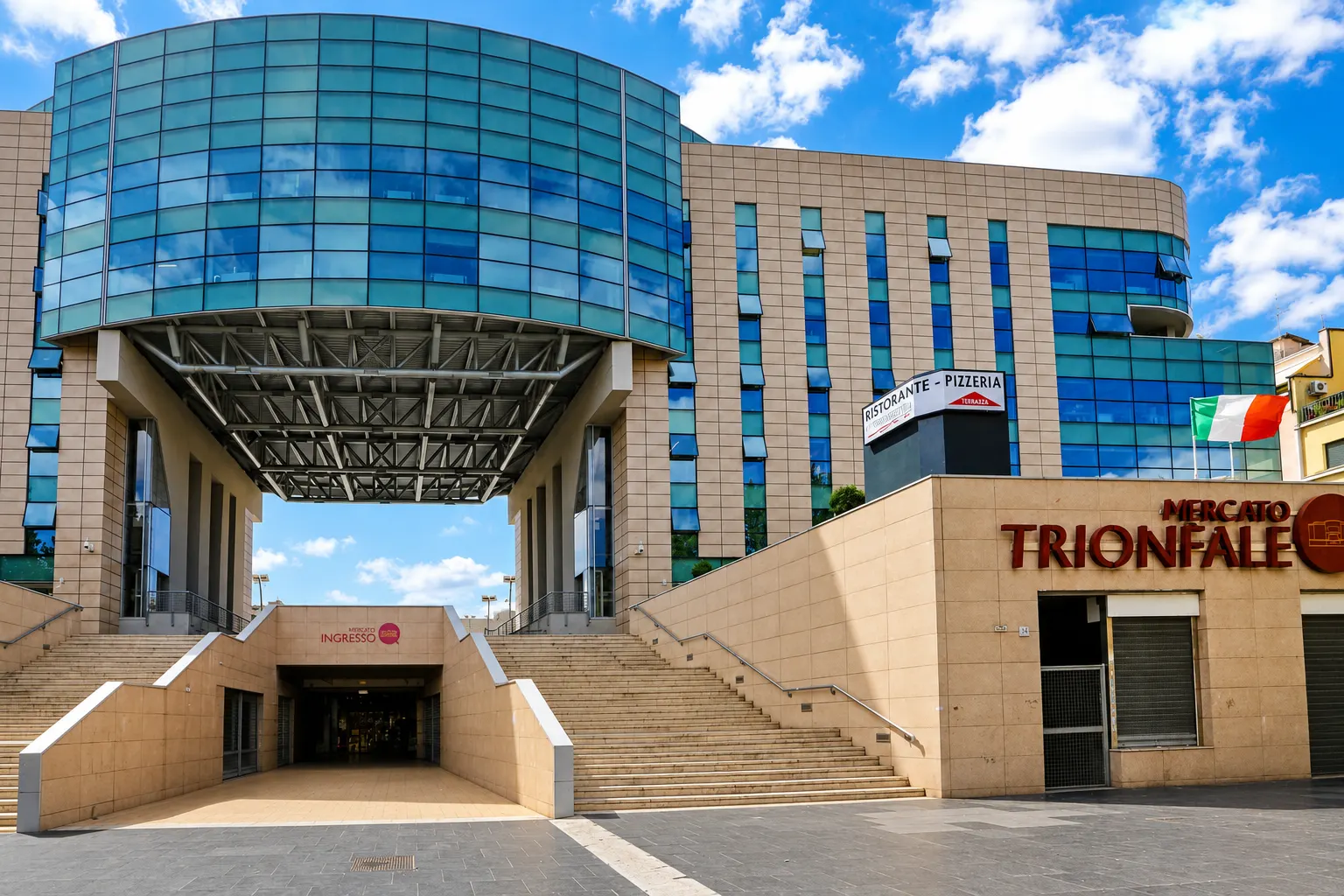
You come out of the Vatican Museums after three hours, you are hungry, and the streets immediately outside are lined with places that know exactly that.
Walk three minutes north instead.
Mercato Trionfale is one of the largest covered markets in Italy — more than two hundred and seventy stalls in a modern hall, open since the 1920s in one form or another. Butchers, fishmongers, cheese counters, growers up from the countryside, and a run of stalls doing hot food and filled rolls to eat standing.
Nobody here is aiming at tourists. It closes at two most days, which is the giveaway.
This is also the best place in the quarter to see how Romans actually shop: by season, in small quantities, every few days, with a lot of conversation. In February the artichoke stalls take over. In summer it is peaches and tomatoes in colours you do not get at home.
- Time to allow: 45–60 min
- Hours: 07:00–14:00 (closed Sunday)
- Address: Via Andrea Doria 41, 00192 Rome
- Nearest transport: Metro Cipro · 8 min walk (A)
- Mornings only most days; closes at 14:00 and all day Sunday
- On Tuesdays and Fridays it stays open until 19:00
- Cash is easiest at the smaller stalls
- There are hot-food counters as well as produce
Local tips
- Come before noon; by one o’clock the stalls are packing up
- Buy bread, cheese and fruit and eat outside — that is what the benches are for
- Ask what is in season; the stallholders will tell you and often let you taste
- Via Cola di Rienzo nearby has the neighbourhood food shops and no queues
- Pizzarium near Cipro is a famous pizza-by-the-slice stop if the market is closed
Terrazza Borromini
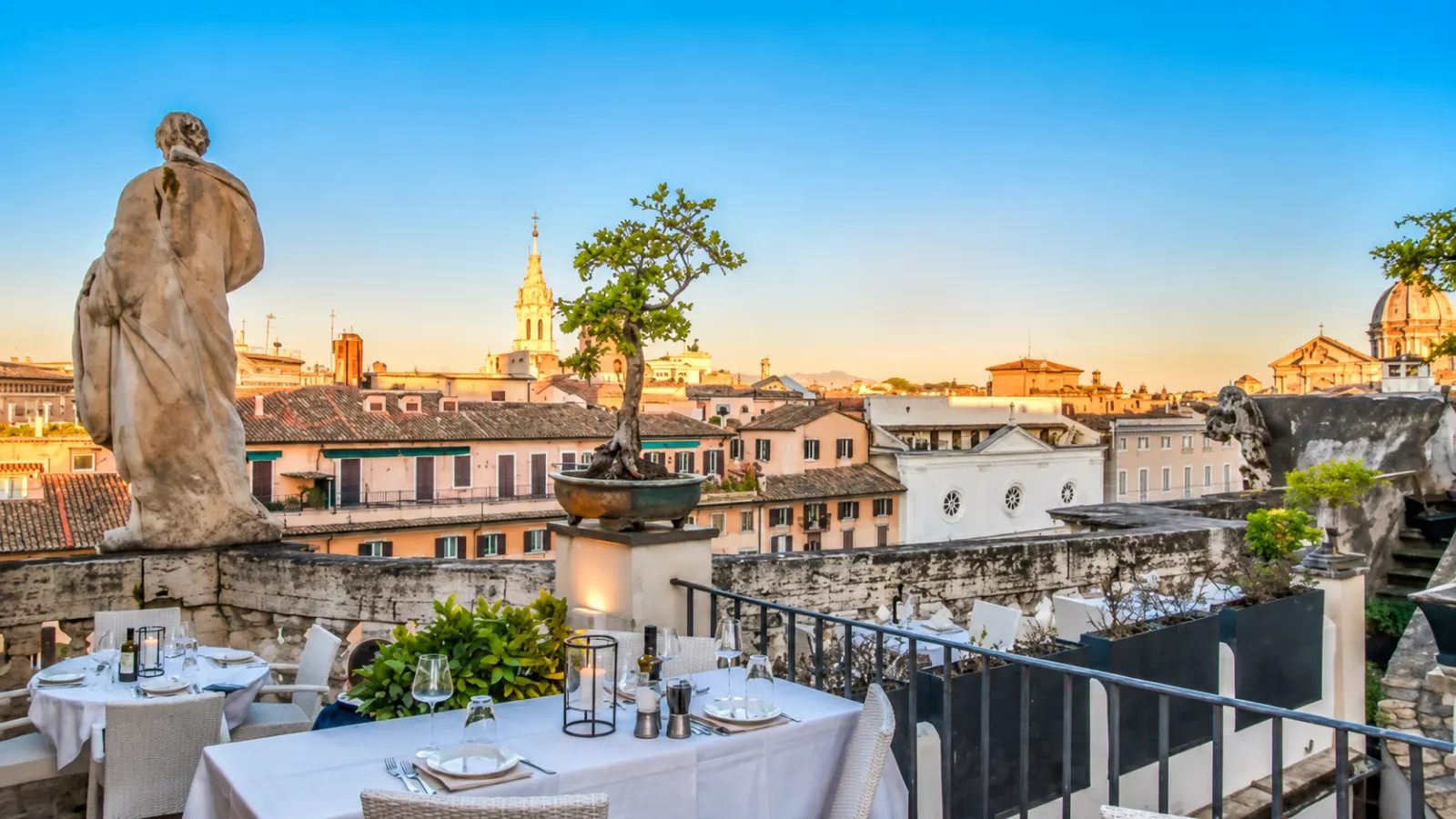
Rome has almost no tall buildings, which means the rooftops that do exist are level with the domes rather than above them. That turns out to be a better view than height would give you.
This one sits on the corner of Piazza Navona, on a palace Borromini worked on in the seventeenth century. Restaurant on the fourth floor, bar on the fifth, and the terrace wraps round so you get three different Romes depending on where you stand: the length of Piazza Navona directly below with Bernini’s fountain in the middle, the dome of Sant’Agnese close enough to read the stonework, and beyond the rooftops, St Peter’s and the Pantheon.
The cooking is modern Italian and priced accordingly.
- Time to allow: 1.5–2 hours
- Hours: 12:00–00:00 (open daily)
- Address: Via di Santa Maria dell’Anima 30, 00186 Rome
- Nearest transport: Bus stop Rinascimento · 3 min walk (30,87)
- Reservations recommended, especially for a terrace table at sunset
- The fifth-floor bar takes walk-ins for drinks without dinner
- Smart-casual dress in the evening
- Entrance is on the side street, not on the piazza
Local tips
- Come up for a drink at sunset even if you are not eating
- Ask for a table on the Piazza Navona side
- The dome you can almost touch is Sant’Agnese in Agone by Borromini
- The entrance is an unmarked hotel door on the side street; take the lift
- Piazza Navona seen from above at night is the best version of it
Trapizzino at Piazza Trilussa

Almost everything you eat in Rome is old. This is not.
In 2008 a pizza maker in Testaccio, Stefano Callegari, took pizza bianca — the plain, salty, olive-oiled Roman flatbread sold by weight in every bakery — cut it into a triangle, opened a pocket in it and filled it with the sort of slow-cooked dish a Roman grandmother makes on a Sunday.
Chicken alla cacciatora. Oxtail. Meatballs in tomato. Tongue in green sauce.
He called it a trapizzino. It is now sold across Italy and in New York, and it is one of very few genuinely new Roman foods in living memory.
The one at Piazza Trilussa sits at the Trastevere end of Ponte Sisto, the pedestrian bridge from Campo de’ Fiori. In the evening the steps of the fountain here fill up with people sitting, drinking, and eating exactly this.
- Time to allow: 30–45 min
- Hours: 12:00–01:00 (open daily)
- Address: Piazza Trilussa 46, 00153 Rome
- Nearest transport: Bus stop Lungotevere Farnesina/Trilussa · 2 min walk (23)
- Counter service; there are a few stools and the fountain steps outside
- Open late, which is unusual for Roman food
- The fillings change with what has been cooked that day
- Trattoria Da Teo nearby is the sit-down alternative
Local tips
- Order the pollo alla cacciatora if it is on the board — that is the one people come back for
- Two trapizzini is a snack, three is dinner
- It stays open until one in the morning, which almost nothing else around here does
- Eat on the fountain steps in Piazza Trilussa, not standing in the doorway
- After eleven the crowd is on the Ponte Sisto side; that is the show
Shops: verified local picks
Campo de’ Fiori Market
Look around. Every other historic square in Rome has a church on it. This one does not, and there is a reason.
Campo de’ Fiori was where the Papal States carried out executions.
The hooded bronze figure standing in the middle is Giordano Bruno, a philosopher who argued that the stars were other suns with other worlds around them, and that the universe had no centre. He was burned alive on this spot in 1600. The statue went up in 1889, put there by students, and it faces the Vatican on purpose.
By day none of that is obvious. Since the nineteenth century the square has held a market — flowers, fruit, vegetables, spices, pasta, and in recent years a growing number of stalls selling souvenirs to people passing through.
- Time to allow: 30–45 min
- Hours: 07:00–14:00 (closed Sunday)
- Address: Campo de’ Fiori, 00186 Rome
- Nearest transport: Bus stop Corso Vittorio Emanuele · 7 min walk (40,64)
- Market runs mornings only and is closed on Sundays
- Stalls at the centre are increasingly souvenirs; the food is around the edges
- Prices are marked by the kilo — say how much you want, not how many
- The square is free and open at all hours
Local tips
- Come before 09:00 for the market as Romans use it
- Forno Campo de’ Fiori on the corner sells pizza bianca by weight — ask for a small piece
- Look up at Giordano Bruno and note which way he is facing
- Via dei Cappellari, off the west side, is full of workshops and almost no visitors
- Ponte Sisto is seven minutes away and crosses straight into Trastevere
Monti: Vintage & Artisan Shops

Monti sits between the Forum and Santa Maria Maggiore, ten minutes from the Colosseum, and most people who visit Rome never walk into it.
In antiquity this was the Suburra — the crowded, notorious, cheap quarter where Julius Caesar grew up and where the city kept its brothels and its poor. For centuries after, it stayed working-class. That is why the streets are narrow and irregular while the areas around it were rebuilt grandly.
Then in the 1990s the artists arrived, and after them the shops.
What is here now is small and made by hand: vintage clothing sorted by decade rather than piled, leather workshops where the bags are cut on the premises, ceramics, jewellery, a couple of good bookshops. Via del Boschetto and Via Urbana are the two streets to walk; Via dei Serpenti connects them.
- Time to allow: 1–1.5 hours
- Hours: 10:30–20:00 (open daily)
- Address: Via Urbana / Via del Boschetto, 00184 Rome
- Nearest transport: Metro Cavour · 4 min walk (B)
- Most shops open around 10:30 and many close Monday morning
- Via del Boschetto and Via Urbana are the main shopping streets
- Almost everything is independent; opening hours vary
- A flea market runs at Via Leonina on some weekends
Local tips
- Walk Via del Boschetto and Via Urbana; Via dei Serpenti links them
- Late afternoon is best — shops are open and the light in these streets is good
- Sit on the fountain in Piazza della Madonna dei Monti with a drink from the bar
- La Taverna dei Fori Imperiali is one street away for dinner — book first
- San Pietro in Vincoli, with Michelangelo’s Moses, is a short walk uphill and free
Via dei Condotti & Via della Croce
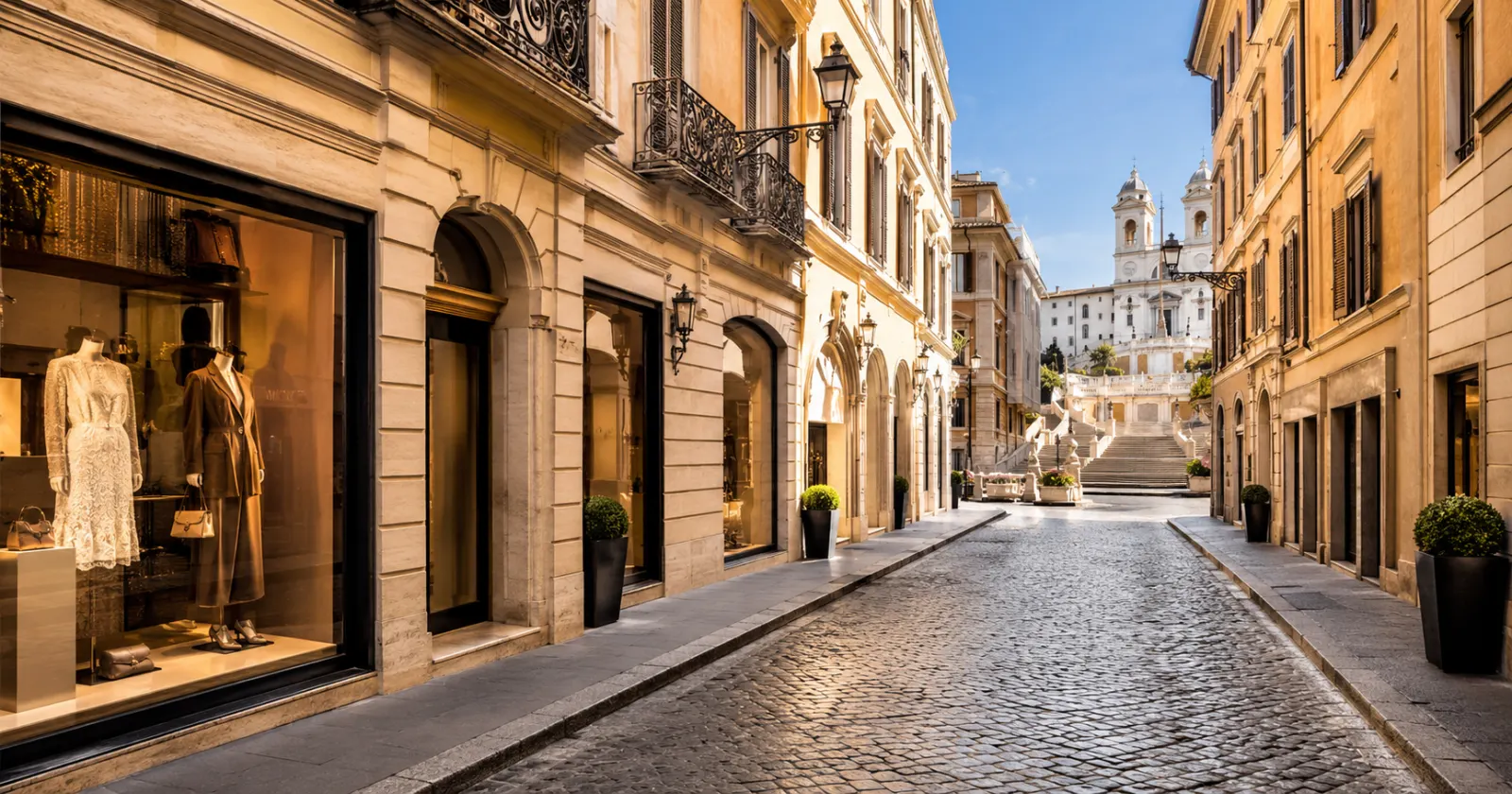
Via dei Condotti runs straight from the bottom of the Spanish Steps and is the most expensive shopping street in Rome. Bulgari has been at number 10 since 1905. Gucci, Prada, Hermès, Valentino — the whole list, in a street barely wide enough for two cars.
The name has nothing to do with luxury. Condotti means conduits: the pipes of the Aqua Virgo, the ancient aqueduct that still feeds the Trevi Fountain, run underneath it.
Halfway down on the left is Caffè Greco, which opened in 1760 and served Goethe, Byron, Keats, Casanova and Stendhal in turn. After losing a long dispute with the building's owner it was sealed in October 2025, and it has stayed shut. The sign is still above the door. The rooms behind it are empty. Whether it comes back is an argument Rome is still having.
- Time to allow: 1–1.5 hours
- Hours: 10:00–19:30 (open daily)
- Address: Via dei Condotti, 00187 Rome
- Nearest transport: Metro Spagna · 4 min walk (A)
- Most shops open 10:00–19:30; some still close for lunch
- Caffè Greco, at number 86, has been closed since October 2025
- Via della Croce, two streets north, is the local shopping street
- Sales run in January and July
Local tips
- Walk Via dei Condotti for the windows, then Via della Croce for anything you actually want
- The Caffè Greco frontage at number 86 is still worth a look — 265 years, then shuttered in 2025
- Via Margutta, further north, is a quiet street of galleries where Fellini lived
- Pastificio Guerra on Via della Croce serves pasta for about €5 from 13:00
- The aqueduct feeding the Trevi Fountain runs directly beneath your feet
Volpetti

You will be handed something to eat before you have decided to buy anything. It is not a sales technique. It is simply how the shop works.
Volpetti has been on Via Marmorata since 1973, in the middle of Testaccio — the neighbourhood that grew around Rome's old slaughterhouse. That is why Roman cooking here is built from the parts nobody else wanted, and why the food shops in these streets are serious in a way the ones in the centre are not.
Behind the counter: wheels of pecorino, mountain cheeses from Piedmont, buffalo mozzarella that came up from Campania this morning, prosciutto sliced to order, and guanciale for the carbonara you will attempt at home and get wrong the first time.
- Time to allow: 20–30 min
- Hours: 09:00–20:30 (closed Sunday)
- Address: Via Marmorata 47, 00153 Rome
- Nearest transport: Metro Piramide · 3 min walk (B)
- Monday to Saturday; closed on Sundays
- They vacuum-pack cheese and cured meat if you are flying home
- You will be offered a taste before you buy — say yes
- Cards accepted, but small purchases move faster in cash
Local tips
- Ask for pecorino romano and have them cut it in front of you
- Guanciale is the one thing you cannot buy properly outside Italy
- Have them build a sandwich and eat it up on the Aventine, ten minutes uphill
- Go before noon; after one o'clock the queue reaches the door
- Testaccio market is four minutes away if you want the cheaper version
Antica Caciara Trasteverina
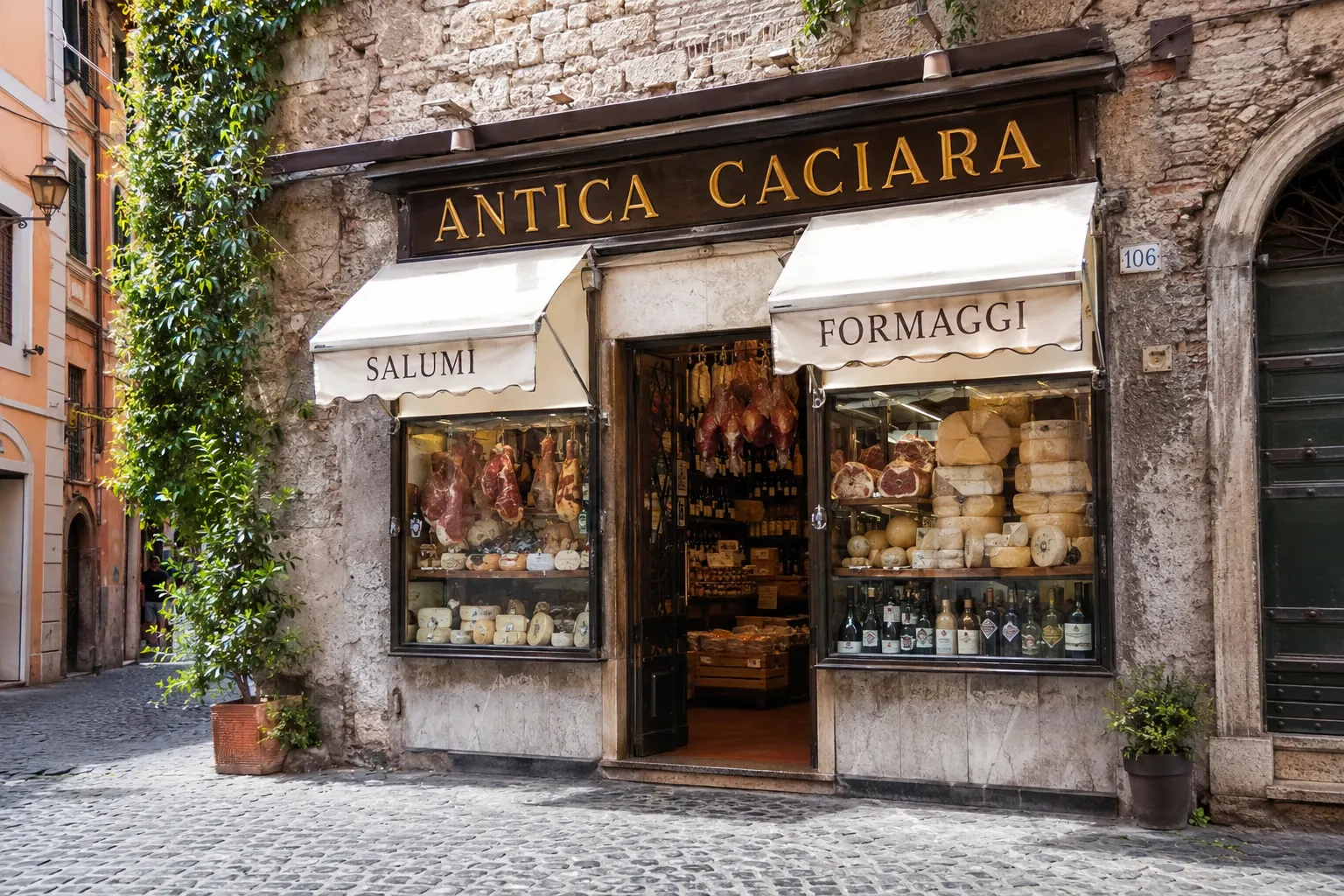
The shop opened in 1900 and has been in the same family for three generations. Roberto, who is usually behind the counter, was born upstairs.
What it sells, above all, is pecorino romano — the hard, salty sheep's cheese that Rome puts on nearly everything and that all four of the classic Roman pastas depend on completely. The wheels come from the countryside south of the city and are cut in front of you with a wire.
There is ricotta, made fresh and gone by mid-morning. There is burrata that arrives from Puglia twice a week. There is guanciale hanging behind the counter, and shelves of things the family bottles itself.
Trastevere has changed a great deal around this shop. Where there were workshops there are bars, and the rents have gone the way rents go everywhere. Antica Caciara stayed, and the people queuing at seven in the morning are still the neighbourhood.
- Time to allow: 15–20 min
- Hours: 07:00–20:00 (closed Sunday)
- Address: Via di San Francesco a Ripa 140, 00153 Rome
- Nearest transport: Bus stop Induno · 3 min walk (75)
- Opens at 7am and closes at 8pm, with a long midday break
- Closed on Sundays
- The fresh ricotta usually sells out before midday
- They vacuum-pack cheese for travelling
Local tips
- Ask for pecorino romano stagionato and taste before choosing the weight
- The ricotta is the reason to come early rather than late
- Roberto will tell you which pasta each cheese belongs on — ask him
- Take it to the river wall at Ponte Sisto rather than back to the hotel
- Cash is quicker, though the queue moves at Roman speed either way
Experiences and activities
The Capuchin Crypt
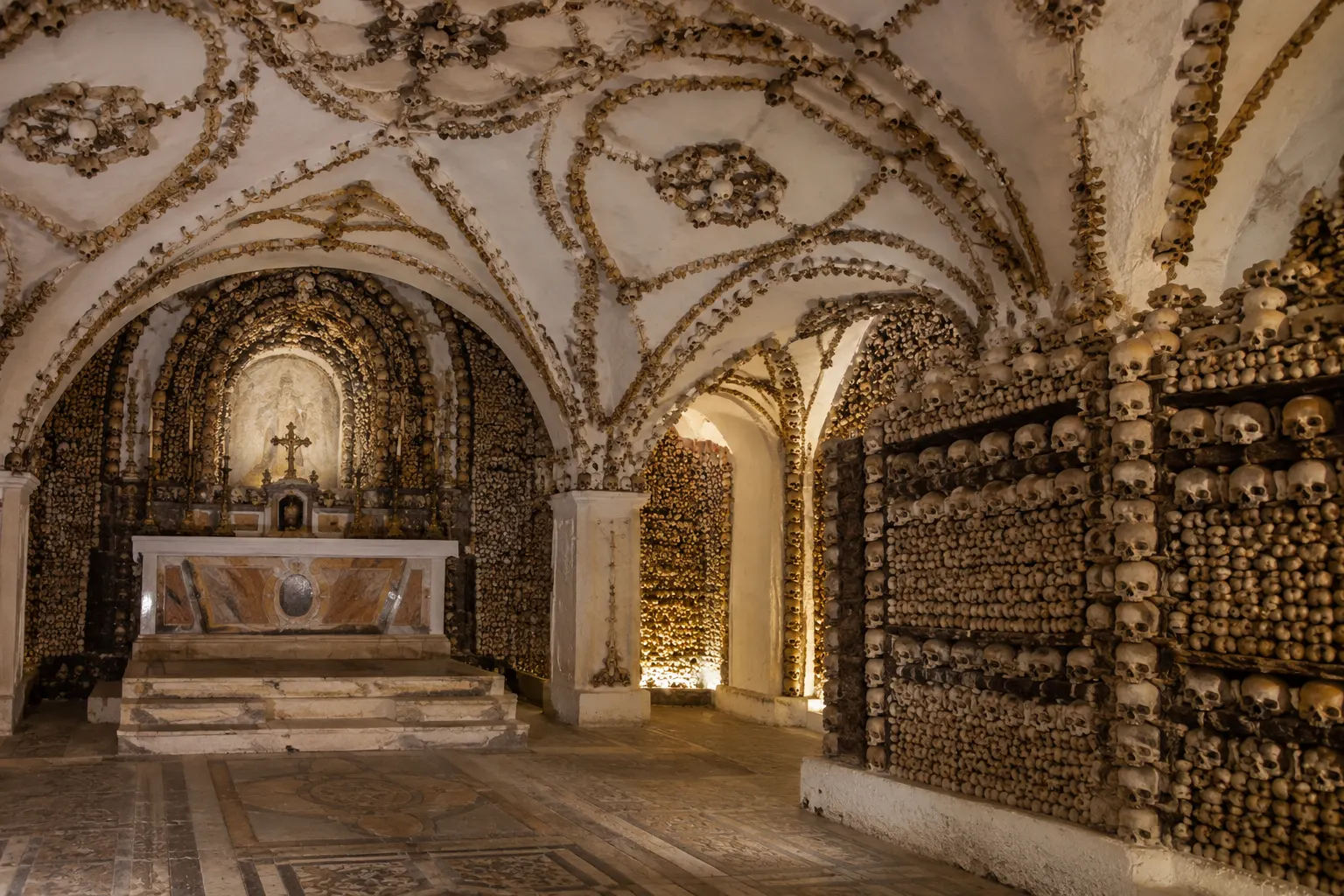
Six small rooms under a church on Via Veneto. The walls, the ceilings, the light fittings and the ornamental arches are all made of human bone.
Around four thousand Capuchin friars, who died between 1528 and 1870.
When the order moved here in 1631 they brought their dead with them in cartloads and, over the following centuries, arranged them. Not carelessly — the work is meticulous. Vertebrae are set into rosettes. Shoulder blades form the wings of an hourglass. Whole skeletons in brown habits stand in niches made of their brothers’ pelvises.
Mark Twain came, and wrote about it. So did the Marquis de Sade.
It reads as macabre now, but it was never meant as horror. The Capuchins are an order built on poverty and the plain fact of death; a friar spent his life being reminded that his body was borrowed. A sign at the end of the last chapel puts it directly, in five languages: what you are, we once were. What we are, you will be.
- Time to allow: 30 min
- Hours: 10:00–19:00 (open daily)
- Address: Via Vittorio Veneto 27, 00187 Rome
- Nearest transport: Metro Barberini · 2 min walk (A)
- Ticketed; the price includes the small museum you pass through first
- No photography anywhere in the crypt
- The visit takes 20–30 minutes
- Not recommended for young children
Local tips
- Walk through the museum rooms first; they explain who these men were
- Look for the vertebrae arranged as flowers on the ceilings
- Read the sign in the last chapel before you leave — that is the point of the place
- It is two minutes from Barberini metro, so it fits easily between the Trevi and Spagna
- Go on a bright day; the rooms are lit only from the corridor
Pasta & Tiramisu Class by the Vatican
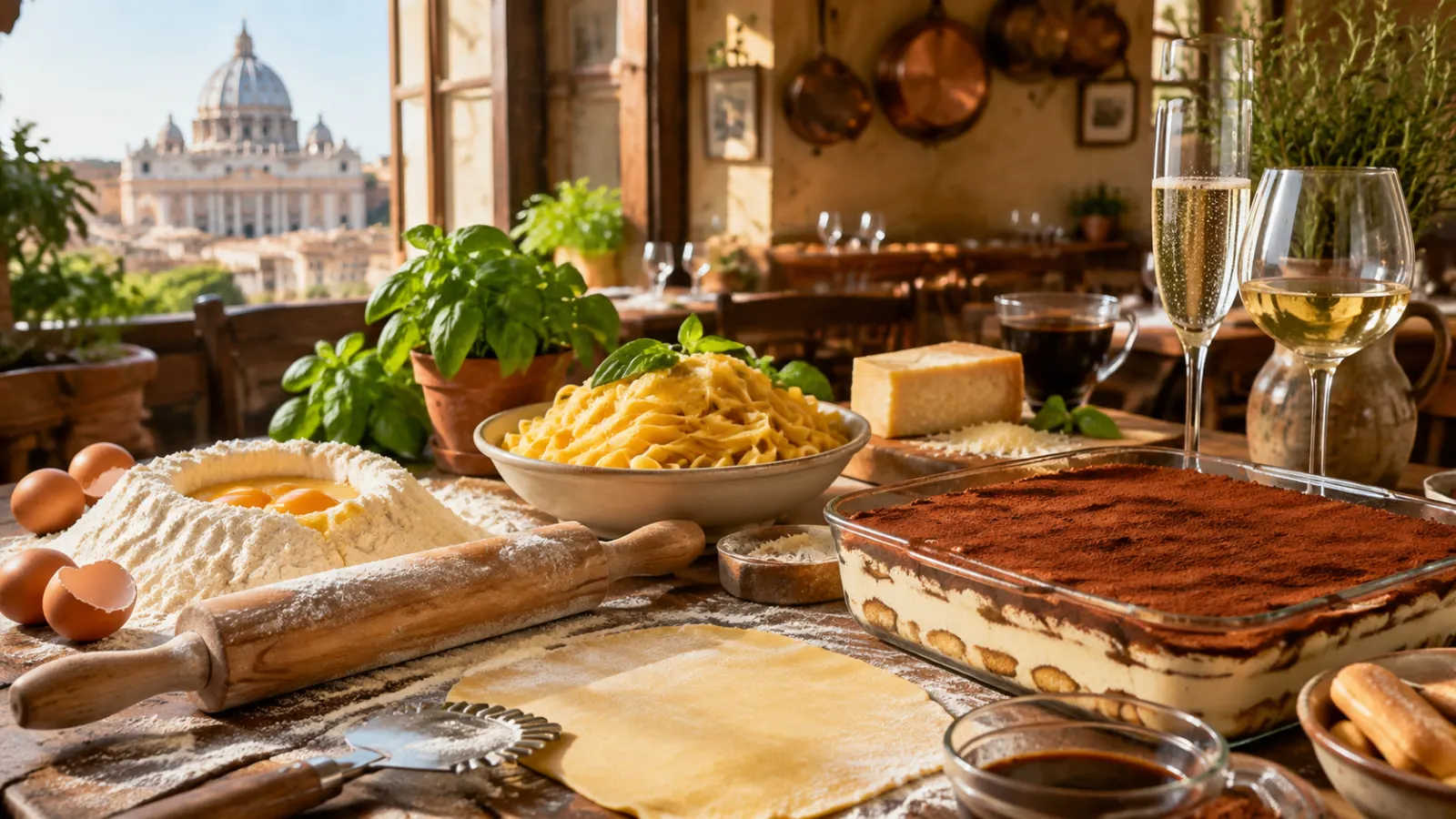
You are handed an apron and a mound of flour, and within ten minutes your hands are covered to the wrist.
The class runs in a working restaurant kitchen in Prati — the calm grid of streets behind the Vatican walls where Roman families actually live, and where nobody is performing Italy at you. The chef talks with his hands, reaches over to fix the well you have made in the flour, and tells you, correctly, that the dough needs another five minutes of pushing.
You make fresh egg pasta from scratch, usually a long cut and a stuffed shape, and then tiramisu, which is far easier than it looks and depends almost entirely on not over-whipping the mascarpone.
- Time to allow: 3 hours
- Hours: 09:00–22:00 (open daily)
- Address: Prati, near the Vatican Museums, 00192 Rome
- Nearest transport: Metro Cipro · 3 min walk (A)
- Several classes a day; morning and evening slots fill first
- The exact venue is confirmed by email after booking — all are in Prati
- Vegetarian and vegan versions on request
- Around 2.5–3 hours including the meal
Local tips
- Book the evening slot and treat it as dinner — you eat what you cook
- Come hungry; what lands on the table is a full meal, not a tasting
- Pair it with the Vatican Museums the same day, museums first
- Ask the chef which flour he uses; the answer will change your pasta at home
- Wine keeps coming, so leave the afternoon after it free
Trastevere Food & Wine Walking Tour
Trastevere means "across the Tiber", and for most of Rome's history that is exactly what it was — the other side, where the dockworkers, the tanners and the foreign traders lived, outside the city proper.
It is still the part of Rome that eats latest and loudest.
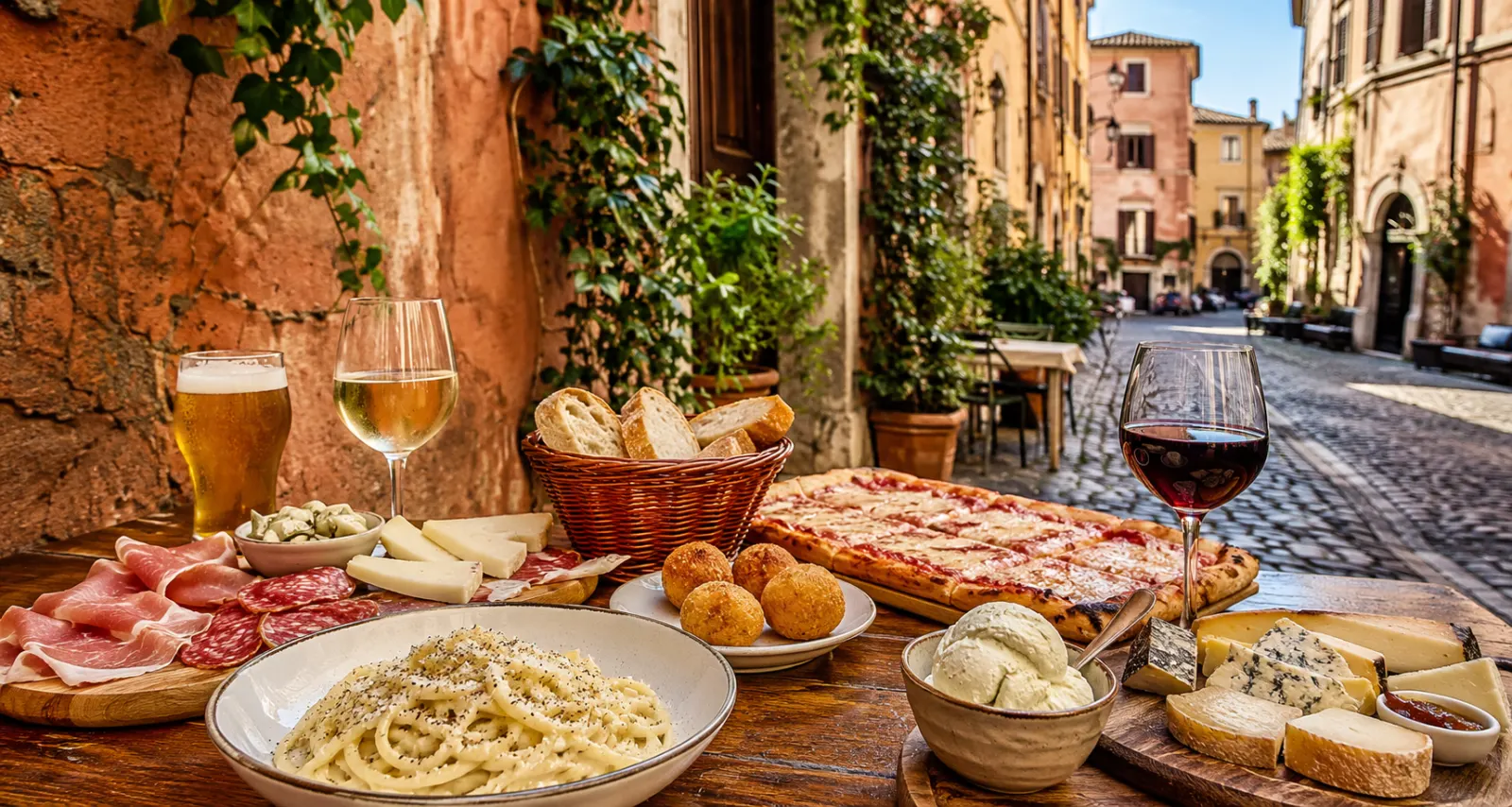
A guide walks a small group through the lanes between Viale di Trastevere and the river, stopping at the places locals actually queue for: a bakery working the same oven since before the war, a salumeria where the prosciutto is cut by hand, a cheese counter, a fried-artichoke bar, a gelateria that makes its own pistachio. Ten or more tastings, with wine at nearly every stop.
The point is not the quantity, although you will not need dinner afterwards. It is that somebody finally explains what you are eating — why the pecorino here is sharper than anywhere else, why cacio e pepe has three ingredients and still goes wrong, what a supplì actually is.
- Time to allow: 3 hours
- Hours: 16:00–22:00 (open daily)
- Address: Piazza Mastai, 00153 Rome
- Nearest transport: Bus stop Induno · 4 min walk (75)
- Runs in the late afternoon and evening; groups stay small
- Come hungry — this replaces dinner rather than precedes it
- Tell them about allergies when you book, not on the day
- About 3 hours, all on foot and mostly flat
Local tips
- Wear shoes you can walk cobbles in for three hours
- Ask the guide where they eat on their own night off — they always answer
- Do not fill up at the first stop; the best plate is usually the fourth
- Stay on afterwards for a drink in Piazza Santa Maria in Trastevere
- Take the later slot; the evening light in these lanes is the reason
Pasta & Limoncello Class by the Pantheon
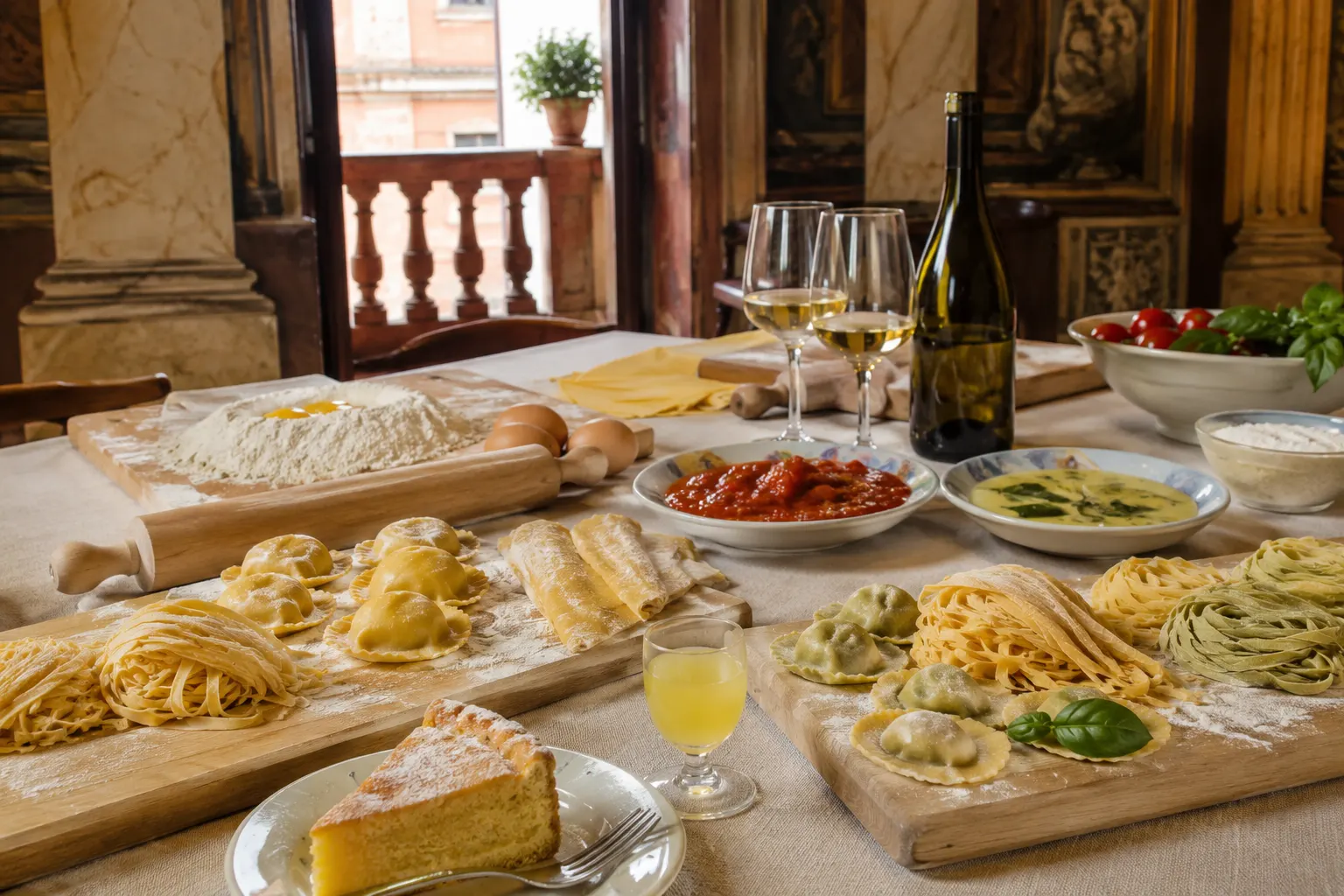
Via della Gatta is a street you would walk past twice. It takes its name from a small marble cat sitting on a cornice above the doorways, Roman, probably first century, looking down at the traffic with total indifference.
Underneath the cat, a kitchen.
The class is three hours and three shapes — usually a long cut, a stuffed one and something short — made entirely by hand, with no machine doing the interesting part. Flour goes on the table, eggs go into the well in the middle, and the chef will not let you get away with a dough that has not been worked long enough.
Then everyone sits and eats all of it, with Tuscan wine, and finishes with dessert and a glass of very cold limoncello.
- Time to allow: 3 hours
- Hours: 10:00–22:00 (open daily)
- Address: Via della Gatta 14, 00186 Rome
- Nearest transport: Bus stop Largo di Torre Argentina · 4 min walk (40,64)
- Classes at lunchtime and in the evening; three hours with the meal
- Vegetarian and gluten-free versions if you ask when booking
- Children are welcome and get a station of their own
- Look for the marble cat above the door — that is the address
Local tips
- Take the evening class and let it be your dinner
- The Pantheon is ninety seconds away — go just before, when the light drops
- Ask for the filling recipe; that is the one you will actually make again
- Do not skip the limoncello, it is house-made and served properly cold
- Book two days ahead in spring and autumn; this one fills up
Rome by Night E-Bike Tour
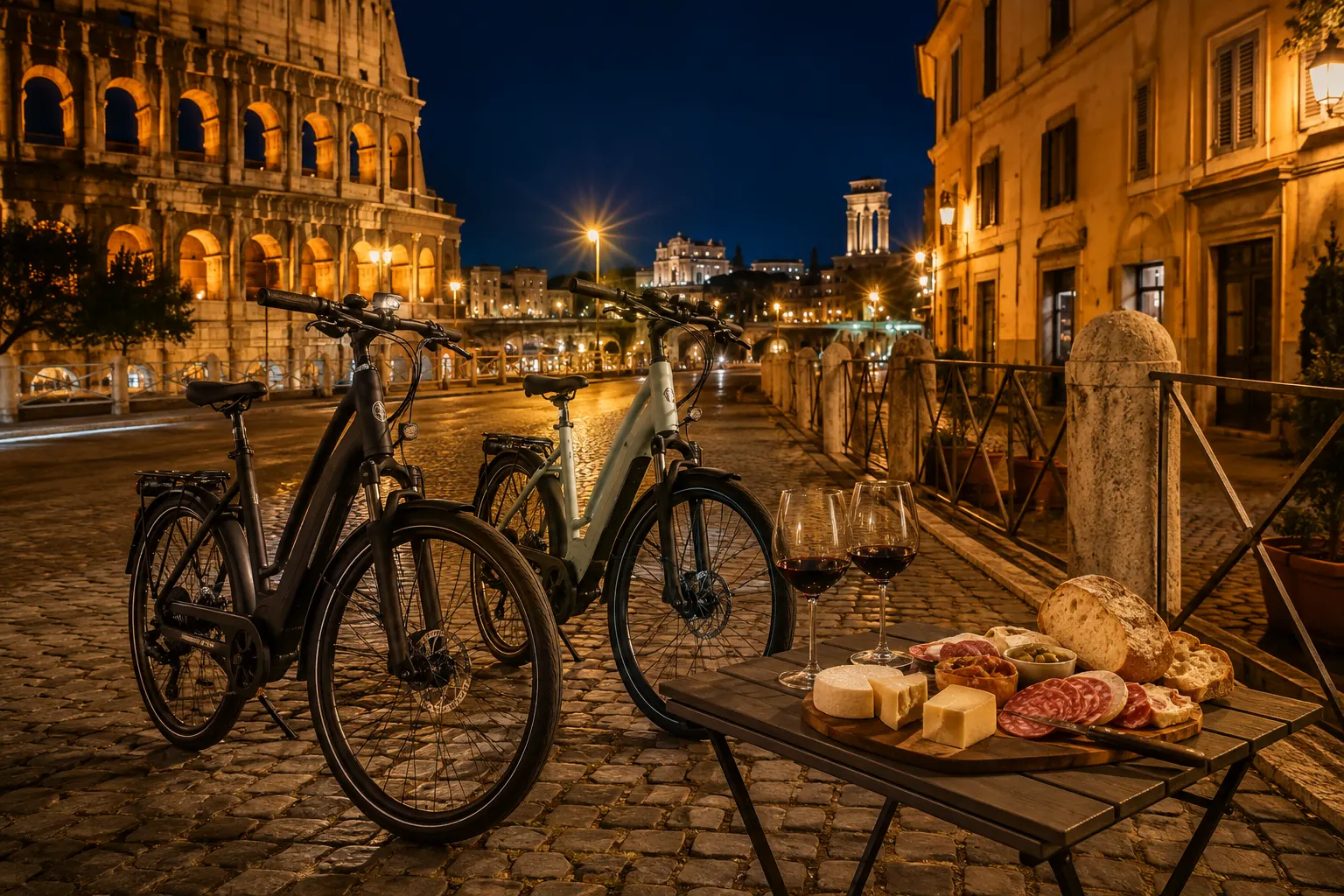
Rome at night is a different city, and the difference is not the lighting. It is that the traffic stops.
The tour leaves after dark in a small group on electric bikes, which matters here, because Rome is built on seven hills and not one of them is gentle. The motor takes the hills. You get the view.
You ride the length of the Circus Maximus with the Palatine lit up above you, cross to the Aventine, come back along the Tiber embankments, and stop in piazzas that are empty for the first time all day — the Colosseum with nobody queuing in front of it, the Trevi Fountain lit and, for once, breathable, the dome of St Peter's at the end of a dark street.
- Time to allow: 3 hours
- Hours: 18:00–23:00 (open daily)
- Address: Via Antonio Rosmini 22, 00184 Rome
- Nearest transport: Metro Termini · 5 min walk (A,B)
- Localada perk: 5% OFF – Small-group night ride with food and wine — book below
- Evening departures only; bike, helmet and lights are provided
- You need to be able to ride a bike — no e-bike experience needed
- Some cobbled stretches; the bikes handle them, but hold on
- About 3 hours, with a stop for food and wine
Local tips
- Take the earlier slot in summer, the later one in spring and autumn
- Bring a light jacket — you cool down fast on the descents
- Ask to stop on the Aventine; the whole city is laid out from there
- Let the motor take the hills, nobody is judging you
- Wear something with pockets so both hands stay on the bars
Day Trip: Pompeii & Mount Vesuvius
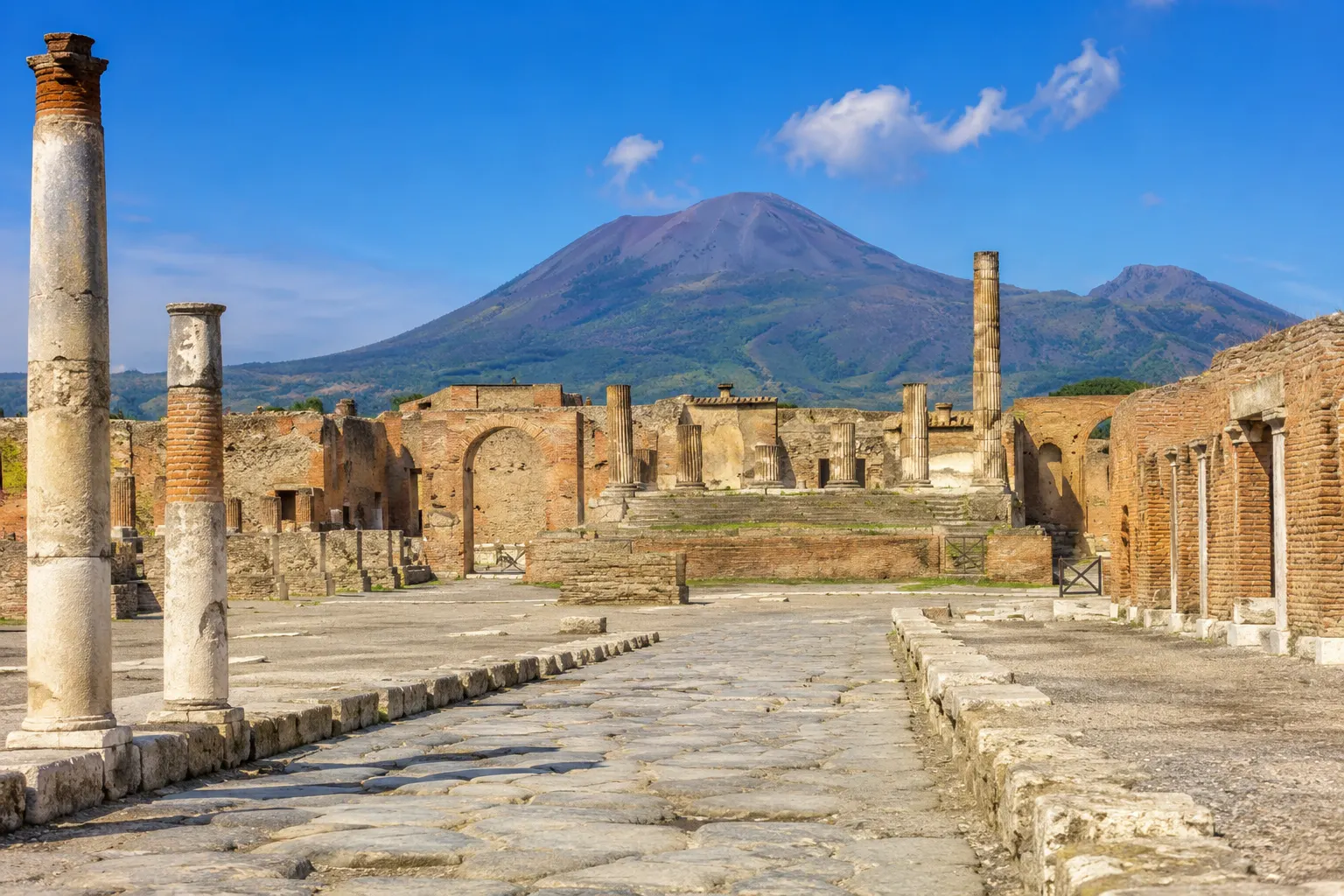
On the 24th of August in the year 79 — or possibly in October, the sources disagree — Vesuvius put a column of ash more than thirty kilometres into the sky above the Bay of Naples, and then let it fall.
Pompeii was a working town of perhaps twelve thousand people. Wine bars with ring marks on the counters. Election slogans painted on house walls. A bakery with the loaves still in the oven.
It was buried, not destroyed. That distinction is the whole reason to go.
You walk streets with cart ruts cut deep into the paving, past a laundry, a bath house, a theatre and a covered market, and you keep noticing things that have no business having survived: a dog on a mosaic floor, a scratched complaint about a girl, a stack of amphorae left exactly where someone put them down.
- Time to allow: a full day
- Hours: 07:00–20:00 (open daily)
- Address: Piazza del Popolo 12, 00187 Rome — departure point
- Nearest transport: Metro Flaminio · 3 min walk (A)
- Localada perk: 5% OFF – Full-day guided trip with transport — book below
- Leaves early and returns in the evening — count on the whole day
- Bring water, a hat and shoes for uneven stone; there is little shade
- The Vesuvius option is a 30-minute climb on loose gravel
- Your exact meeting point is on the booking voucher
Local tips
- Sit on the right on the way down for the coast views
- Start at the Forum and work east; the crowds move the other way
- The plaster casts are in the Granai del Foro — easy to walk straight past
- Eat before you board rather than at the site cafeteria
- Charge your phone the night before; it is a long, photo-heavy day
Day Trip: Tivoli — Villa d'Este & Hadrian's Villa
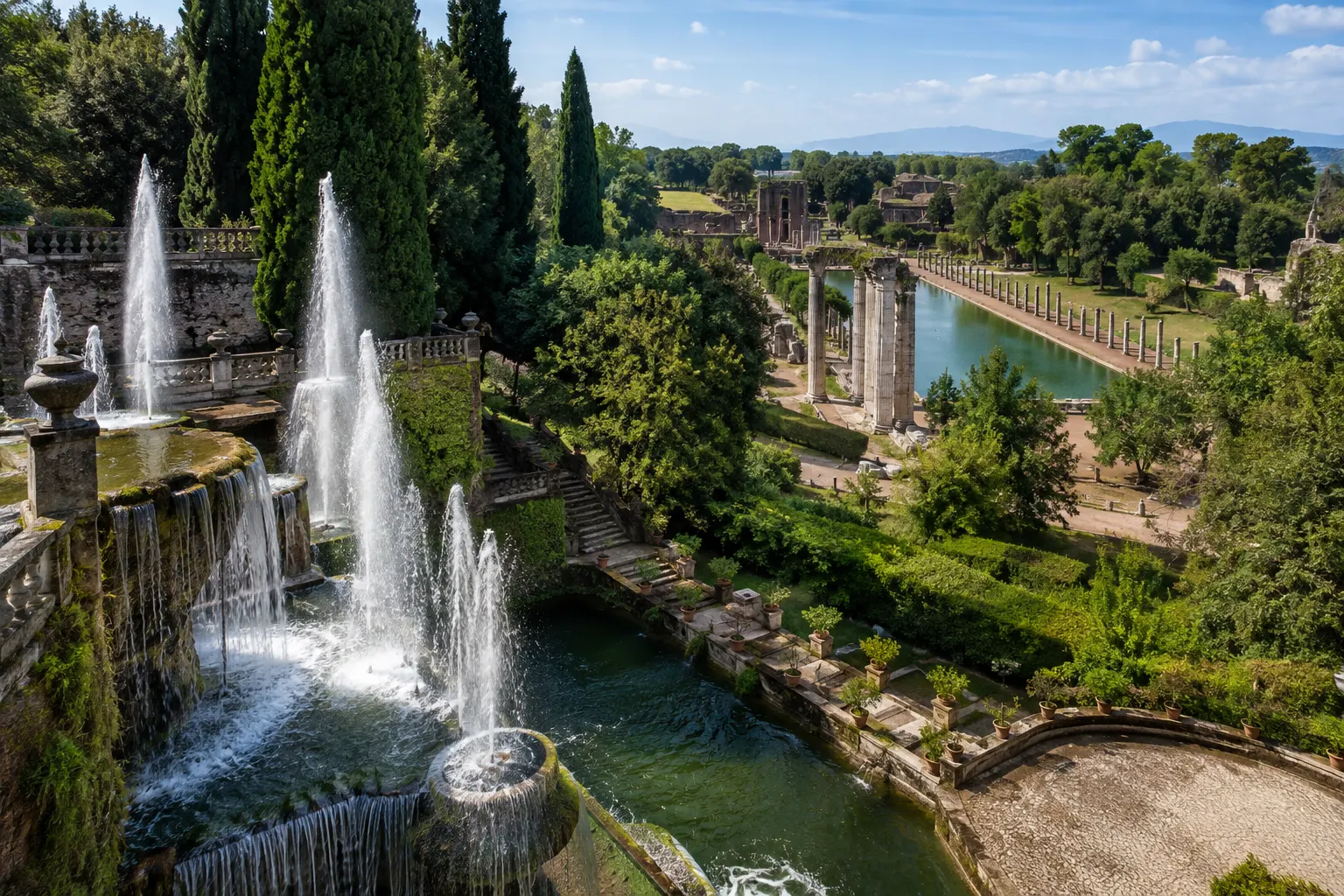
Thirty kilometres east of Rome, in the hills where Romans have always gone to escape their own summer, stand two of the most extravagant private houses ever built.
Hadrian's Villa is the older and by far the stranger. The emperor spent his reign travelling, then built, across a hundred and twenty hectares, quotations of everything he had seen — an Egyptian canal, a Greek portico, a domed pavilion on an island in its own circular moat, reached by drawbridge, where he went to be alone. It is less a villa than a small private state.
Villa d'Este is fourteen centuries younger and pure display. A cardinal who failed to become pope diverted a river through the hillside beneath his house and spent the rest of his life spending it: five hundred fountains, one of them a water organ that still plays, all of it running on gravity alone, without a single pump.
- Time to allow: a full day
- Hours: 08:00–18:00 (open daily)
- Address: Viale Castro Pretorio, 00185 Rome — departure point
- Nearest transport: Metro Castro Pretorio · 2 min walk (B)
- Localada perk: 5% OFF – Guided day trip with transport and entry — book below
- A full day; the two villas are several kilometres apart
- Hadrian's Villa is largely unshaded — go early in summer
- Villa d'Este is stairs and slopes from top to bottom
- The water organ plays every two hours from 10:30
Local tips
- Do Hadrian's Villa first, while your legs are still fresh
- At Villa d'Este go straight down to the Avenue of a Hundred Fountains
- The Oval Fountain has a walkway behind the water — most people miss it
- Tivoli's old town is worth twenty minutes if the timing allows
- Go on a bright day; both places are really about light on water
Rome travel guides on the Localada blog
Rome audio guide: frequently asked questions
Is the Rome audio guide free?
Yes. Localada’s Rome guide is free: create a free account and open it in your browser, no app download needed. It includes 34 stops, audio and written stories, a route map and scam-awareness tips. Tickets for paid sights are bought separately; booking through Localada’s GetYourGuide links gives 5% off.
How many stops are in the Rome audio guide?
There are 34 stops: 16 sights, 6 places to eat, 5 shops and 7 experiences.
How long does it take to see the main sights in Rome?
Visiting all 16 sights in the guide takes about 16.5–22.5 hours, not counting travel between them. The Colosseum needs the most time (allow 2–3 hours).
Which Rome sights are closed on certain days?
1 of the 16 sights have a weekly closing day: The Vatican Museums & Sistine Chapel (closed Sunday). Plan these for another day of the week.
What time do Rome sights open and close?
The earliest opening in the guide is 07:00 (St Peter’s Basilica & Square) and the latest closing is 20:00 (Santa Maria in Trastevere). Each stop’s hours are in the table above.
Are there discounts with the Rome guide?
17 stops include a Localada perk, for example The Colosseum (5% OFF), The Vatican Museums & Sistine Chapel (5% OFF), St Peter’s Basilica & Square (5% OFF), The Pantheon (5% OFF), The Trevi Fountain (5% OFF) and Roman Forum & Palatine Hill (5% OFF). Show the code in the guide at verified restaurants and shops; ticket discounts are applied at GetYourGuide checkout.
What can I do in Rome on a rainy day?
7 stops in the guide are indoors, including The Vatican Museums & Sistine Chapel, St Peter’s Basilica & Square, Capitoline Museums & Piazza del Campidoglio, Basilica of Santa Maria Maggiore, Santa Maria in Trastevere and The Capuchin Crypt.
What is open in the evening in Rome?
These stops in the guide stay open late: La Taverna dei Fori Imperiali (until 23:00), Terrazza Borromini (until 00:00), Trapizzino at Piazza Trilussa (until 01:00), Pasta & Tiramisu Class by the Vatican (until 22:00), Trastevere Food & Wine Walking Tour (until 22:00) and Pasta & Limoncello Class by the Pantheon (until 22:00).
Which Rome sights can I see if I am short on time?
These sights need under an hour: The Trevi Fountain (20–30 min), Piazza Navona (30–45 min), The Spanish Steps & Piazza di Spagna (30–45 min), Santa Maria in Trastevere (30–45 min) and The Mouth of Truth & Santa Maria in Cosmedin (20–30 min).
How do I get between the stops in Rome?
The Rome stops are spread across the city, so the guide lists the nearest metro, tram or train station for each one.
Which languages is the Rome audio guide available in?
Narration and text are available in 15 languages: English, Turkish, German, French, Spanish, Italian, Portuguese, Dutch, Polish, Russian, Arabic, Persian, Chinese, Japanese and Korean.