















Localada’s free Athens audio guide covers 16 stops: 7 sights, 2 places to eat, 2 shops and 5 experiences, narrated in 15 languages. Seeing all 7 sights takes roughly 9.5–12 hours of visiting time, before travel between them. 12 of the 16 stops come with a Localada perk, such as 5% off GetYourGuide tickets or a discount at a verified local restaurant or shop.
Opening hours, perks and visit times below come from the live Localada app and were last checked on 30 October 2026. Always confirm on the day: hours can change for holidays and prayer times.
Athens audio guide stops at a glance
| # | Stop | Type | Time to allow | Hours | Closed | Today | Nearest transport | Localada perk |
|---|---|---|---|---|---|---|---|---|
| 1 | The Acropolis & the Parthenon | Monument | 2–3 hours | 08:00–19:00 | — | — | Akropoli · M2 · 8 min walk | 5% OFF |
| 2 | The Acropolis Museum | Museum | 1–2 hours | 09:00–17:00 | — | — | Akropoli · M2 · 2 min walk | 5% OFF |
| 3 | The Ancient Agora & the Temple of Hephaestus | Ruins | 1.5–2 hours | 08:00–19:00 | — | — | Monastiraki · M1 · M3 · 5 min walk | 5% OFF |
| 4 | The Temple of Olympian Zeus & Hadrian's Arch | Ruins | 1 hour | 08:00–19:00 | — | — | Akropoli · M2 · 4 min walk | 5% OFF |
| 5 | The National Archaeological Museum | Museum | 2 hours | 09:00–16:00 | — | — | Viktoria · M1 · 7 min walk | 5% OFF |
| 6 | The Roman Agora & the Tower of the Winds | Ruins | 1 hour | 08:00–19:00 | — | — | Monastiraki · M1 · M3 · 4 min walk | 5% OFF |
| 7 | Kerameikos | Ruins | 1 hour | 08:00–19:00 | — | — | Kerameikos · M3 · 6 min walk | 5% OFF |
| 8 | Athens Street Food Tasting | Food tour | 3–4 hours | 09:00–19:00 | — | — | Monastiraki · M1 · M3 · at the square | 5% OFF |
| 9 | Varvakios Market & Greek Cooking Class | Cooking class | 4 hours | 09:00–18:00 | Sunday | — | Monastiraki · M1 · M3 · 7 min walk | 5% OFF |
| 10 | Greek Night: Dinner, Theatre & Music | Dinner show | 3 hours | 18:00–23:30 | — | — | Monastiraki · M1 · M3 · 6 min walk | 5% OFF |
| 11 | Wine O'Clock — Greek Wine Tasting | Wine tasting | 2 hours | 12:00–22:00 | Sunday | — | Syntagma · M2 · M3 · 5 min walk | 5% OFF |
| 12 | The Sandal Maker's Workshop | Workshop | 2 hours | 10:00–19:00 | Sunday | — | Monastiraki · M1 · M3 · 5 min walk | 5% OFF |
| 13 | Diporto Agorasi | Restaurant | — | 08:00–19:00 | Sunday | — | Monastiraki · M1 · M3 · 8 min walk | — |
| 14 | Mani Mani | Restaurant | — | 13:00–23:00 | Monday | — | Akropoli · M2 · 4 min walk | — |
| 15 | Forget Me Not | Shop | — | 10:00–21:00 | — | — | Monastiraki · M1 · M3 · 5 min walk | — |
| 16 | Mastihashop | Shop | — | 09:00–20:00 | Sunday | — | Syntagma · M2 · M3 · 3 min walk | — |
How much time do you need in Athens?
- Highlights only (about 4.5–7 hours): The Acropolis & the Parthenon, The Acropolis Museum and The Ancient Agora & the Temple of Hephaestus.
- Every sight in the guide (about 9.5–12 hours): all 7 sights in route order; split across 2 days at a comfortable pace.
- Add food, shopping and experiences: 9 more stops, from verified restaurants to workshops and shows, listed below.
Sights in the Athens audio guide
The Acropolis & the Parthenon
Full The Acropolis & the Parthenon audio guide →
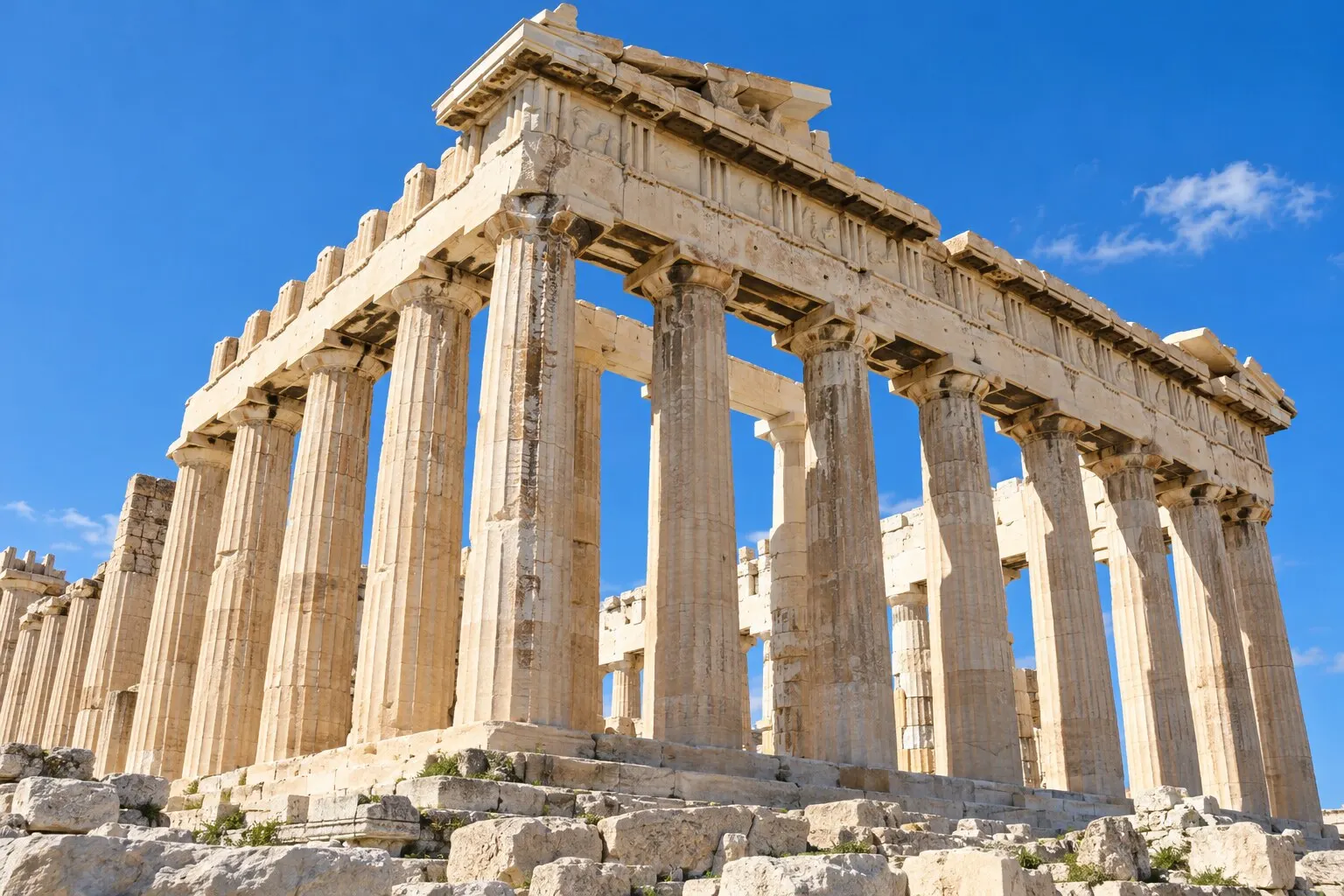
Nothing up here is straight.
The Parthenon has no truly vertical column and no truly flat step. The platform swells upward in the middle by about eleven centimetres. The columns lean slightly inwards and bulge a third of the way up. Every one of these is deliberate — corrections for the way a perfectly straight building looks sagging and thin from a distance. If the columns continued upward they would meet somewhere above a kilometre in the air.
It was built in fifteen years, which is fast even now, and paid for with money collected from other Greek cities for a war against Persia. Several of them said so loudly at the time.
The building has been a temple to Athena, a church, a mosque, and an ammunition store. That last one ended in 1687 when a Venetian shell found the gunpowder and blew the middle out of it. Most of what is missing went that night.
- Time to allow: 2–3 hours
- Hours: 08:00–19:00 (open daily)
- Address: Acropolis, Athens 105 58
- Nearest transport: Akropoli · M2 · 8 min walk (M2 · M3)
- Localada perk: 5% OFF – Guided tour of the Acropolis, Parthenon and Museum — book below
- One entry route up and one down; the marble steps are worn smooth and slippery. There is no shade on the rock. Bags larger than a small daypack are not allowed. The combined heritage ticket also admits you here. Last entry is well before closing.
Local tips
- Go at opening or in the last two hours — the middle of the day on the rock is brutal.
- Use the south-east entrance near the Acropolis Museum; the main gate queue is always longer.
- Take water; there is one fountain and no shade.
- Shoes with grip, not sandals — the marble is polished by three million feet a year.
- The Areopagus rock below is open at all hours and gives the best view back up.
The Acropolis Museum
Full The Acropolis Museum audio guide →
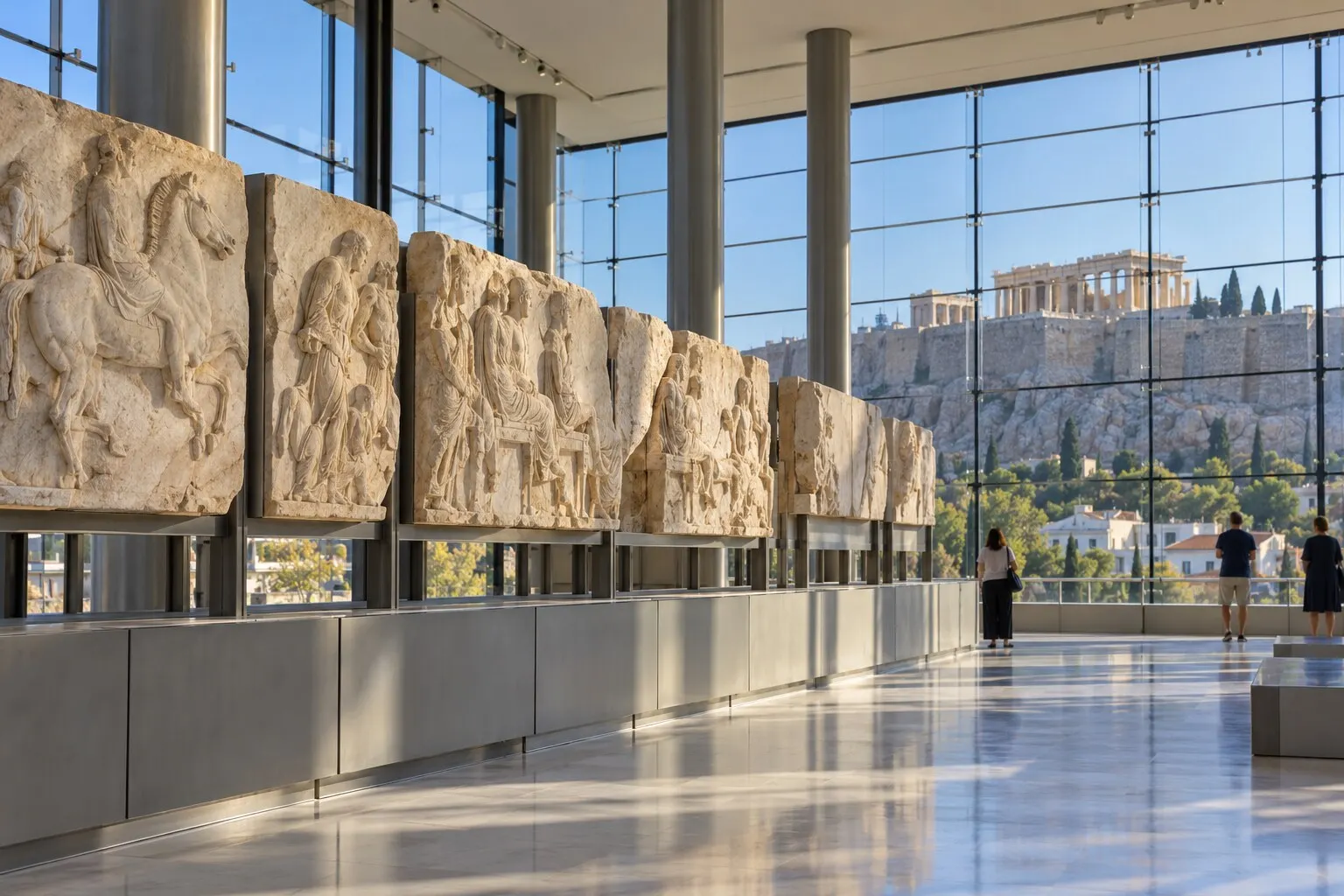
The top floor is the argument.
It is a glass gallery set at the exact angle of the Parthenon, the same size as the temple's outer wall, so the sculptures can be hung in the order and orientation they were carved for. Stand in the middle and the Acropolis is through the window, four hundred metres away.
About half the frieze is missing. Those pieces were removed between 1801 and 1812 and are in London. The museum does not hide the gap: where an original is absent a plain white plaster cast stands in its place, and the colour difference down the length of the gallery is the point being made.
Greece asked for them back in 1983 and has asked at intervals ever since. The building you are standing in was part of the argument — for years the counter-case was that Athens had nowhere suitable to put them.
- Time to allow: 1–2 hours
- Hours: 09:00–17:00 (open daily)
- Address: Dionysiou Areopagitou 15, Athens 117 42
- Nearest transport: Akropoli · M2 · 2 min walk (M2)
- Localada perk: 5% OFF – Acropolis Museum entry ticket — book below
- A one-way route rising through three floors; the Parthenon Gallery is at the top. Photography is allowed except in the Archaic gallery. The excavation under the entrance is included. Open late on Fridays.
Local tips
- Start at the top floor and work down — everyone else does the opposite.
- The glass floor at the entrance is worth five minutes on its own; look straight down.
- Friday evening is the quietest and the light through the gallery is at its best.
- The second-floor restaurant has an Acropolis view and a balcony almost nobody uses.
- Come here after the rock, not before — the sculptures make more sense once you have seen where they stood.
The Ancient Agora & the Temple of Hephaestus
Full The Ancient Agora & the Temple of Hephaestus audio guide →
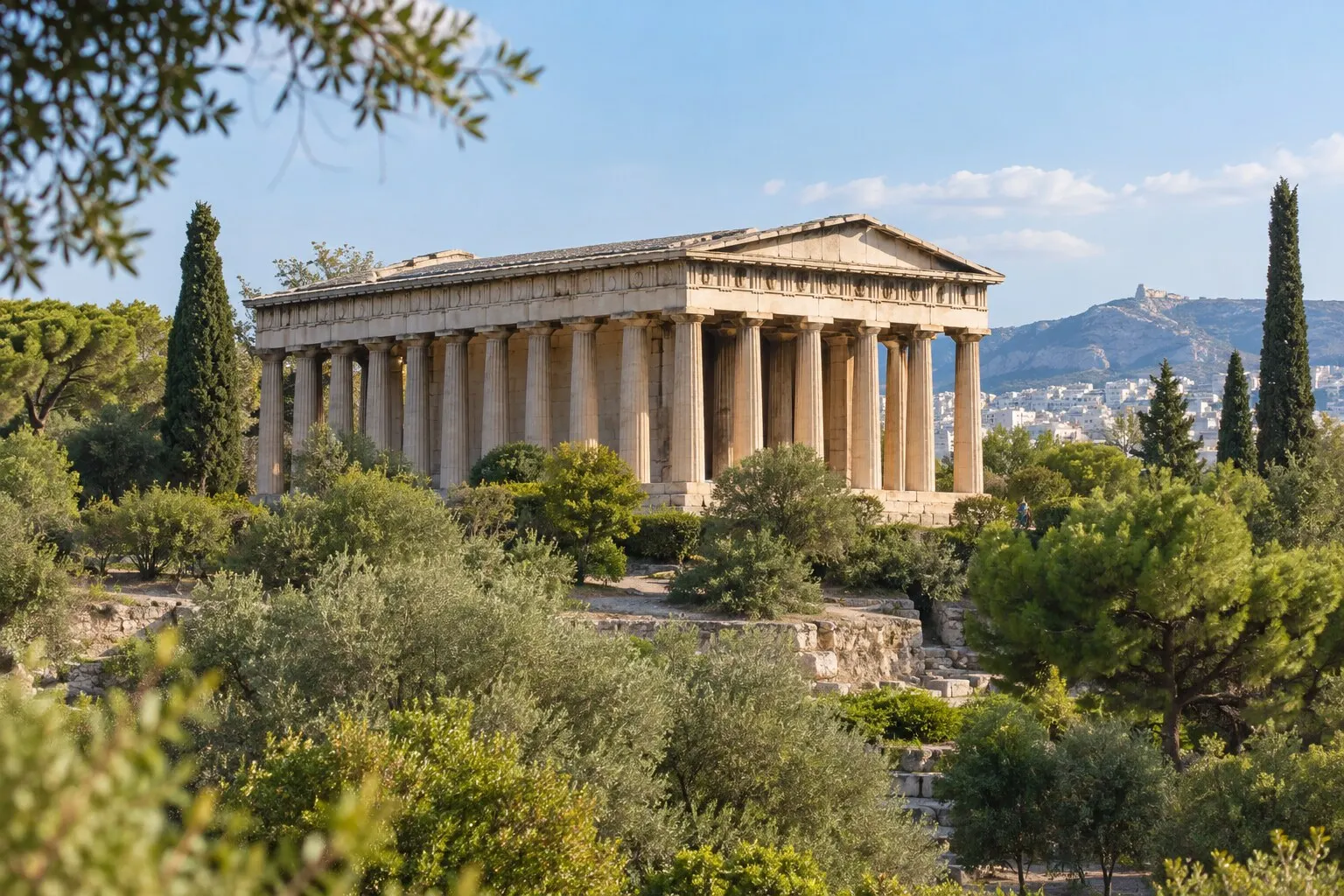
Everyone looks up at the Acropolis. The city actually happened down here.
This was the marketplace, the law court, the mint, the place where juries of five hundred citizens were chosen by a stone machine that randomised the selection. Socrates argued in this square and was condemned somewhere near it. Democracy, as a working daily routine rather than an idea, was done on this ground.
At the top of the slope stands the Temple of Hephaestus, and it is almost entirely intact — roof, columns, pediments. It survived because it spent thirteen centuries as a Christian church, which meant somebody kept the rain out. The Parthenon got the fame; this one got the maintenance.
- Time to allow: 1.5–2 hours
- Hours: 08:00–19:00 (open daily)
- Address: Adrianou 24, Athens 105 55
- Nearest transport: Monastiraki · M1 · M3 · 5 min walk (M1 · M3)
- Localada perk: 5% OFF – Guided tour of the Acropolis and the Ancient Agora — book below
- Large open site with little shade and uneven gravel paths. The Stoa of Attalos houses the museum and is air-conditioned. Entry is included in the combined heritage ticket. The site closes earlier in winter.
Local tips
- Enter from Adrianou street at the north — the Monastiraki gate funnels the crowds.
- The Temple of Hephaestus is a ten-minute climb and the least crowded corner of the site.
- The Stoa museum is the place to cool down in summer.
- Look for the kleroterion in the museum — the stone slab that picked juries at random.
- Morning light is better here; the afternoon sun comes straight down the slope.
The Temple of Olympian Zeus & Hadrian's Arch
Full The Temple of Olympian Zeus & Hadrian's Arch audio guide →
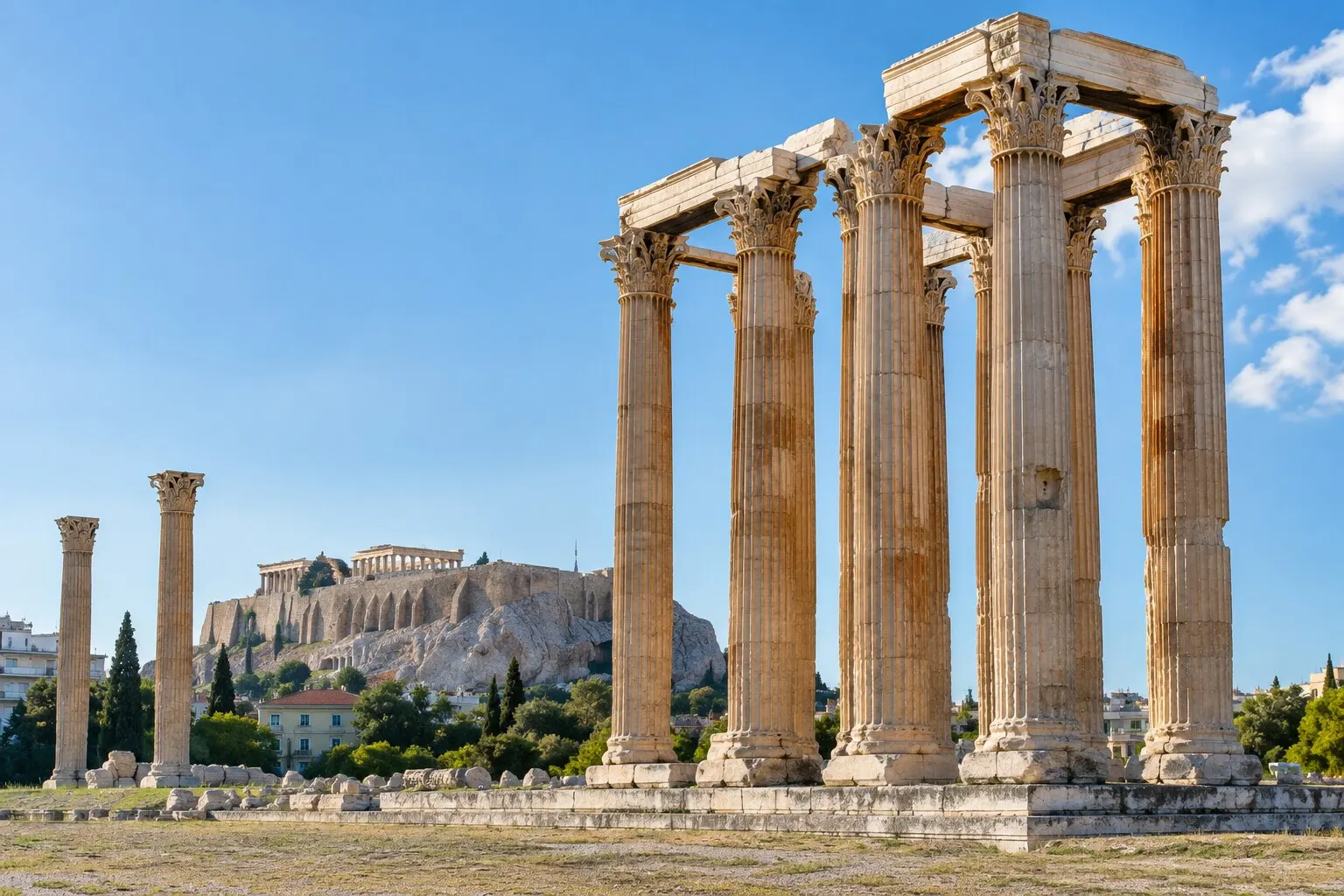
Fifteen columns stand. There were a hundred and four.
Construction started in 515 BC under a tyrant who wanted the largest temple in the Greek world. He was overthrown and the work stopped. It stayed a half-built ruin for three centuries. A Syrian king restarted it, then he died. The Romans looted the finished columns for buildings in Rome. Finally the emperor Hadrian completed it in AD 131, six hundred and thirty-eight years after the first stone.
Inside he put a colossal gold and ivory Zeus, and beside it an equally large statue of himself.
An earthquake brought most of it down in the medieval period and the marble was burned for lime. One column lies where it fell in a storm in 1852, broken into drums like a stack of coins, and it is the most useful thing on the site: you can see how the blocks were cut and pinned.
- Time to allow: 1 hour
- Hours: 08:00–19:00 (open daily)
- Address: Vasilissis Olgas Avenue, Athens 105 57
- Nearest transport: Akropoli · M2 · 4 min walk (M2 · 1)
- Localada perk: 5% OFF – Combined ticket for the Acropolis and the heritage sites — book below
- Open site, no shade, gravel underfoot. Entry is included in the combined heritage ticket, which also covers the Roman Agora and Kerameikos. The arch stands outside the fence and can be seen from the pavement.
Local tips
- Twenty minutes is enough inside; the arch takes five from the street.
- Late afternoon light turns the columns orange and the site is almost empty then.
- Read both sides of the arch — the inscriptions contradict each other on purpose.
- The fallen column is the best thing here; walk to the far corner for it.
- The National Garden next door is shaded and free to walk through.
The National Archaeological Museum

This is the deepest collection of Greek antiquity anywhere, and it is in a neighbourhood most visitors never walk to.
The gold mask came out of a shaft grave at Mycenae in 1876. The man who found it, Heinrich Schliemann, is said to have announced he had gazed on the face of Agamemnon. He had not. The mask is about three hundred years older than any plausible Trojan War, and some archaeologists still argue he improved it with a modern beard.
In room 15 stands a bronze god, over two metres tall, arm drawn back to throw something that is no longer there. If it was a thunderbolt he is Zeus; if a trident, Poseidon. The object was never found. Two centuries of argument rest on a missing hand-sized piece of metal.
- Time to allow: 2 hours
- Hours: 09:00–16:00 (open daily)
- Address: 28is Oktovriou 44, Athens 106 82
- Nearest transport: Viktoria · M1 · 7 min walk (M1 · M2 · 5)
- Localada perk: 5% OFF – National Archaeological Museum ticket with audio — book below
- Very large; the ground floor alone is 8,000 square metres. Rooms are numbered but the route is not one-way. Bags go in the cloakroom. The Antikythera mechanism is on the upper floor, easy to miss.
Local tips
- Two hours is the honest minimum; four is possible if you like this sort of thing.
- Go straight to rooms 3 to 6 for the Mycenaean gold, then room 15 for the bronze god.
- The Antikythera mechanism is upstairs and most people never find it — ask at the desk.
- The courtyard café is a good quiet break halfway through.
- Exarchia around the museum is lively and perfectly fine by day.
The Roman Agora & the Tower of the Winds
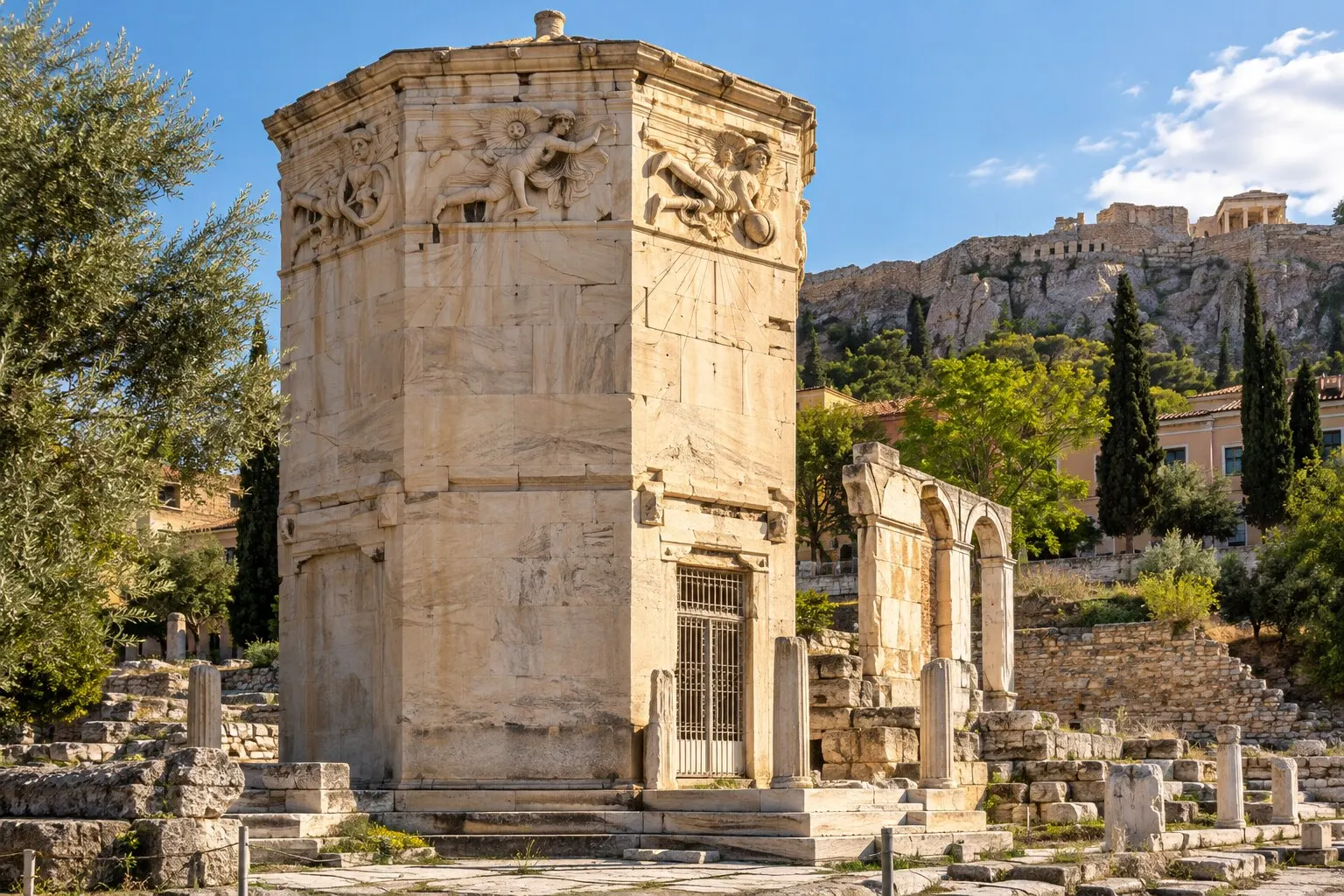
The octagonal marble tower in the corner is the oldest surviving weather station in the world.
Each of its eight faces carries a carved relief of a wind — Boreas from the north with a conch shell, Zephyros from the west scattering flowers, Lips from the south-west holding a ship's ornament. Below each relief is a sundial. Inside was a water clock, fed by a stream from the Acropolis slope, so the time could still be told when the sun was behind cloud.
A bronze weathervane in the shape of Triton turned on the roof and pointed at whichever wind was blowing. It is long gone.
The tower outlasted everything around it by being useful. It became a Christian baptistery, then a Sufi lodge under Ottoman rule, where dervishes held ceremonies under the sundials for two hundred years. The floor inside is still worn in a circle.
- Time to allow: 1 hour
- Hours: 08:00–19:00 (open daily)
- Address: Pelopida and Aiolou, Athens 105 55
- Nearest transport: Monastiraki · M1 · M3 · 4 min walk (M1 · M3)
- Localada perk: 5% OFF – Combined ticket for the Acropolis and the heritage sites — book below
- Small, compact site — much of it is visible from the surrounding streets. Entry is included in the combined heritage ticket. The tower interior opens separately and not every day. Uneven marble underfoot.
Local tips
- Walk the outside first — you can see the whole site from the railing on Aiolou street.
- Stand at the north-east corner for the two best-preserved wind reliefs.
- Combine it with the Agora; the two are eight minutes apart.
- The Fethiye Mosque on the north side opens for exhibitions and is usually empty.
- Early morning here is genuinely quiet, which is rare in Plaka.
Kerameikos
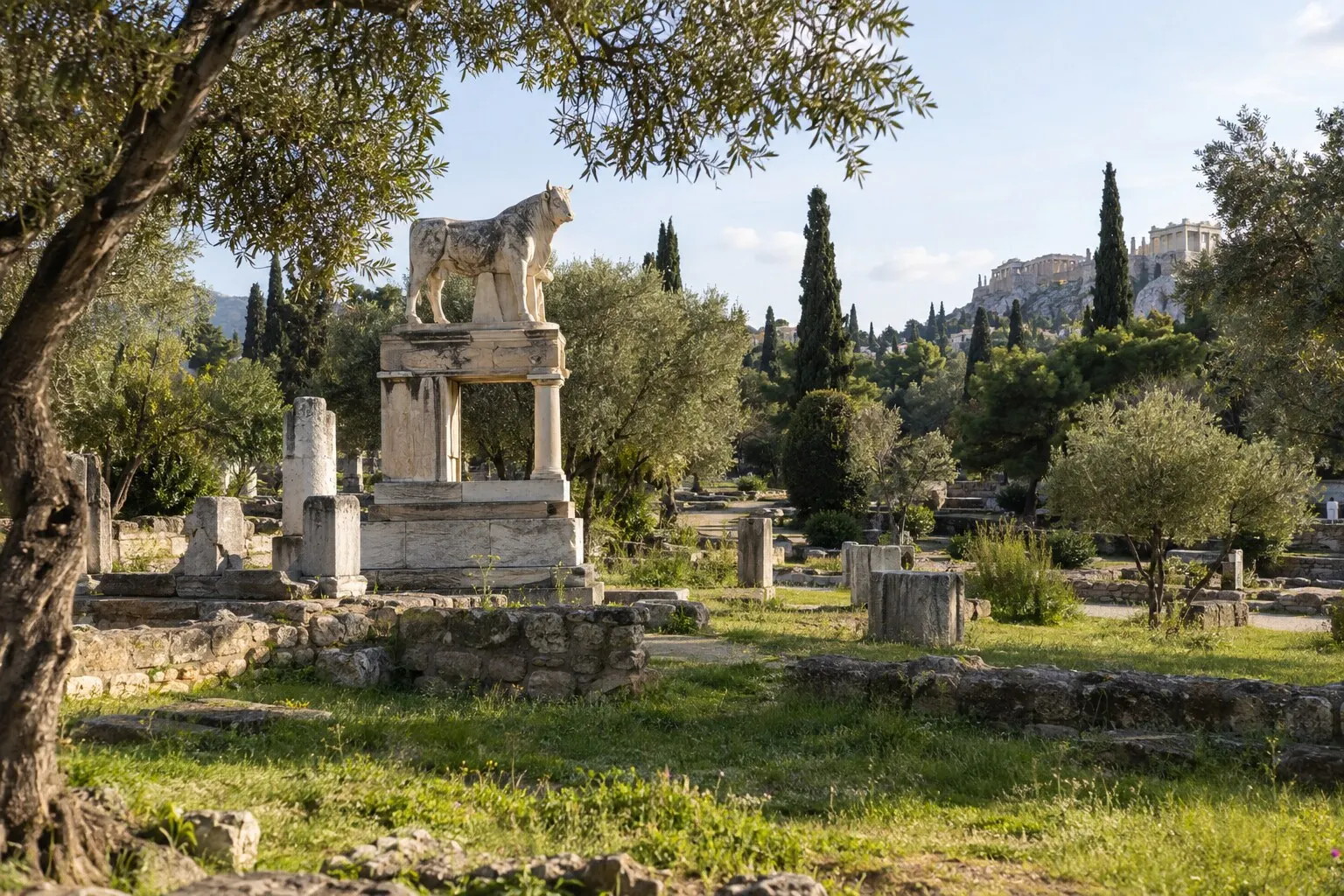
This was the potters' quarter, and then it was the graveyard, and the two facts are connected: the clay that made the pots came from the riverbank here.
For a thousand years Athens buried its dead along this road. The grave markers that survive are extraordinary — a bull carved in marble, a young man taking leave of his family, a woman choosing jewellery from a box held by a servant. Most are casts; the originals are in the site museum fifty metres away and worth the walk.
Two roads leave the city here through the old wall. One goes to the port. The other, the Sacred Way, went to Eleusis, and the initiates of the mystery cult walked it once a year carrying torches.
- Time to allow: 1 hour
- Hours: 08:00–19:00 (open daily)
- Address: Ermou 148, Athens 105 53
- Nearest transport: Kerameikos · M3 · 6 min walk (M3 · M1)
- Localada perk: 5% OFF – Combined ticket for the Acropolis and the heritage sites — book below
- Low-lying, green and often damp underfoot; parts flood after rain. Entry is included in the combined heritage ticket, and the site museum is included with it. Shade is limited but better than the other sites.
Local tips
- The museum fifty metres inside the gate holds the original grave markers — do not skip it.
- It is the quietest ancient site in Athens; midday here is bearable.
- Look for the marble bull on the Street of Tombs, the largest marker still standing.
- Tortoises wander the ruins; move slowly and you will find one.
- The walk from here to Monastiraki along Ermou takes ten minutes.
Where to eat: verified local picks
Diporto Agorasi
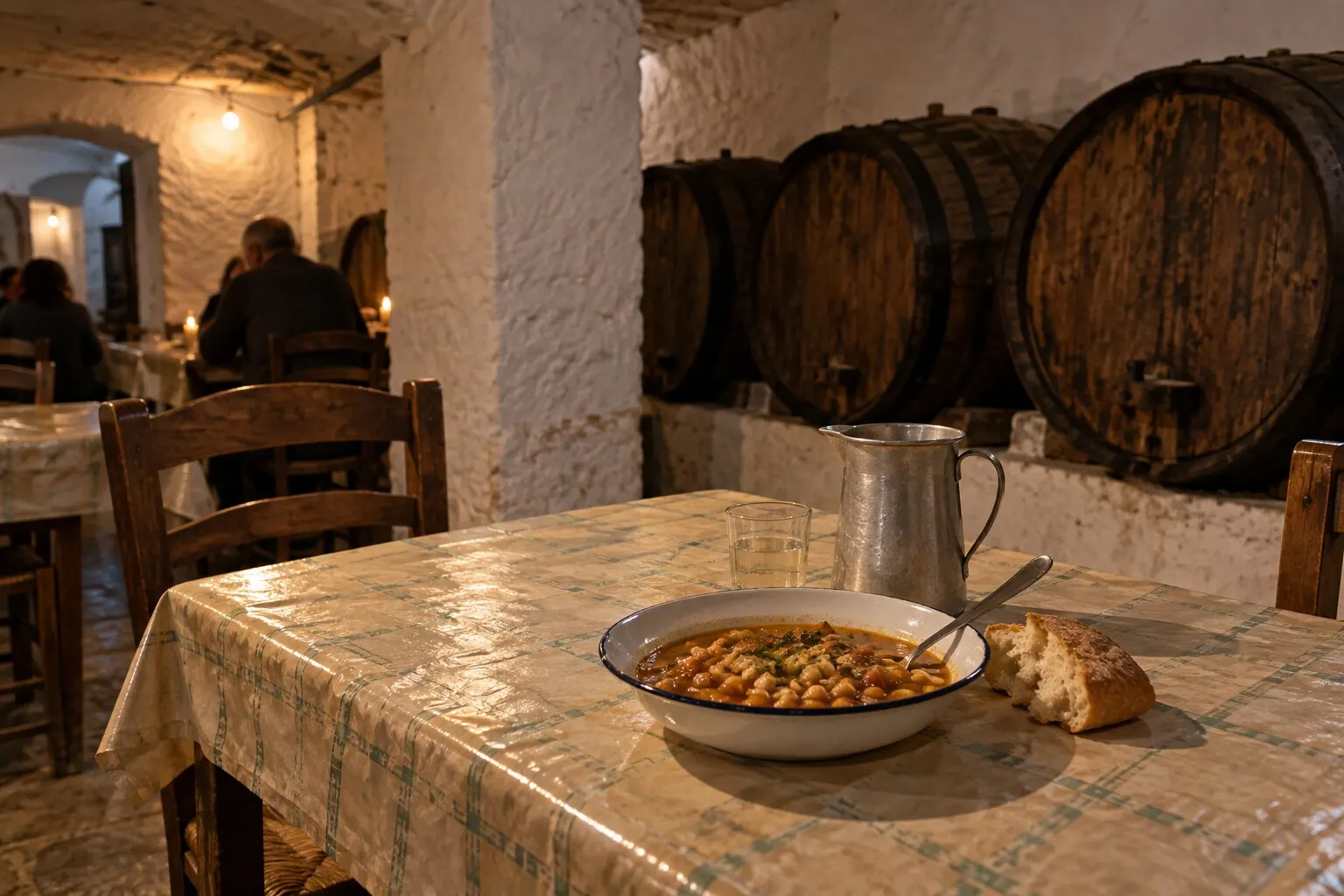
There is no sign. There is no menu. There are two doors in the pavement and a staircase going down.
Diporto means two doors, which is the whole name and the whole description. Underneath the central market, in a cellar lined with wine barrels, four or five dishes are cooked each day and whatever is ready is what you get. Market porters, lawyers, students and the occasional person who read about it sit at the same oilcloth tables.
The chickpeas are the thing — revithia, slow-baked overnight in a clay pot until they collapse. There is usually a fish, usually sardines or small fried gavros. There is a horta, boiled wild greens with lemon. The wine comes from the barrel in a tin jug.
- Hours: 08:00–19:00 (closed Sunday)
- Address: Theatrou 2 and Sokratous, Athens 105 52
- Nearest transport: Monastiraki · M1 · M3 · 8 min walk (M1 · M3)
- No sign, no printed menu and no bookings — you go down the stairs and ask what there is. Four or five dishes a day, served until they run out. Closed on Sundays and through most of August. Cash is easiest.
Local tips
- The entrance is two unmarked doors at the corner of Sokratous and Theatrou — look down, not up.
- Ask what is cooked today rather than ordering from memory.
- The revithia is the dish; order it even if it sounds plain.
- Go at 1pm with the market workers, not at 8pm.
- It closes for most of August like much of the city.
Mani Mani
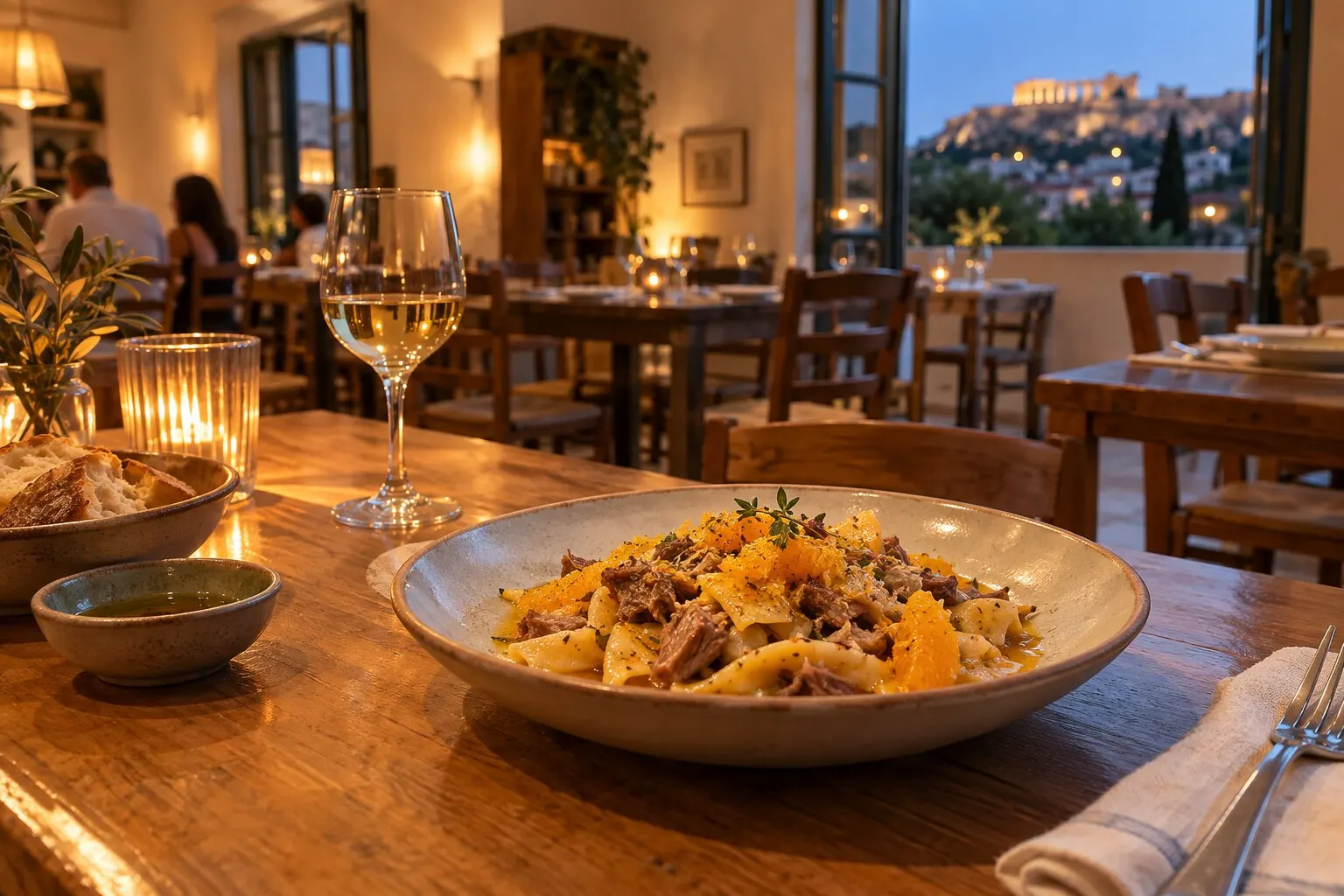
The Mani is the middle finger of the Peloponnese — stone towers, scrub, almost no soil. It produced a cuisine built on preservation because for most of history there was nothing else to do with food there.
This room, up a staircase behind the Acropolis Museum, cooks that food properly. Siglino, pork cured in sea salt and smoked over wild sage and cypress, then simmered in orange juice. Hilopites, square egg noodles, with cockerel. Wild greens from the hills. Sausage with orange peel.
It is quiet, plain and does not advertise. The dining rooms are small and the service is unhurried.
Most people eating within four hundred metres of here are in a taverna built for visitors. This is twenty metres off that route and almost nobody finds it by accident.
- Hours: 13:00–23:00 (closed Monday)
- Address: Falirou 10, Athens 117 42
- Nearest transport: Akropoli · M2 · 4 min walk (M2)
- First floor, up a staircase, with small separate rooms. Booking is advised in the evening. Closed on Mondays. The menu changes with what the Mani sends; the staple dishes stay.
Local tips
- Book in the evening — the rooms are small and it fills with locals.
- Start with the siglino; it is the dish the region is known for.
- Lunch is much quieter than dinner and just as good.
- It is a two-minute walk from the Acropolis Museum but on a side street — look for the staircase.
- Closed Mondays, which catches people out.
Shops: verified local picks
Forget Me Not
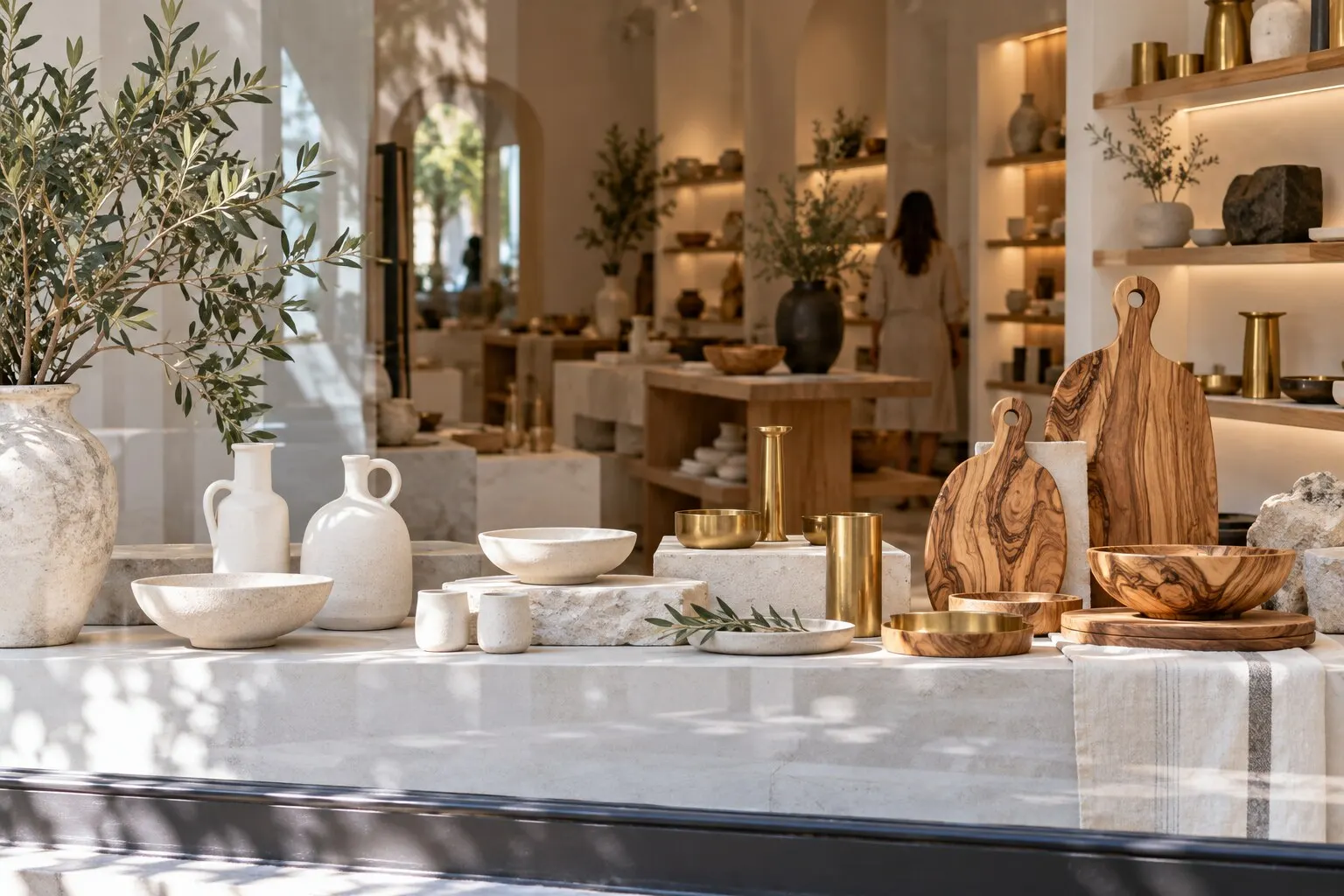
A corner shop on Adrianou that decided Greek souvenirs could be designed rather than imported.
Everything here is made in Greece by people the owners know. Ceramics glazed in Attica, olive wood cut in the Peloponnese, textiles woven in Crete, posters and prints by Athenian illustrators, worry beads that are objects rather than keyrings. There is a whole wall of small brass things.
The shop sits in the middle of the most heavily touristed street in the city, surrounded by stalls selling the same four fridge magnets, and it is the clearest answer anyone has given to that.
Two floors, both small. Prices are honest and the staff will tell you who made what.
- Hours: 10:00–21:00 (open daily)
- Address: Adrianou 100, Athens 105 55
- Nearest transport: Monastiraki · M1 · M3 · 5 min walk (M1 · M3)
- Two small floors on a pedestrian street; the lower floor is easy to miss. Everything is made in Greece. They will pack ceramics for flights if asked. Open seven days in high season, shorter hours in winter.
Local tips
- Go down the stairs — the ceramics and textiles are on the lower floor.
- Ask who made something; they know every maker by name.
- The brass and olive-wood pieces travel best in hand luggage.
- Adrianou outside is tourist stalls — do not judge the shop by the street.
- Five minutes from Monastiraki station, on the pedestrian stretch.
Mastihashop

Mastic is tree resin, and it grows commercially in exactly one place on earth: the southern half of the island of Chios.
The trees grow elsewhere. They only weep usable resin there, and nobody has ever satisfactorily explained why. Growers score the bark in summer and sweep the hardened tears off the ground beneath, which is why it is called the tears of Chios. The villages that do it have been doing it since antiquity and were rich enough under Genoese and Ottoman rule to build fortified towns with no doors at ground level.
It tastes like pine and cedar and faintly of mint, and it is in everything here — chewing gum, liqueur, spoon sweets, toothpaste, skin cream, biscuits, a thick submarine-shaped paste eaten off a spoon in cold water.
- Hours: 09:00–20:00 (closed Sunday)
- Address: Panepistimiou 6, Athens 106 71
- Nearest transport: Syntagma · M2 · M3 · 3 min walk (M2 · M3)
- Small shop near Syntagma run by the Chios growers’ cooperative. Tasting samples are usually out. The liqueur and spoon sweets are liquids — pack for hold luggage. Closed Sundays outside high season.
Local tips
- Try the plain chewing gum first; it is the clearest taste of what mastic is.
- The liqueur and the spoon sweet are liquids — hold luggage only.
- The skin cream is what Greek customers actually come in for.
- It is a growers’ cooperative, so the money goes back to Chios.
- Two minutes from Syntagma square, on a side street.
Experiences and activities
Athens Street Food Tasting
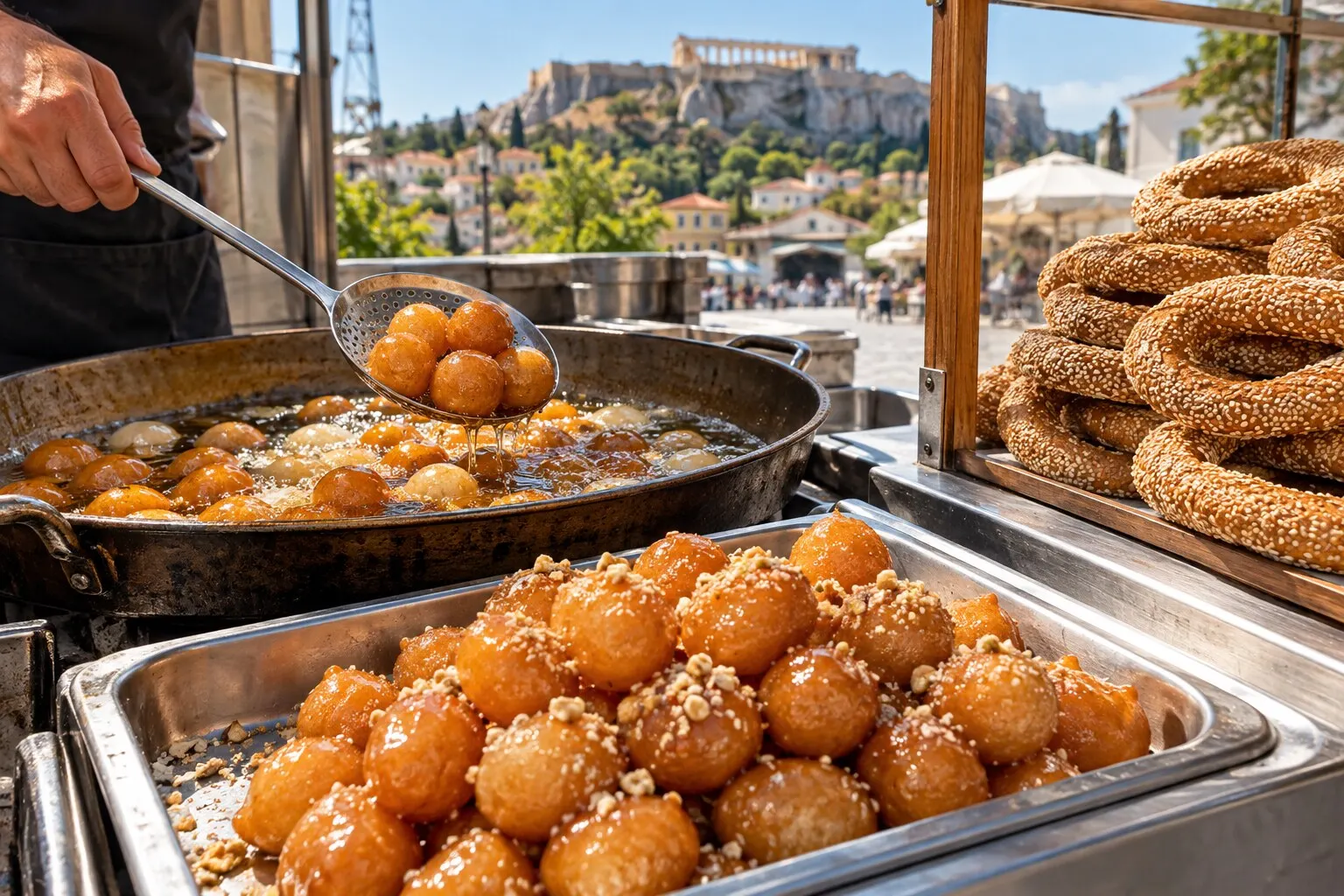
Greek street food is not souvlaki and a photograph. It is a sequence, and the sequence has rules.
Koulouri in the morning from a pavement cart — a sesame ring, cheap, sold since the Ottoman period. Bougatsa, semolina custard in filo, dusted with cinnamon and cut with a knife on the tray. Loukoumades, honey doughnuts fried to order, the oldest recorded dessert in Europe; they were handed to victors at the ancient games. Then souvlaki, properly: pork from the skewer, not the gyro cone.
The tasting runs through the lanes around Monastiraki and the central market, into shops with one product and seventy years of practice — a man who only roasts nuts, a family who only make cheese pies.
- Time to allow: 3–4 hours
- Hours: 09:00–19:00 (open daily)
- Address: Monastiraki, Athens 105 55
- Nearest transport: Monastiraki · M1 · M3 · at the square (M1 · M3)
- Localada perk: 5% OFF – Athens street food tasting tour — book below
- Walking tasting through central Athens with several stops; expect to be on your feet for most of it. Food is included and there is plenty of it. Vegetarian adaptation is possible with notice; tell the operator about allergies in advance.
Local tips
- Come hungry and skip the meal before — this is more food than it sounds.
- Comfortable shoes; the route covers a couple of kilometres on uneven lanes.
- Morning departures catch the market at its busiest, which is the better show.
- Tell them in advance about pork or dairy and they will reroute the stops.
- The nut roaster and the cheese-pie shop are usually the two people remember.
Varvakios Market & Greek Cooking Class

It starts in the loudest building in Athens.
Varvakios is the central market, open since 1886, and at nine in the morning the meat hall is a wall of sound — butchers calling prices over each other, hooks swinging, sawdust on the tiles. Across the road is the fish hall, then the vegetable stalls, then the street of spice and dried-herb shops where the smell changes every three metres.
You shop first. Someone who knows the stallholders picks out what is good that morning, which is the part you could not do alone.
Then you cook it. Not a demonstration — you make the dishes, with wine, in a kitchen, and then sit down and eat what you made. Usually several mezedes, something slow-cooked, and a dessert.
- Time to allow: 4 hours
- Hours: 09:00–18:00 (closed Sunday)
- Address: Athinas 42, Athens 105 51
- Nearest transport: Monastiraki · M1 · M3 · 7 min walk (M1 · M3 · M2)
- Localada perk: 5% OFF – Market visit and Greek cooking class with wine — book below
- Begins with a guided walk through the central market, then moves to a kitchen for the class and the meal. Wine is included. Vegetarian and most allergy adaptations are possible with advance notice. Roughly four hours in total.
Local tips
- The market is at its best before 10am — take an early slot if you can.
- The fish hall is the photograph; the spice street behind it is the smell you remember.
- Wear shoes you do not mind getting wet; the meat hall floor is hosed constantly.
- Ask what grows where — Greek cooking changes completely between islands and mainland.
- You will not need dinner afterwards.
Greek Night: Dinner, Theatre & Music
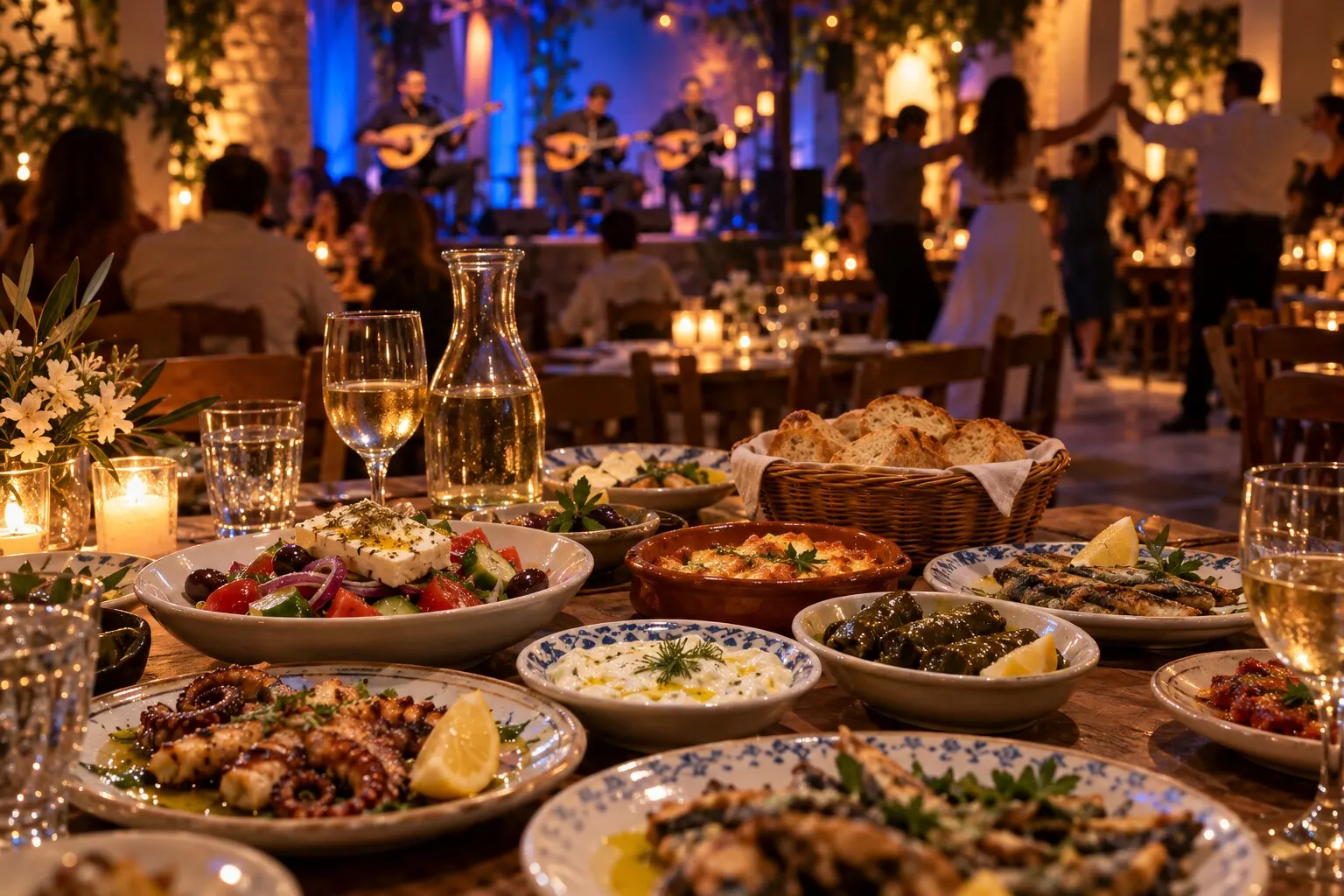
Five dishes, five regions, and the room performs between courses.
The conceit is a tour of Greece by plate — something from the north, something from the islands, something from Crete — with live music and short theatrical pieces running through the meal. Rebetiko gets played, which is the music that came out of the refugee quarters of Piraeus in the 1920s and was banned for decades as the music of hashish dens and the poor. It is now the closest thing Greece has to a national sound.
If the plates get pushed aside and people stand up, that is normal and expected. Nobody breaks anything; plate-smashing was outlawed in the 1960s and the flower-throwing that replaced it is what you will see instead.
- Time to allow: 3 hours
- Hours: 18:00–23:30 (open daily)
- Address: Psyrri, Athens 105 54
- Nearest transport: Monastiraki · M1 · M3 · 6 min walk (M1 · M3)
- Localada perk: 5% OFF – Greek dinner with theatre and live music — book below
- A seated evening of about three hours with a set menu of five courses and live performance between them. Vegetarian menus are available with notice. Tables are shared with other guests. Smart casual dress.
Local tips
- Book the earlier sitting if you want to talk; the later one is louder and livelier.
- Ask for a table off the aisle if you would rather watch than take part.
- The music is rebetiko — ask the band what a song is about, they will tell you.
- Tell them in advance about dietary needs; the menu is fixed otherwise.
- It finishes late by most standards and early by Athenian ones.
Wine O'Clock — Greek Wine Tasting

Greece has around three hundred indigenous grape varieties and almost none of them are grown anywhere else.
Assyrtiko comes from Santorini, where the vines are woven into low baskets on the ground because the wind would otherwise destroy them, and the volcanic soil gives the wine a salt edge. Xinomavro from the north is tannic and ages like Barolo. Agiorgitiko is soft and red and named after Saint George. Retsina, the one with the reputation, was originally pine resin used to seal amphorae; the taste was an accident that became a habit.
The tasting is seated, guided, and goes through several of these with things to eat alongside, which is how Greeks drink in the first place — wine is not served without food.
- Time to allow: 2 hours
- Hours: 12:00–22:00 (closed Sunday)
- Address: Syntagma, Athens 105 63
- Nearest transport: Syntagma · M2 · M3 · 5 min walk (M2 · M3)
- Localada perk: 5% OFF – Greek wine tasting at Wine O'Clock — book below
- A seated guided tasting of about two hours with several wines and accompanying food. Small groups. Non-alcoholic alternatives are limited — say in advance if someone is not drinking. Central location near Syntagma.
Local tips
- Eat something light first; the food served is accompaniment, not a meal.
- Ask for Assyrtiko if it is not on the list — it is the one worth remembering.
- Take a photo of the labels; most of these are hard to find outside Greece.
- Evening sessions are more social, afternoon ones more instructive.
- They will tell you which bottles can be bought nearby and which cannot.
The Sandal Maker's Workshop
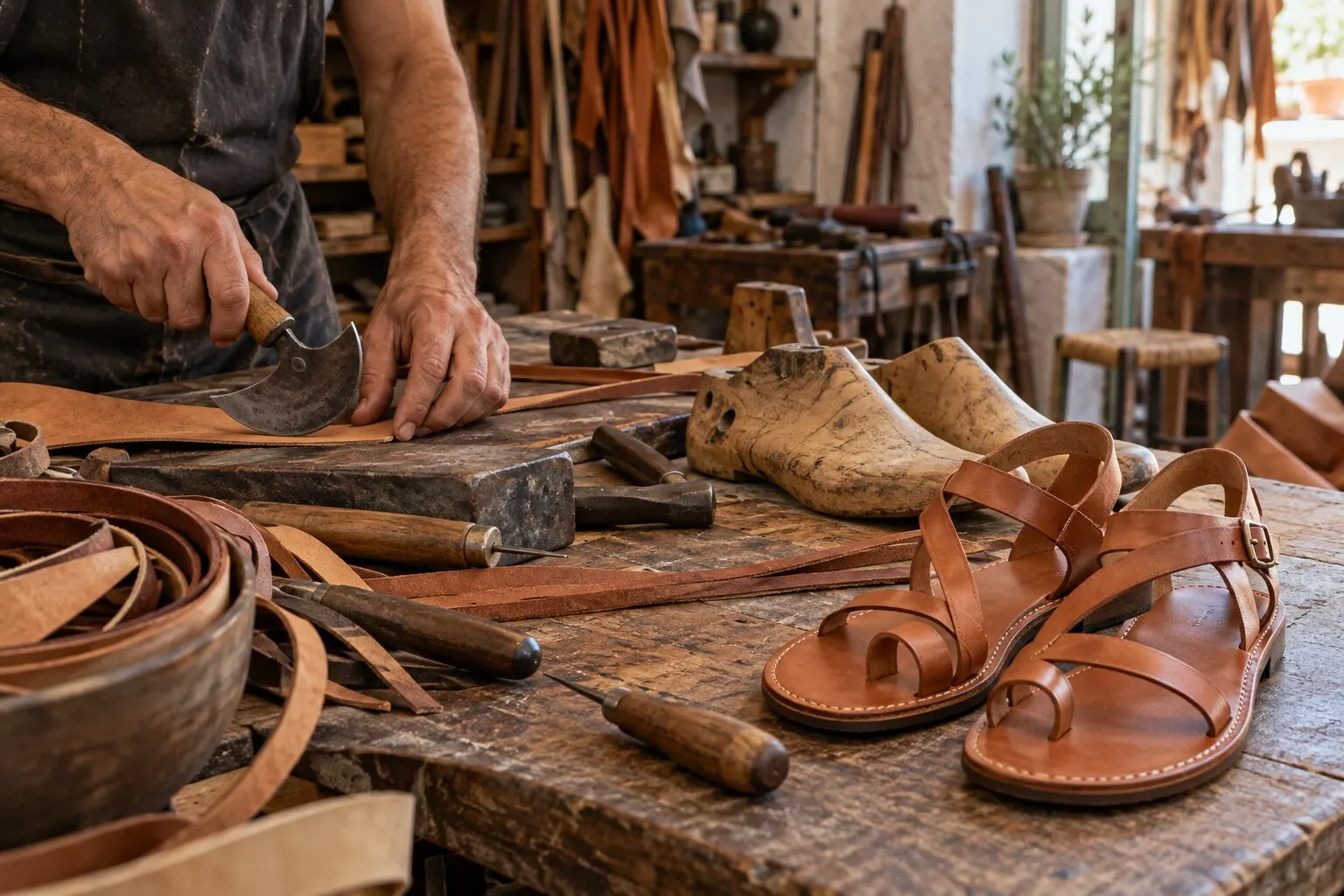
The design has not changed much in two and a half thousand years.
Athens has made leather sandals since antiquity, and a handful of workshops in Psyrri still cut and stitch them by hand. The most famous of them spent the 1960s making sandals for the Beatles, Jackie Onassis and Sophia Loren, and the queue down the street was a fixture for decades.
In the workshop you pick the leather, stand on it while your foot is traced, and then cut, punch and thread the straps yourself. It takes about two hours and the leather is thick enough that your hands know they have done something.
You leave wearing them.
The tools on the bench — the half-moon knife, the wooden last, the awl — are the same shapes found in classical reliefs. Not a revival; they were simply never improved on.
- Time to allow: 2 hours
- Hours: 10:00–19:00 (closed Sunday)
- Address: Psyrri, Athens 105 54
- Nearest transport: Monastiraki · M1 · M3 · 5 min walk (M1 · M3)
- Localada perk: 5% OFF – Make your own leather sandals workshop — book below
- A hands-on workshop of about two hours; you make a pair and take them away. Several leather colours and strap patterns to choose from. Sizes are made to your foot. Not suitable for small children — sharp tools.
Local tips
- Wear or bring the socks you would normally wear with sandals; sizing is done on the spot.
- The leather softens over a week — they will feel stiff walking out and will not stay that way.
- Ask about the half-moon knife; the shape is unchanged since antiquity.
- Book ahead, the benches are few.
- Psyrri around the workshop is full of small makers — worth twenty minutes afterwards.
Athens travel guides on the Localada blog
Athens audio guide: frequently asked questions
Is the Athens audio guide free?
Yes. Localada’s Athens guide is free: create a free account and open it in your browser, no app download needed. It includes 16 stops, audio and written stories, a route map and scam-awareness tips. Tickets for paid sights are bought separately; booking through Localada’s GetYourGuide links gives 5% off.
How many stops are in the Athens audio guide?
There are 16 stops: 7 sights, 2 places to eat, 2 shops and 5 experiences.
How long does it take to see the main sights in Athens?
Visiting all 7 sights in the guide takes about 9.5–12 hours, not counting travel between them. The Acropolis & the Parthenon needs the most time (allow 2–3 hours).
Are Athens sights open every day?
All 7 sights in the guide are listed as open seven days a week, though hours can change on public and religious holidays.
What time do Athens sights open and close?
The earliest opening in the guide is 08:00 (The Acropolis & the Parthenon) and the latest closing is 19:00 (The Acropolis & the Parthenon). Each stop’s hours are in the table above.
Are there discounts with the Athens guide?
12 stops include a Localada perk, for example The Acropolis & the Parthenon (5% OFF), The Acropolis Museum (5% OFF), The Ancient Agora & the Temple of Hephaestus (5% OFF), The Temple of Olympian Zeus & Hadrian's Arch (5% OFF), The National Archaeological Museum (5% OFF) and The Roman Agora & the Tower of the Winds (5% OFF). Show the code in the guide at verified restaurants and shops; ticket discounts are applied at GetYourGuide checkout.
What can I do in Athens on a rainy day?
7 stops in the guide are indoors, including The Acropolis Museum, The National Archaeological Museum, Athens Street Food Tasting, Varvakios Market & Greek Cooking Class, Greek Night: Dinner, Theatre & Music and Wine O'Clock — Greek Wine Tasting.
What is open in the evening in Athens?
These stops in the guide stay open late: Greek Night: Dinner, Theatre & Music (until 23:30), Wine O'Clock — Greek Wine Tasting (until 22:00), Mani Mani (until 23:00) and Forget Me Not (until 21:00).
How do I get between the stops in Athens?
The Athens stops are spread across the city, so the guide lists the nearest metro, tram or train station for each one.
Which languages is the Athens audio guide available in?
Narration and text are available in 15 languages: English, Turkish, German, French, Spanish, Italian, Portuguese, Dutch, Polish, Russian, Arabic, Persian, Chinese, Japanese and Korean.