















Localada’s free Prague audio guide covers 21 stops: 11 sights, 3 places to eat, 2 shops and 5 experiences, narrated in 15 languages. Seeing all 11 sights takes roughly 15.5–18.5 hours of visiting time, before travel between them. 16 of the 21 stops come with a Localada perk, such as 5% off GetYourGuide tickets or a discount at a verified local restaurant or shop.
Opening hours, perks and visit times below come from the live Localada app and were last checked on 28 October 2026. Always confirm on the day: hours can change for holidays and prayer times.
Prague audio guide stops at a glance
| # | Stop | Type | Time to allow | Hours | Closed | Today | Nearest transport | Localada perk |
|---|---|---|---|---|---|---|---|---|
| 1 | Prague Castle & St Vitus Cathedral | Castle | 3 hours | 09:00–17:00 | — | — | Pražský hrad tram stop · 3 min walk | 5% OFF |
| 2 | Strahov Monastery & Its Library | Monastery | 1–1.5 hours | 09:00–17:00 | — | — | Pohořelec tram stop · 4 min walk | 5% OFF |
| 3 | Charles Bridge & the Old Town Bridge Tower | Bridge | 1 hour | Open 24 hours | — | — | Staroměstská station · 5 min walk | 5% OFF |
| 4 | Petřín Hill & the Lookout Tower | Viewpoint | 1.5–2 hours | 09:00–20:00 | — | — | Újezd tram stop · funicular from there | 5% OFF |
| 5 | Kampa Island & the Lennon Wall | District | 45–60 min | Open 24 hours | — | — | Hellichova tram stop · 4 min walk | 5% OFF |
| 6 | Old Town Square & the Astronomical Clock | Square | 1–1.5 hours | 09:00–21:00 | — | — | Staroměstská station · 5 min walk | 5% OFF |
| 7 | The Klementinum Library | Library | 1 hour | 10:00–18:00 | — | — | Staroměstská station · 3 min walk | 5% OFF |
| 8 | The Municipal House & the Powder Tower | Landmark | 45–60 min | 10:00–19:00 | — | — | Náměstí Republiky station · 1 min walk | 5% OFF |
| 9 | Josefov — the Jewish Quarter | Historic quarter | 2–2.5 hours | 09:00–17:00 | Sunday | — | Staroměstská station · 3 min walk | 5% OFF |
| 10 | Wenceslas Square & the National Museum | Square | 2 hours | 10:00–18:00 | — | — | Muzeum station · 1 min walk | 5% OFF |
| 11 | Vyšehrad & the Slavín Cemetery | Fortress | 1.5–2 hours | Open 24 hours | — | — | Vyšehrad station · 8 min walk | 5% OFF |
| 12 | Classical Concert in the Mirror Chapel | Concert | 1 hour | 18:00–21:30 | — | — | Staroměstská station · 3 min walk | 5% OFF |
| 13 | The Medieval Underground | Tour | 1 hour | 10:00–19:00 | — | — | Staroměstská station · 5 min walk | 5% OFF |
| 14 | Trdelník Workshop | Workshop | 1 hour | 10:00–19:00 | — | — | Staroměstská station · 6 min walk | 5% OFF |
| 15 | Self-Pour Czech Beer Tasting | Tasting | 1–1.5 hours | 12:00–23:00 | — | — | Můstek station · 5 min walk | 5% OFF |
| 16 | Czech Folklore Evening | Dinner show | 3 hours | 19:00–22:00 | — | — | I. P. Pavlova station · 6 min walk | 5% OFF |
| 17 | Lokál Dlouhá | Restaurant | — | 11:00–00:00 | — | — | Náměstí Republiky station · 5 min walk | — |
| 18 | U Hrocha | Pub | — | 12:00–23:00 | — | — | Malostranská station · 6 min walk | — |
| 19 | Kantýna | Restaurant | — | 11:30–23:00 | — | — | Muzeum station · 5 min walk | — |
| 20 | Kubista | Design shop | — | 10:00–18:00 | Monday | — | Náměstí Republiky station · 4 min walk | — |
| 21 | Truhlář Marionety | Workshop shop | — | 10:00–18:00 | — | — | Malostranská station · 4 min walk | — |
How much time do you need in Prague?
- Highlights only (about 5–5.5 hours): Prague Castle & St Vitus Cathedral, Charles Bridge & the Old Town Bridge Tower and Old Town Square & the Astronomical Clock.
- Every sight in the guide (about 15.5–18.5 hours): all 11 sights in route order; split across 3 days at a comfortable pace.
- Add food, shopping and experiences: 10 more stops, from verified restaurants to workshops and shows, listed below.
Sights in the Prague audio guide
Prague Castle & St Vitus Cathedral
Full Prague Castle & St Vitus Cathedral audio guide →
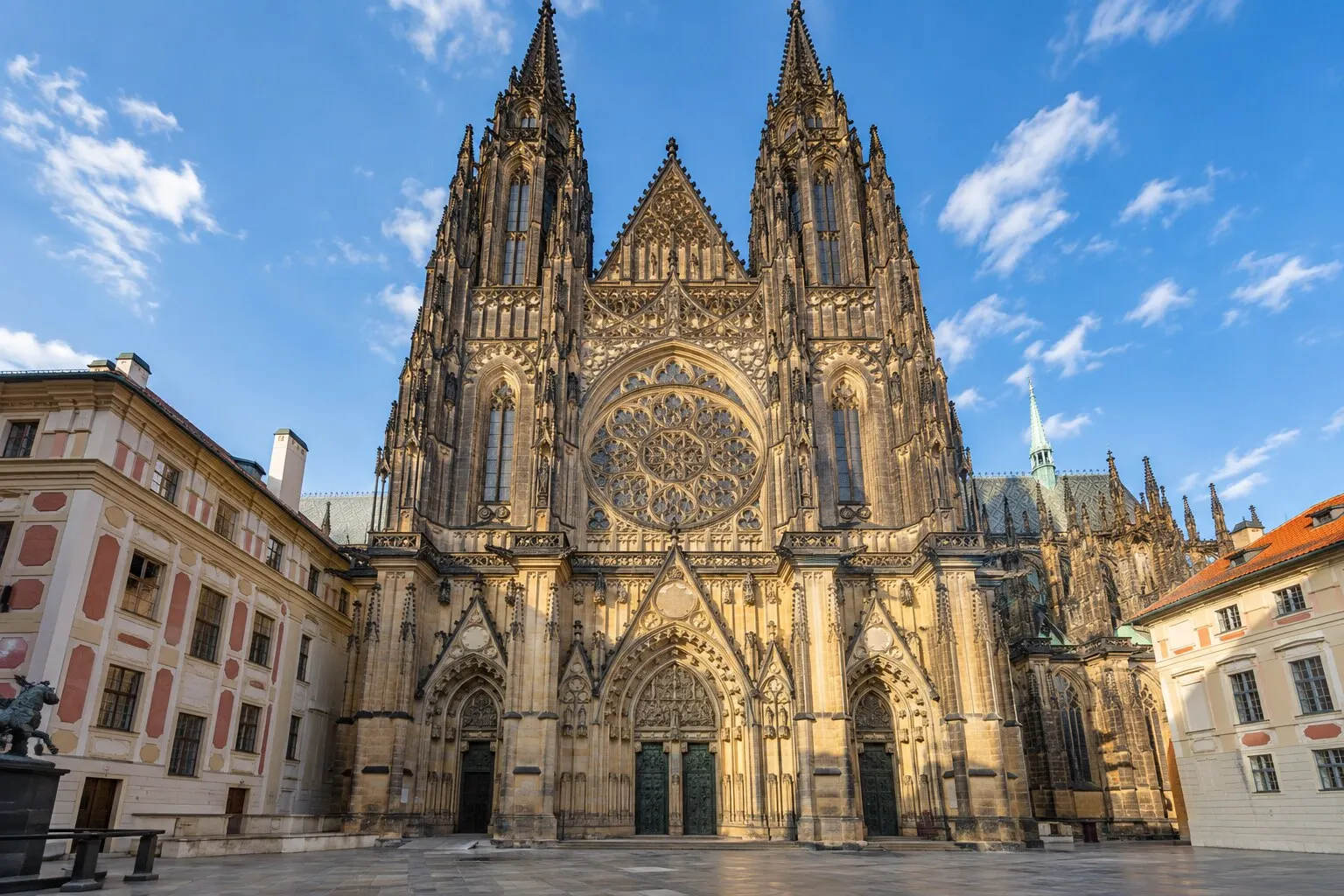
Call it a castle and you will look for a single building. There is no single building.
What stands on this ridge is a walled town: three courtyards, a cathedral, a basilica, a monastery, gardens, a lane of tiny houses, and the office of a head of state who still works here.
St Vitus took nearly six hundred years. The foundation stone went down in 1344 and the western towers were finished in 1929, which is why one half of the facade looks medieval and the other half looks like it was carved last century. It was.
In 1618 two Catholic governors were thrown out of a window in the palace on your right. They landed in a dung heap and survived, which Catholics called a miracle and Protestants called luck. Either way the argument that followed lasted thirty years and emptied much of central Europe.
- Time to allow: 3 hours
- Hours: 09:00–17:00 (open daily)
- Address: Hradčany, 119 08 Prague 1
- Nearest transport: Pražský hrad tram stop · 3 min walk (22)
- Localada perk: 5% OFF – Skip-the-line entry to the castle circuit — book below
- Timed entry; the circuit ticket covers the cathedral, the palace, the basilica and Golden Lane
- Security screening at every gate — allow extra time
- The cathedral closes to visitors during services
Local tips
- Come before 10am or after 3pm — the middle of the day is the crush
- Enter from the tram stop at the top and walk down through the castle, not up
- The cathedral's stained glass by Mucha is in the third chapel on the left
- The view from the Old Castle Steps is better than the one from inside
- The noon guard change is the full ceremony; the hourly one takes two minutes
Strahov Monastery & Its Library
In 1950 the state closed every monastery in the country in a single night. Monks were loaded into trucks. Buildings were emptied.
Strahov's library survived because someone renamed it.
Overnight it became the Museum of National Literature, a state institution with a state budget, and the same shelves stood untouched for forty years while the order that built them was dissolved. The monks came back in 1990 and found their books where they had left them.
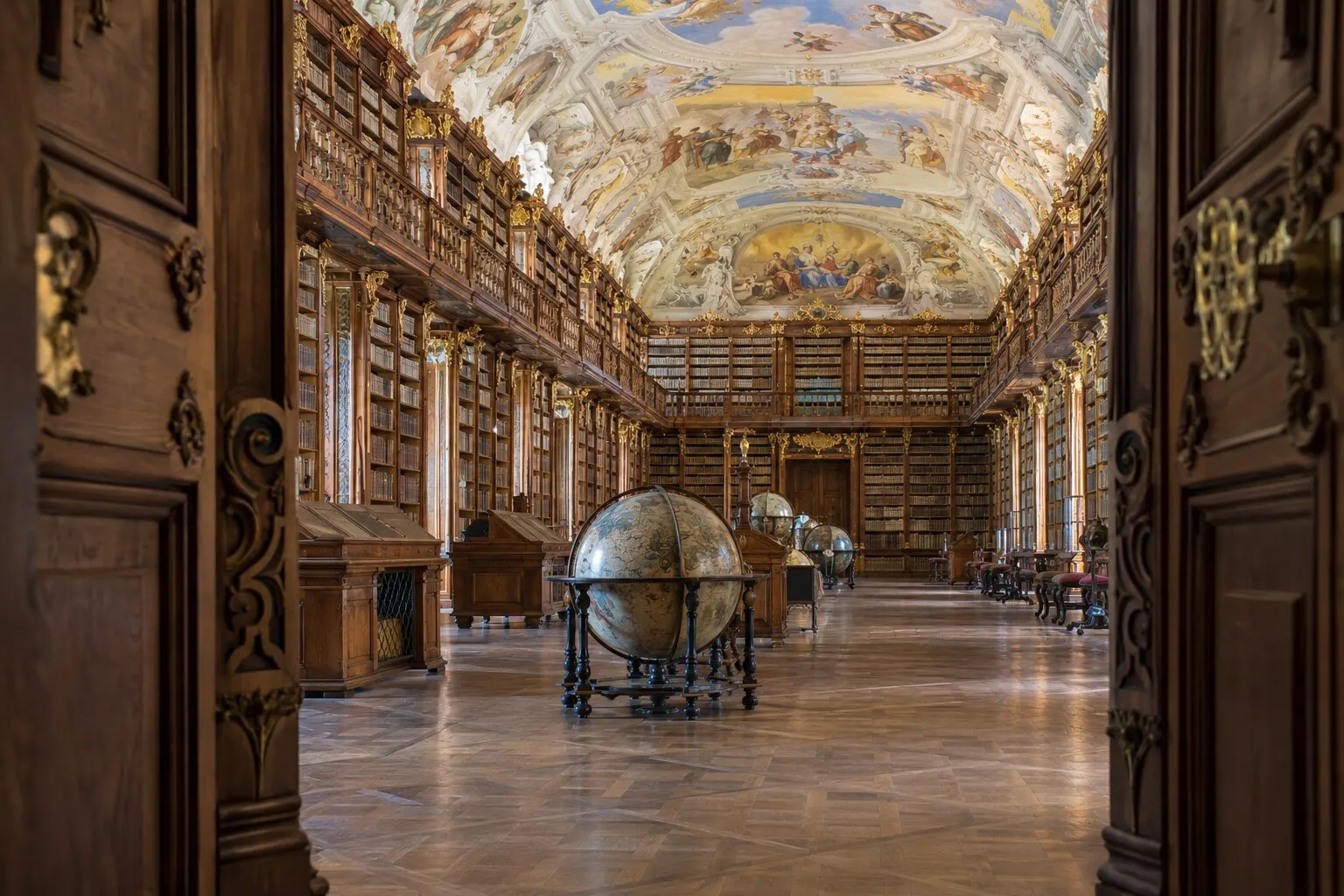
There are two halls. The Theological Hall is the older one, low and warm, its ceiling packed with stucco frames. The Philosophical Hall was built to fit a walnut bookcase bought second-hand from a monastery that had just been shut down by an earlier emperor — the shelves came first, the room was built around them.
- Time to allow: 1–1.5 hours
- Hours: 09:00–17:00 (open daily)
- Address: Strahovské nádvoří 1/132, Hradčany, 118 00 Prague 1
- Nearest transport: Pohořelec tram stop · 4 min walk (22)
- Localada perk: 5% OFF – Entry to the Theological and Philosophical halls — book below
- You view the halls from the doorway; the interiors are not open to walk through
- The cabinet of curiosities and the corridor are included
- The monastery brewery and garden are open separately
Local tips
- Photography inside the halls needs a separate permit, bought at the desk
- The terrace outside has the wide view over the city — better than Petřín on a clear day
- Come on your way down from the castle, not as a separate trip
- The monastery still brews beer in the courtyard
- Allow ten minutes for the corridor cabinets; most people rush past them
Charles Bridge & the Old Town Bridge Tower
Full Charles Bridge & the Old Town Bridge Tower audio guide →
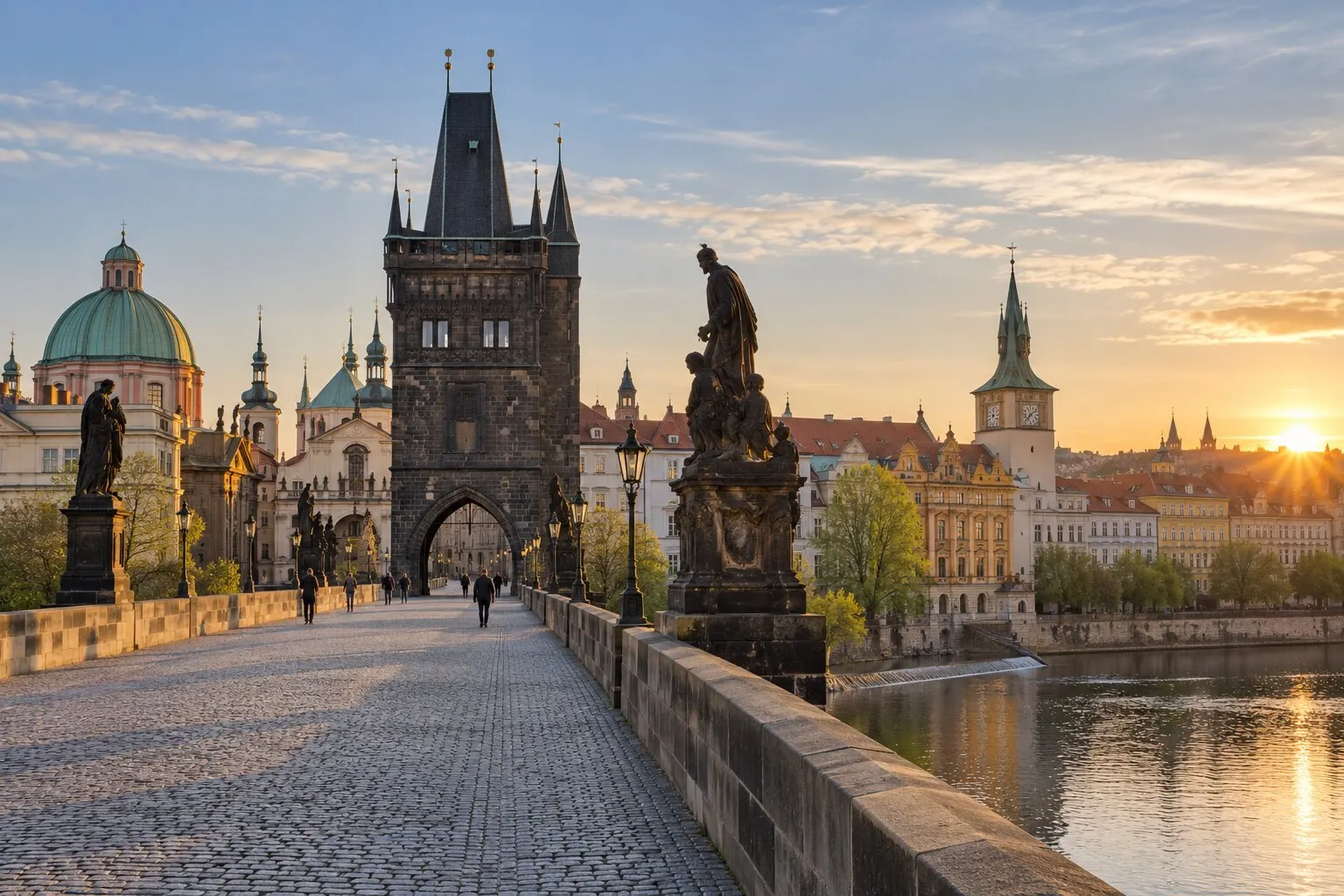
The first stone went down on the ninth of July 1357, at thirty-one minutes past five in the morning.
Write that as numbers and you get 1-3-5-7-9-7-5-3-1. It reads the same in both directions. Charles IV kept astrologers on staff, and they chose the moment.
Whether he believed it or not, the bridge is still here. The one it replaced was washed away by the river, as was the one before that.
The builders were said to have mixed egg yolks into the mortar for strength. Villages sent cartloads of eggs; one town, the story goes, boiled theirs first so they would not break on the road.
The statues came three hundred years later and most of what you see is a copy — the originals are in a museum, out of the weather. The oldest figure is John of Nepomuk, a priest thrown from this bridge on a king's order. Touching the plaque below him is said to bring you back to Prague. The brass is worn through in two places.
- Time to allow: 1 hour
- Hours: Open 24 hours
- Address: Karlův most, 110 00 Prague 1
- Nearest transport: Staroměstská station · 5 min walk (A · 17 · 18)
- Localada perk: 5% OFF – Climb the Old Town Bridge Tower for the view along the bridge — book below
- The bridge itself is open at all hours
- The tower has its own ticket and closes earlier than the bridge
- The statues you see are copies; the originals are in the Lapidarium
Local tips
- Cross at sunrise — by nine the crowd is shoulder to shoulder
- The view along the bridge from the tower is the photograph everyone wants
- The sixteenth pier is where the Vltava swimmers gather in summer
- Street musicians are licensed here; the ones who follow you are not
- Walk it once in each direction; the Castle side and the Old Town side are different bridges
Petřín Hill & the Lookout Tower
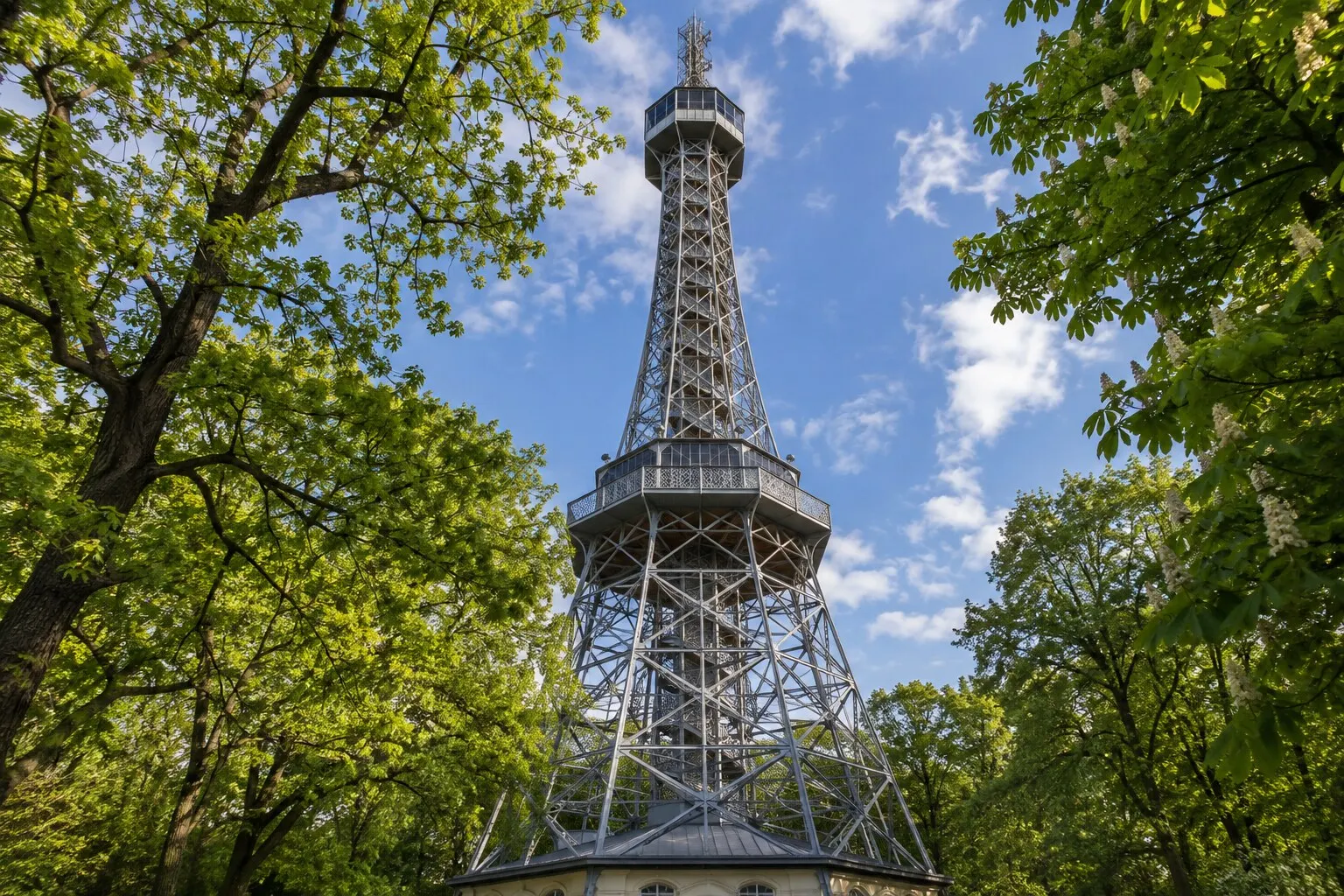
A group of Czech tourists went to the Paris exhibition in 1889, came home impressed, and decided their city needed one too.
Two years later this tower opened. It is a fifth of the height of the one in Paris and it is built as a copy — same lattice, same silhouette, an eighth of the steel.
But it stands on a hill three hundred metres above the river, so the top of it is higher above sea level than the top of the original. Prague has been quietly pointing this out ever since.
The hill below it was orchards, and before that a quarry that supplied stone for half the medieval city. The wall running across it was ordered by Charles IV in a famine year, partly as a defence and mostly to give people work in exchange for food. It has been called the Hunger Wall for six hundred years.
- Time to allow: 1.5–2 hours
- Hours: 09:00–20:00 (open daily)
- Address: Petřínské sady 633, 118 00 Prague 1
- Nearest transport: Újezd tram stop · funicular from there (22 · Funicular)
- Localada perk: 5% OFF – Tower entry with the mirror maze — book below
- The funicular runs on a standard transport ticket
- The tower is a staircase of 299 steps; the lift is small and often queued
- The rose garden and the observatory on the hill are free to walk through
Local tips
- Ride the funicular up and walk down through the orchards
- Go late in the afternoon; the light across the roofs is best an hour before sunset
- The mirror maze takes ten minutes and amuses children more than adults
- The observatory at the top of the hill opens in the evening
- The walk down to the Lennon Wall takes about fifteen minutes
Kampa Island & the Lennon Wall
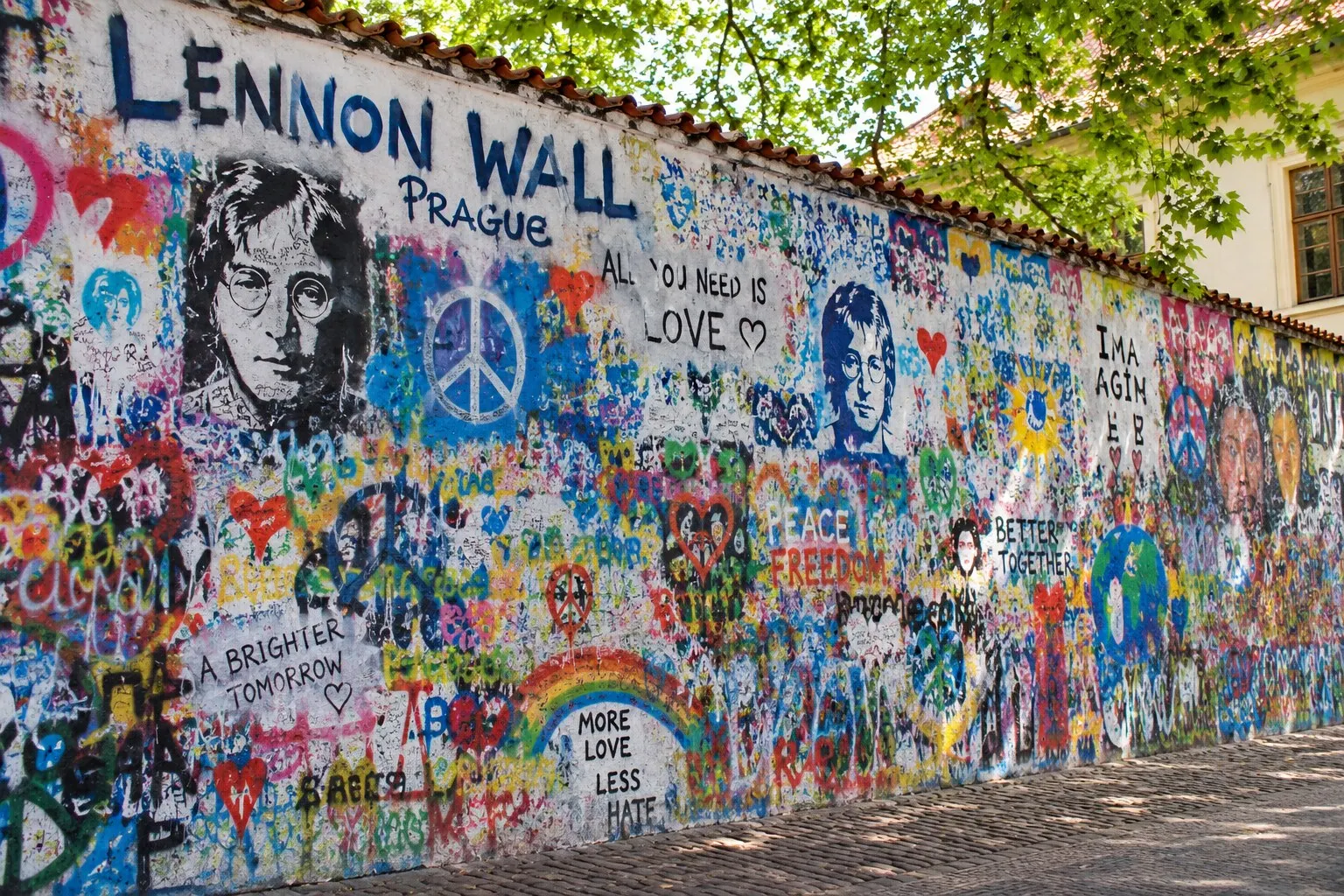
John Lennon never came to Prague. That is not the point.
When he was shot in December 1980, someone painted his face on this wall. Under a government that treated western music as a political problem, the wall filled with lyrics, peace signs and complaints that could not be said aloud.
The police painted it over. It filled again by morning. That went on for most of a decade, and in 1988 a march that started here ended in arrests on the bridge.
The wall belongs to the Knights of Malta, who could have stopped it at any point and never did. Today it is legal, and the layers are thick enough to see in cross-section where the paint has chipped.
Behind you is Kampa, an island cut off by a narrow channel the locals call the Devil's Stream. There is a working water mill, a park where the city comes to sit, and three faceless bronze babies crawling across the grass by the same sculptor who put the others on the television tower.
- Time to allow: 45–60 min
- Hours: Open 24 hours
- Address: Velkopřevorské náměstí, Malá Strana, 118 00 Prague 1
- Nearest transport: Hellichova tram stop · 4 min walk (22 · 2)
- Localada perk: 5% OFF
- Painting on the wall is tolerated; the section by the entrance changes weekly
- The island floods in high water and the paths close
- Museum Kampa on the island has its own ticket
Local tips
- Come early — tour groups arrive from ten onwards
- The mill wheel on the Devil's Stream still turns; the channel was dug for it
- The bench by the river on Kampa's southern tip is the quietest spot in Malá Strana
- The crawling baby sculptures are two minutes from the wall
- Bring nothing to paint with unless you plan to add something worth reading
Old Town Square & the Astronomical Clock
Full Old Town Square & the Astronomical Clock audio guide →
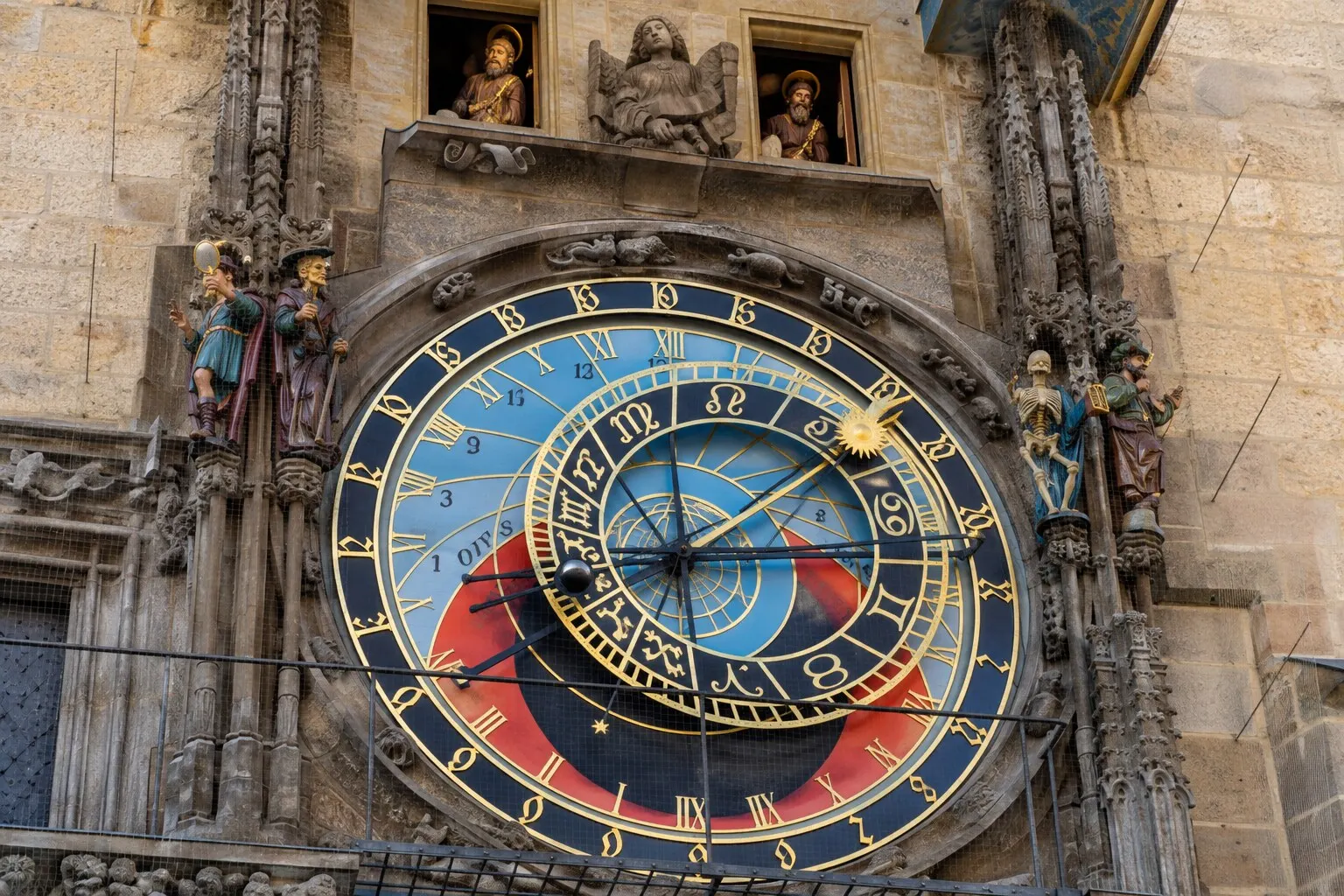
The story everyone repeats is that the councillors blinded the clockmaker so he could never build another one, and that he took his revenge by reaching into the mechanism and stopping it for a century.
It is a good story and it is not true. It was written down four hundred years after the clock was built, by a chronicler with a gift for drama.
The clock was made in 1410 by a royal clockmaker and a professor of mathematics. It has been repaired, rebuilt, ignored, restarted and repaired again ever since. The apostles who parade at the top of the hour are Victorian additions.
The dial is not telling you the time in any way you would recognise. It shows the sun's position, the moon's phase, the old Bohemian hours counted from sunset, and where the sun sits in the zodiac. Reading it takes practice.
- Time to allow: 1–1.5 hours
- Hours: 09:00–21:00 (open daily)
- Address: Staroměstské náměstí 1, 110 00 Prague 1
- Nearest transport: Staroměstská station · 5 min walk (A · 17 · 18)
- Localada perk: 5% OFF – Tower entry and the clock mechanism — book below
- The hourly show lasts about forty-five seconds; the crowd gathers ten minutes early
- The tower ticket includes the lift and the medieval chapel
- The square is closed to traffic
Local tips
- Watch the show from the far side of the square, not from directly under it
- The tower view is the one that shows the square's shape
- The twenty-seven crosses are on the ground by the town hall's eastern wall
- Cafés on the square charge for the location; the streets behind are cheaper
- Come back after eleven at night — the square empties and the buildings do the talking
The Klementinum Library
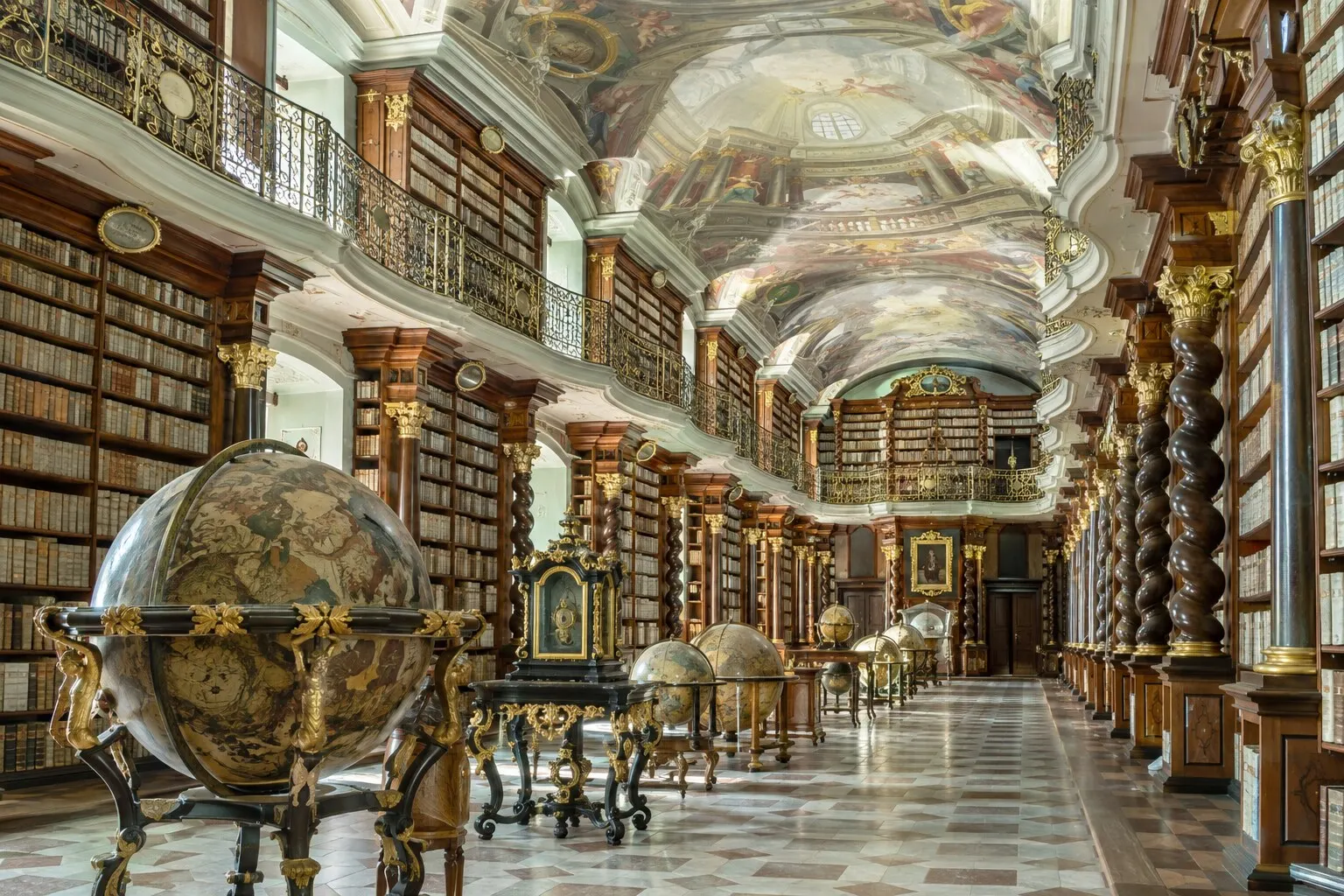
Prague had been a Protestant city for over a century when the Jesuits were invited in, in 1556, to change that.
They were given a small monastery and told to build a college. What they built took two hundred years and swallowed thirty houses, several churches and a graveyard. Only the castle covers more ground.
The Baroque hall at the centre of it was finished in 1722 and has not been altered since. The globes on the floor, the ceiling frescoes, the gilded shelves and the books on them are where they were put three hundred years ago.
Up in the tower there is a room with a brass line set into the floor and a hole in the wall. When the sun crossed the line, it was noon; a flag went up, and a cannon fired from the castle so the city could set its clocks. That happened here until 1918.
- Time to allow: 1 hour
- Hours: 10:00–18:00 (open daily)
- Address: Mariánské náměstí 5, Staré Město, 110 00 Prague 1
- Nearest transport: Staroměstská station · 3 min walk (A · 17 · 18)
- Localada perk: 5% OFF – Guided tour of the Baroque hall and the Astronomical Tower — book below
- The library is seen from the doorway; you do not walk on the floor
- The tour takes about fifty minutes and runs on the hour
- The Astronomical Tower involves 172 steps and no lift
Local tips
- Book the earliest tour of the day for the light in the Baroque hall
- The tower gallery is the best rooftop view in the Old Town, and few people know it
- The Mirror Chapel concerts in the evening are held in the same building
- The courtyards are free to walk through even without a ticket
- Ask the guide to point out the astronomical instruments; most are original
The Municipal House & the Powder Tower

On the twenty-eighth of October 1918, a country was declared from the balcony of a building that had been open for six years and was best known for its restaurant.
The Municipal House was built on the site of the royal court, in a style the Habsburgs found provincial: Czech artists, Czech themes, Czech money raised by subscription. That was the point. Every panel in it argues that this is a nation and not a province.
Mucha decorated the Mayor's Hall — the ceiling, the windows, the lot — and took no fee for it.
Smetana Hall in the centre is where the Prague Spring music festival opens every year, on the anniversary of the composer's death.
In November 1989 the Civic Forum and the communist government held their talks in this building. Seventy-one years after the first declaration, the same address ended the system that followed it.
- Time to allow: 45–60 min
- Hours: 10:00–19:00 (open daily)
- Address: Náměstí Republiky 5, 110 00 Prague 1
- Nearest transport: Náměstí Republiky station · 1 min walk (B · 6 · 9)
- Localada perk: 5% OFF
- The café, the American bar and the ground floor are open without a ticket
- The halls upstairs are seen on a guided tour or with a concert ticket
- The Powder Tower has a separate entrance and its own steep staircase
Local tips
- Walk into the café even if you do not stop — the room is the point
- The guided tour is the only way to see Mucha's Mayor's Hall
- Concert tickets are the cheapest way into Smetana Hall
- The Powder Tower gallery looks straight down the old coronation route
- The building is at its best after dark, when the glass canopy is lit
Josefov — the Jewish Quarter
Full Josefov — the Jewish Quarter audio guide →
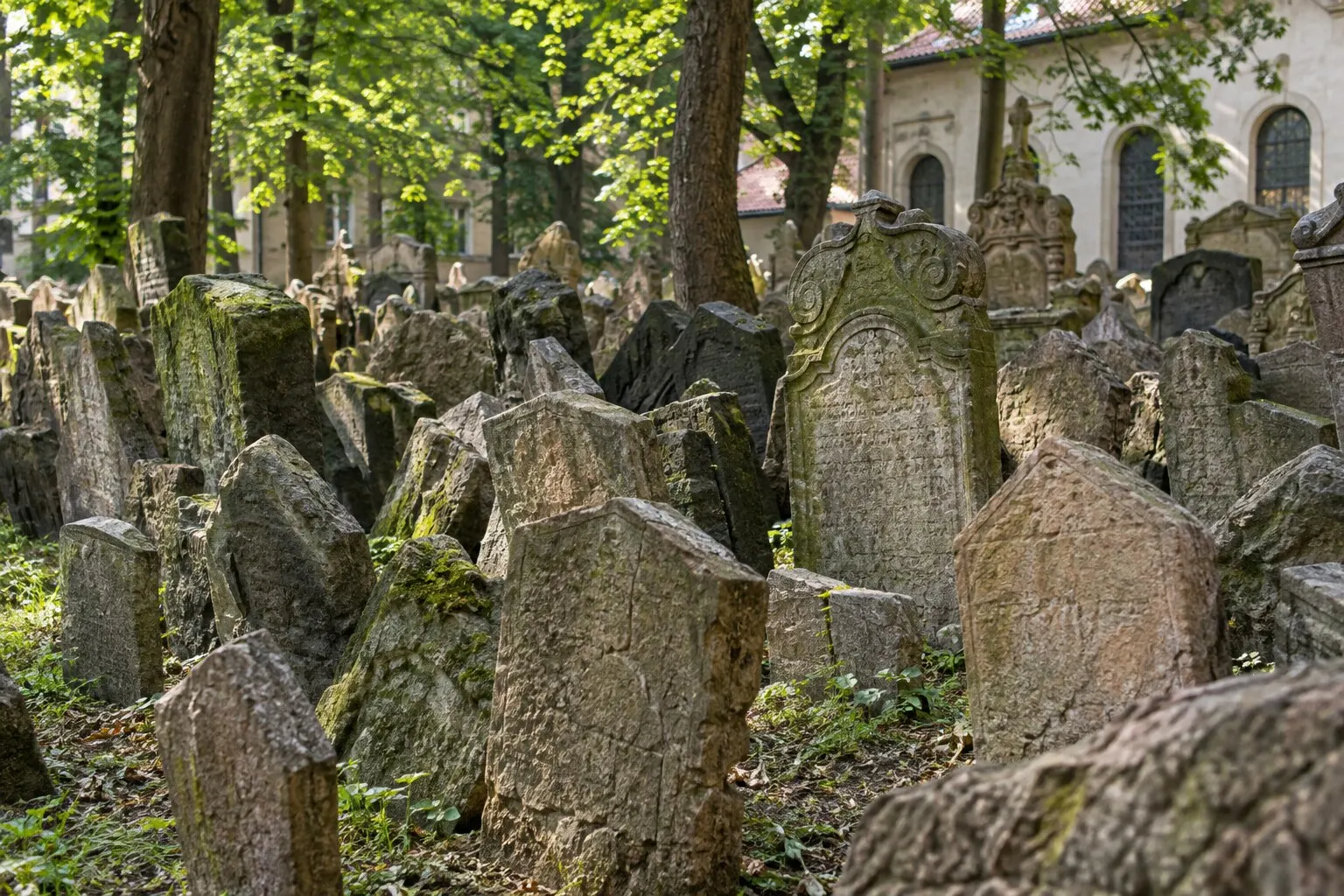
During the occupation, objects from Jewish communities across Bohemia and Moravia were shipped to Prague and catalogued here by Jewish scholars who were then deported.
The intention behind the collection is disputed and the result is not: this is one of the fullest collections of Jewish religious objects anywhere, assembled while the community that used them was being destroyed.
The Pinkas Synagogue has no exhibition. Its walls carry seventy-seven thousand names, hand-painted, of Bohemian and Moravian Jews who did not come back. The communist government closed it for decades and let the damp take the plaster. The names were painted again after 1989.
- Time to allow: 2–2.5 hours
- Hours: 09:00–17:00 (closed Sunday)
- Address: Maiselova 15, Josefov, 110 00 Prague 1
- Nearest transport: Staroměstská station · 3 min walk (A · 17 · 18)
- Localada perk: 5% OFF – One ticket covers the synagogues and the old cemetery — book below
- Closed on Saturdays and Jewish holidays
- Men are asked to cover their heads; paper caps are provided
- No photography inside the synagogues or the cemetery
Local tips
- Start at Pinkas and read a wall properly before moving on
- The cemetery path is one-way and takes twenty minutes
- The Old-New Synagogue needs a separate ticket to the main circuit
- Go first thing; the lanes here are narrow and fill fast
- The Spanish Synagogue at the end is the one people remember
Wenceslas Square & the National Museum
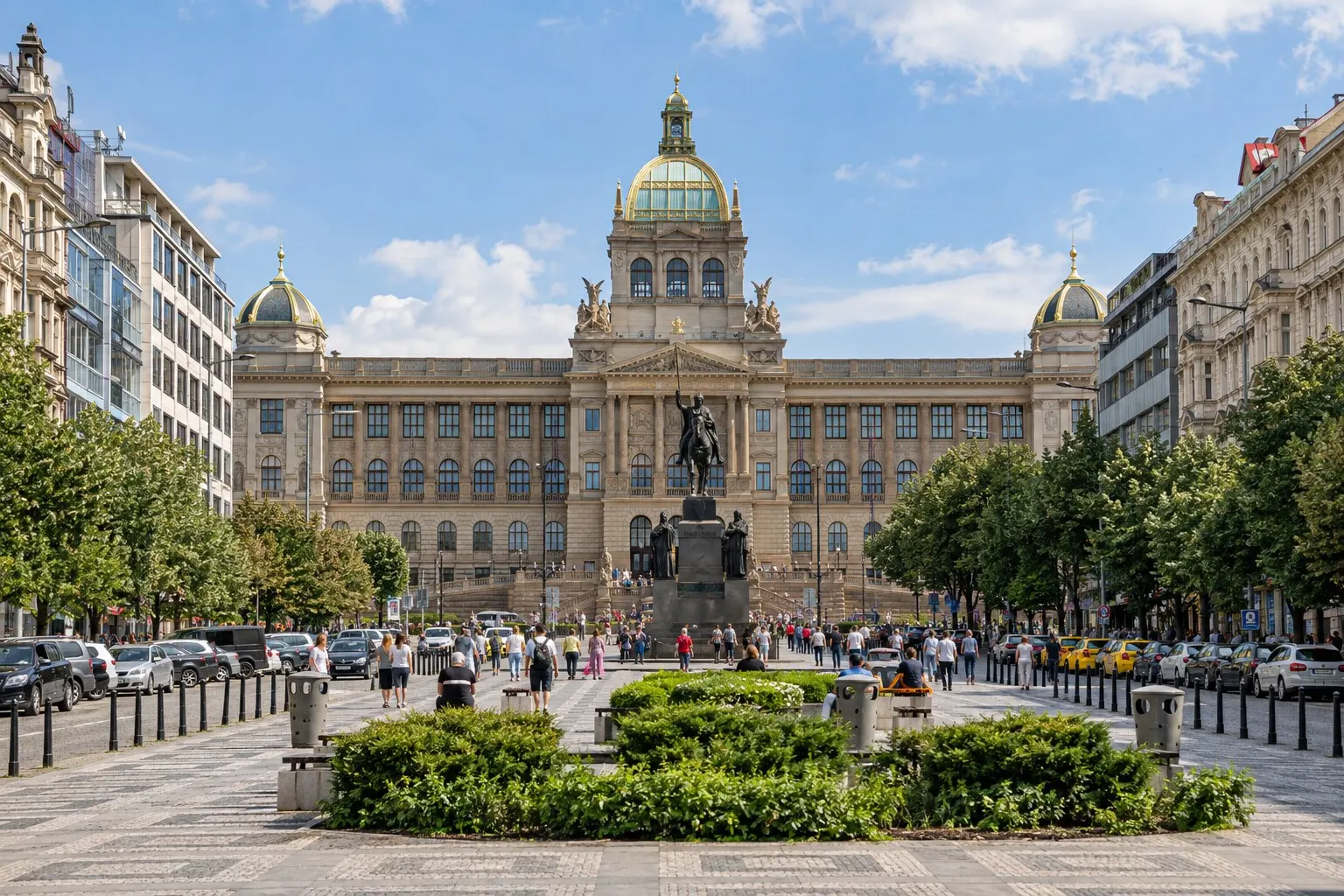
It is not a square. It is a boulevard seven hundred metres long, laid out in 1348 as the horse market of a brand-new town, and it has been the place this country argues with itself ever since.
In 1969 a student called Jan Palach set himself alight near the top of it in protest at the occupation that had crushed the Prague Spring. A bronze cross set into the pavement below the museum marks the spot where he fell.
Twenty years later the crowd that filled this street from end to end jingled their keys at the government until it resigned. The sound was the point: time's up.
The National Museum at the head of the square opened in 1891 and reopened in 2018 after seven years of work. Look closely at the stone around the windows on the facade — the paler patches are repairs where Soviet bullets hit the building in 1968. The restorers were told to leave them visible.
- Time to allow: 2 hours
- Hours: 10:00–18:00 (open daily)
- Address: Václavské náměstí 68, Nové Město, 110 00 Prague 1
- Nearest transport: Muzeum station · 1 min walk (A · C)
- Localada perk: 5% OFF – Museum entry with audio guide — book below
- The historic building and the new building are linked by an underground corridor
- The dome walkway needs a separate timed ticket
- The square is a pickpocket hotspot at the lower end in the evening
Local tips
- Stand at the museum steps and look down the square before you go in
- The Palach memorial is a low bronze cross in the pavement, easy to walk past
- The pale patches on the facade are the 1968 bullet repairs
- The passages off the square hide cinemas, bars and an upside-down horse
- Avoid the currency exchange booths here entirely
Vyšehrad & the Slavín Cemetery
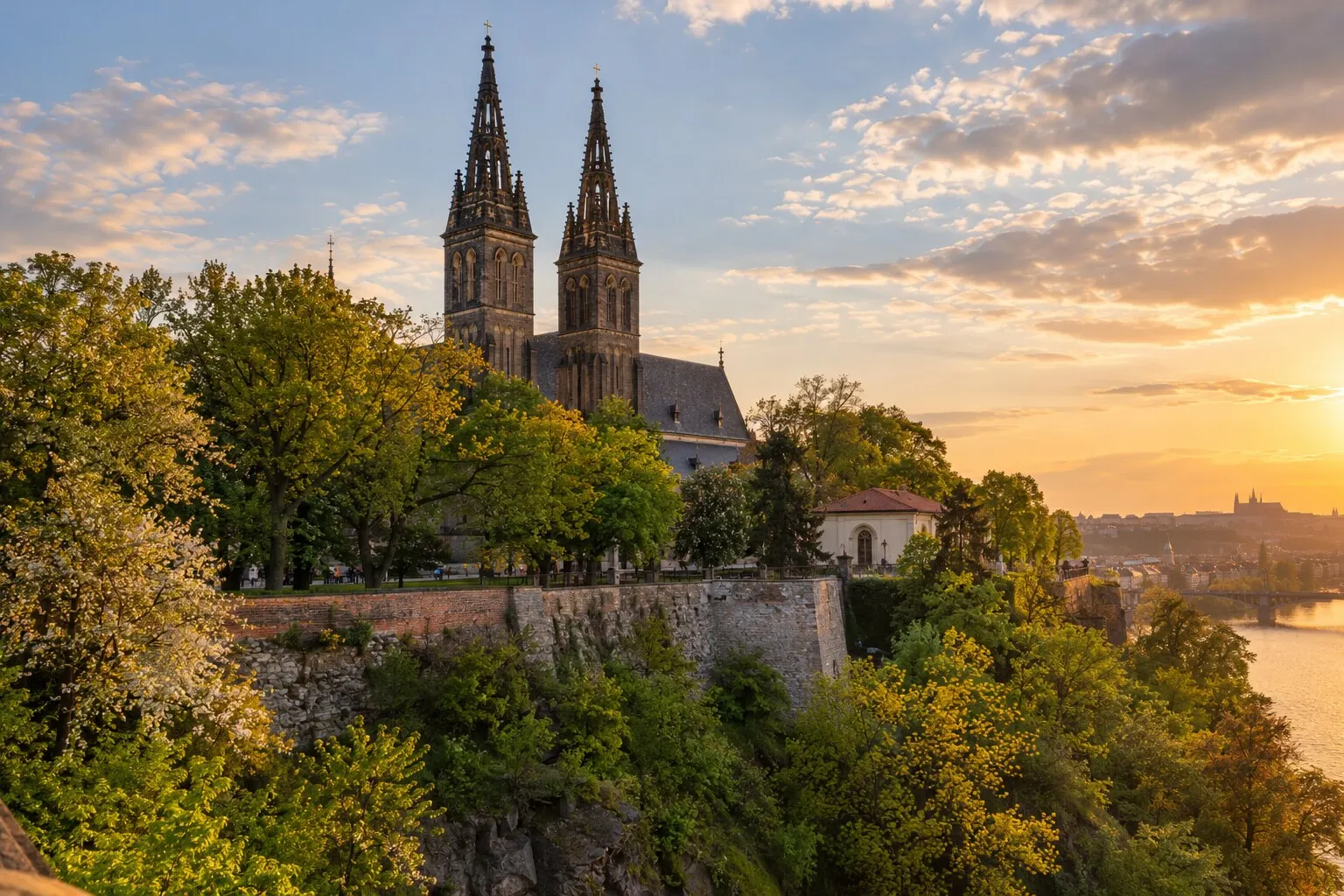
Every Czech child learns that the princess Libuše stood on this rock, looked north across the river and foretold a city whose glory would touch the stars.
She was standing in the wrong place. The city grew around the other hill, the one with the castle on it, and Vyšehrad spent the next thousand years being the one that did not win.
What is left is a fortress the Habsburgs rebuilt as a barracks, a pair of neo-Gothic towers visible from half of Prague, and the quietest ground in the city.
The cemetery beside the church is the national one. Dvořák is here, and Smetana, and Mucha, and Čapek who gave the world the word robot. The communal tomb at the centre is called Slavín; being buried in it is decided by committee and considered an honour.
- Time to allow: 1.5–2 hours
- Hours: Open 24 hours
- Address: V Pevnosti 159/5b, Vyšehrad, 128 00 Prague 2
- Nearest transport: Vyšehrad station · 8 min walk (C)
- Localada perk: 5% OFF
- The grounds are open at all hours; the casemates and the church have their own tickets
- The cemetery closes earlier than the park
- The walk up from the metro is gentle but continuous
Local tips
- Come at the end of the day; the sunset over the river from the south wall is the reason locals climb up here
- The cemetery map at the gate marks the famous graves
- The casemate tour is the only way to see the original bridge statues
- Bring something to drink; there is one kiosk and it keeps its own hours
- The river path back into town takes about thirty minutes on foot
Where to eat: verified local picks
Lokál Dlouhá
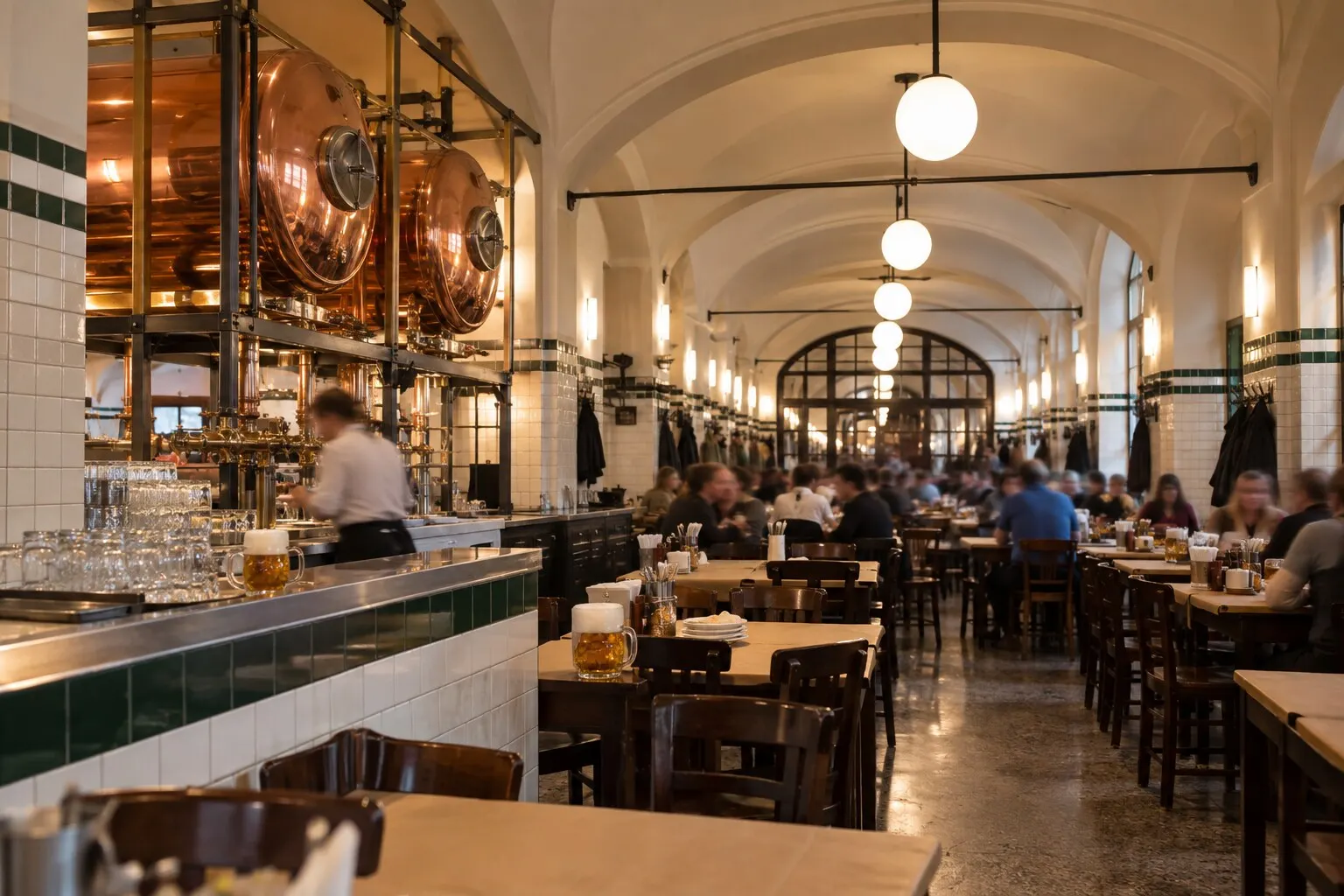
A long tiled hall with paper tablecloths, a beer tank behind the bar and waiters who have been doing this for twenty years.
The beer arrives unpasteurised from Plzeň and is drunk fast enough that it never sits. Ask for a hladinka and you get the standard pour with a finger of foam; ask for a mlíko and you get a glass of almost nothing but foam, which Czechs drink as a last round.
The food is the canon done properly: svíčková with cream sauce and bread dumplings, goulash, a fried cheese that nobody defends and everybody orders.
It is busy, it is loud, and the prices are what a Praguer would pay.
- Hours: 11:00–00:00 (open daily)
- Address: Dlouhá 33, Staré Město, 110 00 Prague 1
- Nearest transport: Náměstí Republiky station · 5 min walk (B · 6 · 8)
- No reservations for small groups in the evening; expect a short wait
- The daily lunch menu is written on the board in Czech only
- Card payment accepted; the tab is written on your table sheet
Local tips
- Order the beer by name: hladinka for the normal pour, mlíko for the foam one
- The lunch menu between 11 and 3 is the best value in the Old Town
- Sit at the long shared tables — the booths get taken by groups
- Say dobrý den when you walk in; it is expected and it changes the service
U Hrocha
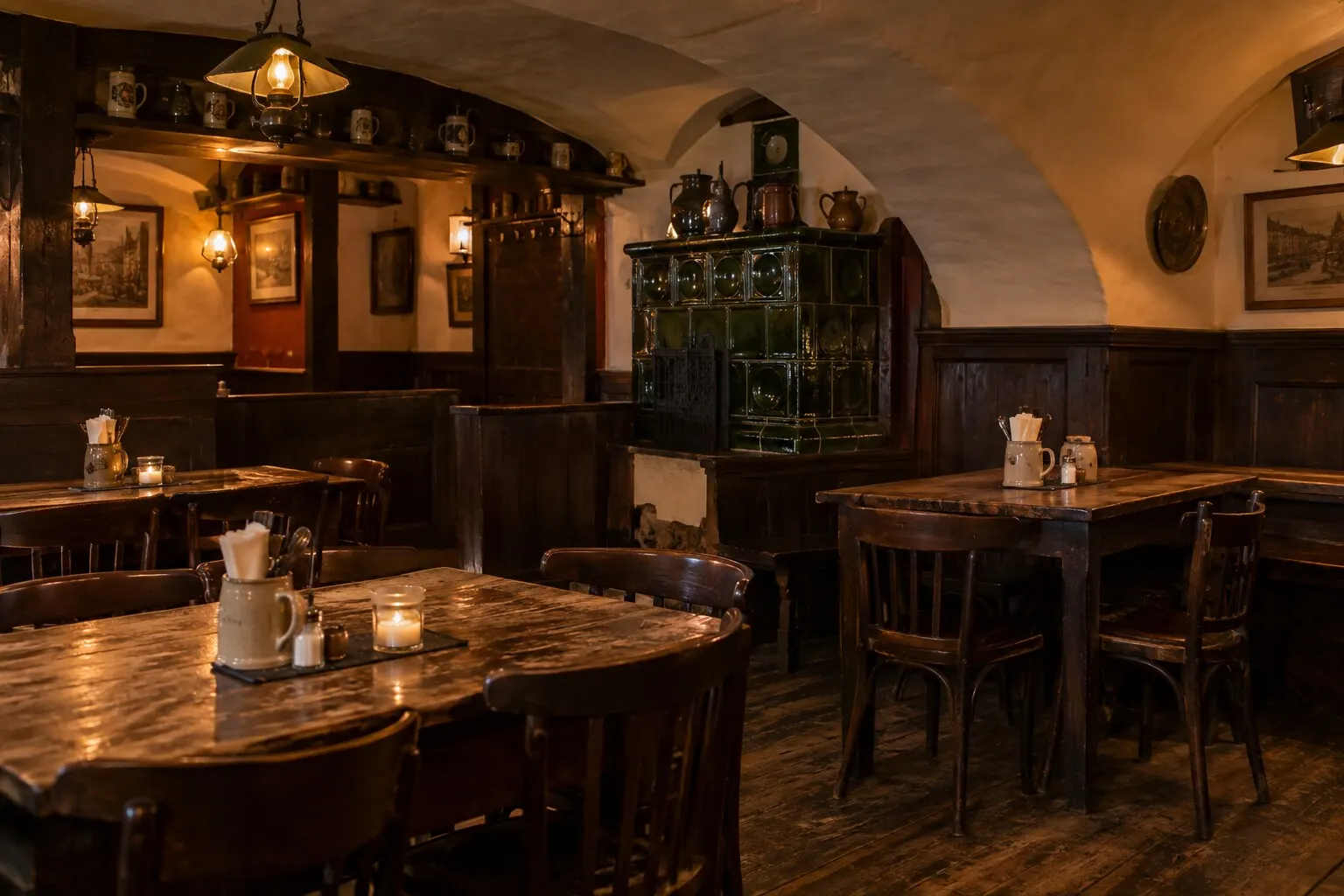
Four tables, a low ceiling, and a hippo on the sign. It sits on the lane that climbs to the castle and somehow the crowd walking past never comes in.
There is no English menu. There is a blackboard, a barman who will point, and a short list of things that go with beer: goulash, sausage, pickled cheese, bread.
The regulars are older men who have been sitting in the same seats since before the revolution, journalists from the offices nearby, and the occasional politician from the castle above.
If you want to know what a Czech pub was like before anyone came to look at them, it is up this lane.
- Hours: 12:00–23:00 (open daily)
- Address: Thunovská 10, Malá Strana, 118 00 Prague 1
- Nearest transport: Malostranská station · 6 min walk (A · 22)
- Cash is safest; the card machine is not always working
- No English menu — point, or ask the barman
- Small room, and locals have their seats; wait to be waved in
Local tips
- Go early evening; after eight there is rarely a free table
- Order the goulash and a dark beer, in that order
- The lane outside is the quiet way up to the castle
- Do not expect fast service or a smile in the first five minutes; both arrive later
Kantýna

A butcher's shop and a canteen in the same room, in a former bank hall with the counters still in place.
You queue at the case, choose the cut you want by pointing at it, and it is weighed, priced and cooked while you find a seat at one of the long shared tables. The tartare is prepared in front of you and comes with fried bread to rub with garlic yourself.
The meat comes from Czech farms the owners name on the board. At lunchtime the queue is office workers; in the evening it is families and people who came for the steak and stayed for the beer.
No reservations, no waiters, no ceremony.
- Hours: 11:30–23:00 (open daily)
- Address: Politických vězňů 1511/5, Nové Město, 110 00 Prague 1
- Nearest transport: Muzeum station · 5 min walk (A · C)
- Order and pay at the counter; the number on your ticket is called when it is ready
- Tables are shared and filling up is normal
- Busiest between 12 and 1; the queue moves fast
Local tips
- Go at the edges of lunch — 11:30 or after 2 — for a shorter queue
- The tartare is the thing to order if you only order one thing
- Ask for the cut to be cooked medium rare; they know what they are doing
- The standing counter by the window is quicker than waiting for a table
Shops: verified local picks
Kubista
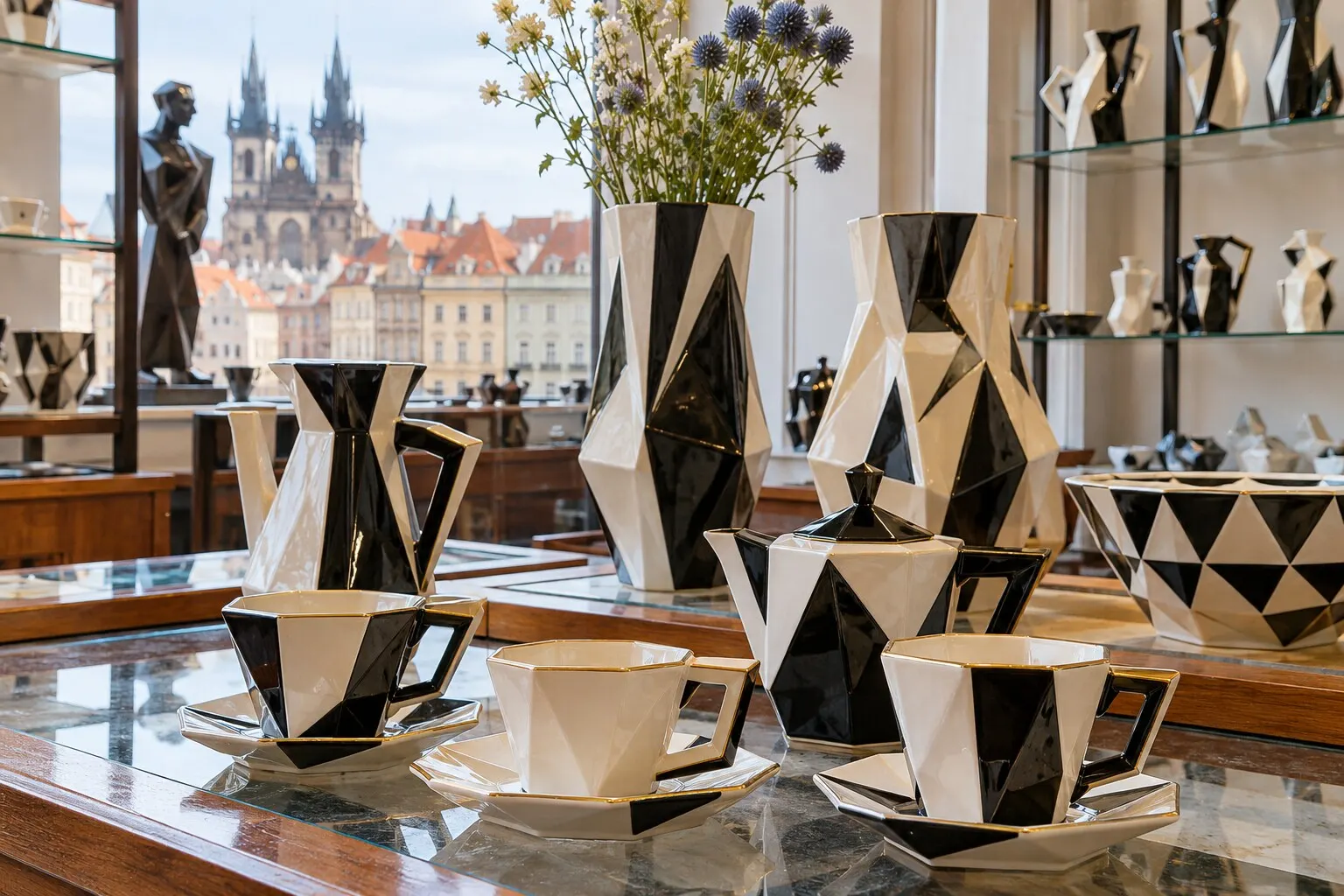
Cubism went from painting to architecture in exactly one country, and this is the ground floor of the building where it happened.
The House of the Black Madonna was finished in 1912 with faceted walls, angled windows and a café upstairs that looks like a drawing folded into a room. Czech designers took the idea further than anyone: cups with sharp edges, chairs built out of triangles, clocks that lean.
The shop sells reproductions made from the original drawings, alongside period pieces and books. Some of it is affordable and some of it is museum-priced; the staff will tell you which is which without being asked.
It is the one souvenir from Prague that could not come from anywhere else.
- Hours: 10:00–18:00 (closed Monday)
- Address: Ovocný trh 19, Staré Město, 110 00 Prague 1
- Nearest transport: Náměstí Republiky station · 4 min walk (B · 6 · 8)
- Closed on Mondays
- Reproductions are marked as such; period pieces come with documentation
- Shipping can be arranged for larger items
Local tips
- Look up at the facade before you go in — the building is the exhibit
- The café on the first floor is the only Cubist interior you can sit in
- The small ceramics travel well and cost a fraction of the furniture
- Ask which pieces are still made by the original workshop
Truhlář Marionety
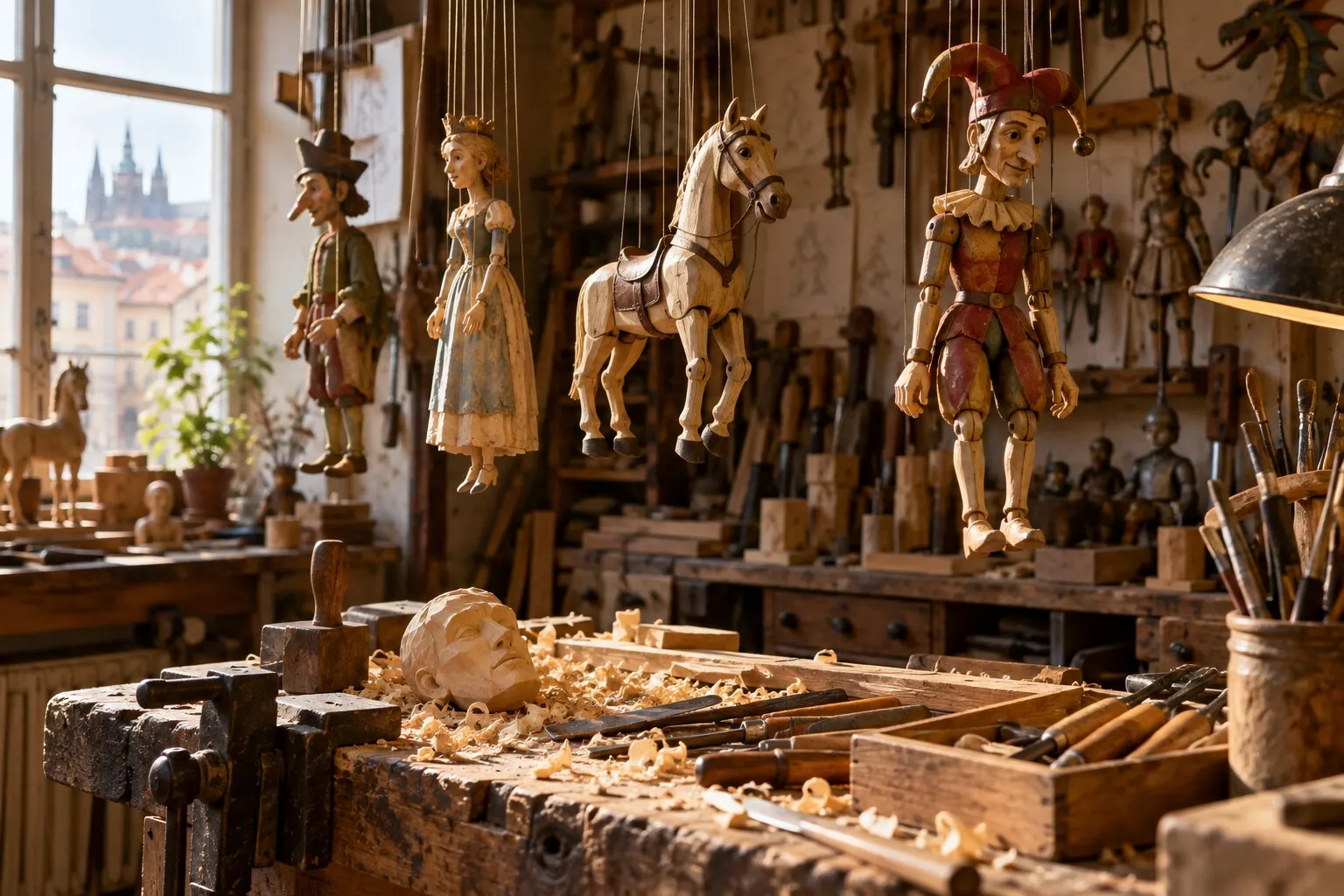
Czech puppetry is on the UNESCO list of living traditions, and for two hundred years it did a job no theatre could: when German was the official language, travelling puppeteers kept performing in Czech, to villages, in barns.
Walk down Karlova and you will see hundreds of marionettes in the windows, nearly all of them factory-made from resin.
This is a workshop. The puppets are carved from lime wood, strung by hand, and the carvers' names are on them. A jester takes days; a devil with a moving jaw takes longer.
You can watch part of the carving, ask for a commission, and bring one back years later to be restrung.
The difference between this window and the ones on the tourist street is about three hundred years of practice.
- Hours: 10:00–18:00 (open daily)
- Address: U Lužického semináře 5, Malá Strana, 118 00 Prague 1
- Nearest transport: Malostranská station · 4 min walk (A · 22)
- Hand-carved pieces are signed by the carver
- Commissions take several weeks and can be shipped
- Repairs and restringing are done in the workshop
Local tips
- Pick one up before you buy — weight and balance are how you tell wood from resin
- The small jesters are the classic first puppet and travel in hand luggage
- Ask to see the strings knotted; that is where the work shows
- The National Marionette Theatre a few streets away still runs a Don Giovanni in puppets
Experiences and activities
Classical Concert in the Mirror Chapel
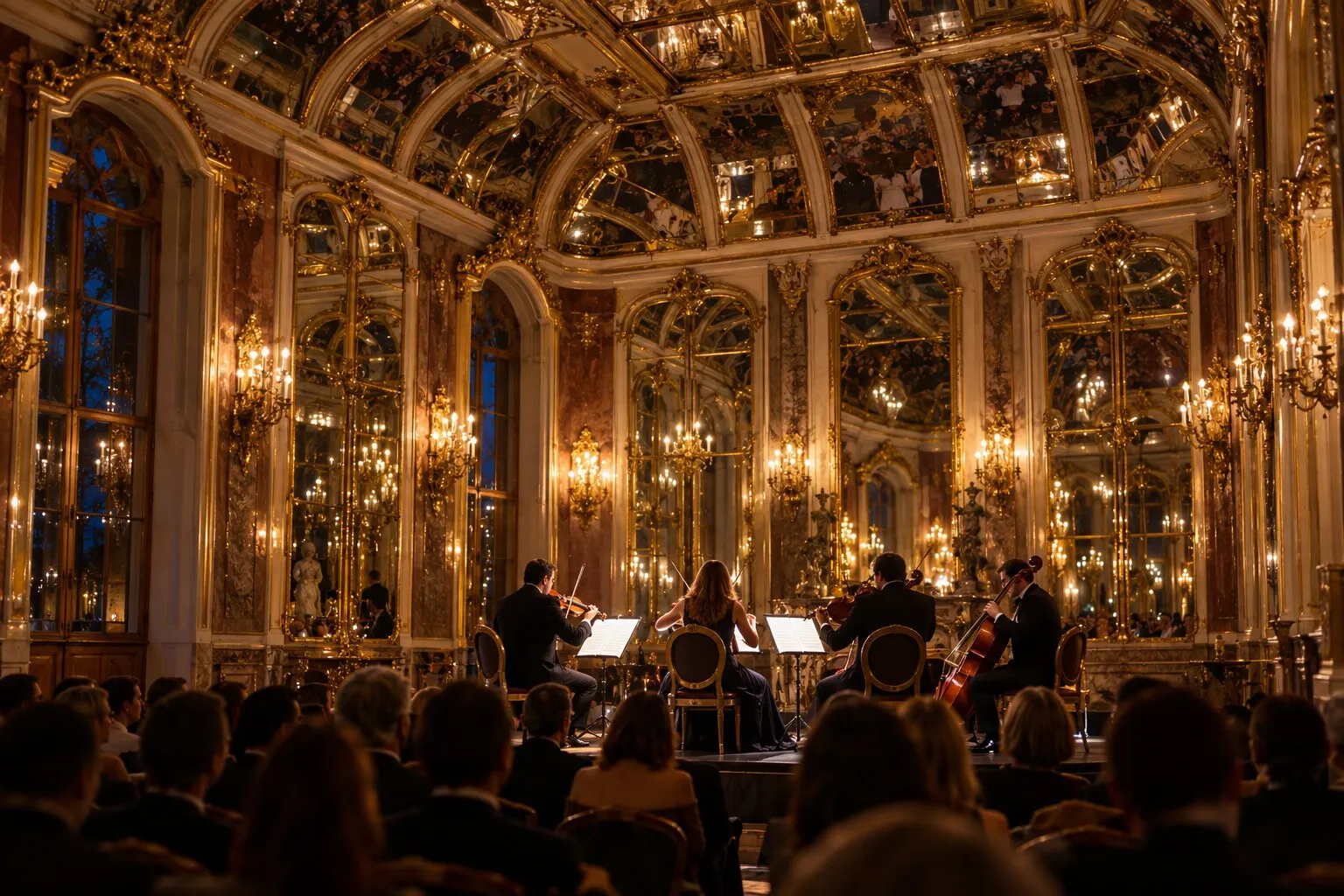
The chapel inside the Klementinum is lined with mirrors set into the ceiling frescoes, which is unusual enough on its own. Mozart played the organ here.
The concerts are short, an hour or so, and the programme is what you would expect: Vivaldi, Mozart, Dvořák, sometimes Smetana. The players are local professionals and the room seats fewer than two hundred.
It is the one evening in Prague where the building and the music were made for each other.
- Time to allow: 1 hour
- Hours: 18:00–21:30 (open daily)
- Address: Klementinum, Mariánské náměstí 5, 110 00 Prague 1
- Nearest transport: Staroměstská station · 3 min walk (A · 17 · 18)
- Localada perk: 5% OFF – Reserved seating in the Mirror Chapel — book below
- Seating is unnumbered in some tiers; arrive fifteen minutes early for the front
- The chapel is cool even in summer
- Photography without flash is allowed between pieces
The Medieval Underground
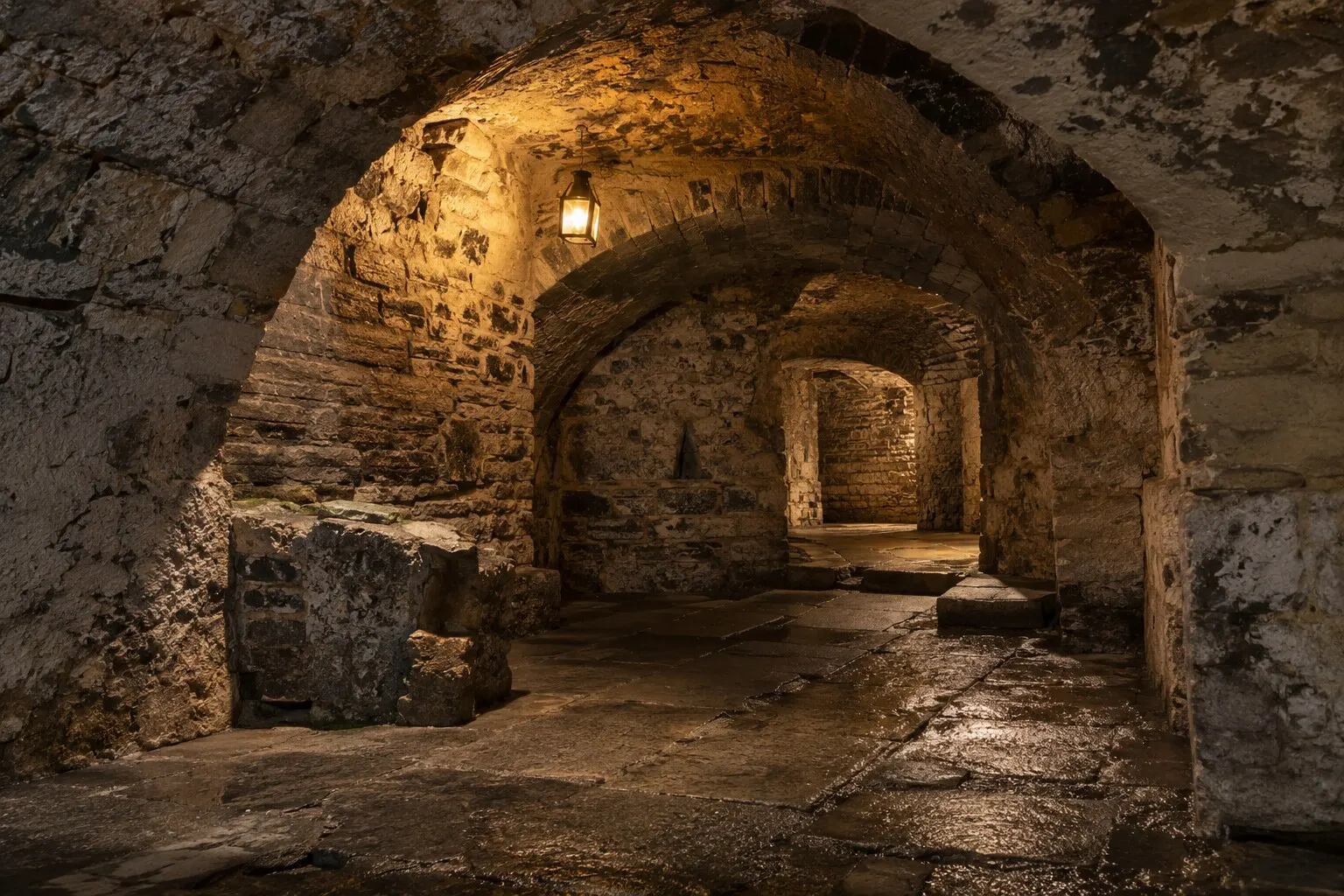
The Old Town used to flood. The solution, in the thirteenth century, was to raise the whole street level by three metres and build on top of what was there.
Ground floors became cellars. Doorways became ceilings. The rooms are still down there under the square, and the tour takes you through them: a Romanesque house, the dungeon, the passages the councillors used.
The guides are good on the details that make it real — where the prisoners were kept, what the walls were used for, why one room has a drain in the middle of the floor.
- Time to allow: 1 hour
- Hours: 10:00–19:00 (open daily)
- Address: Staroměstské náměstí 1, 110 00 Prague 1
- Nearest transport: Staroměstská station · 5 min walk (A · 17 · 18)
- Localada perk: 5% OFF – Guided descent under the Old Town Hall — book below
- Low ceilings and uneven floors; not suitable for anyone unsteady on their feet
- Cool underground whatever the weather outside
- Tours run in English several times a day
Trdelník Workshop
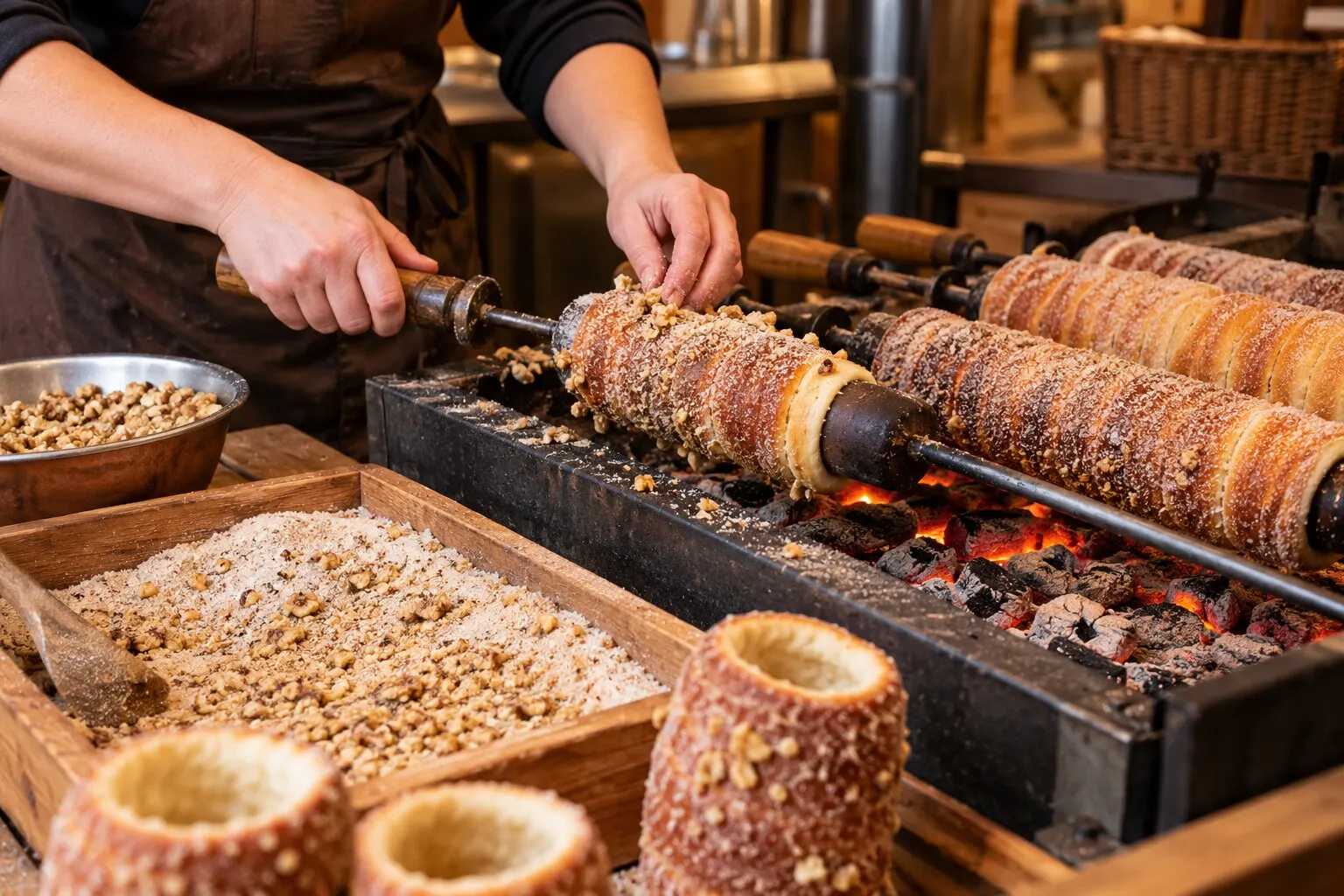
Every second doorway in the Old Town sells trdelník and every Czech will tell you it is not Czech. They are right — it arrived from Transylvania in the nineteenth century and became a tourist staple only in the last twenty years.
Making one yourself is a different thing. You roll the dough into a rope, wind it round a hot iron cylinder, turn it over the coals, and roll it in sugar and walnut while it steams.
It takes an hour, it is loud and messy, and it settles the argument about whether the ones sold on the street are worth it.
- Time to allow: 1 hour
- Hours: 10:00–19:00 (open daily)
- Address: Dlouhá, Staré Město, 110 00 Prague 1
- Nearest transport: Staroměstská station · 6 min walk (A · 6 · 8)
- Localada perk: 5% OFF – Make your own chimney cake and eat it warm — book below
- Aprons provided; the dough is sticky
- Suitable for children with an adult
- Vegan dough is available on request
Self-Pour Czech Beer Tasting
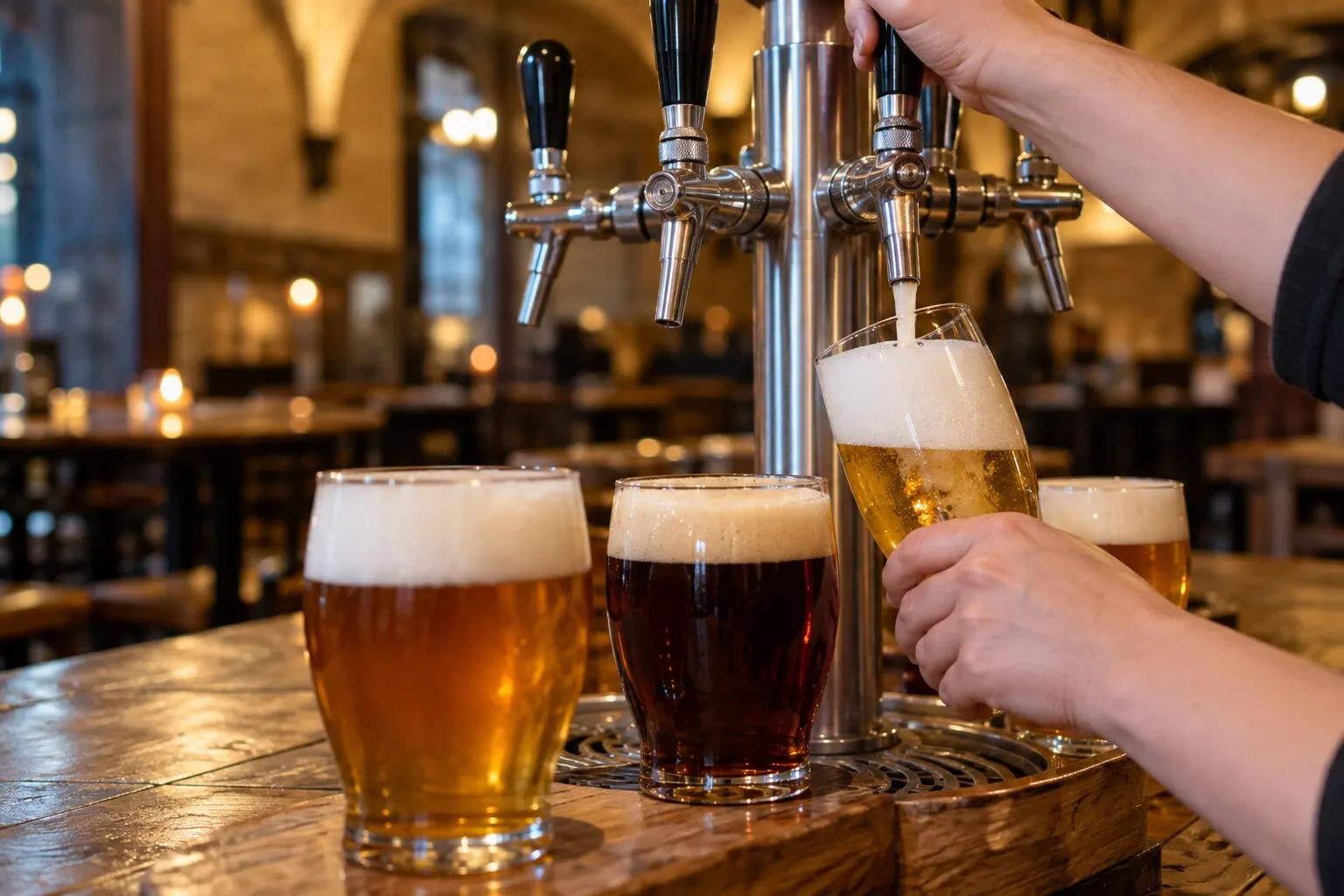
Czechs drink more beer per head than anyone else and have done for thirty years running. They are also particular about how it is poured: a proper Pilsner comes with a thick wet head, and asking for it without one is a small insult.
Here you pour it yourself from the tap at your table, which is the fastest way to learn why that matters. The flight moves through pale lager, dark lager, unfiltered and a wheat beer, with someone on hand to explain what you are tasting.
You will also learn the three ways a Czech bartender can pour the same beer, and when to ask for each.
- Time to allow: 1–1.5 hours
- Hours: 12:00–23:00 (open daily)
- Address: Nové Město, 110 00 Prague 1
- Nearest transport: Můstek station · 5 min walk (A · B)
- Localada perk: 5% OFF – Pour your own flight of Czech beers — book below
- Over-18s only; soft drinks available for anyone not drinking
- Snacks are included with most flights
- Late sessions fill up at weekends
Czech Folklore Evening
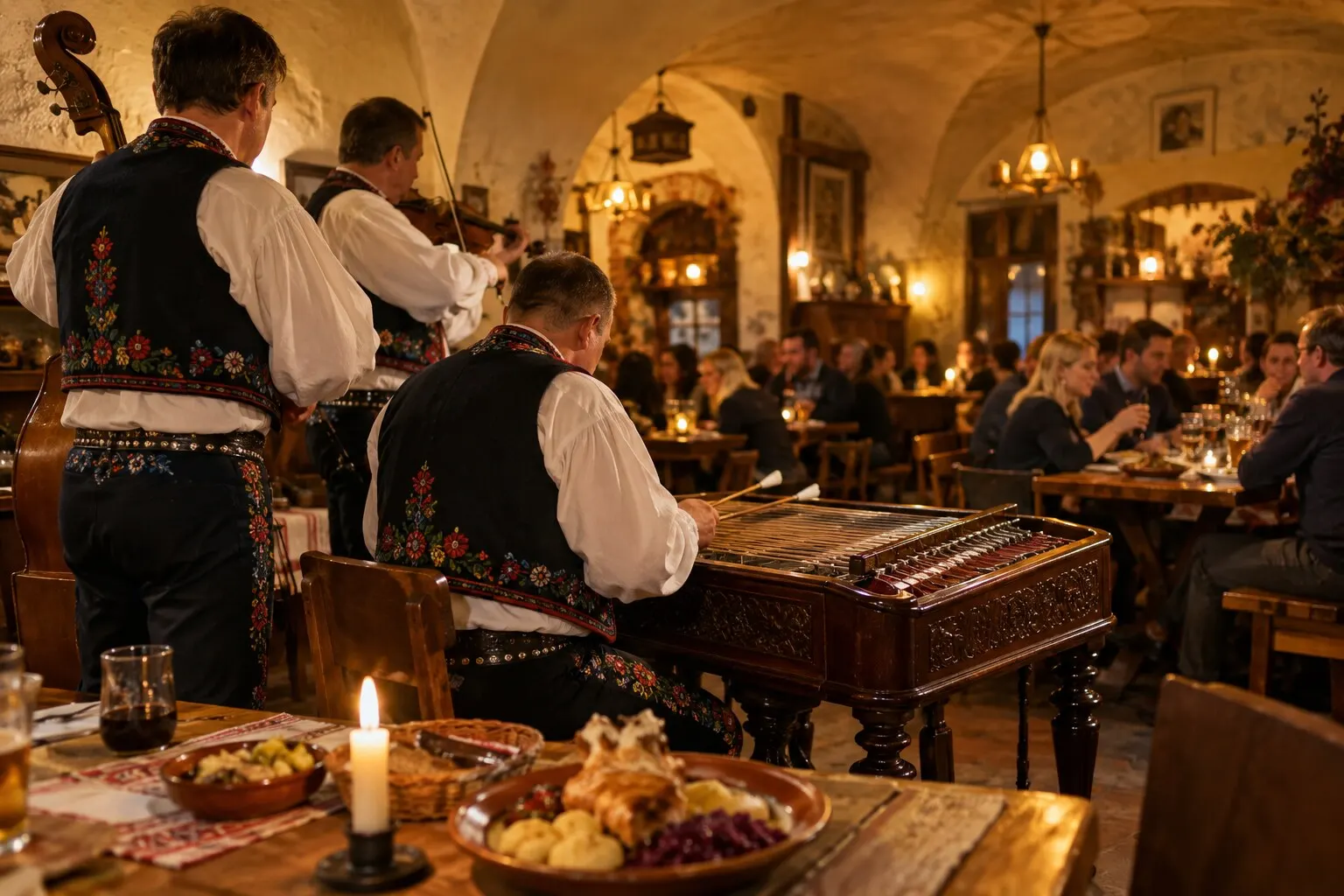
Folk music in Bohemia and Moravia was not written down for most of its life; it was played at weddings and harvests and passed on by ear. The costumes change every fifty kilometres and so do the dances.
The evening is a dinner with a live band, dancers, a dulcimer and a stack of traditional dishes — roast pork, dumplings, cabbage, the whole canon.
It is unapologetically a show. But the musicians are the real thing, and by the second hour half the room is on its feet, which is more or less what would have happened at the wedding.
- Time to allow: 3 hours
- Hours: 19:00–22:00 (open daily)
- Address: Nové Město, 120 00 Prague 2
- Nearest transport: I. P. Pavlova station · 6 min walk (C)
- Localada perk: 5% OFF – Dinner, drinks and the folklore show — book below
- Dinner is included and served during the show
- Vegetarian menus on request when booking
- Shows run most evenings and finish before the 10pm noise curfew
Prague travel guides on the Localada blog
Prague audio guide: frequently asked questions
Is the Prague audio guide free?
Yes. Localada’s Prague guide is free: create a free account and open it in your browser, no app download needed. It includes 21 stops, audio and written stories, a route map and scam-awareness tips. Tickets for paid sights are bought separately; booking through Localada’s GetYourGuide links gives 5% off.
How many stops are in the Prague audio guide?
There are 21 stops: 11 sights, 3 places to eat, 2 shops and 5 experiences.
How long does it take to see the main sights in Prague?
Visiting all 11 sights in the guide takes about 15.5–18.5 hours, not counting travel between them. Prague Castle & St Vitus Cathedral needs the most time (allow 3–3 hours).
Which Prague sights are closed on certain days?
1 of the 11 sights have a weekly closing day: Josefov — the Jewish Quarter (closed Sunday). Plan these for another day of the week.
What time do Prague sights open and close?
The earliest opening in the guide is 09:00 (Prague Castle & St Vitus Cathedral) and the latest closing is 21:00 (Old Town Square & the Astronomical Clock). Each stop’s hours are in the table above.
Are there discounts with the Prague guide?
16 stops include a Localada perk, for example Prague Castle & St Vitus Cathedral (5% OFF), Strahov Monastery & Its Library (5% OFF), Charles Bridge & the Old Town Bridge Tower (5% OFF), Petřín Hill & the Lookout Tower (5% OFF), Kampa Island & the Lennon Wall (5% OFF) and Old Town Square & the Astronomical Clock (5% OFF). Show the code in the guide at verified restaurants and shops; ticket discounts are applied at GetYourGuide checkout.
What can I do in Prague on a rainy day?
9 stops in the guide are indoors, including Prague Castle & St Vitus Cathedral, Strahov Monastery & Its Library, The Klementinum Library, Wenceslas Square & the National Museum, Classical Concert in the Mirror Chapel and Trdelník Workshop.
What is open in the evening in Prague?
These stops in the guide stay open late: Old Town Square & the Astronomical Clock (until 21:00), Classical Concert in the Mirror Chapel (until 21:30), Self-Pour Czech Beer Tasting (until 23:00), Czech Folklore Evening (until 22:00), Lokál Dlouhá (until 00:00) and U Hrocha (until 23:00).
How do I get between the stops in Prague?
The Prague stops are spread across the city, so the guide lists the nearest metro, tram or train station for each one.
Which languages is the Prague audio guide available in?
Narration and text are available in 15 languages: English, Turkish, German, French, Spanish, Italian, Portuguese, Dutch, Polish, Russian, Arabic, Persian, Chinese, Japanese and Korean.