
















Localada’s free Barcelona audio guide covers 21 stops: 11 sights, 3 places to eat, 2 shops and 5 experiences, narrated in 15 languages. Seeing all 11 sights takes roughly 13.5–18.5 hours of visiting time, before travel between them. 16 of the 21 stops come with a Localada perk, such as 5% off GetYourGuide tickets or a discount at a verified local restaurant or shop.
Opening hours, perks and visit times below come from the live Localada app and were last checked on 30 October 2026. Always confirm on the day: hours can change for holidays and prayer times.
Open the free Barcelona guide →
Barcelona audio guide stops at a glance
| # | Stop | Type | Time to allow | Hours | Closed | Today | Nearest transport | Localada perk |
|---|---|---|---|---|---|---|---|---|
| 1 | Sagrada Família | Basilica | 1.5–2 hours | 09:00–20:00 | — | — | Sagrada Família station · 2 min walk | 5% OFF |
| 2 | Park Güell | Park | 1.5–2 hours | 09:30–19:30 | — | — | Lesseps station · 15 min walk uphill | 5% OFF |
| 3 | Casa Batlló | House | 1–1.5 hours | 09:00–20:00 | — | — | Passeig de Gràcia station · 2 min walk | 5% OFF |
| 4 | La Pedrera — Casa Milà | House | 1–1.5 hours | 09:00–20:00 | — | — | Diagonal station · 2 min walk | 5% OFF |
| 5 | Barcelona Cathedral & the Gothic Quarter | Cathedral | 1–1.5 hours | 09:30–18:30 | — | — | Jaume I station · 4 min walk | 5% OFF |
| 6 | Santa Maria del Mar | Basilica | 45–60 min | 10:00–18:00 | — | — | Jaume I station · 5 min walk | 5% OFF |
| 7 | Picasso Museum | Museum | 1.5–2 hours | 10:00–19:00 | Monday | — | Jaume I station · 5 min walk | 5% OFF |
| 8 | Palau de la Música Catalana | Concert hall | 1 hour | 09:00–15:30 | — | — | Urquinaona station · 3 min walk | 5% OFF |
| 9 | La Boqueria & La Rambla | Market | 45–90 min | 08:00–20:30 | Sunday | — | Liceu station · 1 min walk | 5% OFF |
| 10 | Hospital de Sant Pau | Monument | 1.5–2 hours | 09:30–18:30 | — | — | Sant Pau | Dos de Maig station · 3 min walk | 5% OFF |
| 11 | MNAC — Palau Nacional | Museum | 2–2.5 hours | 10:00–18:00 | Monday | — | Espanya station · 10 min walk and escalators | 5% OFF |
| 12 | Montjuïc Cable Car | Cable car | 45–60 min | 10:00–19:00 | — | — | Paral·lel station · funicular, then the cable car | 5% OFF |
| 13 | Flamenco at Palau Dalmases | Show | 1 hour | 18:00–23:00 | — | — | Jaume I station · 4 min walk | 5% OFF |
| 14 | Paella Cooking Class & Boqueria Market | Cooking class | 3–4 hours | 10:00–18:00 | — | — | Liceu station · 3 min walk | 5% OFF |
| 15 | Catamaran from Port Vell | Boat trip | 1.5 hours | 11:00–21:00 | — | — | Drassanes station · 3 min walk | 5% OFF |
| 16 | Casa Vicens | House | 1 hour | 10:00–20:00 | — | — | Fontana station · 5 min walk | 5% OFF |
| 17 | Cervecería Catalana | Restaurant | — | 09:00–01:00 | — | — | Diagonal station · 6 min walk | — |
| 18 | Bar del Pla | Restaurant | — | 12:00–23:00 | Monday | — | Jaume I station · 3 min walk | — |
| 19 | Quimet & Quimet | Restaurant | — | 12:00–22:30 | Sunday | — | Paral·lel station · 5 min walk | — |
| 20 | Cereria Subirà | Store | — | 09:30–20:00 | Sunday | — | Jaume I station · 2 min walk | — |
| 21 | Casa Gispert | Store | — | 10:00–20:00 | Sunday | — | Jaume I station · 5 min walk | — |
How much time do you need in Barcelona?
- Highlights only (about 4–5.5 hours): Sagrada Família, Park Güell and Casa Batlló.
- Every sight in the guide (about 13.5–18.5 hours): all 11 sights in route order; split across 3 days at a comfortable pace.
- Add food, shopping and experiences: 10 more stops, from verified restaurants to workshops and shows, listed below.
Sights in the Barcelona audio guide
Sagrada Família
Full Sagrada Família audio guide →
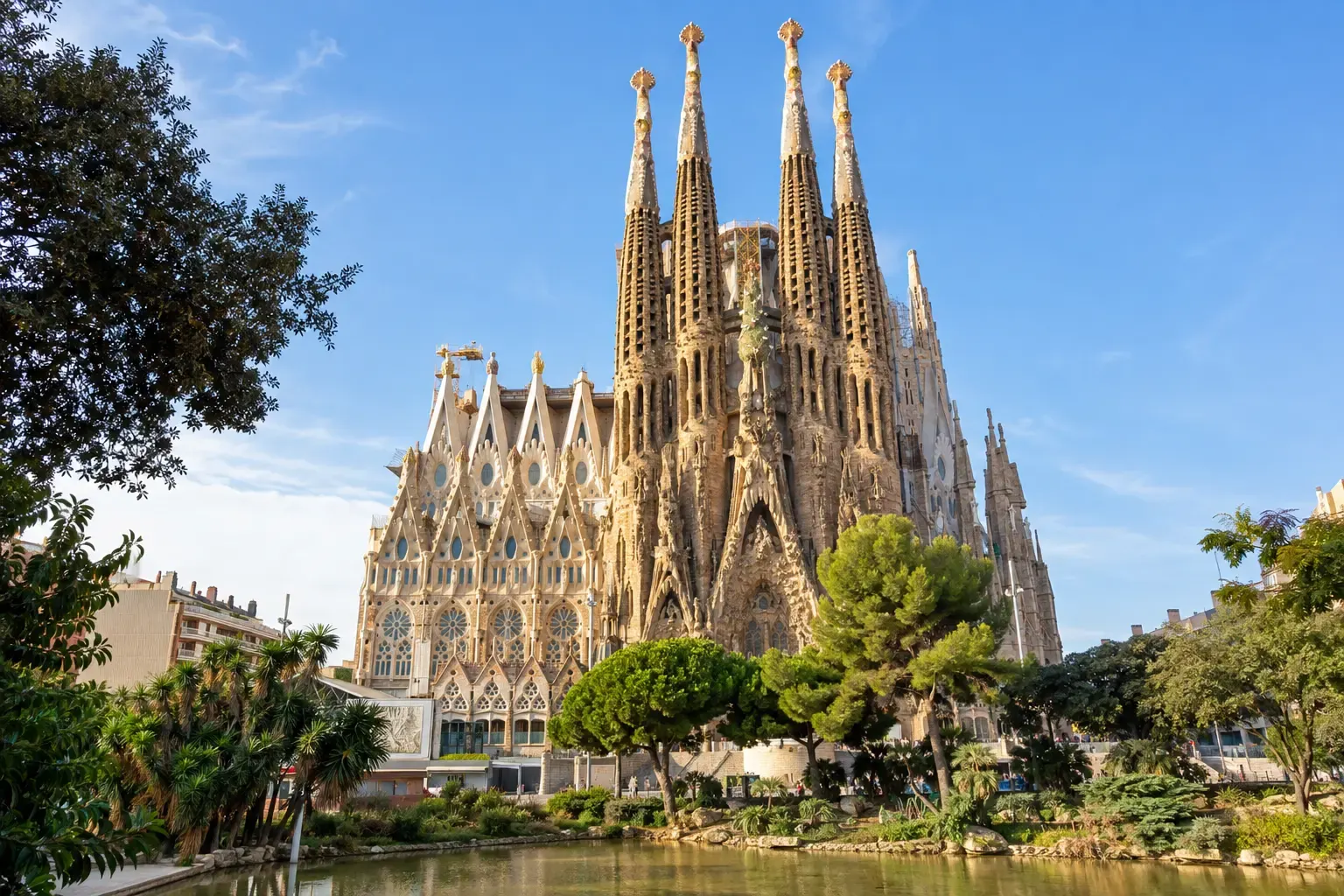
Gaudí knew he would not live to see it finished. When someone asked why the work was taking so long, he said his client was not in a hurry.
Building started in 1882 under a different architect. Gaudí took over a year later, threw out the plans and redrew the whole thing.
He gave it the last forty-three years of his life, and lived the final twelve on the site, sleeping in the workshop among the models.
He was hit by a tram in 1926 and died three days later. Nobody recognised him at first — he was dressed so plainly that he was taken for a beggar.
The Tower of Jesus Christ was finished in 2026, a century after his death. It brings the basilica to 172.5 metres and makes it the tallest church in the world.
- Time to allow: 1.5–2 hours
- Hours: 09:00–20:00 (open daily)
- Address: Carrer de Mallorca 401, L’Eixample, 08013 Barcelona
- Nearest transport: Sagrada Família station · 2 min walk (L2,L5)
- Localada perk: 5% OFF – Skip-the-line entry with audio guide — book below
- Timed entry — every ticket has a fixed time slot
- Tower lifts are booked separately and sell out first
- Shoulders and knees must be covered
- Opening hours change with the season; check before you go
Local tips
- Book the earliest slot of the day — the crowds build steadily through the morning
- Enter at the Nativity façade and leave by the Passion façade; they are meant to be read in that order
- If you can, come back late in the day — the west windows turn the interior into a different building
- The tower lifts give you the view, not the architecture; skip them if you are short on time
- The metro leaves you at the Passion side, so walk around the outside before you go in
Park Güell
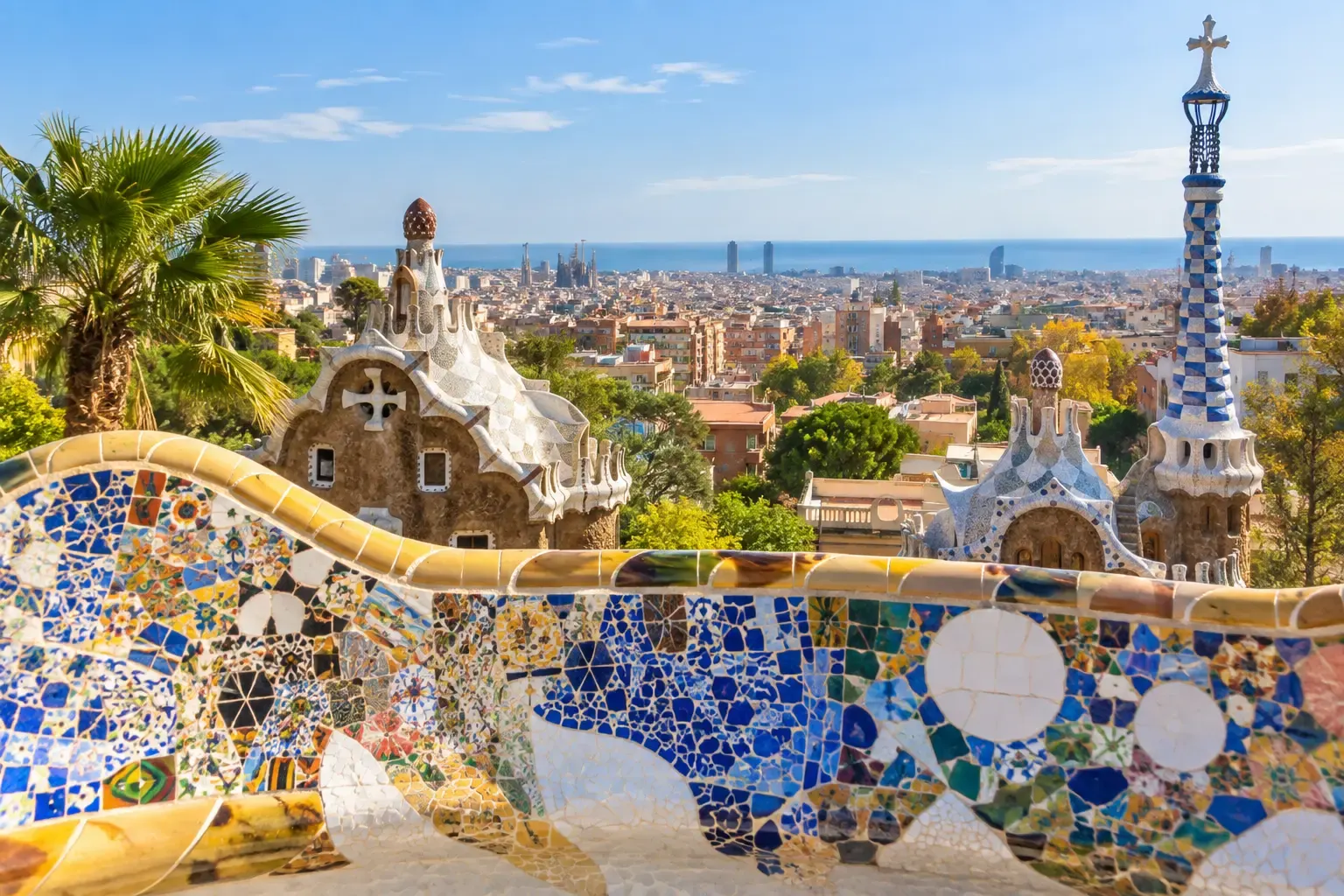
This was meant to be a gated estate for the rich. Sixty plots on a hill, clean air, a view of the sea.
Eusebi Güell bought the land in 1900 and handed the job to Gaudí. Roads were cut, terraces built, the entrance pavilions and the great terrace finished.
Two plots sold. Two.
The site was too far from the city, the road up too steep, and the buyers Güell had in mind had no interest in living on a bare hillside. Work stopped in 1914.
The city bought it in 1922 and opened it as a public park four years later. The failure of the scheme is the only reason you can walk through it.
Look closely at the surfaces. The benches, the lizard and the pinnacles are covered in trencadís — broken tile pressed into mortar, much of it factory waste and smashed crockery, used because a curved surface cannot be tiled any other way.
- Time to allow: 1.5–2 hours
- Hours: 09:30–19:30 (open daily)
- Address: Carrer d’Olot, Gràcia, 08024 Barcelona
- Nearest transport: Lesseps station · 15 min walk uphill (L3)
- Localada perk: 5% OFF – Timed entry to the Monumental Zone — book below
- The Monumental Zone is ticketed with timed entry
- The wider park is open without a ticket
- It is a steep climb from the metro
- Outdoor escalators run from the Vallcarca side
Local tips
- Book a morning slot — the terrace faces east and the light is best early
- Come up via Vallcarca and the escalators if you would rather not climb
- Stand in the middle of the hall under the terrace and listen; the sound is the point
- The Gaudí House Museum is a separate ticket and usually quiet
- Street works around Torrent del Remei run into 2027 — approach from the Olot side
Casa Batlló
Full Casa Batlló audio guide →
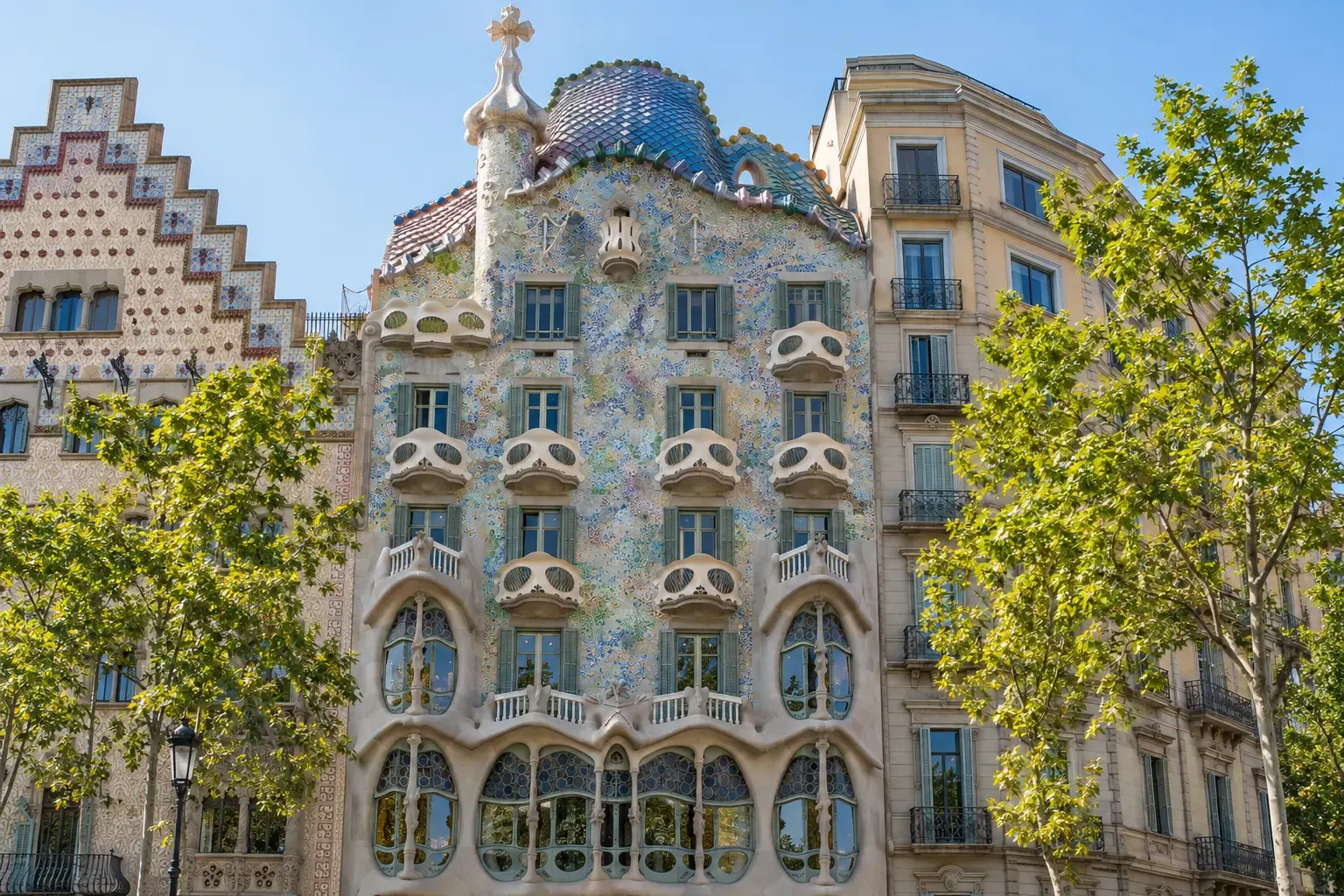
Gaudí did not build this house. He was handed one that already existed and told to make it worth looking at.
It went up in 1877, plain and rectangular. In 1904 Josep Batlló bought it and wanted it demolished. Gaudí talked him out of it.
What he did instead was take the front wall off and start again. Bones, scales, masks. Barcelona has always called it the house of bones.
The roof is the part everyone reads as a dragon's back, with a cross set into it like a lance. Whether Gaudí meant Saint George is not settled — he left no explanation.
Inside, look up the light well. The tiles run from pale at the bottom to deep blue at the top, because daylight weakens as it falls and he wanted every floor to receive the same amount.
- Time to allow: 1–1.5 hours
- Hours: 09:00–20:00 (open daily)
- Address: Passeig de Gràcia 43, L’Eixample, 08007 Barcelona
- Nearest transport: Passeig de Gràcia station · 2 min walk (L2,L3,L4)
- Localada perk: 5% OFF – Skip-the-line entry with audio guide — book below
- Timed entry; slots sell out in peak season
- The audio guide is included with most tickets
- Evening visits with a rooftop drink run in summer
- This is a private house museum, not a public monument
Local tips
- Go at the first or last slot; the middle of the day is shoulder to shoulder
- Stand on the far pavement first — the façade only resolves from across the street
- Look at the light well before the roof; it explains everything else
- The neighbours are worth two minutes: this block is known as the block of discord
- La Pedrera is a ten-minute walk up the same street
La Pedrera — Casa Milà
Full La Pedrera — Casa Milà audio guide →
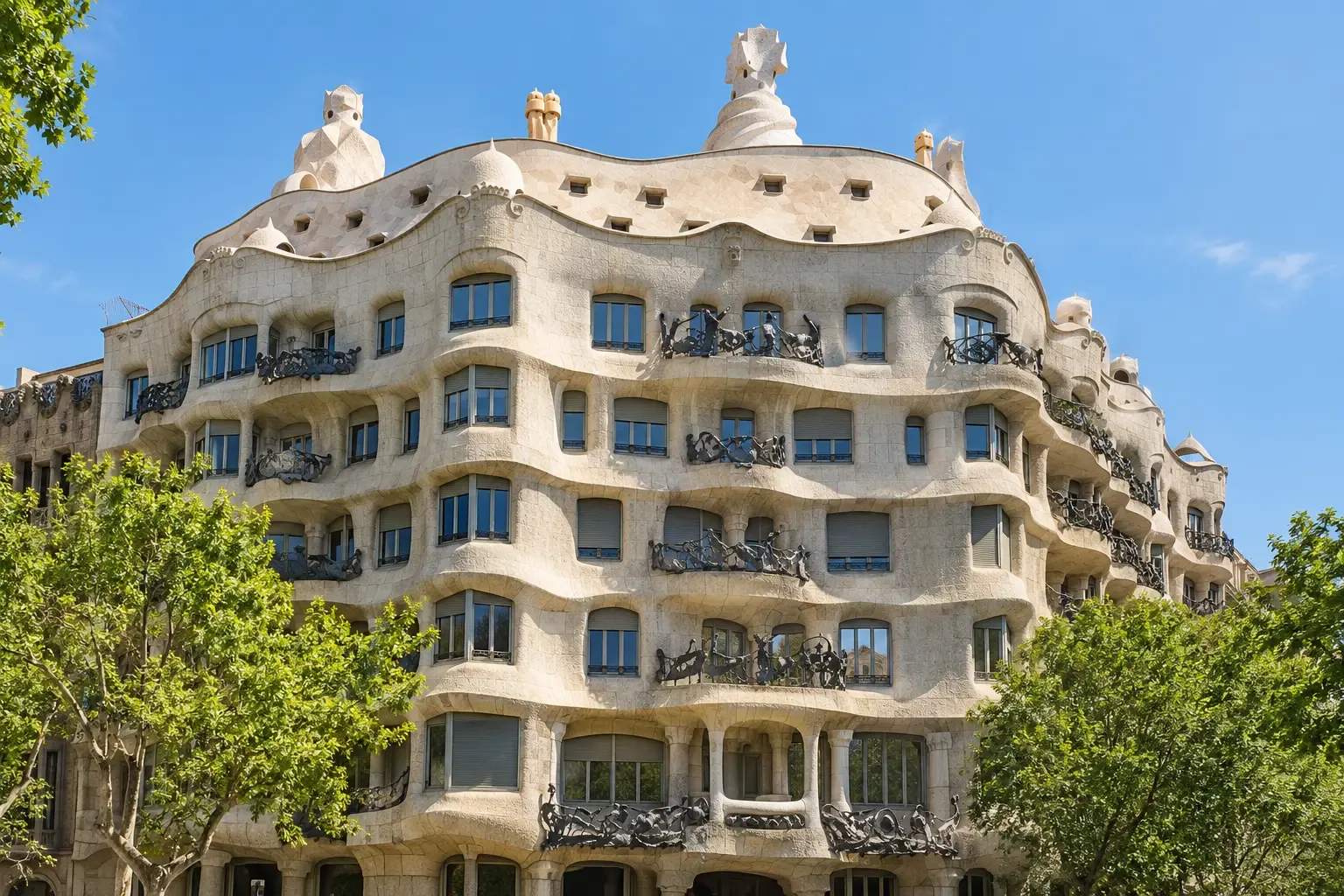
The name is an insult. La Pedrera means the quarry, and that is what Barcelona called it when it went up — a lump of rock dropped on the smartest street in the city.
The newspaper cartoons were merciless. One drew it as a hangar for airships. Another showed the balconies rented out as parking spaces.
Gaudí built it between 1906 and 1912 for Pere Milà and his wife Roser Segimon. It was the last house he ever completed. After this he gave the rest of his life to one church.
The façade carries none of the building's weight. It hangs off the frame behind it, which is why the windows can be any shape and any size — nothing in that wall is holding anything up.
- Time to allow: 1–1.5 hours
- Hours: 09:00–20:00 (open daily)
- Address: Passeig de Gràcia 92, L’Eixample, 08008 Barcelona
- Nearest transport: Diagonal station · 2 min walk (L3,L5)
- Localada perk: 5% OFF – Skip-the-line entry with audio guide — book below
- Timed entry; the roof closes in bad weather
- Night visits with a rooftop show run for most of the year
- The lift does not reach every level and the roof has steps
- Some floors are still private homes
Local tips
- The roof is the reason to come — check the forecast before you book a slot
- Do not rush the attic on your way up; it explains the whole building
- Look at the balconies from the pavement before you go in
- Casa Batlló is ten minutes down the same street
- Late slots give you the roof in low light and far fewer people
Barcelona Cathedral & the Gothic Quarter
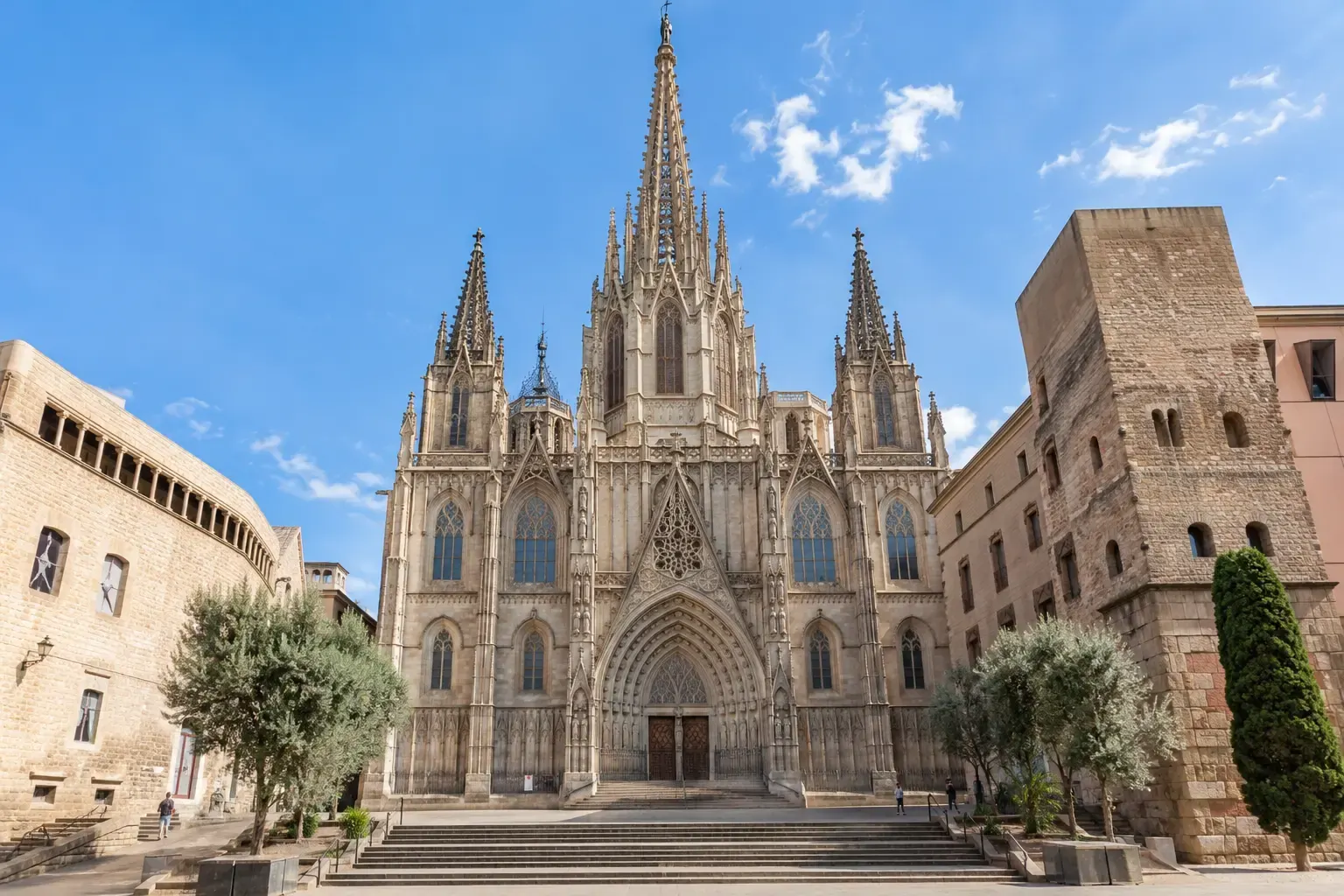
Start with the front, because the front is not what it claims to be.
The cathedral behind it was built between 1298 and 1448. The façade you are looking at went up between 1887 and 1913, paid for by a banker and worked from a drawing made in 1408 that nobody had ever built.
It is honest Gothic in the sense that it follows the old plan. It is also younger than the Eiffel Tower.
The same is true of the streets around it. A great deal of what reads as medieval Barcelona was rebuilt, moved or invented in the 1920s, while the city was tidying itself up for the 1929 exhibition.
The stone bridge on Carrer del Bisbe that everybody photographs was put there in 1928.
- Time to allow: 1–1.5 hours
- Hours: 09:30–18:30 (open daily)
- Address: Pla de la Seu, Ciutat Vella, 08002 Barcelona
- Nearest transport: Jaume I station · 4 min walk (L4)
- Localada perk: 5% OFF
- Visiting hours and worship hours are separate
- Shoulders and knees must be covered
- The roof terrace has its own lift and ticket
- The cloister geese are part of the cathedral, not an exhibit
Local tips
- Go into the cloister first — most visitors never find it
- The crypt is down the steps in front of the altar and takes two minutes
- Carrer del Bisbe is packed at midday and the light is better early anyway
- Plaça Sant Felip Neri is three minutes away and still carries the marks of a 1938 bombing
- Santa Maria del Mar is fifteen minutes east and a completely different kind of Gothic
Santa Maria del Mar
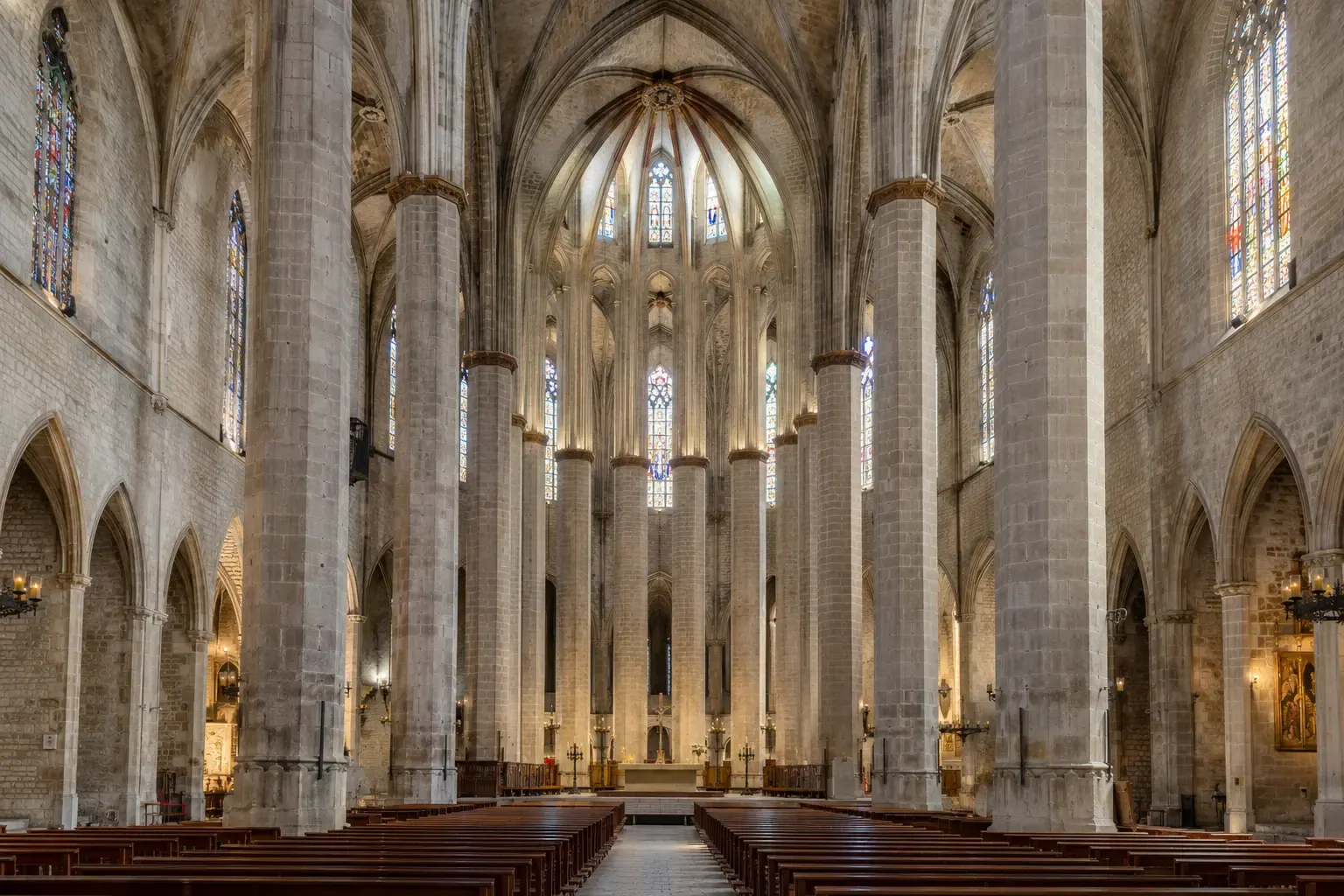
Most great churches took centuries. This one took fifty-four years, and you can feel it the moment you walk in.
Work began in 1329 and finished in 1383. Nothing was added halfway through, nothing redesigned by a later century with different taste. What you are standing in is a single idea, carried out once.
The district paid for it. This was a working port neighbourhood — shipowners, merchants, dockers — and the stone came from the quarry on Montjuïc, carried across the city on the backs of the Ribera porters. They are on the bronze doors.
Look at the columns. Octagonal, slim, and set thirteen metres apart, which is wider than almost anything else raised in medieval Europe.
- Time to allow: 45–60 min
- Hours: 10:00–18:00 (open daily)
- Address: Plaça de Santa Maria 1, El Born, 08003 Barcelona
- Nearest transport: Jaume I station · 5 min walk (L4)
- Localada perk: 5% OFF
- Visiting hours and worship hours are separate
- The roof and towers are a separate guided ticket
- Shoulders and knees must be covered
- This is a working parish church
Local tips
- Sit down for five minutes before you look at anything; the proportions do the work
- The guided roof tour is small-group and books out days ahead
- Fossar de les Moreres beside the church holds the dead of the 1714 siege
- Carrer de Montcada and the Picasso Museum begin one minute away
- Evening is quietest — most of the crowds here are on their way somewhere else
Picasso Museum
This is not a greatest-hits museum, and walking in expecting one is how people leave disappointed.
What it holds is the beginning. School drawings. The large academic canvases he painted to satisfy his father. The Blue Period years, when he had almost no money and painted people who had less.
You can watch him learn the rules, get bored of them, and start taking them apart.
The museum exists because of a friendship. Jaume Sabartés met Picasso in 1899 and spent much of his life as his secretary; he handed his own collection to the city, and the museum opened in 1963.
Picasso then gave more himself, including the fifty-eight canvases of Las Meninas — one painting by Velázquez pulled apart and rebuilt over several months in 1957.
- Time to allow: 1.5–2 hours
- Hours: 10:00–19:00 (closed Monday)
- Address: Carrer de Montcada 15-23, El Born, 08003 Barcelona
- Nearest transport: Jaume I station · 5 min walk (L4)
- Localada perk: 5% OFF – Skip-the-line entry — book below
- The collection concentrates on the early years
- Timed entry; book ahead in high season
- Photography is restricted in some rooms
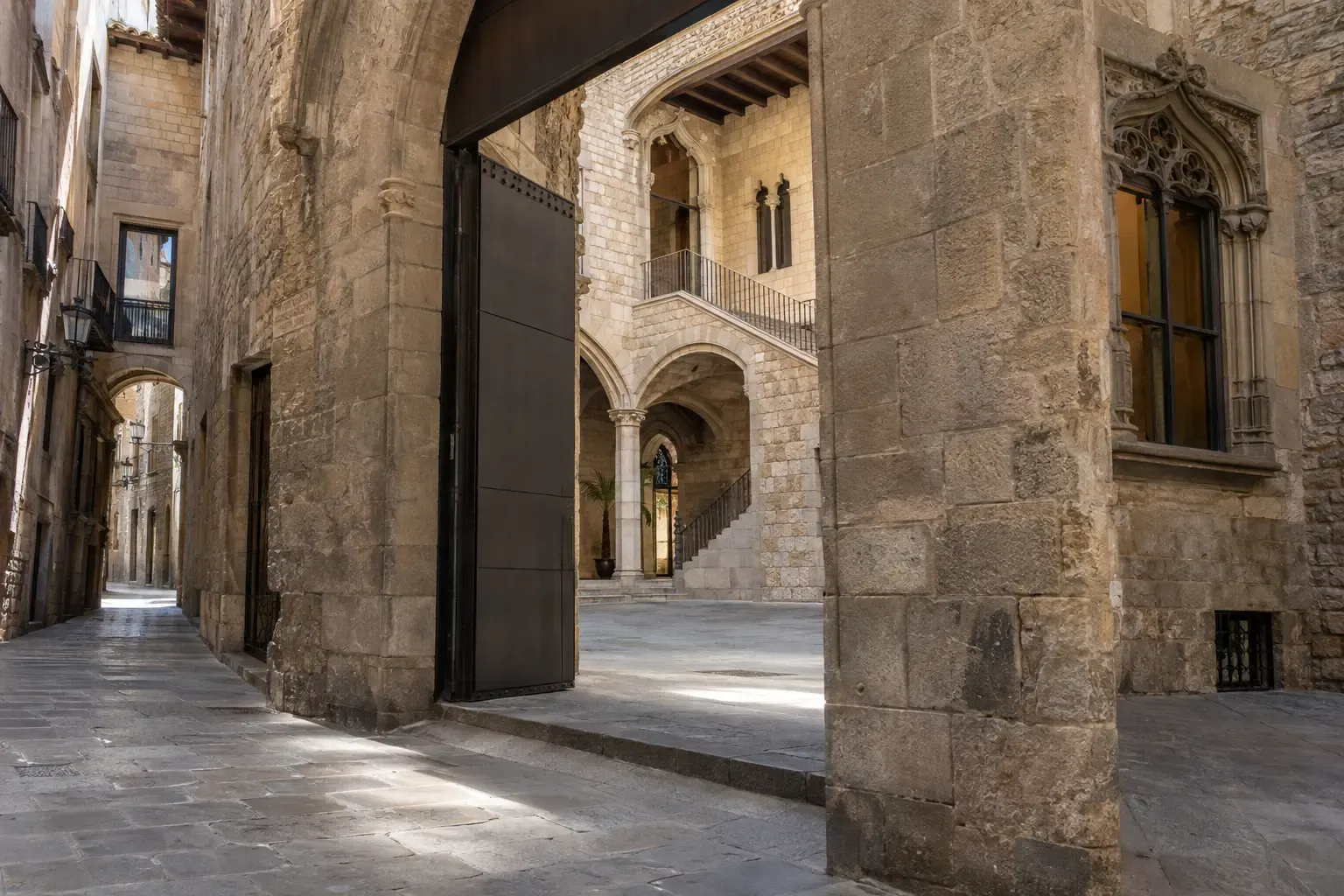
- It occupies five linked medieval palaces
Local tips
- Come for the training, not for the famous paintings — they are elsewhere
- Give the Las Meninas rooms proper time; they are the heart of the collection
- The courtyards between the palaces are part of the visit, not a corridor
- Carrer de Montcada is one of the oldest streets in the city; look up as you walk it
- Santa Maria del Mar is one minute away at the end of the street
Palau de la Música Catalana
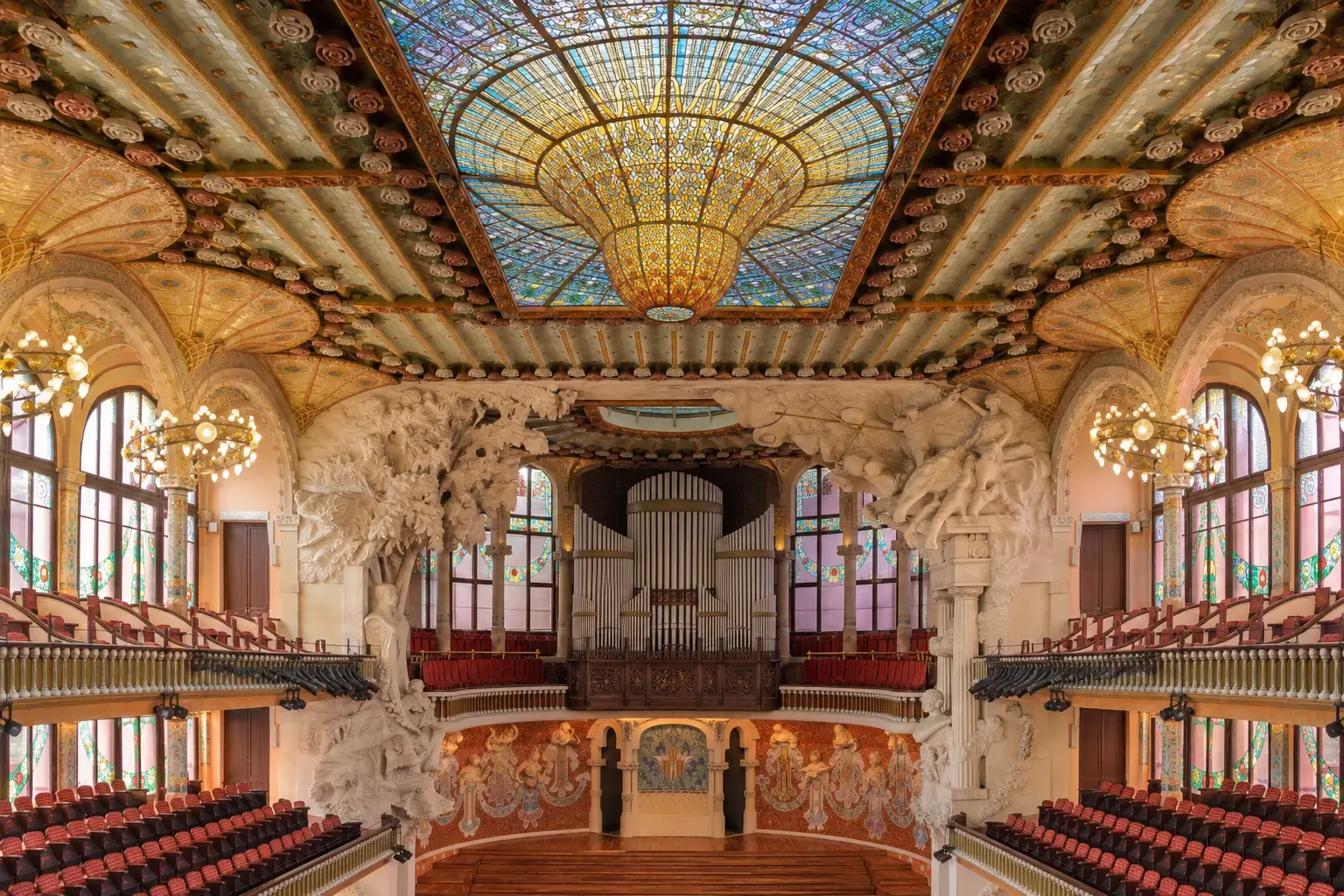
There is no other concert hall in Europe that can hold an afternoon performance without switching on a single lamp.
The walls are stained glass. The ceiling is an inverted dome of it — gold around the rim, deep blue at the centre — hanging into the room like a drop of water that has not fallen yet.
Lluís Domènech i Montaner built it between 1905 and 1908 for the Orfeó Català, a choral society of ordinary people who sang in Catalan at a time when singing in Catalan carried a cost.
That is the argument of the building. It was not raised for an aristocracy. The money came from subscriptions, and the decoration is full of folk singers rather than emperors.
- Time to allow: 1 hour
- Hours: 09:00–15:30 (open daily)
- Address: C/ Palau de la Música 4-6, Ciutat Vella, 08003 Barcelona
- Nearest transport: Urquinaona station · 3 min walk (L1,L4)
- Localada perk: 5% OFF – Guided tour of the hall — book below
- Guided tours run through the day in several languages
- Tour times depend on the rehearsal and concert schedule
- Photography is allowed on tours but not during concerts
- This is a working venue, not a museum
Local tips
- Take a daytime tour — the whole point is the light, and lamps flatten it
- Book ahead; tours cap numbers and fill up
- Stand directly under the ceiling dome before you look at anything else
- The mosaic musicians behind the stage change shape as you walk past
- A short daytime concert shows the room doing its job, which a tour cannot
La Boqueria & La Rambla
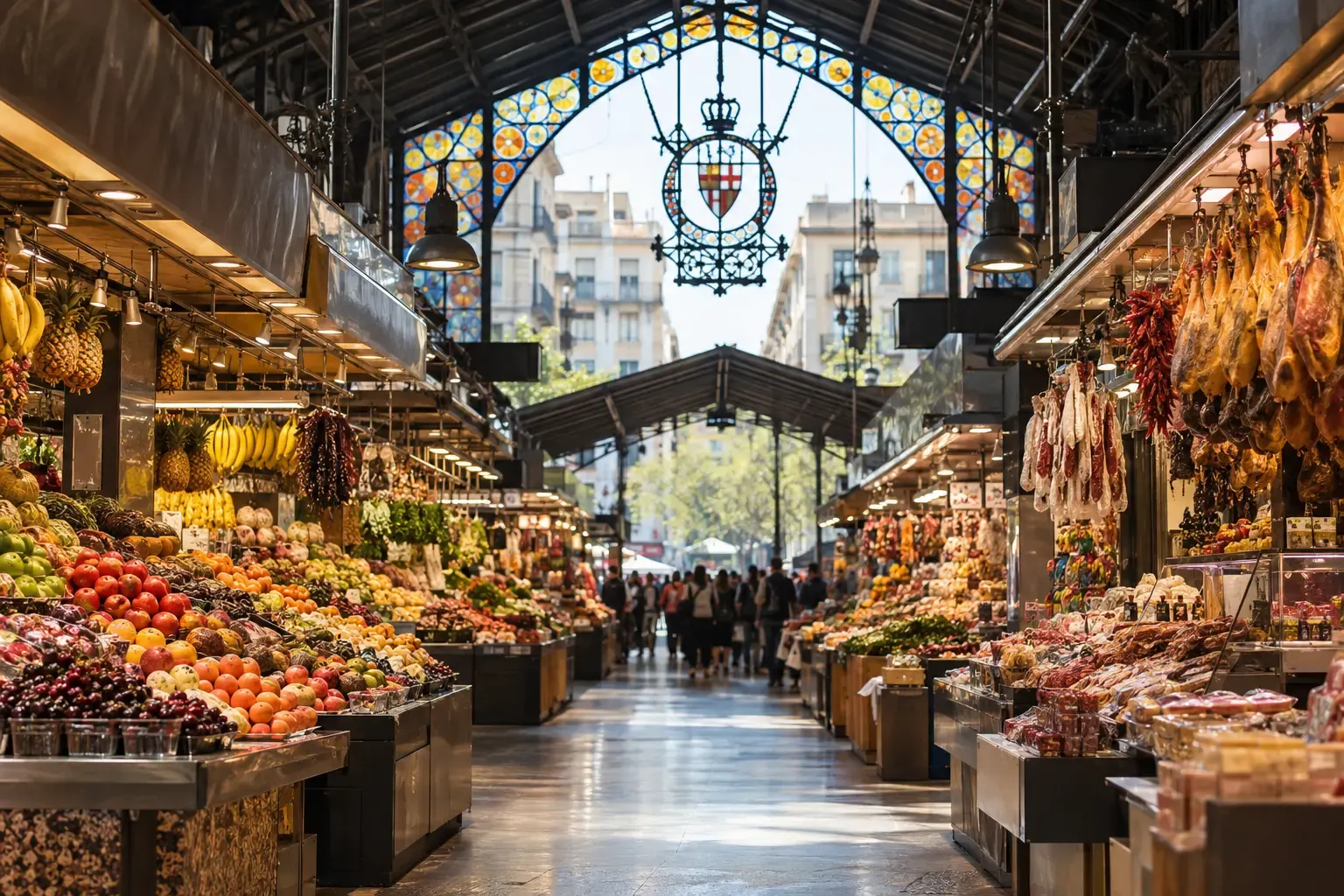
La Rambla is a river. Not as a figure of speech — an actual watercourse that ran along the outside of the medieval wall and carried the runoff from the hills down to the sea.
When the wall came down, the dry bed made an obvious street. That is why it is the one straight promenade in a district of crooked lanes.
The market halfway along has been here in some form since the thirteenth century. It started as farmers setting up outside the gate to avoid the taxes charged inside it.
The ground itself belonged to a Carmelite monastery dedicated to Saint Joseph. In 1835 it burned during a week of anticlerical riots, the ruins were cleared, and the traders who had been standing in the street were finally given a floor.
- Time to allow: 45–90 min
- Hours: 08:00–20:30 (closed Sunday)
- Address: La Rambla 91, Ciutat Vella, 08001 Barcelona
- Nearest transport: Liceu station · 1 min walk (L3)
- Localada perk: 5% OFF
- Closed on Sundays
- Busiest between 11:00 and 14:00
- Some stalls shut in the afternoon
- Photography at the stalls is fine; blocking the aisle is not
Local tips
- Arrive before 10:00 to see it working rather than see the crowd
- Walk past the first two rows — that is where both the quality and the audience change
- The bar counters at the back cook what the stalls sell; sit at one
- Keep your bag in front of you on La Rambla; this is the busiest pickpocket stretch in the city
- The Liceu opera house is one minute south on the same street
Hospital de Sant Pau

Walk the length of Avinguda de Gaudí and the Sagrada Família stands at one end and this at the other. Almost everybody only looks one way.
It was a working hospital until 2009. People were treated here for close to eighty years, in pavilions covered in mosaic, stained glass and carved stone.
That was deliberate. Lluís Domènech i Montaner believed surroundings affected recovery, so he gave the wards gardens between them, high ceilings and colour in every direction a patient could look.
The money came from a banker. Pau Gil died in Paris in 1896 and left his fortune to build a hospital for Barcelona. The saint in the name is his.
Twelve pavilions went up between 1902 and 1930, each turned forty-five degrees against the Eixample grid so it could take sun and air from its own angle.
- Time to allow: 1.5–2 hours
- Hours: 09:30–18:30 (open daily)
- Address: C/ Sant Antoni Maria Claret 167, L’Eixample, 08025 Barcelona
- Nearest transport: Sant Pau | Dos de Maig station · 3 min walk (L5)
- Localada perk: 5% OFF – Entry to the modernista site — book below
- Self-guided and guided visits are both available
- Much of the site is outdoors, between pavilions
- Some pavilions house institutions and stay closed
- Ten minutes on foot from the Sagrada Família
Local tips
- Walk from the Sagrada Família instead of taking the metro; the avenue was cut to link them
- Go inside the Sant Salvador pavilion — the restored ward is the reason to come
- The underground tunnels open on the guided route only
- Late afternoon suits the mosaics; they take the sun from the west
- Save this for the day the crowds elsewhere have worn you down
MNAC — Palau Nacional
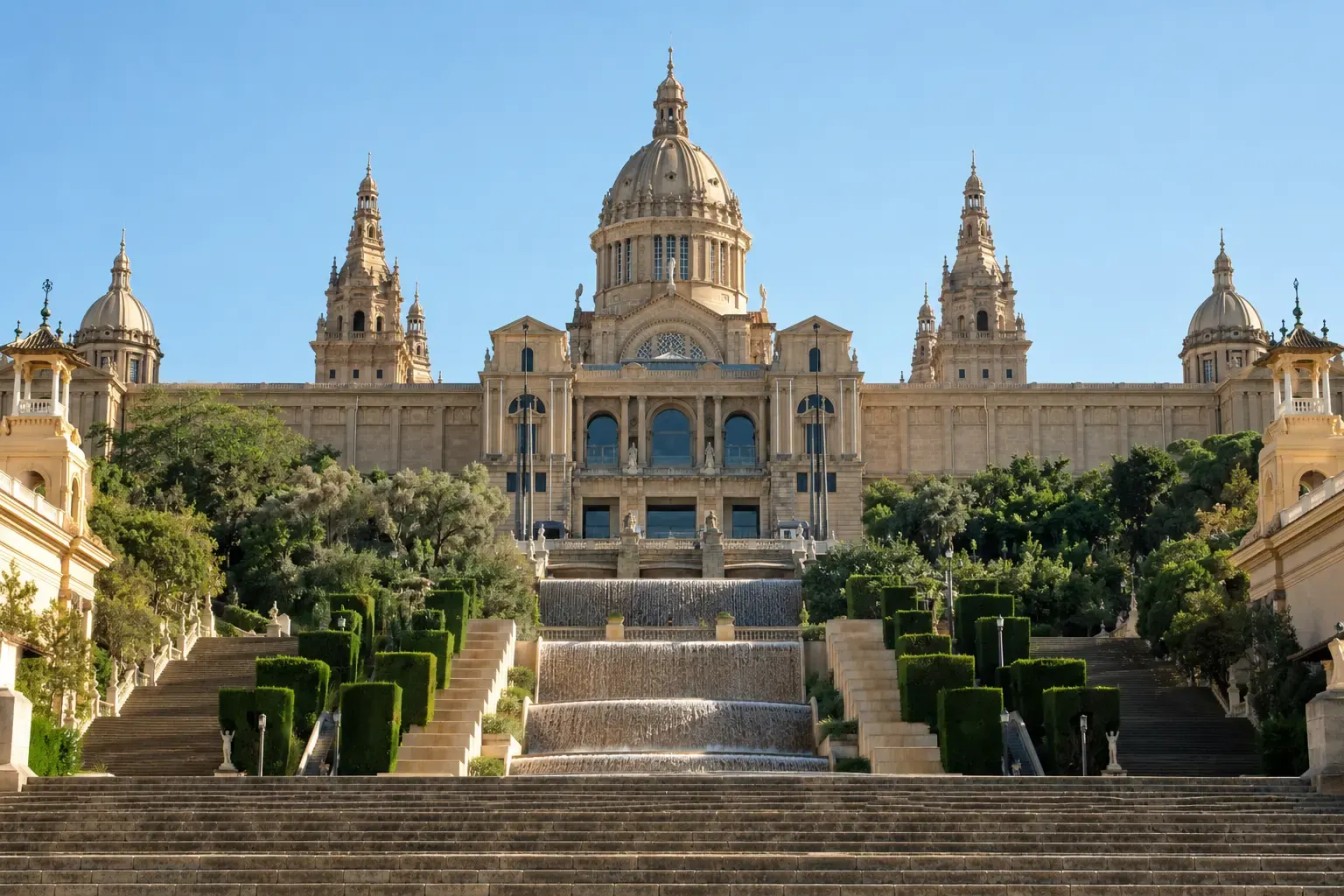
In the 1920s, teams went up into the Pyrenees and peeled the paintings off the walls of village churches.
The method is called strappo. Glue canvas onto the plaster, let it dry, and pull. The image lifts away in one skin a few millimetres thick.
It sounds like vandalism. It was a rescue. Dealers were buying Romanesque frescoes from remote parishes and shipping them to America, and this was how Catalonia stopped losing them.
The paintings were brought here and remounted on curved replicas of the apses they came from — same angle, same distance, same curve — so you stand where a congregation stood.
What that produced is the finest collection of Romanesque wall painting anywhere, with the Christ of Taüll at the centre of it, staring out of a barrel vault that no longer exists.
- Time to allow: 2–2.5 hours
- Hours: 10:00–18:00 (closed Monday)
- Address: Palau Nacional, Parc de Montjuïc, 08038 Barcelona
- Nearest transport: Espanya station · 10 min walk and escalators (L1,L3)
- Localada perk: 5% OFF – Museum entry — book below
- Closed on Mondays
- The Romanesque rooms are on the ground floor
- The terrace is included with a ticket
- Outdoor escalators run up from Plaça d’Espanya
Local tips
- Start with the Romanesque rooms while you are still fresh; they are why this museum matters
- Sit down in front of the Christ of Taüll apse rather than walking past it
- The Modernisme rooms upstairs connect straight back to the buildings you have seen in town
- The terrace is at its best in the hour before sunset
- The fountain below runs on a seasonal schedule — check before you plan an evening around it
Where to eat: verified local picks
Cervecería Catalana

There will be a queue at the door and it will look hopeless. It usually is not.
The trick here is that the queue is for tables and the bar is first come, first served. Walk in, find a gap along the counter, and you are eating in five minutes instead of fifty.
Eating at the bar is also how the place is meant to work. The montaditos are built in front of you, the cold tapas are laid out where you can point at them, and the kitchen sends the hot ones straight over the counter.
It is not a secret and it is not undiscovered. It is simply consistent, which in a city this busy is harder to find than novelty.
It is not a secret and nobody is pretending it is undiscovered. What it is, in a city where plenty of kitchens near the main streets have stopped trying, is reliably good.
- Hours: 09:00–01:00 (open daily)
- Address: Carrer de Mallorca 236, L’Eixample, 08008 Barcelona
- Nearest transport: Diagonal station · 6 min walk (L3,L5)
- No reservations; the bar is first come, first served
- Open through the afternoon, unlike most kitchens here
- Busiest between 21:00 and 23:00
- Card and cash both accepted
Local tips
- Skip the table queue and eat standing at the bar — same menu, no wait
- Order in small rounds so you can change your mind
- The cold tapas are on display; point rather than translate
- Go before 20:30 or after 23:00 if you want room to breathe
- Casa Milà is a six-minute walk away
Bar del Pla
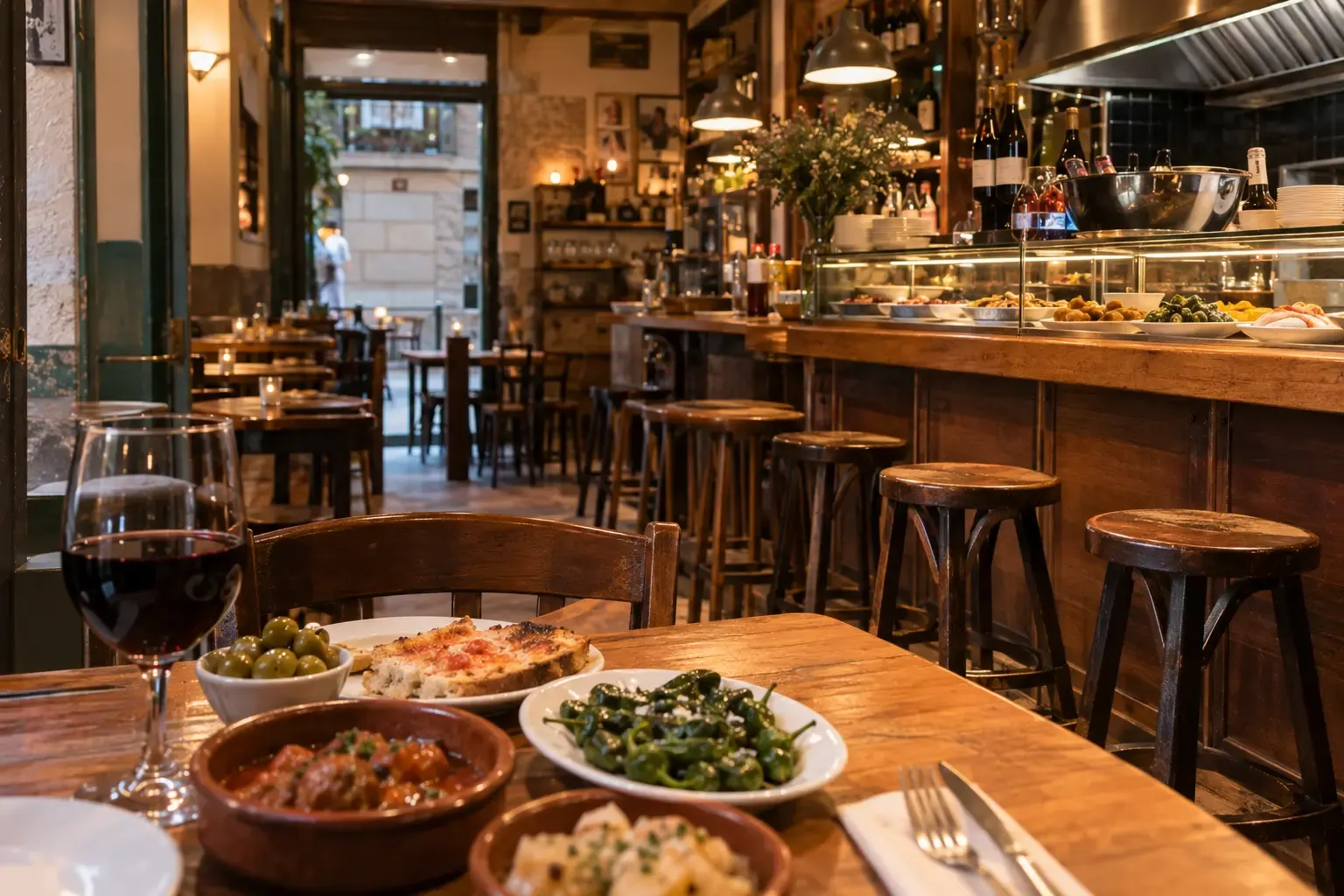
The street this bar stands on holds five medieval palaces and the Picasso Museum. The bar is at the bottom of it, and most people walk straight past on their way to the art.
Bar del Pla cooks Catalan tapas without treating them as museum pieces. The plates are small, the cooking is exact, and nothing arriving at the table is trying to be a monument.
Look for the things that only exist here. The bikini — a pressed ham and cheese sandwich with truffle, far better than that description makes it sound — and whatever is chalked on the board rather than printed on the menu.
It is a small room and it takes few reservations, so you either arrive early or you wait at the bar with a vermouth in your hand.
- Hours: 12:00–23:00 (closed Monday)
- Address: Carrer de Montcada 2, El Born, 08003 Barcelona
- Nearest transport: Jaume I station · 3 min walk (L4)
- Small room; reservations are limited
- Closed on Mondays
- Open through the afternoon at weekends
- The board changes more often than the menu
Local tips
- Arrive at opening or expect to wait at the bar
- Order the bikini once even if you think you are above it
- Ask what is on the board; that is where the kitchen is actually working
- Weekend vermouth before lunch is the local habit, not a tourist ritual
- The Picasso Museum is two minutes up the same street
Quimet & Quimet
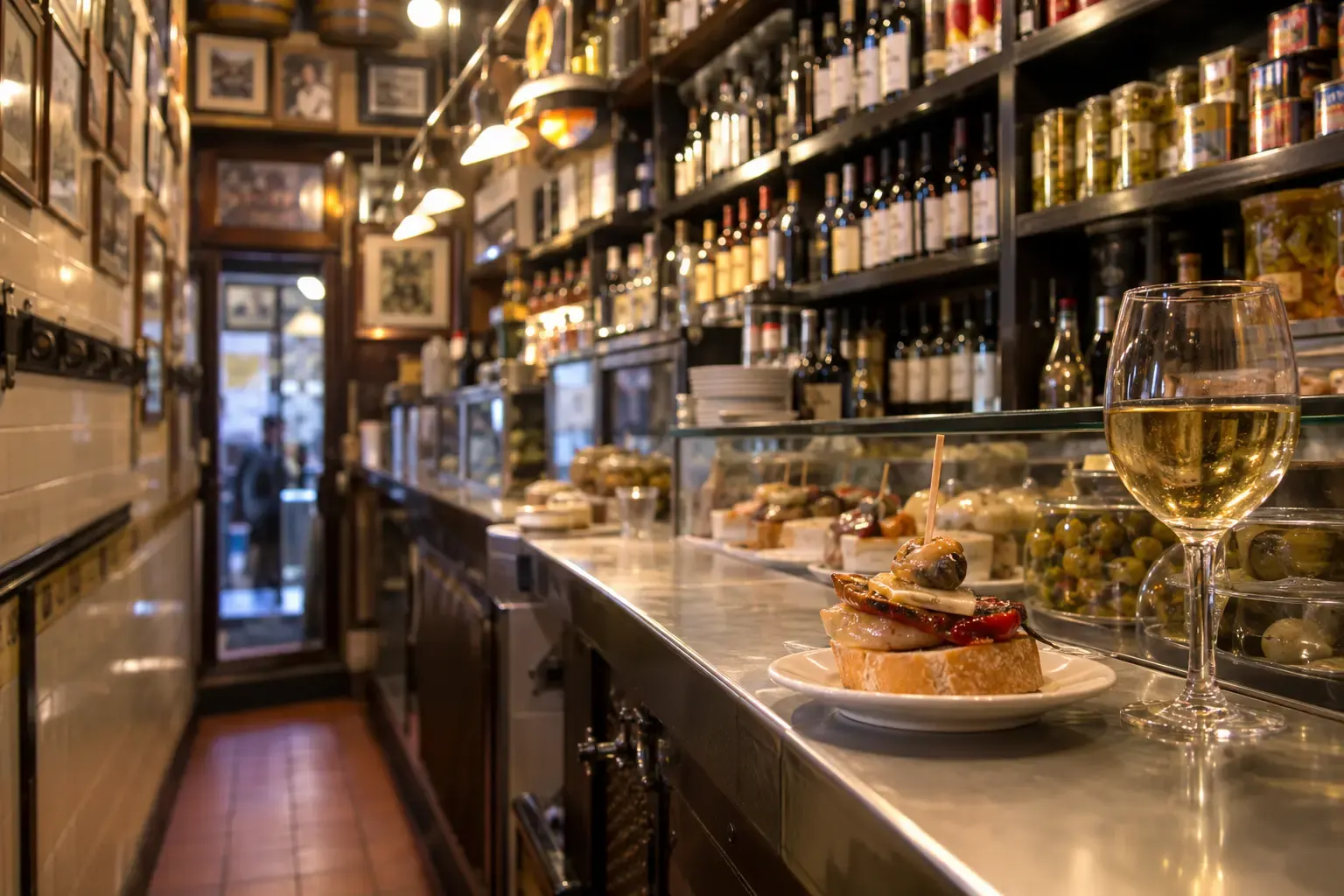
There is no kitchen. That is the first thing to understand about this bar.
Everything is built on the counter in front of you, out of tins and jars. Conservas — tinned seafood — are not an emergency food in Spain. They are a craft with their own producers, reputations and good years.
The same family opened the place in 1914 and has run it since. The room holds about twenty people standing and there is nowhere at all to sit.
What you order are montaditos: small open sandwiches assembled to order in layers, in combinations settled by long habit rather than invention. Salmon with yoghurt and truffled honey is the one people come back for.
The walls are bottles from floor to ceiling. That is stock, not decoration.
- Hours: 12:00–22:30 (closed Sunday)
- Address: Carrer del Poeta Cabanyes 25, Poble-sec, 08004 Barcelona
- Nearest transport: Paral·lel station · 5 min walk (L2,L3)
- Standing room only; no tables and no reservations
- Closed Sundays and through the afternoon
- Everything is assembled cold or from a tin — there is no kitchen
- Fills from around 19:00
Local tips
- Go when it opens; twenty minutes later there is no room
- Let them build the montaditos rather than ordering from a list
- The tinned seafood is the point — order it the way they suggest
- It is a five-minute walk from the Montjuïc funicular at Paral·lel
- If it is full, walk the same street; Poble-sec is lined with bars
Shops: verified local picks
Cereria Subirà
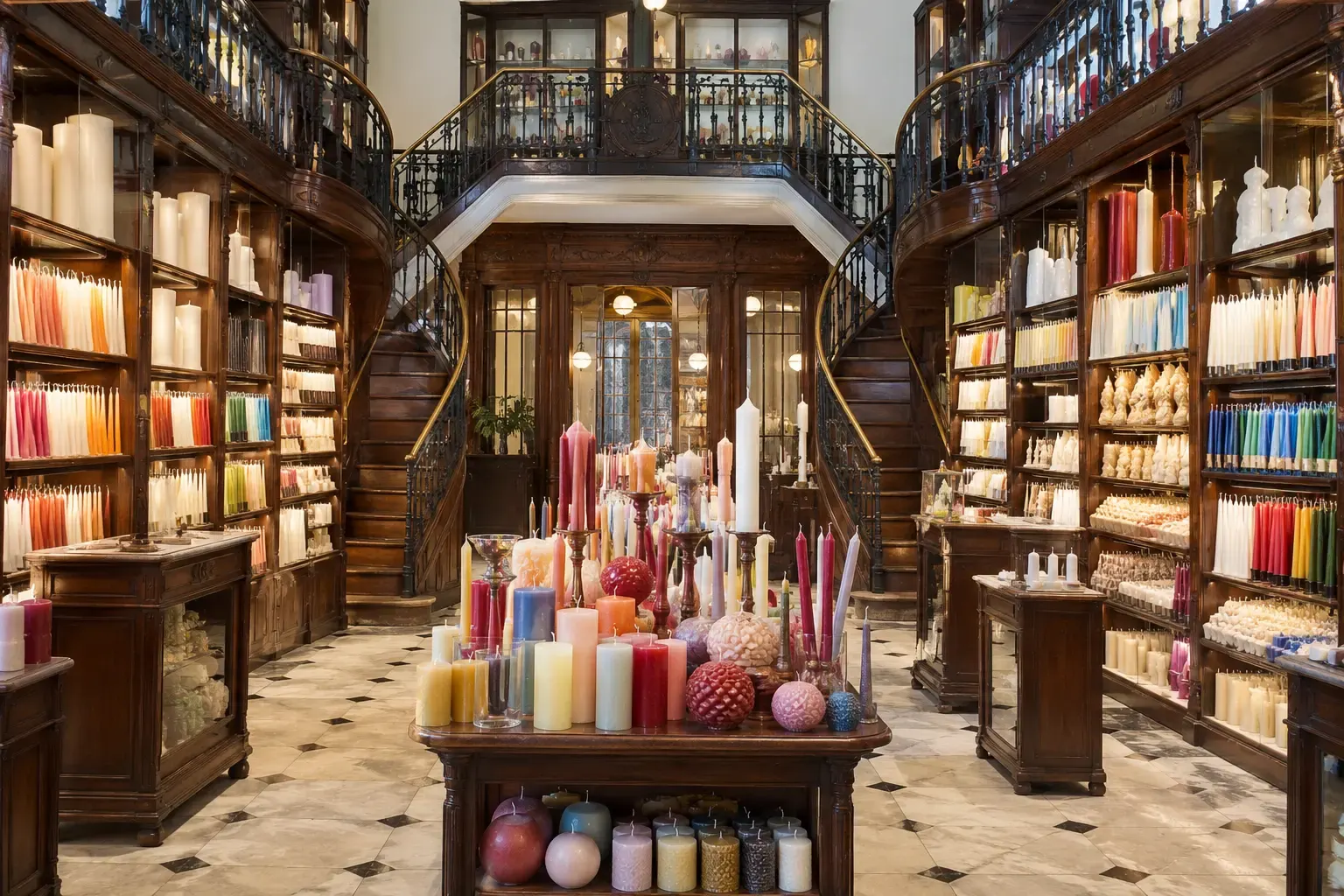
It has been trading since 1761, which makes it the oldest shop in Barcelona.
It has sold candles for that entire time, and it still does. That is the unusual part — most businesses that last this long survive by quietly becoming something else.
The interior is not original to the trade. The shop moved into this building in 1847, taking over a space that had been a fabric merchant's, and it kept the fittings: the curved double staircase, the two draped figures holding lamps, the dark wooden counters.
That is why it looks like a stage set. It effectively is one. Nineteenth-century retail theatre, built so that buying cloth would feel like an occasion.
- Hours: 09:30–20:00 (closed Sunday)
- Address: Baixada de Llibreteria 7, Ciutat Vella, 08002 Barcelona
- Nearest transport: Jaume I station · 2 min walk (L4)
- Trading since 1761 at the same trade
- Closed on Sundays
- The interior dates from 1847
- A working shop, not a museum
Local tips
- Go in even if you are not buying; nobody minds and the smell is the point
- Plain beeswax survives a suitcase; the sculpted candles do not
- It is two minutes downhill from the cathedral cloister
- Morning light through the front windows is when the staircase looks best
- Carrer de Montcada and Casa Gispert are ten minutes east
Casa Gispert
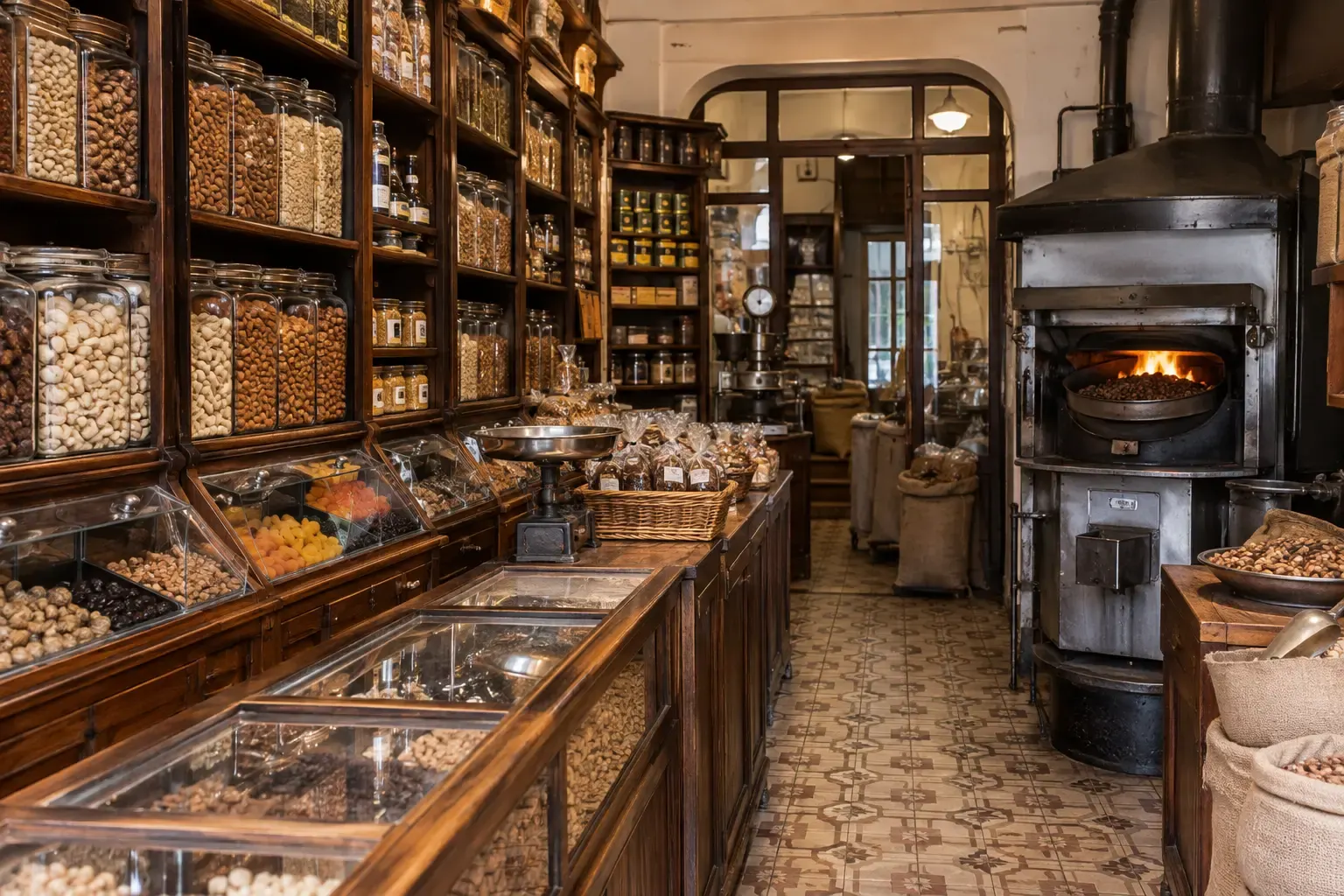
At the back of this shop there is a wood-fired oven from the nineteenth century, and it is still roasting.
Casa Gispert opened in 1851 and has roasted its own nuts on the premises ever since. The oven is why the smell reaches you before you are through the door.
Almonds, hazelnuts, pine nuts, dried fruit, cocoa, spices — sold loose by weight out of sacks and jars, the way food was bought before anyone thought to package it.
Ask to see the roaster. They will usually show you, and it is among the oldest of its kind still working anywhere in the country.
Marcona almonds are the thing to take home. Rounder and sweeter than ordinary almonds, barely exported in any quantity, and robust enough to survive a suitcase.
- Hours: 10:00–20:00 (closed Sunday)
- Address: Carrer dels Sombrerers 23, El Born, 08003 Barcelona
- Nearest transport: Jaume I station · 5 min walk (L4)
- Roasting on site since 1851
- Closed on Sundays
- Sold loose by weight rather than pre-packed
- The wood-fired roaster is still in daily use
Local tips
- Ask to see the oven at the back; they are used to the question
- Marcona almonds are the souvenir that survives the flight
- Buy small quantities of several things rather than a lot of one
- Santa Maria del Mar is around the corner and worth pairing with this
- Go before midday if you want the staff to have time to explain things
Experiences and activities
Montjuïc Cable Car
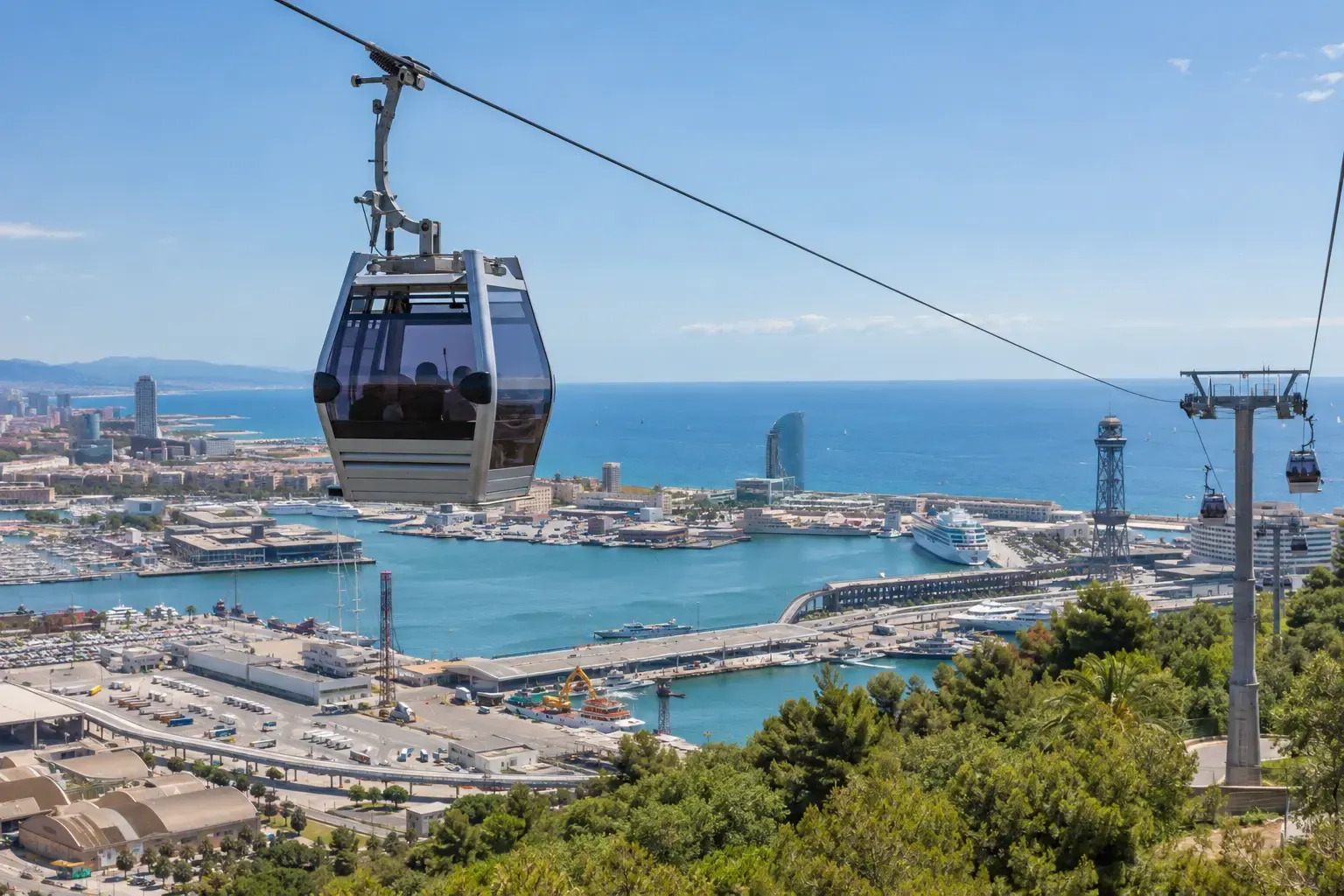
The cable car is the last leg of a three-part climb, and most people never find the first two.
From Paral·lel a funicular runs up inside the hill. It is part of the metro network and a metro ticket covers it. At the top station the cable car takes over.
The cabins were rebuilt in 2007 and hold eight. The crossing takes a little over five minutes and ends at the castle on the summit.
What you are riding over is a hill that has been the city's high ground, its quarry, its cemetery, its fortress and its Olympic park, roughly in that order.
The castle at the top spent most of the twentieth century as a military prison, and Barcelona still has complicated feelings about it.
- Time to allow: 45–60 min
- Hours: 10:00–19:00 (open daily)
- Address: Avinguda de Miramar 30, Parc de Montjuïc, 08038 Barcelona
- Nearest transport: Paral·lel station · funicular, then the cable car (L2,L3,Funicular)
- Localada perk: 5% OFF – Return ticket on the Montjuïc cable car — book below
- The cable car is separate from the funicular; a metro ticket does not cover it
- It closes in high wind
- Queues build from midday at the lower station
- The castle at the top has its own ticket
Local tips
- Take the funicular from Paral·lel first — it is part of the metro
- Ride up at the end of the day and walk down through the gardens
- Face the sea going up and the city coming down
- The Joan Miró Foundation is ten minutes on foot from the upper station
- Check the wind before building an evening around it; it stops when it blows hard
Flamenco at Palau Dalmases
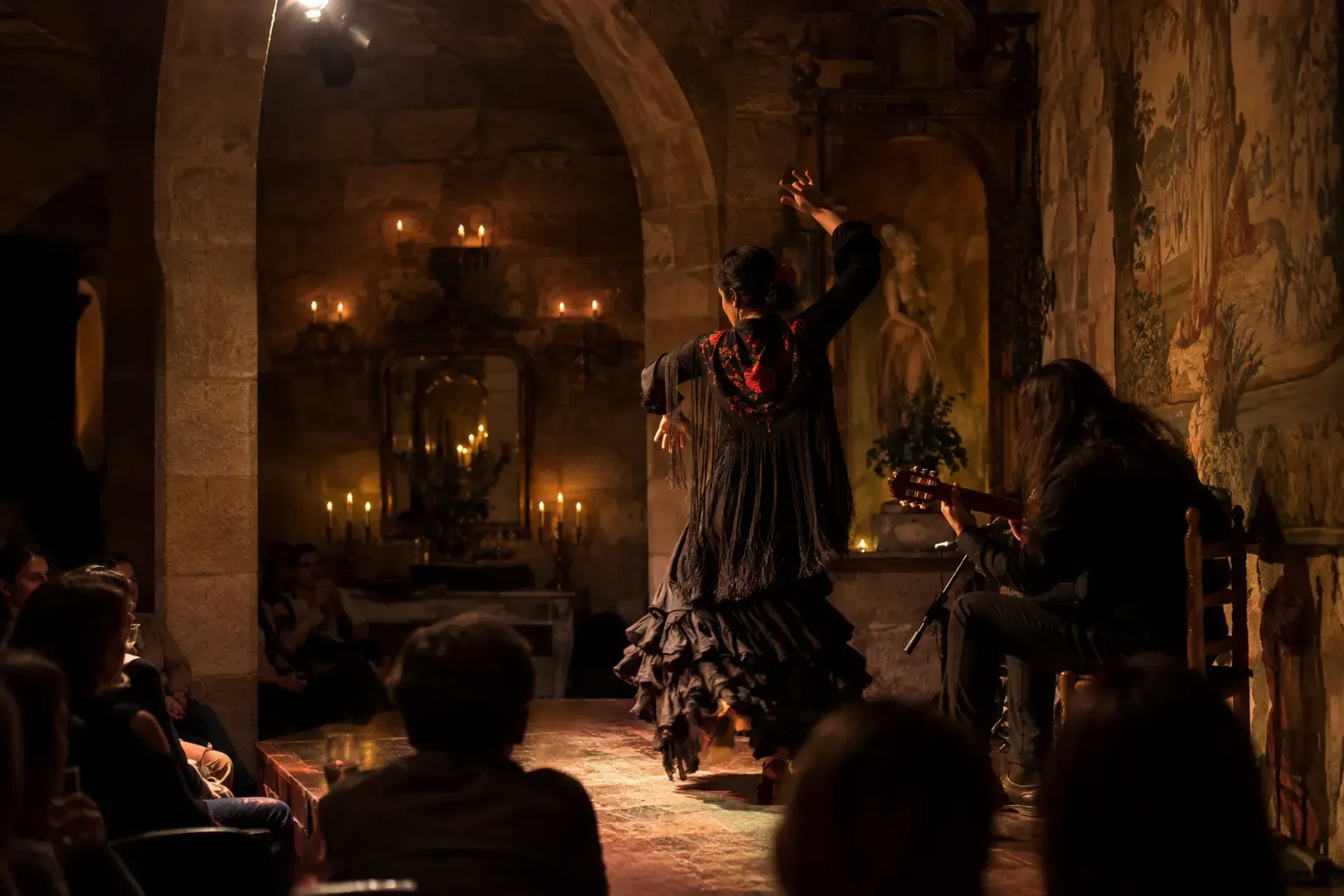
Flamenco is not from Barcelona. It is Andalusian, and anyone telling you otherwise is selling something.
What this city has is a long history of Andalusian migration, and a small number of rooms where the form is played properly rather than performed at visitors.
This is one of them — a baroque palace on Carrer de Montcada, the same street as the Picasso Museum, with a courtyard staircase from the seventeenth century.
The room holds well under a hundred people. You are close enough to hear the floor under the dancer.
Three or four performers work without amplification: a singer, a guitarist, a dancer, sometimes a percussionist.
The singing is the oldest part of it and the hardest to like straight away. It is not trying to be pretty. Give it ten minutes before you decide.
- Time to allow: 1 hour
- Hours: 18:00–23:00 (open daily)
- Address: Carrer de Montcada 20, El Born, 08003 Barcelona
- Nearest transport: Jaume I station · 4 min walk (L4)
- Localada perk: 5% OFF – Flamenco show with a drink — book below
- Several shows an evening; seating is unreserved
- The room is small and late arrivals stand
- A drink is included with most tickets
- This is a seventeenth-century palace, not a theatre
Local tips
- Arrive twenty minutes early if you want to be near the front
- Sit close — the form depends on hearing the feet
- Do not clap along; the rhythm is harder than it sounds
- The Picasso Museum is two minutes up the same street
- Eat afterwards rather than before; the show is short and the neighbourhood is full of places
Paella Cooking Class & Boqueria Market
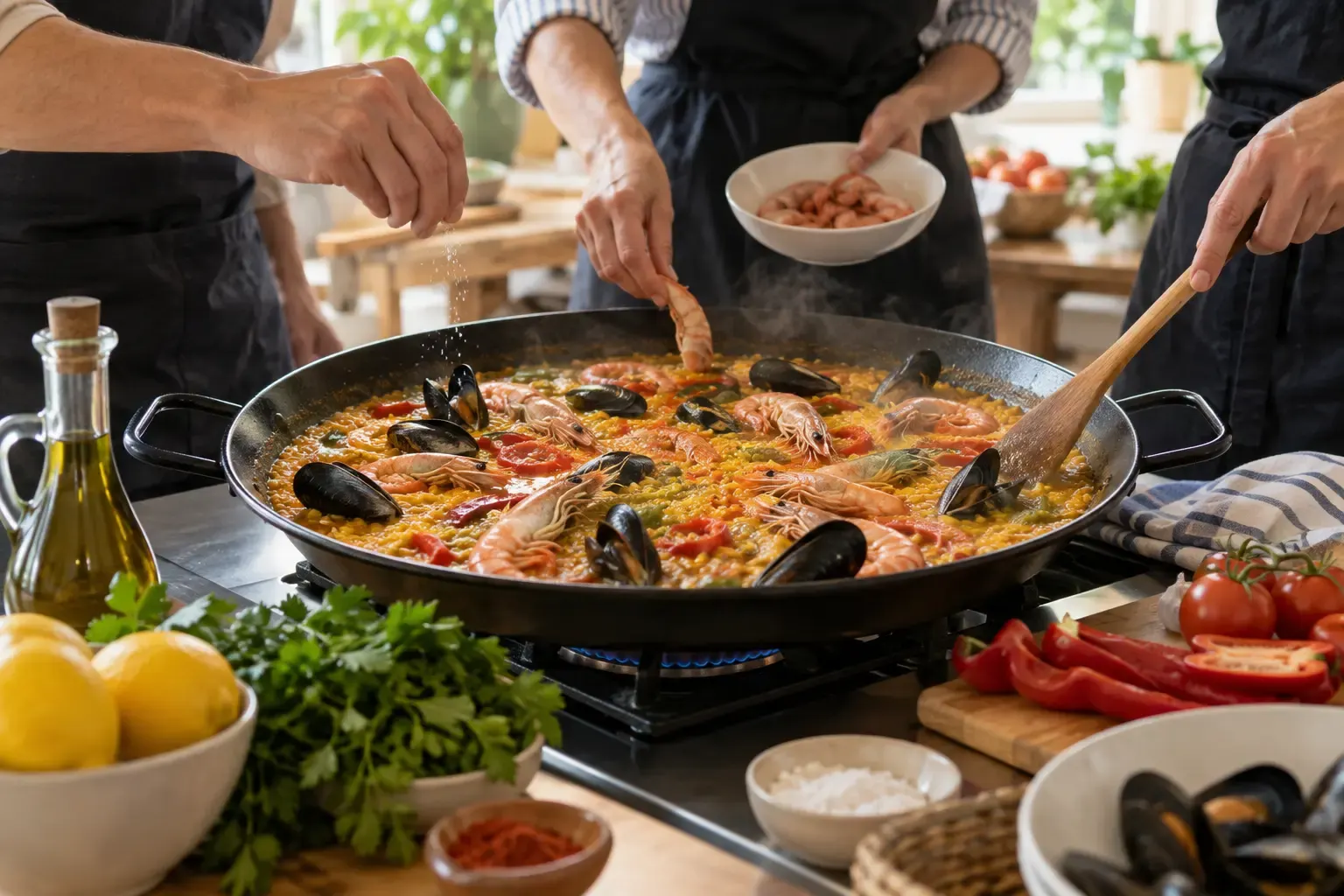
Paella is Valencian, not Catalan, and it is the dish most often ruined in this city.
The version photographed on a board outside a restaurant on La Rambla is not the thing you are about to make.
The class begins in the Boqueria, walking the rows with somebody who actually buys there. That part teaches you more than the cooking does.
Then you cook. The rice goes into the pan dry and toasts in the oil before any liquid touches it, and once the stock is in it is never stirred again.
The crust that forms on the bottom is called socarrat. It is the object of the exercise, not a mistake.
You also learn that the pan is the dish. Paella is the name of the shallow steel pan; the food is named after the equipment.
- Time to allow: 3–4 hours
- Hours: 10:00–18:00 (open daily)
- Address: La Rambla area, Ciutat Vella, 08001 Barcelona
- Nearest transport: Liceu station · 3 min walk (L3)
- Localada perk: 5% OFF – Market walk and paella class — book below
- Three to four hours including the market walk
- Vegetarian and shellfish-free versions on request when booking
- Small groups; book several days ahead in season
- The meal you cook is included, with wine or sangria
Local tips
- Take the lunchtime session — the market is properly alive in the morning
- Mention allergies when you book, not on the day
- Come hungry; you eat everything you cook and it is a full meal
- Ask which rice they use and where to buy it before you leave
- Do not rush the market walk to get to the kitchen; it is the part people remember
Catamaran from Port Vell
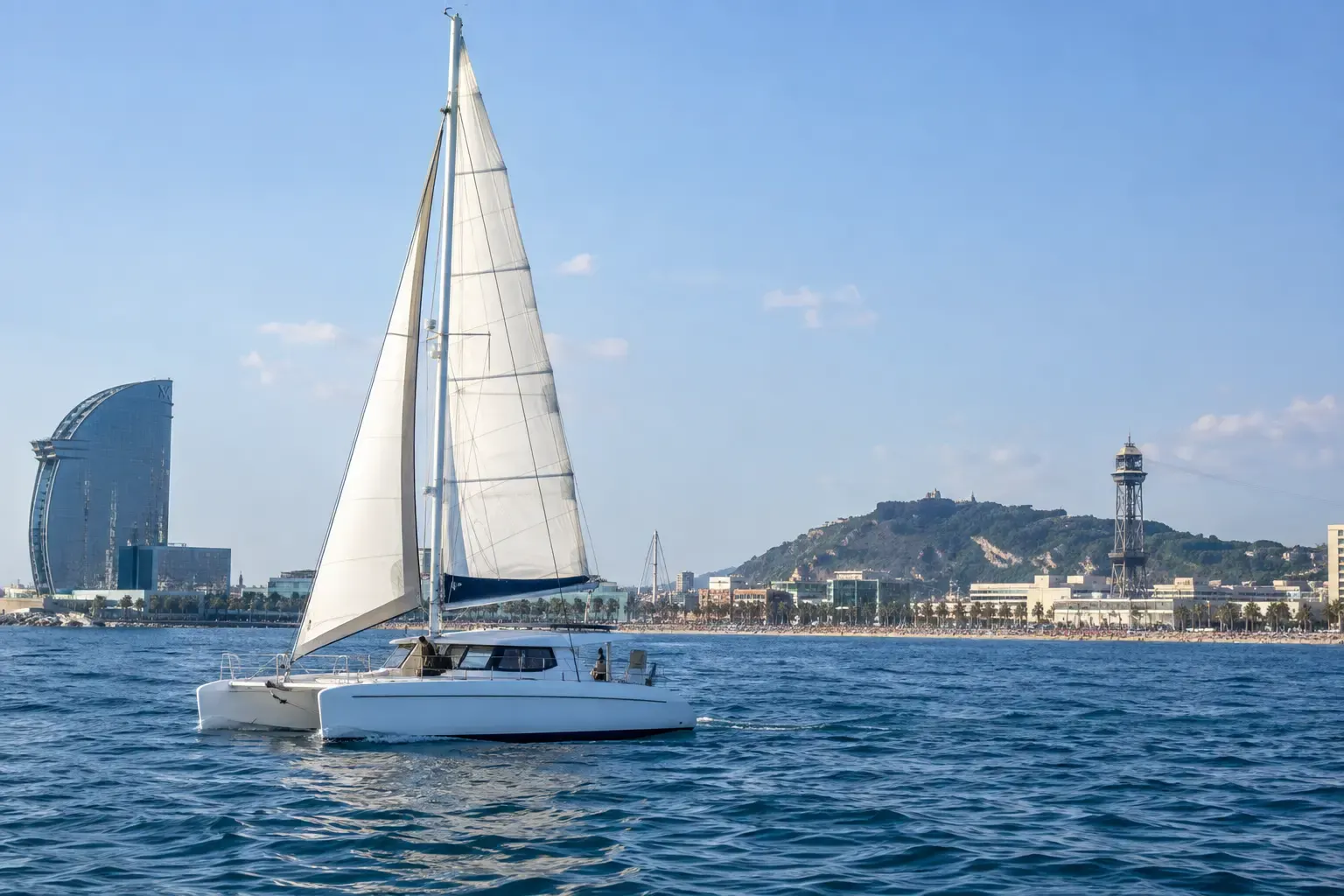
Barcelona spent most of its history with its back to the sea.
The waterfront was industry — rail sidings, warehouses, works. There was no beach worth the name, and the city was cut off from its own coast by the things it did for a living.
The 1992 Olympics changed that. The sidings were lifted, two kilometres of beach were built from nothing, and the city turned around to face the water.
From the deck you can see exactly what that decision produced: an unbroken front from Montjuïc to the Fòrum, the hill at one end, the Sagrada Família's towers standing up behind it all.
The boats leave from Port Vell, the old harbour, beside a replica of the submarine Narcís Monturiol tested in this water in 1859.
- Time to allow: 1.5 hours
- Hours: 11:00–21:00 (open daily)
- Address: Moll de Drassanes, Port Vell, 08039 Barcelona
- Nearest transport: Drassanes station · 3 min walk (L3)
- Localada perk: 5% OFF – Catamaran sailing from Port Vell — book below
- Departures from Moll de Drassanes in Port Vell
- About ninety minutes on the water
- Trips run in most weather but cancel in high wind
- Sunset sailings sell out first in summer
Local tips
- Take the late sailing; the city front looks best from the water at that hour
- Bring a layer — it is colder out there than on shore, in any season
- Check the wind forecast; this is the first thing cancelled when it picks up
- Sit on the seaward side going out and the city side coming back
- Barceloneta and the beach are a ten-minute walk from the dock
Casa Vicens
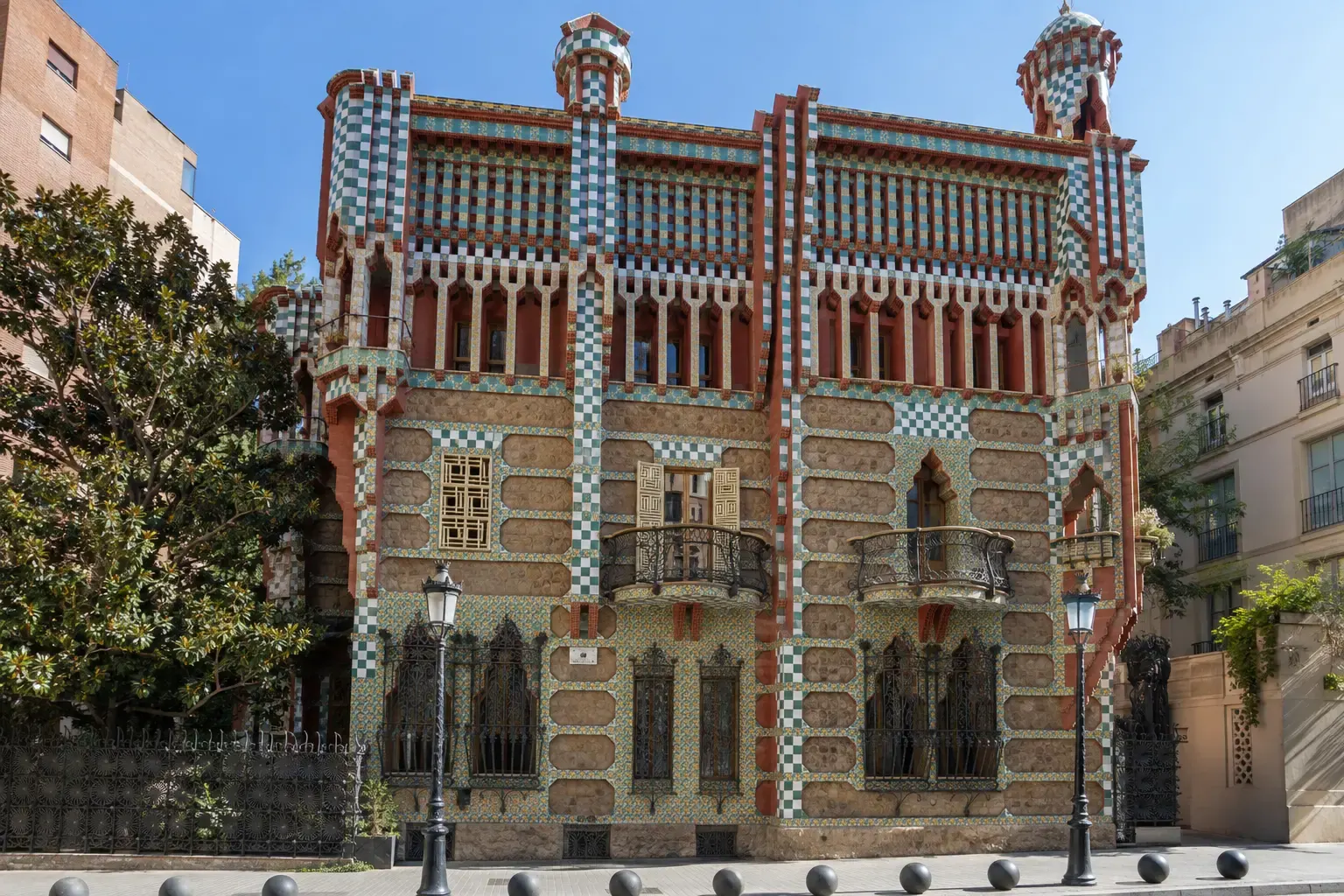
This is the first house Gaudí ever built, and he finished it at thirty-one.
A tile manufacturer called Manuel Vicens commissioned it as a summer house in 1883, back when Gràcia was still a separate town outside Barcelona.
Look at what it is made of. Tiles, everywhere — green and white checks, marigold flowers — because the client manufactured tiles and the building is, among other things, an advertisement.
There is no sign here of the melting stone he became famous for. The shapes are sharp, the patterns flat, the influences Moorish and Japanese rather than anything growing.
You can watch him working out what he thinks. The iron palm leaves on the garden gate were cast from a real plant that grew on this ground.
- Time to allow: 1 hour
- Hours: 10:00–20:00 (open daily)
- Address: Carrer de les Carolines 20-26, Gràcia, 08012 Barcelona
- Nearest transport: Fontana station · 5 min walk (L3)
- Localada perk: 5% OFF – Entry to Gaudí’s first house — book below
- Opened to the public in 2017
- A small building; an hour is enough
- Timed entry, though slots are rarely full
- On the way between Fontana station and Park Güell
Local tips
- Pair it with Park Güell — same district, twenty minutes apart
- Go early and you may have the smoking room to yourself
- Look at the garden gate before you go in; the ironwork is cast from a real palm
- The top-floor terrace is easy to miss and was added in the restoration
- This is the least visited Gaudí building in Barcelona and the easiest one to actually look at
Barcelona travel guides on the Localada blog
Barcelona audio guide: frequently asked questions
Is the Barcelona audio guide free?
Yes. Localada’s Barcelona guide is free: create a free account and open it in your browser, no app download needed. It includes 21 stops, audio and written stories, a route map and scam-awareness tips. Tickets for paid sights are bought separately; booking through Localada’s GetYourGuide links gives 5% off.
How many stops are in the Barcelona audio guide?
There are 21 stops: 11 sights, 3 places to eat, 2 shops and 5 experiences.
How long does it take to see the main sights in Barcelona?
Visiting all 11 sights in the guide takes about 13.5–18.5 hours, not counting travel between them. MNAC — Palau Nacional needs the most time (allow 2–2.5 hours).
Which Barcelona sights are closed on certain days?
3 of the 11 sights have a weekly closing day: Picasso Museum (closed Monday), La Boqueria & La Rambla (closed Sunday) and MNAC — Palau Nacional (closed Monday). Plan these for another day of the week.
What time do Barcelona sights open and close?
The earliest opening in the guide is 08:00 (La Boqueria & La Rambla) and the latest closing is 20:30 (La Boqueria & La Rambla). Each stop’s hours are in the table above.
Are there discounts with the Barcelona guide?
16 stops include a Localada perk, for example Sagrada Família (5% OFF), Park Güell (5% OFF), Casa Batlló (5% OFF), La Pedrera — Casa Milà (5% OFF), Barcelona Cathedral & the Gothic Quarter (5% OFF) and Santa Maria del Mar (5% OFF). Show the code in the guide at verified restaurants and shops; ticket discounts are applied at GetYourGuide checkout.
What can I do in Barcelona on a rainy day?
8 stops in the guide are indoors, including Sagrada Família, Barcelona Cathedral & the Gothic Quarter, Santa Maria del Mar, Picasso Museum, Palau de la Música Catalana and MNAC — Palau Nacional.
What is open in the evening in Barcelona?
These stops in the guide stay open late: Flamenco at Palau Dalmases (until 23:00), Catamaran from Port Vell (until 21:00), Cervecería Catalana (until 01:00), Bar del Pla (until 23:00) and Quimet & Quimet (until 22:30).
How do I get between the stops in Barcelona?
The Barcelona stops are spread across the city, so the guide lists the nearest metro, tram or train station for each one.
Which languages is the Barcelona audio guide available in?
Narration and text are available in 15 languages: English, Turkish, German, French, Spanish, Italian, Portuguese, Dutch, Polish, Russian, Arabic, Persian, Chinese, Japanese and Korean.