
















Localada’s free Cappadocia audio guide covers 20 stops: 16 sights and 4 experiences, narrated in 15 languages. Seeing all 16 sights takes roughly 16.5–25 hours of visiting time, before travel between them. 2 of the 20 stops come with a Localada perk, such as 5% off GetYourGuide tickets or a discount at a verified local restaurant or shop.
Opening hours, perks and visit times below come from the live Localada app and were last checked on 29 October 2026. Always confirm on the day: hours can change for holidays and prayer times.
Open the free Cappadocia guide →
Cappadocia audio guide stops at a glance
| # | Stop | Type | Time to allow | Hours | Closed | Today | Localada perk |
|---|---|---|---|---|---|---|---|
| 1 | Göreme | Town | 30–45 min | Open 24 hours | — | — | 5% OFF |
| 2 | Göreme Open Air Museum | Museum | 1.5–2 hours | 08:00–19:00 | — | — | 5% OFF |
| 3 | Uchisar Castle | Landmark | 45–60 min | 08:00–18:00 | — | — | — |
| 4 | Monks Valley | Landmark | 30–45 min | 08:00–19:00 | — | — | — |
| 5 | Zelve Open Air Museum | Museum | 1.5–2 hours | 08:00–19:00 | — | — | — |
| 6 | Avanos | Town | 1–2 hours | Open 24 hours | — | — | — |
| 7 | Ürgüp | Town | 1–2 hours | Open 24 hours | — | — | — |
| 8 | Derinkuyu Underground City | Museum | 1–1.5 hours | 08:00–19:00 | — | — | — |
| 9 | Love Valley | Landmark | 1–2 hours | Open 24 hours | — | — | — |
| 10 | Devrent Valley | Landmark | 30–45 min | Open 24 hours | — | — | — |
| 11 | Pigeon Valley | Landmark | 1.5–2 hours | Open 24 hours | — | — | — |
| 12 | Red Valley | Landmark | 1.5–2 hours | Open 24 hours | — | — | — |
| 13 | Three Beauties | Landmark | 20–30 min | Open 24 hours | — | — | — |
| 14 | Kaymakli Underground City | Museum | 45–60 min | 08:00–19:00 | — | — | — |
| 15 | Ihlara Valley | Landmark | 2–3 hours | 08:00–18:00 | — | — | — |
| 16 | Selime Monastery | Museum | 1–1.5 hours | 08:00–18:00 | — | — | — |
| 17 | Sunrise Hot Air Balloon Flight | Experience | — | Open 24 hours | — | — | — |
| 18 | ATV Valley Adventure — Sunset or Daytime | Experience | — | Open 24 hours | — | — | — |
| 19 | Horseback Ride Through the Valleys — Sunrise or Sunset | Experience | — | Open 24 hours | — | — | — |
| 20 | Pottery Workshop in Avanos | Experience | — | Open 24 hours | — | — | — |
How much time do you need in Cappadocia?
- Highlights only (about 3–4 hours): Göreme, Göreme Open Air Museum and Uchisar Castle.
- Every sight in the guide (about 16.5–25 hours): all 16 sights in route order; split across 4 days at a comfortable pace.
- Add food, shopping and experiences: 4 more stops, from verified restaurants to workshops and shows, listed below.
Sights in the Cappadocia audio guide
Göreme
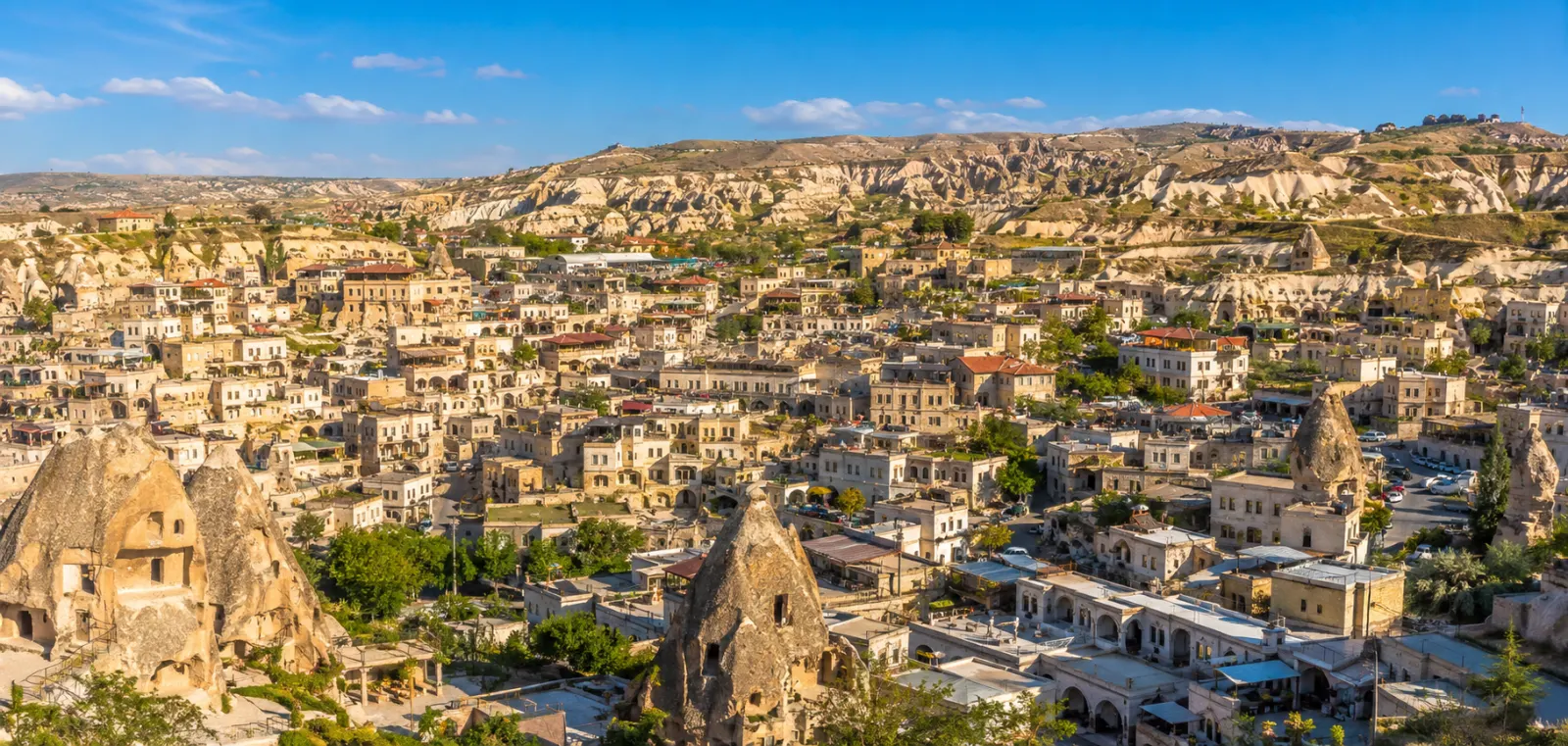
You're standing in one of the strangest towns on Earth. Look around you — the hills aren't hills at all. They're cones of soft volcanic rock, hollowed out over centuries into homes, chapels, and stables, some of them still lived in today.
Millions of years ago, nearby volcanoes buried this entire region in ash. That ash hardened into a soft stone called tuff, and over time, wind and rain carved it into the cone-shaped towers you see rising around Göreme. But it wasn't just nature that shaped this place. Early Christians, fleeing persecution in the Roman era, discovered that this stone was soft enough to carve by hand. They dug homes into the rock. Then they dug churches. Then, when danger came, they dug entire cities beneath the ground.
- Time to allow: 30–45 min
- Hours: Open 24 hours
- Address: Göreme, Nevşehir, Türkiye
- Localada perk: 5% OFF – 🎈 Don't leave without a balloon ride or guided valley tour — book below.
- 🆓 Free to walk — Göreme is an open town, not a ticketed site
- 🎈 Best known as the launch point for Cappadocia's sunrise hot air balloons
- 🏘 Many cave houses in town are still lived in or used as guesthouses and cafés
Local tips
- 🌅 Watch the sunrise balloon launch from a viewpoint near town — even without flying, it's one of the best free experiences in Cappadocia.
- 🚶 Walk the town on foot first — many cave houses are still in daily use as homes, cafés, and shops.
- 🚗 Use Göreme as your base — nearly everything on this list is a short drive or organized tour away.
Göreme Open Air Museum
Full Göreme Open Air Museum audio guide →
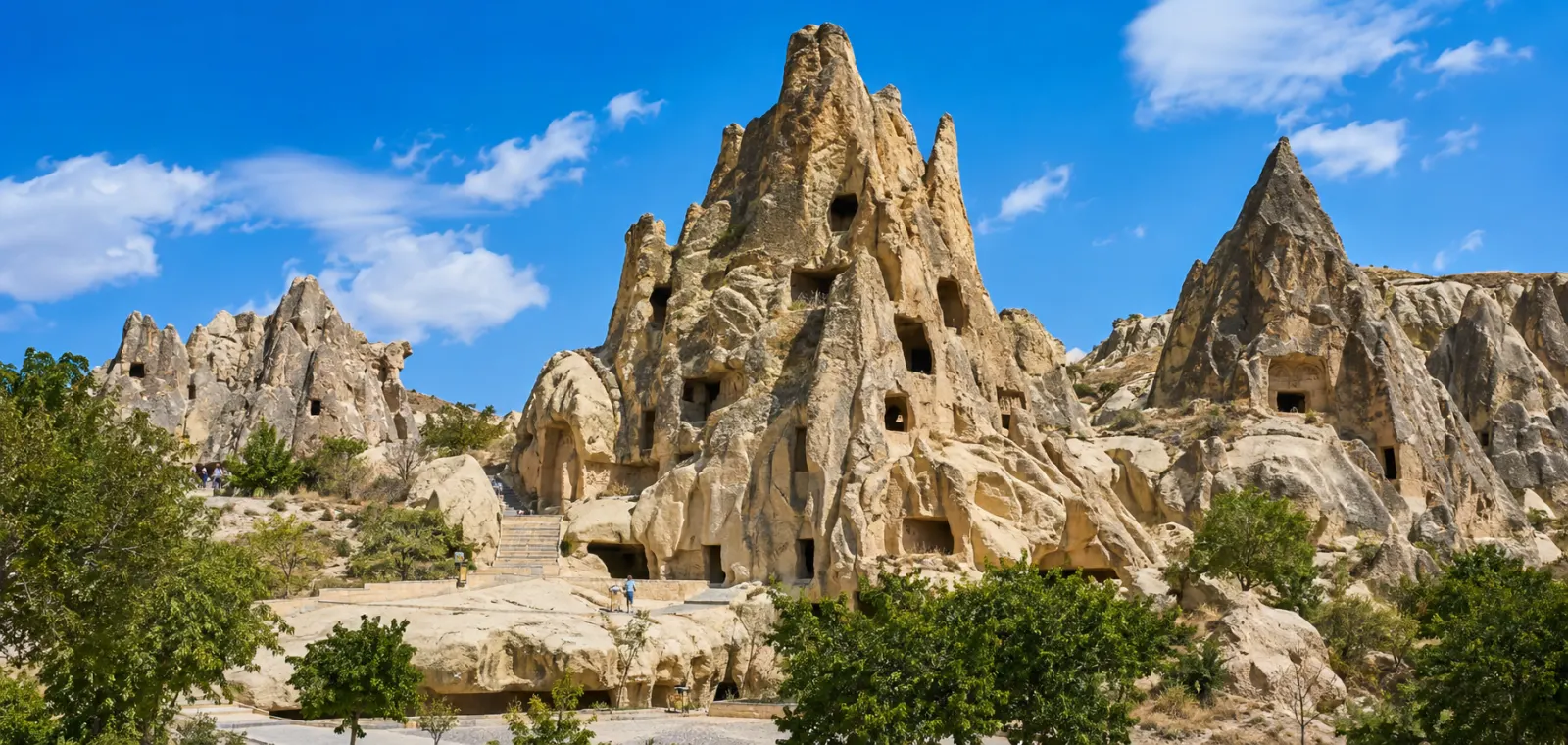
This is the single most important historical site in all of Cappadocia — a monastery carved entirely out of rock, hidden inside the landscape itself.
Between the tenth and twelfth centuries, monks and hermits carved an entire religious community into these soft volcanic cones: churches, chapels, dining halls, even a kitchen, all cut by hand out of solid stone. Inside several of the churches, the walls are covered in Byzantine frescoes — painted scenes of Christ, the Virgin Mary, and the saints, some of them remarkably well preserved after nearly a thousand years underground and out of sight.
The most famous is the Dark Church, so called because its lack of windows kept sunlight from fading the paint. Its frescoes are the best preserved in the entire museum, and stepping inside feels like walking into a completed fresco cycle exactly as an eleventh-century monk would have seen it. It requires a small separate ticket, and it is worth every bit of it.
- Time to allow: 1.5–2 hours
- Hours: 08:00–19:00 (open daily)
- Address: Göreme Tarihi Milli Parkı, Göreme, Nevşehir
- Localada perk: 5% OFF – 🎨 Book a guided tour below to actually understand what you're looking at.
- 🌙 Winter hours run shorter (approx. 08:00–17:00) — summer hours extend to 19:00
- 🚶 15–20 minutes on foot from Göreme town center
Local tips
- ⛪ Don't skip the Dark Church — it costs a little extra but has the best-preserved frescoes in the whole museum.
- ⏰ Arrive at opening (08:00) or after 15:00 — tour buses crowd the site between 10:00 and 14:00.
- 👟 Wear comfortable shoes — paths are uneven and many church interiors have steep, narrow steps.
Uchisar Castle
Full Uchisar Castle audio guide →
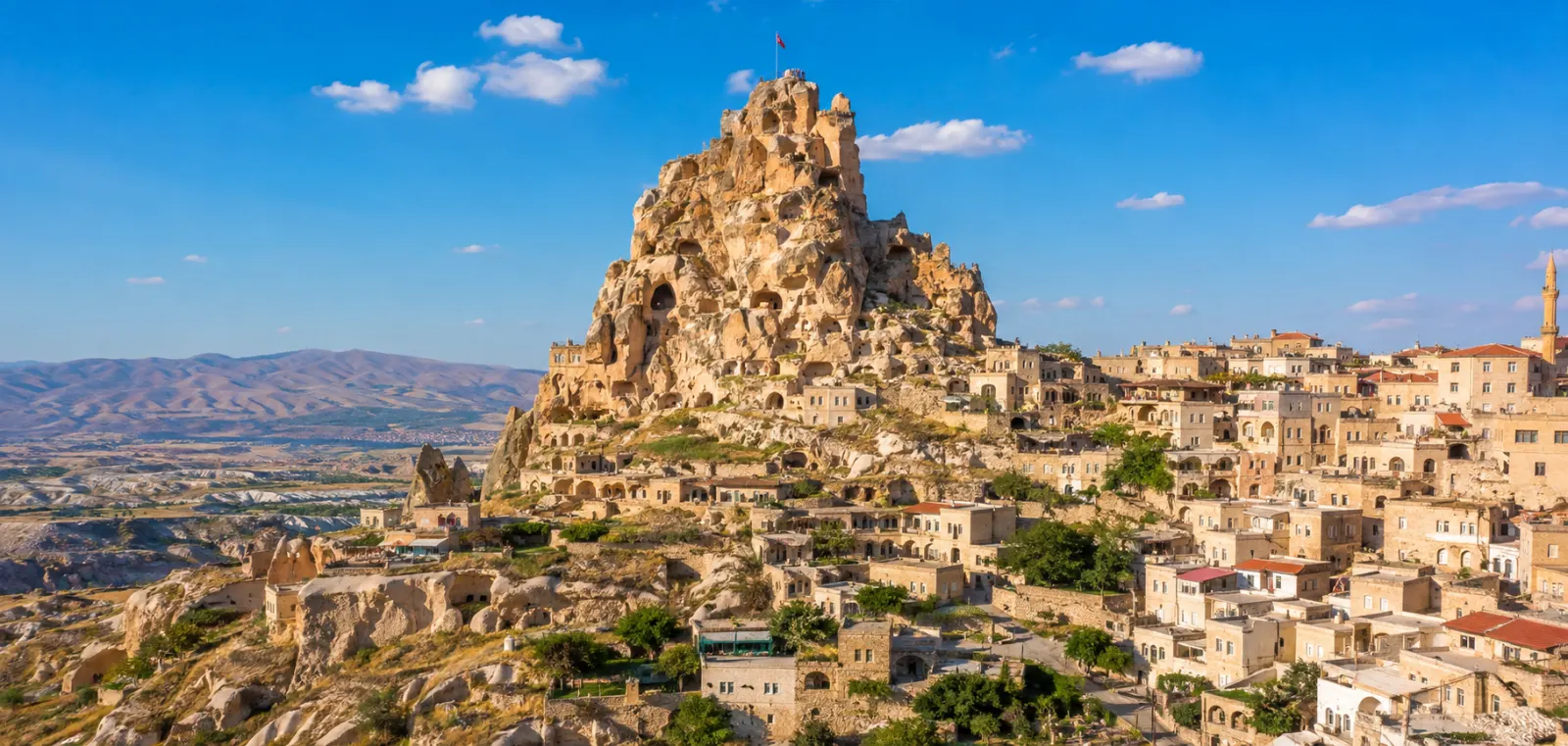
This is the highest point in all of Cappadocia — a massive volcanic rock rising straight out of the town of Uçhisar, hollowed out from top to bottom into rooms, tunnels, and storage chambers that once sheltered entire families.
The name itself means "third fortress" in Turkish — one of three natural strongholds in the region, alongside Ürgüp and Ortahisar. For centuries, people carved into this rock for shelter and defense, storing food and water deep inside so they could survive a siege without ever stepping outside.
Climb the steps to the summit and you'll understand why people chose this spot in the first place. From the top, the view stretches across the entire region — Göreme and its fairy chimneys to the north, Pigeon Valley below you, and on a clear day, the snow-capped peak of Mount Erciyes on the horizon.
- Time to allow: 45–60 min
- Hours: 08:00–18:00 (open daily)
- Address: Uçhisar, Nevşehir, Türkiye
- 🪜 Around 300 steps to the summit — manageable but not accessible for everyone
- 🌅 Best at sunrise (balloon views) or sunset (golden light over the valleys)
Local tips
- 🌅 Time it for sunrise or sunset — the light transforms the whole experience.
- 🪶 Look for the red-painted pigeon holes carved into the rock on your way up.
- 👟 Wear proper shoes — some sections are steep, narrow, or slippery after rain.
Monks Valley
Full Monks Valley audio guide →
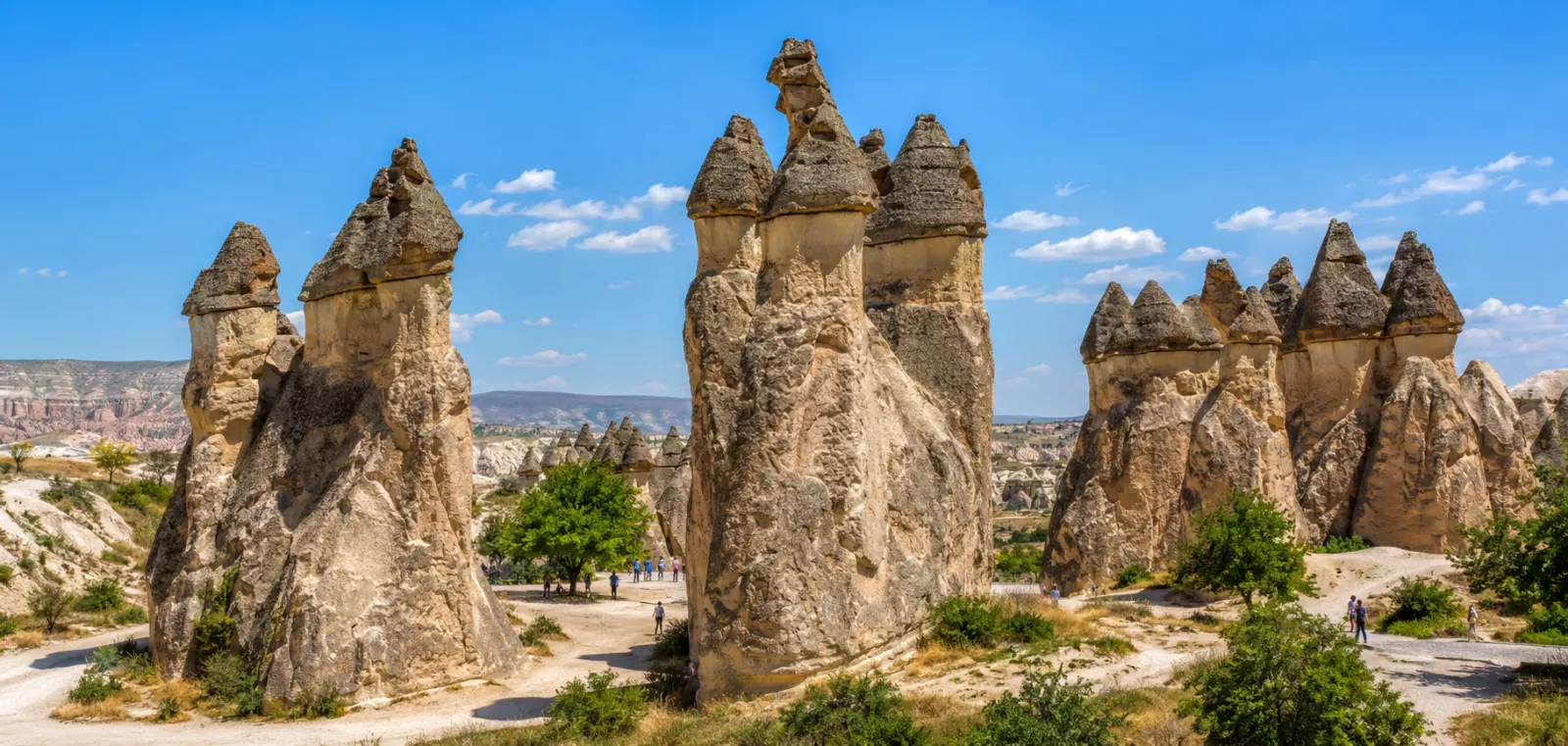
If one image could define Cappadocia, it would probably be this one — tall, mushroom-shaped rock towers, several of them crowned with two or even three separate stone caps stacked on top of each other.
Most fairy chimneys in Cappadocia have a single cap, a piece of harder rock protecting the softer stone underneath from erosion. Here, that erosion split many of the caps into multiple sections, creating the strange, layered towers you're looking at now — some of them rising over fifteen metres.
This place has another name too: Monks Valley. Between the fifth and twelfth centuries, Christian hermits carved small cells directly into these formations, choosing the tallest, most isolated towers for a life of solitary prayer. Look for the entrance carved into one of the triple-capped chimneys — that's the cell of Saint Simeon, a hermit monk who once lived exactly where you're standing.
- Time to allow: 30–45 min
- Hours: 08:00–19:00 (open daily)
- Address: Paşabağı, Göreme–Avanos Yolu, Nevşehir
- 🍄 Home to Cappadocia's most famous multi-capped "mushroom" fairy chimneys
- ⛪ Saint Simeon's hermit chapel is carved inside one of the triple-capped chimneys
- ⏰ Arrive early morning or late afternoon — tour buses crowd the site midday
Local tips
- 📷 Come early morning or late afternoon — the low light makes the multi-capped chimneys even more dramatic in photos.
- ⛪ Look for Saint Simeon's cell — a small carved doorway inside one of the triple-capped chimneys.
- 🍇 The valley doubles as a vineyard — look for grape vines growing right at the base of the fairy chimneys.
Zelve Open Air Museum

This was once one of the largest communities in Cappadocia — a village spread across three valleys, carved entirely into the rock, and lived in continuously until 1952, when the last residents were finally evacuated because the crumbling stone had become too dangerous.
Unlike some of the more polished sites nearby, Zelve feels raw and unfiltered. You can walk directly into cave houses, churches, wineries, and even an old rock-cut mosque, most of them still connected by the same tunnels and passageways that villagers used every day for centuries.
Christian monastic communities settled here as early as the ninth century, and the site kept evolving long after that — Byzantine chapel, then Ottoman village, then finally, in 1967, a museum. There are no crowds pushing past you here, no roped-off frescoes. Just three valleys of caves you're free to wander into, exactly as they were left.
- Time to allow: 1.5–2 hours
- Hours: 08:00–19:00 (open daily)
- Address: Zelve Ören Yeri, Aktepe, Nevşehir
- 🌙 Winter hours: 08:00–17:00 · Summer hours: 08:00–19:00
- 🏘 Inhabited until 1952 — one of the last lived-in cave villages in Cappadocia
- 🚫 Drone flights are not permitted inside the site
Local tips
- 🥾 Wear sturdy shoes — paths are uneven and some cave interiors require ducking or light climbing.
- 🕰 Visit all three valleys, not just the first — each one feels different.
- 🌅 Come near sunset for the best light and the fewest people — Zelve is far quieter than Göreme's museum.
Avanos

This riverside town has been shaping pottery from the same red clay for over four thousand years — since the Hittites first worked it, long before Rome, long before Byzantium, long before anyone called this place Cappadocia at all.
Avanos sits on the Kızılırmak, Turkey's longest river, known as the Red River for the iron-rich clay it carries. That clay is what built this town's entire identity. Walk the old streets and you'll find family-run pottery studios everywhere, many of them run by descendants of potters who worked the same wheels generations ago.
Step into one, and you can watch a master potter turn a shapeless lump of clay into a vase in under a minute — or sit down yourself and try it, hands in the clay, wheel spinning, someone guiding you the whole way.
- Time to allow: 1–2 hours
- Hours: Open 24 hours
- Address: Avanos, Nevşehir, Türkiye
- 🆓 Free to walk — Avanos is an open town, workshops charge separately
- 🏺 4,000 years of continuous pottery-making, dating back to the Hittites
Local tips
- 🏺 Book a hands-on wheel-throwing session — most studios welcome walk-ins but booking ahead guarantees a spot.
- 🌉 Cross the pedestrian Stone Bridge at sunset — the river turns golden and it's the best photo spot in town.
- 🛍 Look for family-run studios over large tourist-bus workshops — the smaller ones often have better prices and more personal demonstrations.
Ürgüp
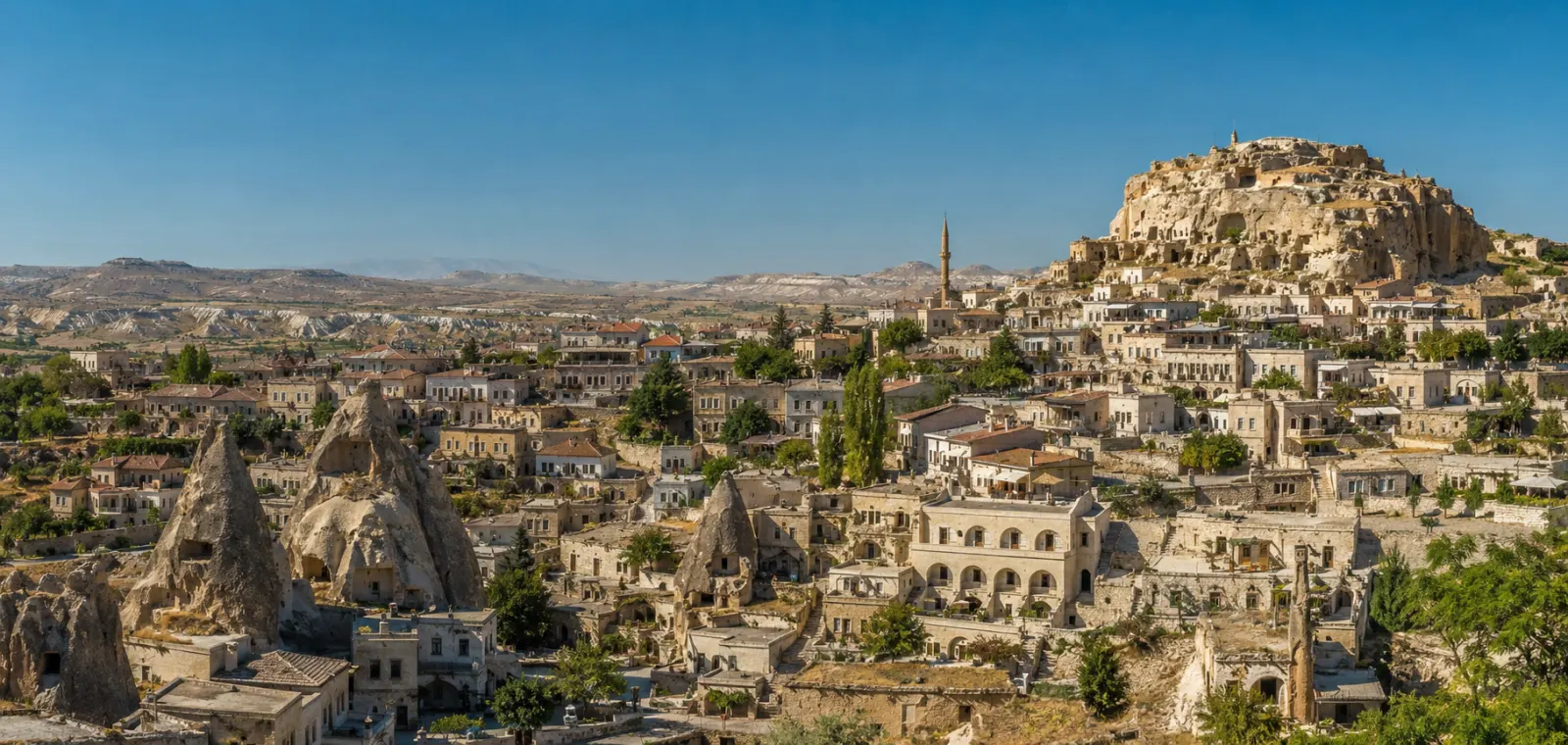
Ürgüp is Cappadocia at its most polished — stone mansions, boutique cave hotels, and a winemaking tradition that goes back generations, all wrapped around a town that's been rebuilt, renamed, and reinvented by nearly every civilization that's passed through this region.
The volcanic soil here happens to be excellent for grapes, and Ürgüp has been making wine from it for centuries. Family-run wine houses across town offer tastings of grape varieties you won't find anywhere else — a genuinely different way to experience Cappadocia beyond valleys and fairy chimneys.
Climb Temenni Hill in the old town for the best view in Ürgüp — 13th-century wishing tombs at the summit, and a panorama that stretches across the town's stone rooftops all the way to Mount Erciyes on a clear day.
- Time to allow: 1–2 hours
- Hours: Open 24 hours
- Address: Ürgüp, Nevşehir, Türkiye
- 🆓 Free to walk — Ürgüp is an open town, wineries and tastings charge separately
- 🍇 Cappadocia's volcanic soil produces distinctive wine — Ürgüp is the region's wine capital
Local tips
- 🍷 Book a wine tasting at a family-run cellar — Ürgüp's volcanic-soil wine is genuinely distinctive.
- ⛰ Climb Temenni Hill before sunset — the view over the stone rooftops is one of the best in town.
- 🏘 Walk the old quarter slowly — restored Greek and Turkish mansions sit side by side, many now boutique hotels.
Derinkuyu Underground City

You're about to walk down into one of the largest underground cities ever discovered — a place that once sheltered up to twenty thousand people, along with their livestock and food supplies, hidden completely beneath the surface.
Derinkuyu descends across eight levels open to visitors today, though the full complex likely extends even deeper. Inside, you'll find stables, kitchens, wine and oil presses, a school with study rooms, even a chapel — an entire functioning city, carved by hand out of solid volcanic rock.
Massive circular stone doors, some over a metre wide, could be rolled shut from the inside to seal off each level in an emergency, and a sophisticated network of more than fifty ventilation shafts kept fresh air circulating all the way to the bottom.
- Time to allow: 1–1.5 hours
- Hours: 08:00–19:00 (open daily)
- Address: Bayramlı, Niğde Cd., 50700 Derinkuyu, Nevşehir
- 🪜 8 levels open to the public — narrow corridors, low ceilings, and steep stairs throughout
- 😨 Not recommended for anyone uncomfortable in tight, enclosed spaces
Local tips
- 🔦 Bring a small flashlight — some corridors are dimly lit and every detail is worth seeing clearly.
- 😤 Take it slow on the stairs — the air gets noticeably cooler and thinner the deeper you go.
- 🚫 Skip this one if you're claustrophobic — corridors are genuinely narrow and low in several sections.
Love Valley

Officially, this is Bağlıdere Valley. Everyone calls it Love Valley instead — and one look at the fairy chimneys rising from the valley floor will tell you exactly why. These are some of the tallest, most unusually shaped rock pillars in all of Cappadocia, some reaching over thirty metres, and locals long ago decided their distinctive form deserved a more romantic name than the official one.
Beyond the shape that made it famous, this is simply one of the best hiking valleys in the region — wide open paths, panoramic viewpoints, and a landscape that shifts from cream to soft rose as the light changes throughout the day.
Come at sunrise and you'll likely catch hot air balloons drifting low between the formations, sometimes passing right at eye level. It's completely free to walk, with a viewpoint at the top for those who'd rather admire it from above than hike down into it.
- Time to allow: 1–2 hours
- Hours: Open 24 hours
- Address: Aşk Vadisi, Göreme–Uçhisar Yolu, Nevşehir
- 🆓 Free to enter — no ticket office or gate
- 🚶 Main trail is roughly 2–3 km one way, connecting toward White and Rose Valley
Local tips
- 🌅 Arrive right at sunrise — this is one of the best spots in Cappadocia to watch balloons drift low overhead.
- 🥾 Combine with White Valley and Rose Valley for a longer 6–8 km hike if you have the time and energy.
- 📸 The parking area viewpoint at the top gives you the classic photo without needing to hike down at all.
Devrent Valley
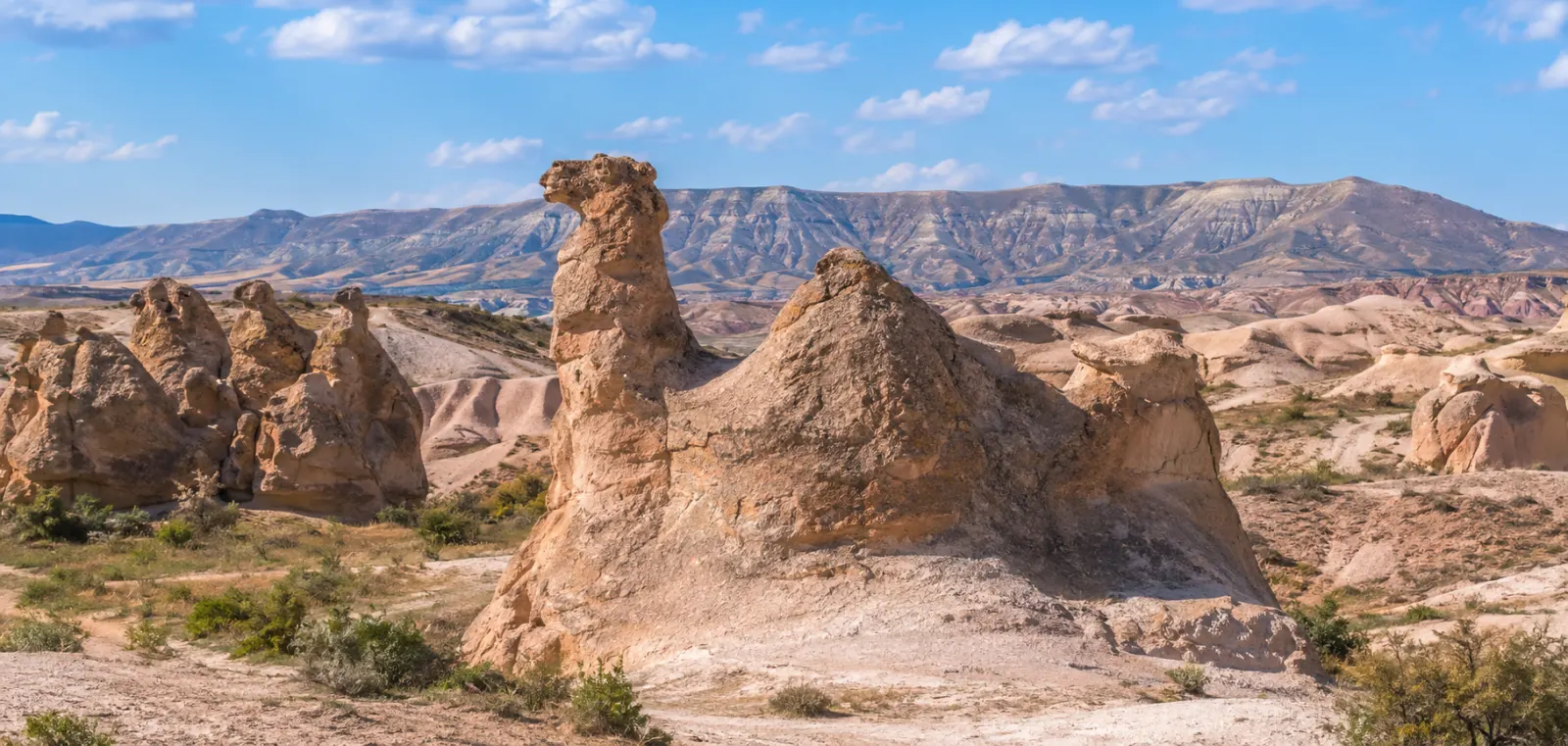
Unlike almost every other valley in Cappadocia, there are no cave churches here, no carved houses, no monastic history. This is pure geology — and it's exactly what makes it so strange to walk through.
Erosion here didn't just carve tall pillars. It sculpted shapes — a camel kneeling at the entrance so convincing it's become one of the most photographed rocks in the region, along with dolphins, snakes, kissing birds, and human silhouettes scattered across the valley floor, all depending on the angle and your imagination.
That's exactly why it's called Imagination Valley. There's no single "right" way to see it. Walk slowly, look from different angles, and let the shapes reveal themselves.
- Time to allow: 30–45 min
- Hours: Open 24 hours
- Address: Devrent Vadisi, Zelve–Avanos Yolu, Nevşehir
- 🆓 Free to visit — no ticket, no gate, no crowds
- 🐫 Look for the famous "Camel Rock" right at the entrance
Local tips
- 🐫 Find the Camel Rock at the entrance first — then look deeper into the valley for dolphins, snakes, and other shapes.
- 🌅 Visit at sunset — the rock turns rose-pink, and it's why locals also call it "Pink Valley."
- 🐢 No rush needed here — walk slowly and view formations from a few different angles.
Pigeon Valley

This valley takes its name from something you'll see carved into the cliffs on either side of you as you walk — thousands of small openings, dug by hand into the soft rock, built specifically to house pigeons.
For centuries, locals here relied on pigeon droppings as a natural fertilizer for their vineyards and orchards, and they carved entire dovecotes into the rock face to attract and keep the birds. Look closely as you walk and you'll spot them everywhere — small square doorways dotting the cliffs, some with faded paint still visible around the entrances.
The trail runs about four kilometres between Uçhisar and Göreme, easiest walked downhill starting from Uçhisar Castle. Along the way, look for the Evil Eye Tree — a tree covered in hundreds of blue glass nazar beads, one of the most photographed spots in the entire valley.
- Time to allow: 1.5–2 hours
- Hours: Open 24 hours
- Address: Güvercinlik Vadisi, Uçhisar–Göreme, Nevşehir
- 🆓 Free to visit — no ticket, no gate
- 🐦 Thousands of hand-carved pigeon houses dot the cliffs along the trail
Local tips
- 🚶 Start at Uçhisar and walk toward Göreme — it's mostly downhill and much easier that direction.
- 🧿 Don't miss the Evil Eye Tree roughly midway — one of the most photographed spots in the valley.
- 👀 Turn around occasionally — some of the best views of Uçhisar Castle are behind you, not ahead.
Red Valley

Wait here for sunset, and you'll understand exactly why this is considered the best spot in all of Cappadocia to watch the day end.
Iron oxide in the volcanic rock gives this valley its deep red and rose tones, and as the sun drops, that colour intensifies — the whole landscape glowing red and gold at once, unlike anything else in the region.
But it's not just about the light. Hidden along the trail is Üzümlü Church, a ninth-century cave chapel decorated with faded frescoes of grape bunches on its ceiling — a quiet reminder that monks once sought exactly this kind of seclusion here, long before sunset-chasers started arriving.
The main loop is a manageable three kilometres, starting and ending in Göreme, so there's no need to arrange transport back. Time your walk to reach the viewpoint about two hours before sunset, and give yourself time to just sit and watch.
- Time to allow: 1.5–2 hours
- Hours: Open 24 hours
- Address: Kızılçukur Vadisi, Göreme, Nevşehir
- 🆓 Free to visit — no ticket, no gate
- 🌅 Best experienced at sunset — arrive roughly 2 hours before to reach the viewpoint
Local tips
- 🌅 Time your arrival about 2 hours before sunset — the colour intensifies dramatically as the light drops.
- ⛪ Don't miss Üzümlü Church partway along the trail — a quiet, free alternative to the crowded churches at Göreme.
- 🥾 For a quieter view, climb the extra 15 minutes to the flag viewpoint above the main café.
Three Beauties
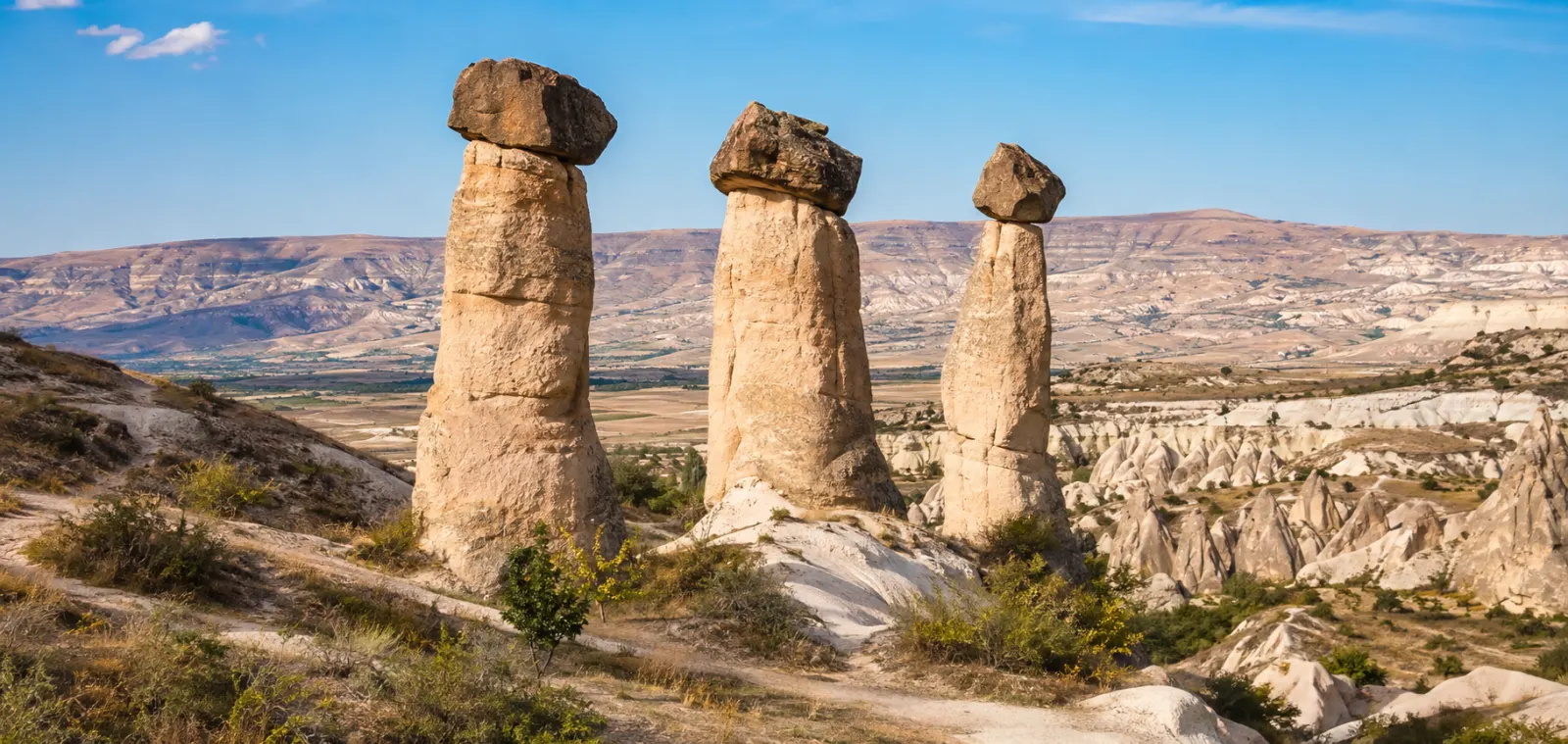
These three fairy chimneys, standing side by side on the road into Ürgüp, have become the unofficial symbol of the town — and of Cappadocia itself.
Two tall, one small, each capped with its own balanced stone hat, they've long been read by locals as a family: father, mother, and child. A local legend tells of a princess who fell in love with a shepherd against her father's wishes — and whatever the truth behind the story, the shape genuinely does look like three figures standing together, frozen mid-story.
This isn't a hike or a valley to explore — it's a five-minute stop, right at the edge of Ürgüp, easily reached on foot or by a short drive. A wooden boardwalk keeps the site protected while still letting you get close.
- Time to allow: 20–30 min
- Hours: Open 24 hours
- Address: Ürgüp–Nevşehir Yolu, Ürgüp, Nevşehir
- 🆓 Free to visit — a quick roadside stop, not a hike
- 🚶 About 5 minutes from Ürgüp center on foot, or a short drive
Local tips
- 📸 A quick, easy photo stop — no need to allocate more than 20-30 minutes here.
- 🌅 Visit around sunset if you can — the low light makes the rock colours much richer.
- 🍷 Combine with a quick stop in Ürgüp itself — it's just a few minutes away.
Kaymakli Underground City

This is the largest underground city ever found in Cappadocia — eight levels deep in total, though only the top four are open to walk through today.
Where Derinkuyu feels like a tall, narrow tower built downward, Kaymakli feels different: wider, more spread out, with rooms branching off in every direction. You'll pass stables, kitchens with soot-blackened ceilings, wine presses, storage rooms, and even underground churches, all carved directly into soft volcanic rock by people who once relied on this exact network to survive.
Follow the red arrows through the main route and the blue arrows back out — the tunnels genuinely do form a maze, and it's easy to lose your bearings without them.
- Time to allow: 45–60 min
- Hours: 08:00–19:00 (open daily)
- Address: Kaymaklı, Nevşehir, Türkiye
- 🪜 4 of 8 levels open to visitors — wider and more spread out than Derinkuyu
- 👟 Wear sneakers — stone steps are uneven and some passages are steep
Local tips
- 🔴 Follow red arrows going in, blue arrows coming out — the tunnels really are a maze without them.
- 👟 Wear sneakers — the stone steps are uneven and some sections require ducking.
- 🕰 Visit early morning if you can — much quieter before tour groups arrive around mid-morning.
Ihlara Valley
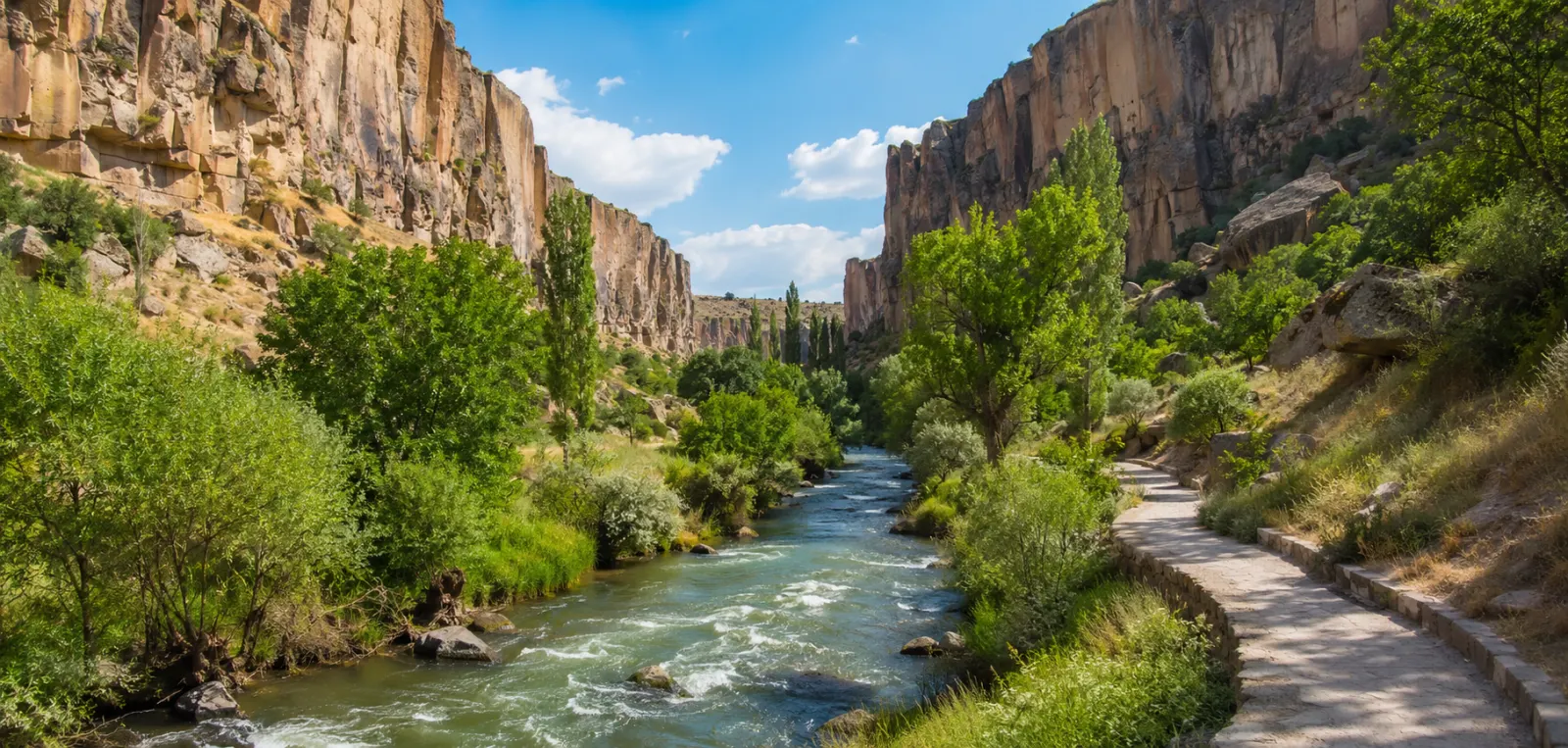
If everywhere else in Cappadocia felt dry and volcanic, this is the exception — a deep, green canyon carved by the Melendiz River, shaded by poplar trees, with running water and birdsong the whole way through.
Byzantine monks settled here starting in the seventh century, carving over a hundred churches directly into the canyon walls. Many still hold their original frescoes, faded but genuinely visible, hidden behind small entrances easy to walk right past if you're not looking for them.
The full canyon runs about fourteen kilometres, but you don't need to walk all of it. Most visitors descend a steep staircase near Ihlara village, walk a comfortable stretch along the riverside trail, and stop at one of the small tea gardens built right on the water for a break.
- Time to allow: 2–3 hours
- Hours: 08:00–18:00 (open daily)
- Address: İhlara, Aksaray, Türkiye
- 🚶 Full canyon is ~14–16 km — most visitors walk a shorter 3–4 km stretch
- 🪜 Steep staircase (around 350–400 steps) at the main Ihlara village entrance
Local tips
- 🪜 The main staircase entrance has several hundred steps — pace yourself on the way down.
- 🍵 Stop at one of the riverside tea gardens — a genuinely relaxing break mid-hike.
- 🚶 You don't need to walk the whole canyon — even a 3-4 km stretch gives you the full experience.
Selime Monastery

This is the largest rock-cut religious complex in all of Cappadocia — a multi-storey monastery carved directly into a hillside at the far end of Ihlara Valley, so massive it functions almost like a small carved city rather than a single building.
Dating back to the eighth or ninth century, it once housed a full monastic community: a cathedral-sized church with columns carved straight out of the rock, monks' cells, a communal kitchen still stained black from centuries of cooking fires, and stables with stone feeding troughs still intact, once used for the camels of travelling caravans.
Climbing to the top takes some effort — the paths are steep and uneven, with no railings, so take it slow. Once you're up, though, the view stretches out across the valley you may have just spent hours walking through.
- Time to allow: 1–1.5 hours
- Hours: 08:00–18:00 (open daily)
- Address: Kayaaltı, 68500 Selime, Güzelyurt, Aksaray
- 🏛 Largest rock-cut religious complex in Cappadocia — cathedral-sized church, monks' cells, kitchens, stables
- 🎬 Rumoured Star Wars filming connection is widely disputed by local guides
Local tips
- 🪜 The climb to the upper levels is steep with no handrails — take it slow, especially if unsteady on uneven terrain.
- 🎬 Ask your guide about the Star Wars rumor — it's a fun conversation, even though most say it isn't true.
- 🚶 Pair this with an Ihlara Valley hike — it's the natural, dramatic ending point.
Experiences and activities
Sunrise Hot Air Balloon Flight
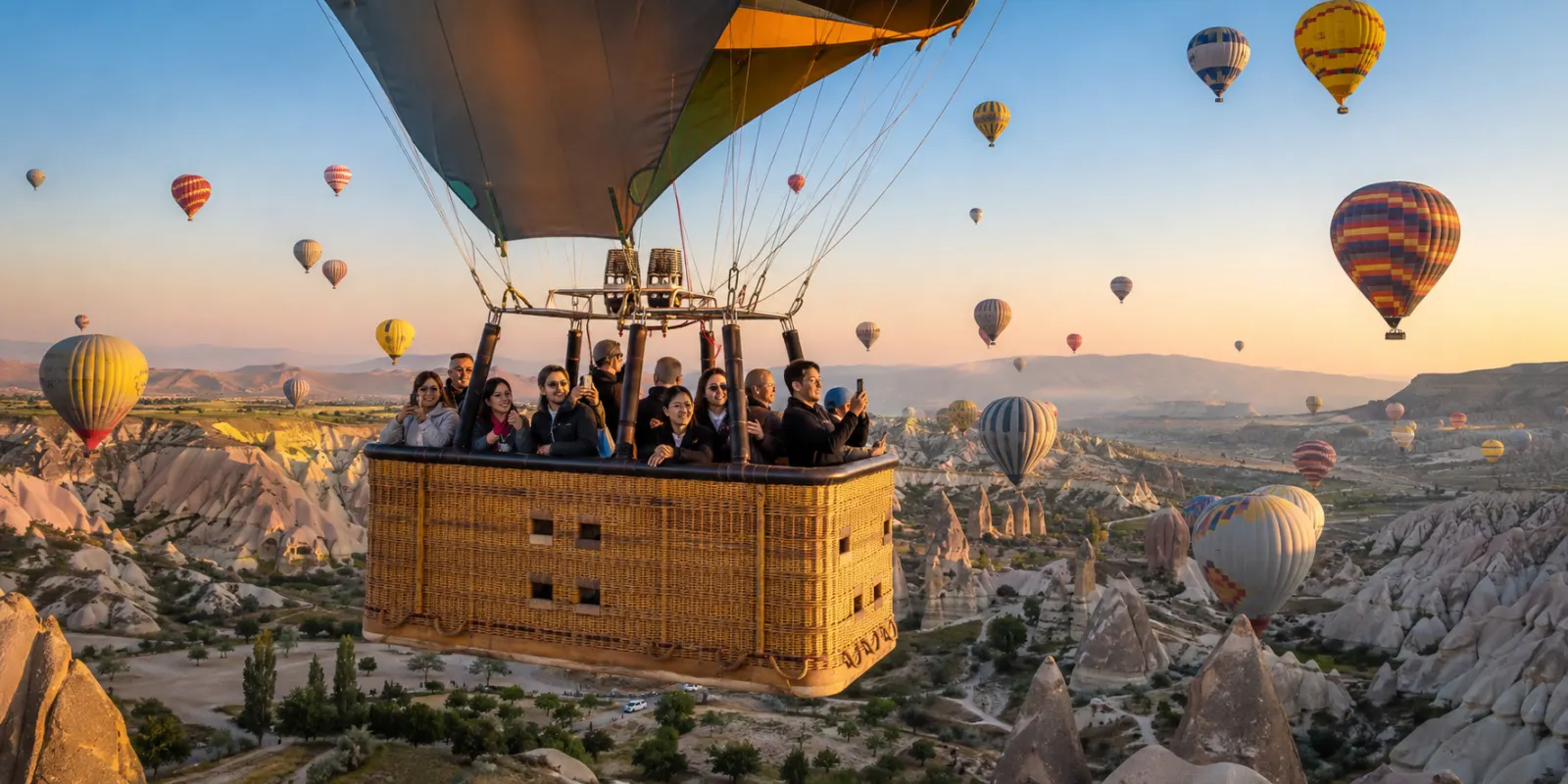
There's a reason people cross the world for this one hour.
Before first light, the valleys around you are silent and cold. Then the burners fire. The fabric swells. And one by one, dozens of balloons lift off the valley floor together.
Within minutes you're drifting hundreds of meters above a landscape that looks like nowhere else on Earth.
Beneath you, the fairy chimneys catch the first orange light. Volcanic ash, laid down millions of years ago, carved by wind and water into cones and ridges and hidden churches. From the ground, they're strange. From up here, they finally make sense — you can see how the whole region flows together, valley into valley, all the way to the horizon.
- Hours: Open 24 hours
- Address: Göreme, Nevşehir
- Takes off at sunrise only — hotel pickup is about 1 hour before
- Dress in warm layers — mornings are cold even in summer
Local tips
- Book it for your first morning, not your last — if weather cancels, you'll still have days to try again
- Reserve well ahead between April and October; the best mornings sell out weeks in advance
- Wear closed shoes you don't mind getting dusty — take-off and landing fields are open ground
- Never buy a cheap flight in cash from someone on the street; book only through licensed channels
ATV Valley Adventure — Sunset or Daytime
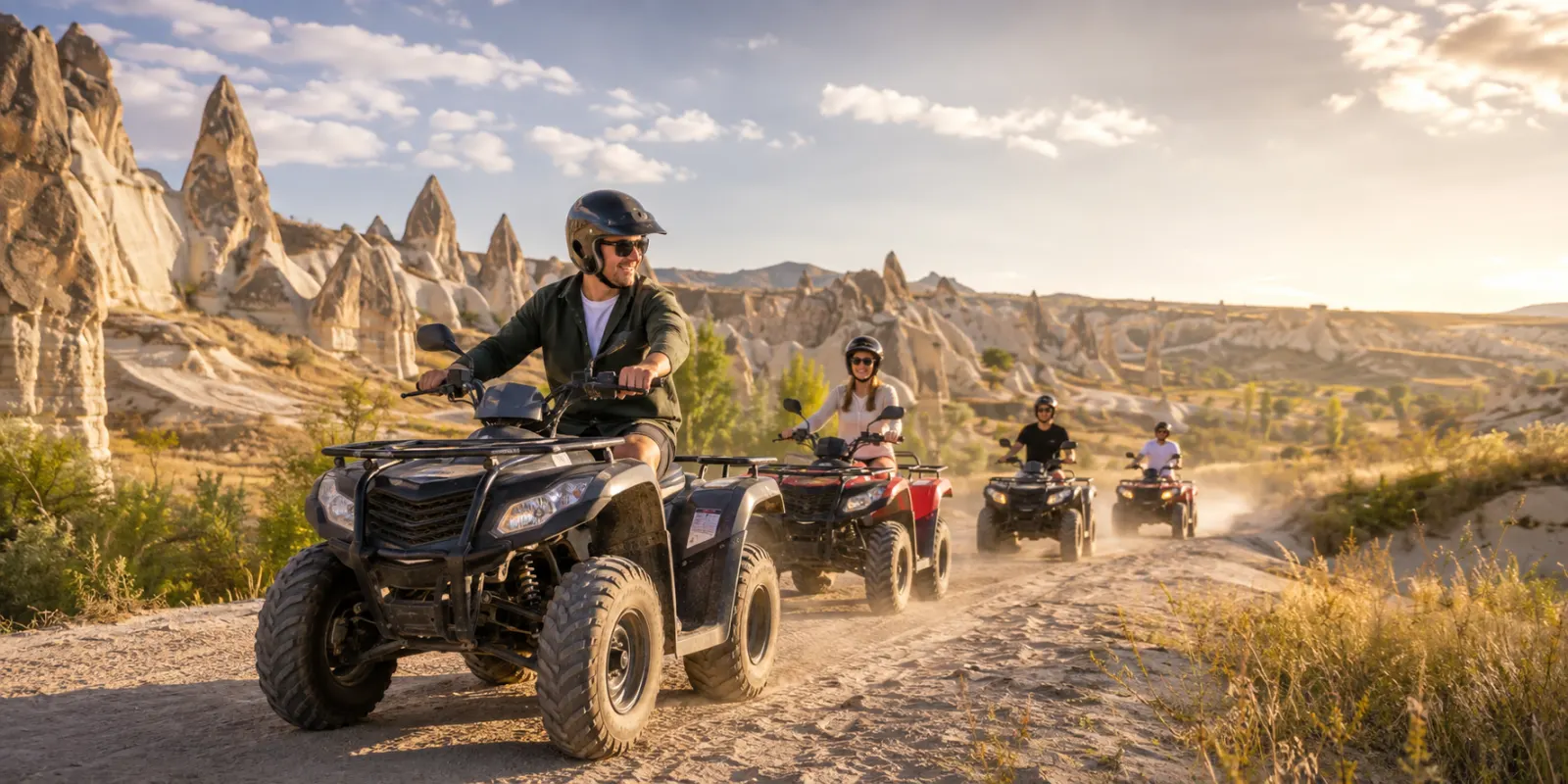
Some places you look at. Others you move through.
The valleys around Göreme were never built for cars. They're narrow, dusty, uneven — cut by water over thousands of years into corridors of soft volcanic rock. Which is exactly why riding through them feels different from anything else you'll do here.
You'll start with a briefing and a few practice laps. No experience needed — the machines are simple, and a guide rides with you the whole way.
Then the trails open up.
First, Love Valley — wide, exposed, famous for the tall stone columns that rise straight out of the valley floor. This is where the landscape stops feeling like scenery and starts feeling like another planet.
- Hours: Open 24 hours
- Address: Göreme, Nevşehir
- Runs 1 to 2 hours, with daytime and sunset departures
- Private and small-group options are available
Local tips
- Bring your driver's licence if you want to drive — no licence means riding as a passenger
- Wear closed shoes and clothes you don't mind getting dusty
- Sunset departures are the most popular — book a day or two ahead in high season
- Sunglasses help more than you'd think on the open trails
- Agree what's included before you start, and never pay cash extras to anyone on the trail
Horseback Ride Through the Valleys — Sunrise or Sunset
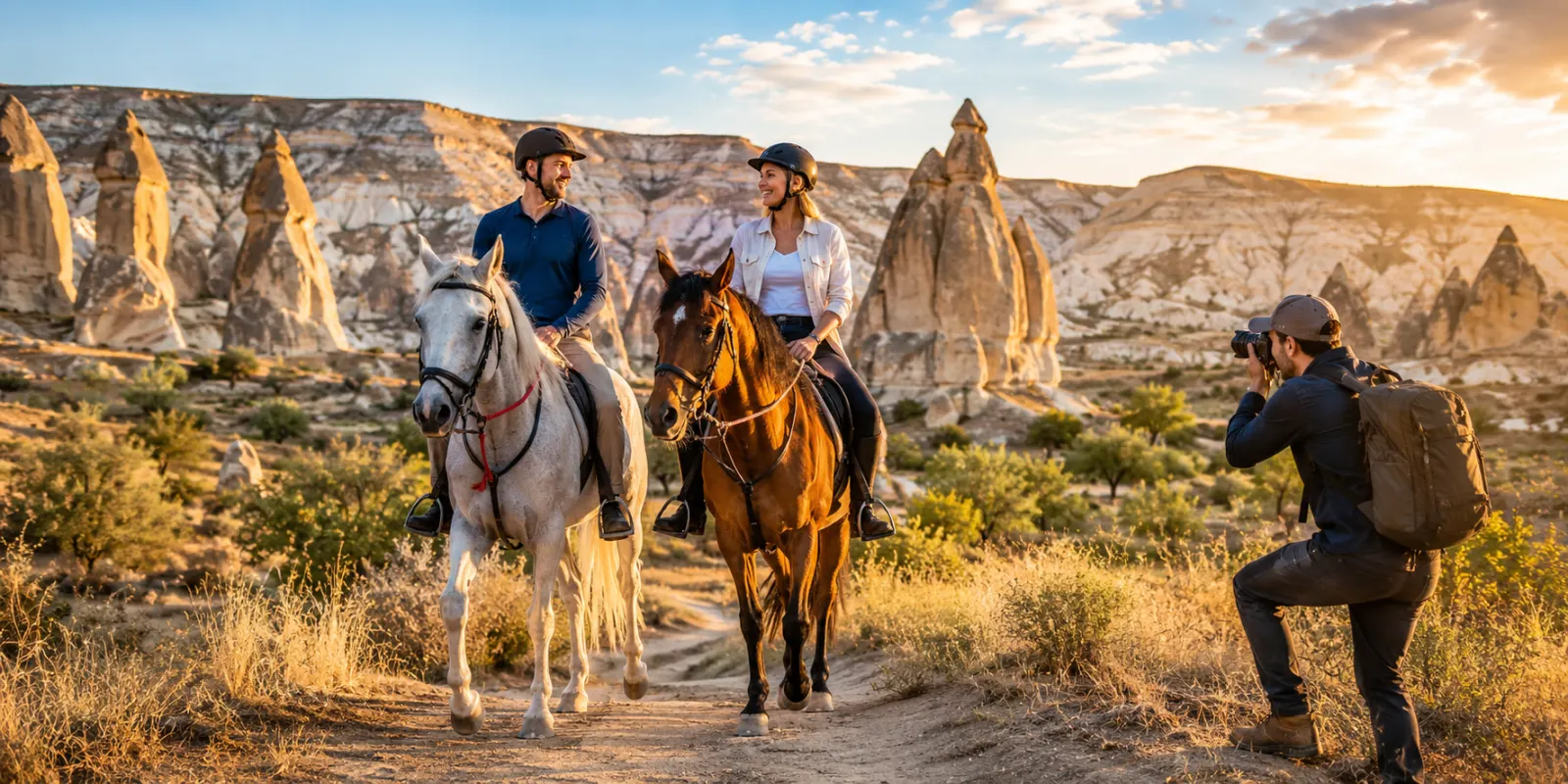
Long before the balloons, there were horses.
The name Cappadocia is often traced back to an old Persian word — Katpatuka — said to mean "the land of beautiful horses." Whether or not the translation is exact, the association stuck. These valleys have been horse country for thousands of years.
And there's a reason for that. The trails here are narrow, sandy, and steep in places. A horse goes where a vehicle can't — quietly, at a pace that lets you actually look around.
You'll set out from Çavuşin, an old village built against the rock face. The route drops into Love Valley, where those tall stone columns rise out of the ground, then climbs toward the White Valley viewpoint, where the whole landscape opens up beneath you.
- Hours: Open 24 hours
- Address: Çavuşin, Nevşehir
- Runs 1 to 2 hours, with sunrise and sunset departures
- No riding experience needed — horses are calm and a guide rides with you
Local tips
- Sunrise rides start very early — confirm your exact pickup time the evening before
- Wear long trousers and closed shoes; the saddle and trails are rough on bare legs
- Confirm which valleys your route covers when you book, so it matches what you want to see
- Bring a light jacket for sunrise — mornings are cold in the valleys even in summer
- Agree the duration and price before you start, and keep your booking confirmation
Pottery Workshop in Avanos
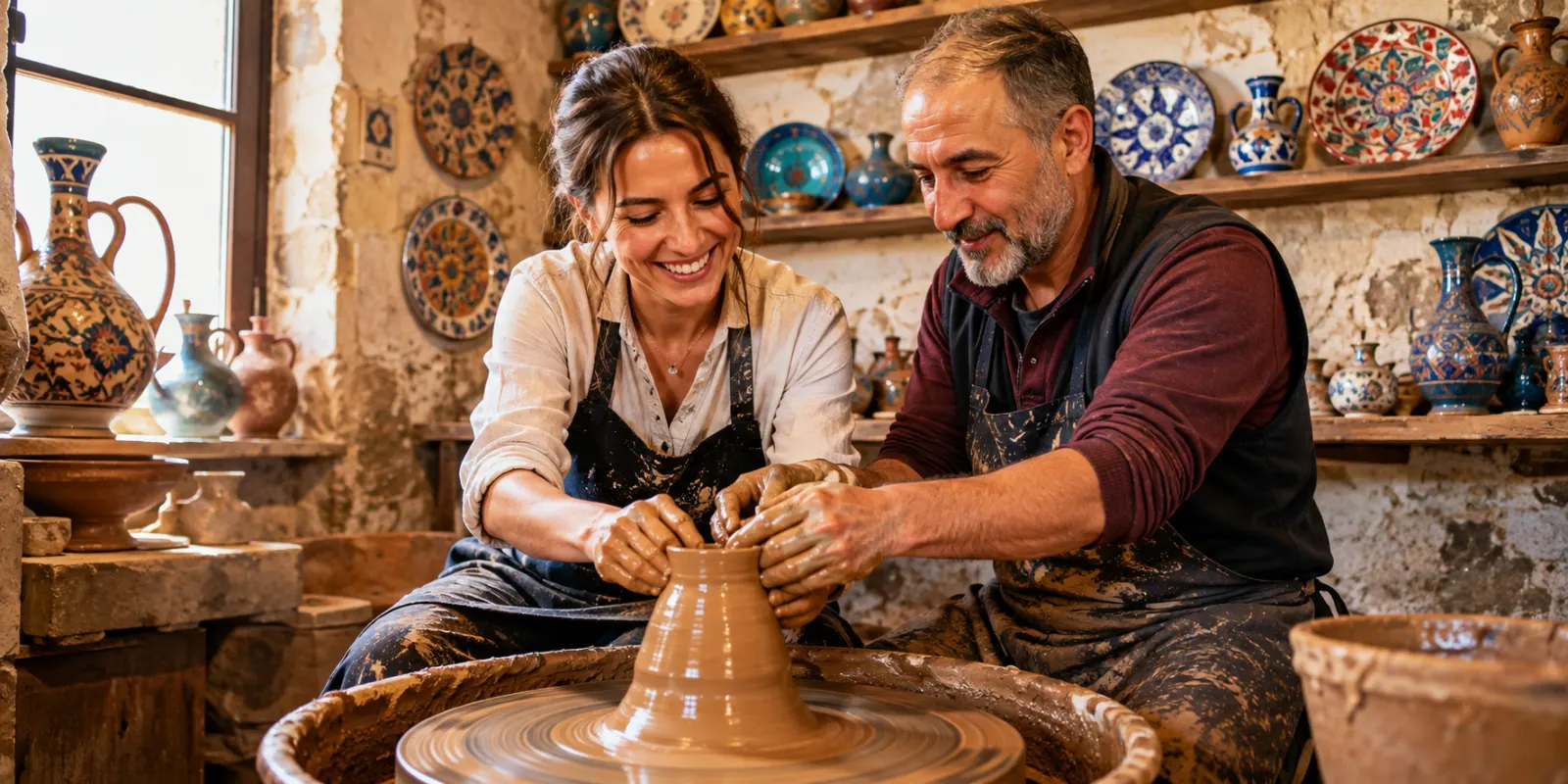
Avanos sits on the banks of the Kızılırmak — the Red River, the longest river in Türkiye. And the town owes everything to it.
The river carries a fine red clay down from the highlands, and people here have been shaping it into pots for thousands of years. Long before the Ottomans, long before the Byzantines. This is one of the oldest continuous crafts in Anatolia, still practised in the same town, with clay from the same river.
Walk through Avanos and you'll see it everywhere — workshops open to the street, shelves of drying pots, wheels turning.
In the workshop, you'll sit at a kick wheel. It's powered by your own foot, the same way it has been for centuries. No motor, no shortcuts. The instructor will show you how to centre the clay, how to open it, how to let the walls rise between your fingers.
- Hours: Open 24 hours
- Address: Sanayi Cd. No:33, Alaaddin, 50500 Avanos / Nevşehir
- Lasts 45 minutes to 1.5 hours
- Guided in English, Spanish, French and German
Local tips
- Combine it with your Avanos stop — the workshop is right in town, so it fits into a half day easily
- Your piece comes home wet and unfired, so wrap it well and don't pack it under anything heavy
- The gallery is beautiful but pieces there can be expensive — browsing is welcome, buying is never expected
- Wear something you don't mind getting clay on; it washes out but it goes everywhere
- Great for kids and complete beginners — no skill needed at all
Cappadocia travel guides on the Localada blog
- Cappadocia Family Travel Guide for a Calm 3-Day Trip
- Göreme versus Ürgüp: Which Base Suits You?
- Balloon Safety Trends in Cappadocia for 2026
- A Cappadocia Couple Trip Example for 3 Days
- How to Visit Derinkuyu Safely Without a Tour
- Sunrise Versus Sunset Ballooning in Cappadocia
- How to Choose Licensed Cappadocia Balloon Operators
- Göreme Balloon Operator Reviews You Can Trust
Cappadocia audio guide: frequently asked questions
Is the Cappadocia audio guide free?
Yes. Localada’s Cappadocia guide is free: create a free account and open it in your browser, no app download needed. It includes 20 stops, audio and written stories, a route map and scam-awareness tips. Tickets for paid sights are bought separately; booking through Localada’s GetYourGuide links gives 5% off.
How many stops are in the Cappadocia audio guide?
There are 20 stops: 16 sights and 4 experiences.
How long does it take to see the main sights in Cappadocia?
Visiting all 16 sights in the guide takes about 16.5–25 hours, not counting travel between them. Ihlara Valley needs the most time (allow 2–3 hours).
Are Cappadocia sights open every day?
All 16 sights in the guide are listed as open seven days a week, though hours can change on public and religious holidays.
What time do Cappadocia sights open and close?
The earliest opening in the guide is 08:00 (Göreme Open Air Museum) and the latest closing is 19:00 (Göreme Open Air Museum). Each stop’s hours are in the table above.
Are there discounts with the Cappadocia guide?
2 stops include a Localada perk, for example Göreme (5% OFF) and Göreme Open Air Museum (5% OFF). Show the code in the guide at verified restaurants and shops; ticket discounts are applied at GetYourGuide checkout.
What can I do in Cappadocia on a rainy day?
6 stops in the guide are indoors, including Göreme Open Air Museum, Zelve Open Air Museum, Derinkuyu Underground City, Kaymakli Underground City, Selime Monastery and Pottery Workshop in Avanos.
Which Cappadocia sights can I see if I am short on time?
These sights need under an hour: Göreme (30–45 min), Monks Valley (30–45 min), Devrent Valley (30–45 min) and Three Beauties (20–30 min).
How do I get between the stops in Cappadocia?
The Cappadocia stops are spread out, so the guide is planned for a car, taxi or tour transfer between towns and valleys.
Which languages is the Cappadocia audio guide available in?
Narration and text are available in 15 languages: English, Turkish, German, French, Spanish, Italian, Portuguese, Dutch, Polish, Russian, Arabic, Persian, Chinese, Japanese and Korean.