













Two days is enough for a Prague 2 day itinerary that covers the castle, Charles Bridge, Old Town, the Jewish Quarter, and one less-crowded neighborhood without racing from photo stop to photo stop. The key is to start at Prague Castle early, group sights by side of the river, and reserve timed visits before you arrive.
Essentials at a glance
- Realistic pace: Plan two full days, with around 8 to 10 hours out each day including meals and transit.
- Best starting stop: Take tram 22 or 23 to Pražský hrad for Prague Castle. It saves you the steep uphill walk from Malá Strana.
- What to book ahead: Reserve Prague Castle circuit tickets if you want to enter St. Vitus Cathedral and historic buildings, and book any guided Clementinum visit directly through its official channel. Popular concerts and major museum exhibitions may also have timed entry.
- Closed days: Prague Castle grounds are open daily, but the historic buildings use seasonal hours. The Jewish Museum sites are closed on Saturdays and Jewish holidays. Check official calendars for holiday changes.
- Dress code: Churches are active places of worship. Wear clothing that covers shoulders and knees when entering St. Vitus Cathedral or other churches, and remove hats where requested.
- Useful transit: Metro A stops at Malostranská and Staroměstská; Metro B stops at Můstek and Náměstí Republiky; Metro C stops at Vyšehrad. Trams 22 and 23 are especially useful for the castle area.
Prague Castle and Old Town Day One
What should you see on the first day in Prague?
Start at Prague Castle, walk downhill through Malá Strana, cross Charles Bridge, then spend the evening in Old Town. This route follows the city’s geography instead of repeatedly climbing between the castle hill and the river.
Arrive at the Pražský hrad tram stop shortly before the historic buildings open. Prague Castle’s grounds generally open from 6 a.m. to 10 p.m. Historic buildings, including St. Vitus Cathedral, typically open from 9 a.m. to 5 p.m. from April through October and from 9 a.m. to 4 p.m. from November through March. On Sundays, cathedral access can begin later because of services. Allow 2.5 to 3.5 hours for the cathedral, Old Royal Palace, St. George’s Basilica, and Golden Lane.
Do not confuse the freely accessible castle grounds with entry to the interiors. Buy only through official Prague Castle channels or a trusted booking partner, and ignore anyone outside offering a “special” ticket or claiming the official office is closed. Staff and signs inside the complex will direct you to the real ticket point.
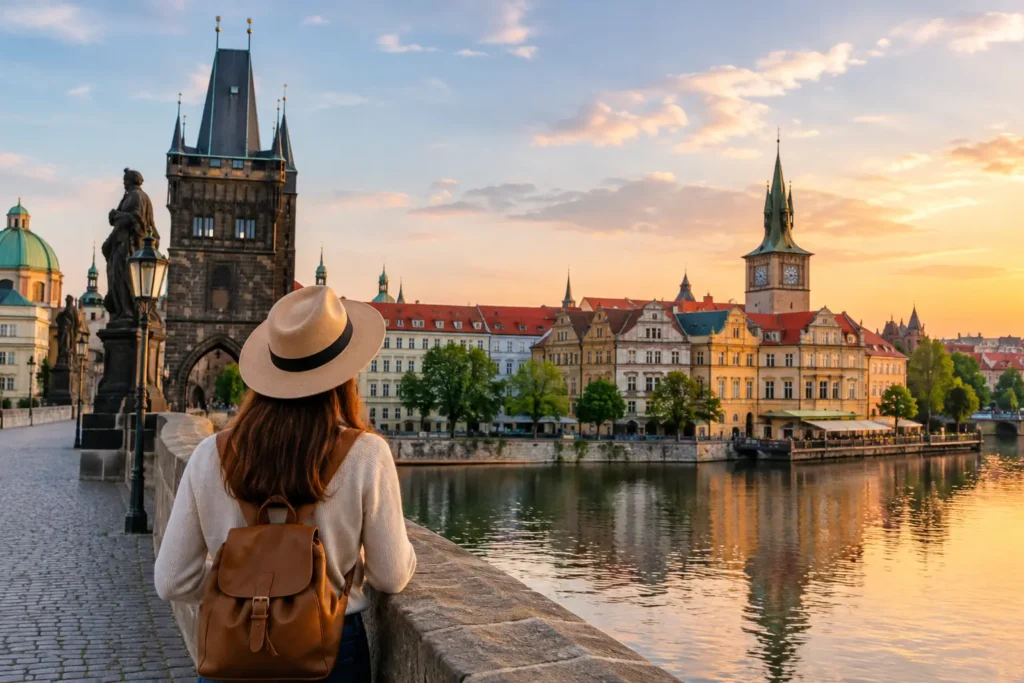
From the castle, walk 10 minutes downhill to Nerudova Street. It is attractive but can be busy and steep underfoot, so wear shoes with grip. Continue through Malá Strana to Charles Bridge, around 1 km from the castle gates and roughly 15 to 20 minutes on foot.
When is the best time to walk across Charles Bridge?
Early morning or after dinner is best if you want room to look at the statues and river views. The bridge is open at all hours and takes about 15 minutes to cross without stops, but allow 30 minutes if you want photographs and a look at the Old Town Bridge Tower from outside.
Street artists and souvenir sellers are part of the bridge experience, but there is no need to buy anything in a hurry. Keep your phone and wallet in a closed bag in the densest sections, especially when a crowd pauses around a performer. Prague is easy to enjoy with basic city awareness, not constant worry.
On the Old Town side, walk five minutes to Old Town Square. See the Astronomical Clock from the square, then step into the side streets rather than spending your whole evening directly below it. The hourly display is brief. It is worth seeing once, but it is not worth sacrificing an hour of your day for a front-row position.
For a viewpoint, the Old Town Hall Tower is a practical choice because it is in the center of the square. Opening hours can shift by season and special events, so confirm them on the official Old Town Hall website that morning. If you go up, allow about 45 minutes including the elevator or ramp and time at the top.
End around Havelská Market and the lanes toward Náměstí Republiky, a walk of about 1 km. Choose dinner on a side street where the menu clearly lists what you are ordering. Be cautious around restaurants using aggressive hosts, vague exchange rates, or menus without clear totals. A polite “no, thank you” is enough.
Jewish Quarter and New Town Day Two
Is the Jewish Quarter worth visiting in Prague?
Yes, especially if you want context beyond Prague’s skyline. The Jewish Quarter, or Josefov, is compact and sits about 500 meters north of Old Town Square. Its synagogues, cemetery, and museum sites tell a connected history, so it works best as one focused visit rather than a quick walk-by.
Take Metro A to Staroměstská and walk five minutes to the quarter. The Jewish Museum’s historic sites are generally open Sunday through Friday, with seasonal hours that are longer from spring through early fall. They close on Saturdays and Jewish holidays, so put this part of the itinerary on Friday only if you can arrive well before the earlier closing time, or choose another day.
Allow 2 to 3 hours for the main sites. The Old Jewish Cemetery is moving and often crowded, so go near opening if it matters to you. Photography rules vary by building. Follow the signs and staff directions rather than assuming that a ticket allows photos everywhere.
If your visit falls on Saturday, replace Josefov with the National Museum at the top of Wenceslas Square. It is a 10-minute walk from Metro A or B at Můstek, or a few minutes farther from Muzeum station on lines A and C. The museum is generally open daily from 10 a.m. to 6 p.m.; allow about two hours for a focused visit. Check the official museum calendar for temporary exhibition changes.
How do you spend the afternoon away from the busiest crowds?
After Josefov or the National Museum, take Metro C from Muzeum to Vyšehrad, one stop south of I. P. Pavlova. From Vyšehrad station, it is about a 10-minute uphill walk to the fortress gate. The ramparts, park, and views over the Vltava offer a calmer counterweight to Old Town, and the outdoor grounds can be visited without treating the stop as a rushed checklist.
Allow 1.5 to 2 hours to walk the fortifications, see the exterior of the Basilica of Sts. Peter and Paul, and pause at the river viewpoints. The route is roughly 2 km if you make a full loop. Bring water in warm weather and expect uneven paths in places.
Return by Metro C from Vyšehrad, or take a tram from the riverside if you prefer seeing the city pass by. For your final evening, consider a short walk around the National Theatre and the riverfront. It is a good place to see Prague’s illuminated landmarks without returning to the tightest Old Town crowds.
Transport and Scam-Awareness Basics
Should you use trams or walk in Prague?
Use both. Central Prague is highly walkable, but the castle hill, cobblestones, and distance between Vyšehrad and Old Town make transit useful. For a first visit, tram 22 or 23 to Prague Castle and the Metro for longer jumps are the simplest combination.
Buy and validate transport only through official ticket machines, approved transit points, or the official Prague public transport app. If someone approaches you near a machine and offers to “help,” keep control of your card and screen. The same rule applies at ATMs and currency exchanges: use bank-operated machines when possible, review the conversion offered on screen, and decline a conversion you do not understand.
Avoid unmarked cars that offer rides near major sights. If you need a taxi, use an established company or have your hotel or restaurant call one. For immediate help, dial 112 for the European emergency number, 158 for police, 150 for fire, and 155 for ambulance services.
Frequently Asked Questions
Can you see Prague in two days?
Yes, but you should choose a few interiors rather than trying to enter every church, tower, and museum. Prague Castle, Old Town, Josefov, and Vyšehrad make a balanced first visit.
Is Prague Castle free to enter?
No. The outdoor grounds can be entered freely, while the main historic interiors require the appropriate admission ticket.
Is the Jewish Quarter open on Saturday?
No. Jewish Museum sites are closed on Saturdays and Jewish holidays, so schedule Josefov for another day.
How long does Prague Castle take?
About 3 hours. Allow longer if you want a slow visit, photographs, or a stop for coffee in the castle district.
Is Charles Bridge safe at night?
Yes, but keep valuables secured as you would in any busy central area, particularly when crowds gather around performers or viewpoints.
Do you need a car in Prague?
No. Walking, trams, and the metro are more practical for this itinerary, and parking adds an unnecessary complication.
If you want this guidance in one place while you walk, Localada’s free Prague audio guide adds narrated context, mapped routes, opening details, and practical local advice without turning your visit into a group tour.
Sources and official information
Opening hours, prices and rules change. These are the primary sources behind this guide; check them before you go.
- Istanbulkart (Istanbul Metropolitan Municipality): The official transport card used on Istanbul trams, metro, buses and ferries.
- UK Foreign Office travel advice: Turkey safety and security: Government guidance on crime, unofficial taxis and drink spiking in Turkey.
- UK Foreign Office travel advice: getting help in Turkey: Confirms 112 as the emergency number for ambulance, fire and police.
Questions answered in this article
- What should you see on the first day in Prague?
- When is the best time to walk across Charles Bridge?
- Is the Jewish Quarter worth visiting in Prague?
- How do you spend the afternoon away from the busiest crowds?
- Should you use trams or walk in Prague?
- Can you see Prague in two days?
- Is Prague Castle free to enter?
- Is the Jewish Quarter open on Saturday?
- How long does Prague Castle take?
- Is Charles Bridge safe at night?
- Do you need a car in Prague?
Summarise this guide with AI: ChatGPT · Claude · Perplexity