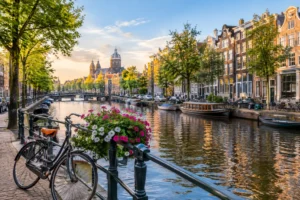

















A Paris 2 day itinerary for first time visitors works best when you group sights by neighborhood, rather than trying to cross the city for every famous landmark. Give Day 1 to the Louvre, the Seine, and the Eiffel Tower area; use Day 2 for the historic center, Saint-Germain-des-Prés, and one museum or Montmartre.
Paris Essentials for Two Days 2026
Time needed: Two full days, plus an evening on arrival if you have one. Paris rewards a measured pace. Plan one major museum per day at most, with time for meals, transport, and the unexpected queue.
Closed days: The Louvre is closed Tuesdays. Musée d’Orsay is closed Mondays. Many smaller shops close on Sundays or Mondays, while major landmarks generally remain open.
Dress code: Churches ask for covered shoulders and clothing that reaches at least mid-thigh. Comfortable walking shoes matter more than anything else – this route covers roughly 10 to 13 km each day.
Metro and RER: Buy and validate the ticket type that matches your journey before boarding. Line 1 is especially useful for central sights, while RER C serves the Eiffel Tower area at Champ de Mars-Tour Eiffel. Use RATP’s official journey planner for live disruptions and platform changes.
Book ahead: Reserve a timed Louvre entry, an Eiffel Tower ascent if you want to go up, and Sainte-Chapelle. Do not buy from people approaching you outside an attraction or from lookalike ticket websites designed to add unnecessary markups.
Paris 2 Day Itinerary for First-Time Visitors
Day 1: Louvre, Seine, and Eiffel Tower
Start at the Louvre when it opens at 9:00 a.m. The museum is open Wednesday through Monday until 6:00 p.m., with late opening until 9:00 p.m. on Wednesdays and Fridays. Arrive 20 to 30 minutes before your timed entry to allow for the security line, and enter through the access point shown on your reservation rather than following anyone offering a faster route.
Two and a half to three hours is enough for a first visit. Choose a short route: the Mona Lisa, Winged Victory of Samothrace, Venus de Milo, and a few rooms that genuinely interest you. Trying to see every department turns the visit into a long queue between crowded galleries.
From the Louvre, walk west through the Tuileries Garden to Place de la Concorde. It is about 0.8 km from the museum pyramid to the garden’s western end. Continue along the Seine or through the garden, then take Metro Line 1 from Concorde to Charles de Gaulle-Étoile for the Arc de Triomphe. The monument sits in the middle of a large traffic circle. Use the underground pedestrian passage from Avenue de la Grande Armée or the Champs-Élysées side – never attempt to cross the roadway.
The Arc rooftop gives a clear view of the twelve avenues meeting below and the Eiffel Tower in the distance. Allow about 45 minutes if you go inside. From there, it is a 2.2 km walk to the Eiffel Tower via Avenue Kléber and Trocadéro, or take Line 6 from Charles de Gaulle-Étoile to Trocadéro. The Trocadéro terrace is a strong first viewpoint, especially before sunset, but it can be busy.
For an Eiffel Tower ascent, arrive at the entry named on your reservation. Security screening is mandatory, and large luggage is not accepted. If tickets are unavailable, enjoy the views from Champ de Mars and Pont d’Iéna instead. A good Paris trip does not depend on forcing one fully booked attraction into the day.
Day 2: Île de la Cité, Latin Quarter, and Left Bank
Begin at Notre-Dame Cathedral on Île de la Cité. Entry to the cathedral is free, though security screening applies. Monday through Friday, it opens at 7:50 a.m. and closes at 7:00 p.m.; Saturday and Sunday hours are 8:15 a.m. to 7:30 p.m. Arrive early for a quieter visit and dress respectfully.
Sainte-Chapelle is a five-minute walk away in the Palais de Justice complex. Its stained glass is the reason to visit, but the security process can take longer than the chapel itself. Allow 45 to 60 minutes and keep a photo ID with you. Morning light is often best, while late-afternoon visits can be less crowded depending on the season.
Cross Pont Saint-Michel into the Latin Quarter for lunch. This is a better place to slow down than to follow a fixed checklist. Walk past Shakespeare and Company, then choose either the Panthéon, about 1 km uphill, or the Luxembourg Gardens, about 1.3 km south. Families may prefer the gardens; visitors interested in French history may prefer the Panthéon.
In the afternoon, take Metro Line 4 from Saint-Michel to Saint-Germain-des-Prés or walk there in about 20 minutes. The walk along the Seine is more interesting if the weather is good. From Saint-Germain, choose one major stop: Musée d’Orsay for Impressionist art, or Montmartre for neighborhood views and Sacré-Cœur.
Musée d’Orsay is open Tuesday through Sunday from 9:30 a.m. to 6:00 p.m., with a late closing at 9:45 p.m. on Thursdays. It is closed Mondays. If you choose Montmartre instead, take Line 12 to Abbesses and expect steep streets. The funicular is useful if stairs are difficult, but the basilica itself is free to enter. Keep the final part of the evening simple: dinner near where you finish is usually better than a long ride across town for a restaurant someone called “must-see.”
Transport and Safety Basics 2026
Central Paris is walkable, but do not confuse walkable with small. Check the distance before setting off: the Louvre to Notre-Dame is about 1.5 km, while Notre-Dame to the Eiffel Tower is roughly 4 km. The Metro is usually the sensible choice for longer jumps, especially when your feet are tired.
Keep phones and wallets in a zipped front pocket or closed crossbody bag on busy platforms, escalators, and around major landmarks. This is routine city awareness, not a reason to worry. Be cautious if someone asks you to sign a petition, offers a bracelet, claims an attraction is suddenly closed, or insists they can sell you entry on the street. Step away politely and use the attraction’s official entrance or staff desk.
For urgent help in France, call 112 for the general emergency service. Police can be reached on 17, fire services on 18, medical emergencies on 15, and emergencies at sea on 196. Save your accommodation address offline before leaving each morning.
Frequently Asked Questions
Is two days enough for a first Paris visit?
Yes, but only if you focus on central neighborhoods and avoid trying to enter every major museum. You will see the essential landmarks and still have time to enjoy the city between them.
Should I visit the Louvre and Musée d’Orsay on the same day?
No. Both deserve time and attention, and pairing them often creates museum fatigue. Put the Louvre on Day 1 and Musée d’Orsay on Day 2, or skip one without guilt.
Do I need to reserve the Eiffel Tower in advance?
Yes, if going up matters to you. Advance reservations are the most reliable way to get an ascent time that fits your route, particularly in busy periods.
Is the Metro safe at night?
Yes, but use normal big-city awareness. Stay near other passengers, avoid empty rail cars, and keep valuables out of easy reach.
Can I enter Notre-Dame without a ticket?
Yes. Cathedral entry is free, but security screening and visitor flow controls can create a wait.
How long should I allow for Sainte-Chapelle?
About 45 to 60 minutes, including security. Allow extra time during busy travel periods.
For on-the-ground help, the free Localada Paris guide lists each stop’s hours, closing days and how long to allow, with narrated stories in 15 languages, scam warnings and verified local restaurants and shops. Booking tickets through its GetYourGuide links saves 5%.
Sources and official information
Opening hours, prices and rules change. These are the primary sources behind this guide; check them before you go.
- UNESCO World Heritage Centre: Paris, Banks of the Seine: World Heritage listing for central Paris along the Seine.
- Musée du Louvre: hours and admission: Official opening hours, closing day and ticket rules.
- RATP: tickets and fares: The Paris transport operator’s official ticket and fare information.
- Paris Police Prefecture: Staying safe in Paris (PDF): Police guidance for visitors on theft, scams and how to report them.
- UK Foreign Office travel advice: France safety and security: Government guidance on theft on the Paris Metro, RER and at major stations.
Questions answered in this article
Summarise this guide with AI: ChatGPT · Claude · Perplexity