

The Istanbul museum pass can look like the simplest answer to a packed sightseeing plan: pay once, show a code, and move through the city’s major landmarks. But Istanbul does not fit neatly into one ticket. Some of the places visitors expect to be included operate under different rules, opening times change, and the pass only saves money when your itinerary matches its coverage.
For most independent travelers, the better question is not “Is this pass good?” It is: “Will I visit enough eligible museums, within the valid period, to make it worthwhile?” Here is how to make that decision before you pay.
What an Istanbul museum pass usually covers
An Istanbul museum pass is generally designed around museums and historic sites administered through Türkiye’s museum system. Coverage and validity can change, so always read the current official terms before purchase rather than relying on an old blog post, a hotel leaflet, or a reseller’s promise.
The attractions commonly relevant to an Old City visit may include sites such as Topkapi Palace, the Istanbul Archaeological Museums, and selected museums beyond Sultanahmet. That can make a pass useful for travelers who enjoy collections, palace history, and a fuller view of Byzantine, Roman, Ottoman, and Anatolian history.
The key word is “may.” A pass is not a universal Istanbul attraction ticket. It can have exclusions, special areas may require a separate ticket, and temporary closures or restricted visiting hours still apply. Treat the official attraction page as the final word, especially for the dates of your trip.
The places that cause the most confusion
Visitors often assume that the pass covers every famous stop around Sultanahmet Square. It does not necessarily work that way.
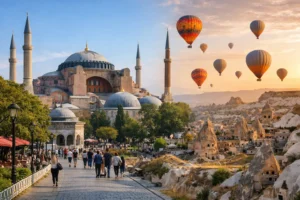
Hagia Sophia, the Blue Mosque, Basilica Cistern, and private or independently managed attractions can follow separate entry systems. Hagia Sophia and the Blue Mosque are also active religious sites, so visitor access and hours are shaped by worship schedules and site rules. The Basilica Cistern has its own admission arrangement. Do not buy a museum pass solely because these names are on your must-see list.
Topkapi Palace is another common source of disappointment. Even when palace entry is covered under a particular pass, specialized sections can have separate admission conditions. Check what your chosen pass includes before building your day around it.
When the pass is genuinely worth buying
A museum pass is most likely to make sense if you have at least two full sightseeing days, enjoy spending real time in museums, and plan to visit several participating sites. It can also be a practical choice for a family or couple who would rather settle their museum access in advance than make separate payment decisions at every door.
It is particularly useful for travelers whose plans extend beyond the classic photo stops. The Istanbul Archaeological Museums, for example, reward more than a quick walk-through. Their collections help place the city in a much larger regional story, from ancient civilizations to imperial Constantinople. If you are the kind of traveler who reads the labels, pauses at a sarcophagus, and wants more than a checklist, the pass can earn its place.
It may also reduce small points of friction during a busy itinerary. That is different from assuming it gives you priority access everywhere. Entry procedures vary by site, and security screening can still take time. A pass helps with eligible admissions, not with every line you encounter.
When you should skip it
Skip the pass if you have one rushed day in the Old City and your priorities are Hagia Sophia, the Blue Mosque, the Basilica Cistern, the Grand Bazaar, and a Bosphorus view. Those are excellent choices, but they do not automatically add up to good museum-pass value.
The same applies if you prefer neighborhoods, food, hammams, and unplanned wandering to indoor collections. Istanbul is not a city that needs to be consumed through ticket gates. A long breakfast in Sultanahmet, an afternoon crossing to another district, or time lost pleasantly in the Grand Bazaar can be just as memorable as fitting in one more museum.
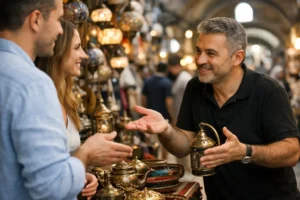
Be cautious if a seller tells you a pass is “the only way” to enter an attraction, is valid for every landmark, or must be bought immediately because official tickets have disappeared. Those are pressure tactics, not helpful travel advice. Türkiye is welcoming and easy to enjoy with a little preparation, but major tourist areas do attract resellers who profit from confusion.
Do the five-minute value check
Before purchasing, make a short list of the museums you realistically plan to enter. Then check three things on official sources: whether each site is included, whether special sections cost extra, and whether the attraction is open during your available days.
Next, compare the current pass price with the individual official admission prices for only those eligible sites. Do not include attractions you might visit “if there is time.” Istanbul days fill up quickly, particularly when you factor in airport transfers, meal breaks, prayer-time access changes, weather, and the simple pleasure of stopping when something catches your attention.
Finally, check the pass validity window. A pass that is valid for several consecutive days may work well for a museum-focused stay. It is less useful if you activate it late on your final afternoon or attempt to cram every covered site into one exhausting day.
This calculation is more reliable than comparing a pass to a long list of attractions. Your trip is not the brochure itinerary.
A smarter way to plan Sultanahmet
Sultanahmet works best when you separate ticketed sites from places that are free to experience from outside or enter under their own visitor rules. Start with the landmarks that have fixed access considerations, then leave room for the square, the Hippodrome monuments, quiet side streets, and a proper meal.
For a museum-centered day, Topkapi Palace and the Istanbul Archaeological Museums are a natural pairing because they are close together. Give each enough time. Trying to add the Basilica Cistern, Hagia Sophia, the Blue Mosque, and the Grand Bazaar on the same day can turn a historic neighborhood into a race between queues.
For a classic first day, begin early around Hagia Sophia and the Blue Mosque, check current visitor hours, and keep the Basilica Cistern as a separate ticket decision. Save the Grand Bazaar for later, when you are ready to browse rather than hurry. It is easy to enter and much harder to leave quickly.
Buy only through channels you can verify
Use official museum channels or trusted booking partners recommended by a reliable local source. Before paying, confirm the name of the product, the validity dates, the attractions included, and any requirement to collect or activate it.
Avoid buying from someone who approaches you outside an attraction, insists a site is closed, or offers an unexplained “special price.” A genuine closure can happen, but you can verify it yourself through the official source. Keep your confirmation details available on your phone, and do not hand over your device or card to a stranger offering to “help” with online booking.
Prices and policies change often, so there is no responsible fixed price to quote months in advance. Check close to your travel date, and budget a little flexibility rather than building your plans around outdated numbers.
The pass is a tool, not the itinerary
The best Istanbul visit balances the big names with enough breathing room to understand where you are. A museum pass can be a smart tool for the traveler who wants several eligible museums and will use it efficiently. For everyone else, individual official tickets are often clearer and better value.
If you want the practical details in one place – including Old City walking routes, audio stories, official-ticket guidance, and tips for avoiding common tourist traps – the Localada Pack is built for exploring Istanbul with more confidence, at your own pace.