
You can be standing steps from the Blue Mosque, with its six minarets overhead and your Istanbul itinerary finally on track, then lose time because your knees, shoulders, or hair are uncovered. The Blue Mosque dress code tourists need to follow is straightforward, but it is enforced because this is an active place of worship, not only a landmark.
The good news: you do not need to buy a special outfit or dress formally. You do need to arrive covered appropriately, remove your shoes, and plan around prayer times. A little preparation prevents an awkward entrance stop, a long wait for borrowed coverings, or having to leave and return later.
Blue Mosque dress code for tourists
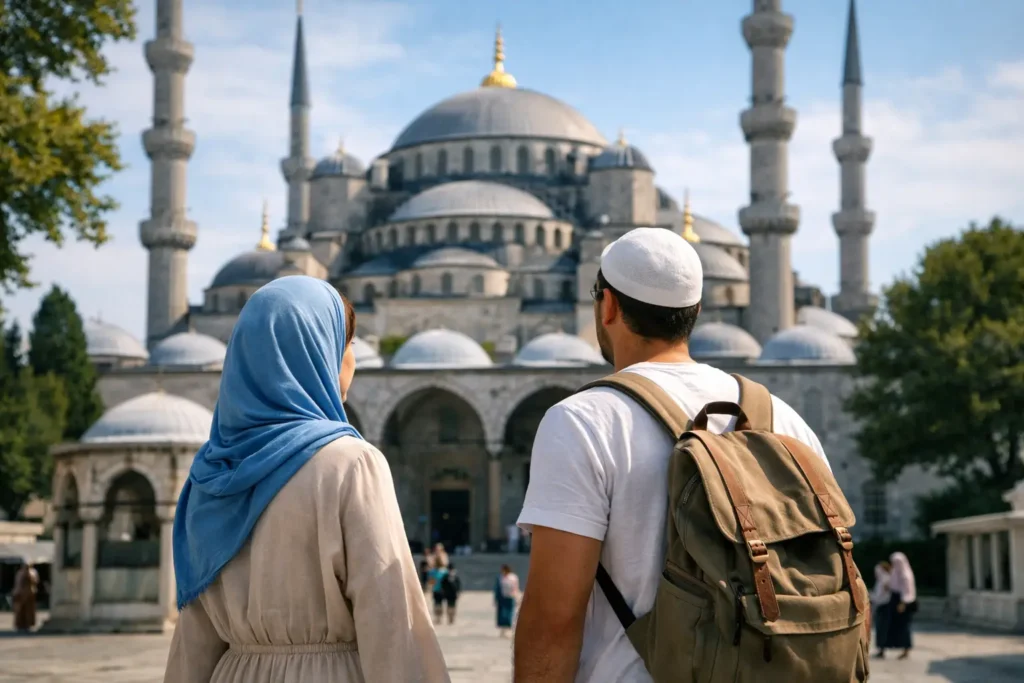
At the Blue Mosque, visitors of all genders should wear clothing that covers their shoulders and knees. Clothing should not be very tight, transparent, or revealing. Women are also expected to cover their hair before entering the prayer hall.
For most travelers, this means a T-shirt or shirt with sleeves and pants, jeans, a long skirt, or a dress that falls below the knee. A lightweight scarf in your day bag is the simplest solution for women. It takes almost no space, works in other mosques around Istanbul, and saves you from relying on a borrowed head covering during a busy entry period.
Men should avoid tank tops, sleeveless shirts, and shorts above the knee. Knee-length shorts may be accepted, but long pants are the lower-risk choice, especially if you are visiting several religious sites in Sultanahmet on the same day. Women should avoid sleeveless tops, short skirts, shorts, low-cut clothing, and sheer fabrics unless they have suitable layers to cover them.
The point is not fashion perfection. It is respectful coverage in a functioning mosque. If staff decide an outfit does not meet the requirements, they may ask you to use a covering or wait until you can adjust it.
What happens if you are not dressed appropriately?
Coverings such as headscarves, shawls, or wraps are often available near the entrance. Availability and the exact process can change with crowd levels and site management, so do not treat borrowed items as a guaranteed backup plan. They may also slow down your entry when large tour groups arrive together.
If you wear a short dress, a sleeveless top, or shorts, you may be given or directed to a covering. This is usually a practical correction, not a confrontation. Still, arriving prepared is more comfortable and more hygienic, particularly in hot weather when many people are using the same wraps.
Bring a light scarf, pashmina, oversized button-down shirt, or thin long-sleeve layer. These are useful beyond the Blue Mosque: Hagia Sophia also has expectations for modest dress, and Istanbul evenings can become cooler than visitors expect.
Shoes, bags, and the entrance process
Everyone removes their shoes before entering the carpeted prayer area. Wear shoes that are easy to take off and put back on. Sneakers are fine, but complicated laces can become annoying when there is a line behind you.
You will generally carry your shoes in a provided bag or keep them with you as directed. Do not leave valuables in your shoes outside the entrance. A small crossbody bag or secure daypack is practical for your phone, wallet, scarf, and water bottle.
The Blue Mosque is free to enter as a mosque, but free does not mean immediate access at every moment. Security checks, visitor lines, prayer periods, restoration activity, and crowd control can all affect the experience. Be cautious if anyone outside the official entrance claims the mosque is closed and offers to take you to a shop, carpet showroom, or paid alternative tour instead. Check the entrance area and official signage yourself.
Prayer times change the visitor schedule
The Blue Mosque closes to non-worshippers during daily prayers and reopens afterward. The exact times shift throughout the year, so avoid building a tight schedule around a single fixed time you saw months ago.
Friday is especially important. Friday congregational prayer attracts more worshippers, and visitor access can be more limited around midday. If the Blue Mosque is a priority, choose an early weekday visit when possible and leave room in your plan for a change of timing.
A sensible Sultanahmet plan is to keep nearby stops flexible. If the mosque is temporarily closed to visitors, walk through Sultanahmet Square, see the exterior and courtyard, or move to another nearby attraction before returning. Do not let one prayer-time closure turn into an expensive, rushed taxi ride across the city.
What to wear by season in Istanbul
Istanbul weather creates a real trade-off: summer can be hot and humid, while winter is often cold, wet, and windy. The answer is not to ignore the dress code. It is to choose breathable layers that work indoors and outdoors.
In summer, loose linen pants, cotton maxi skirts, breathable long dresses, and short-sleeve shirts with a light overshirt are comfortable choices. A wide scarf can cover hair and shoulders without adding much weight. Avoid relying on beachwear, very short shorts, or thin straps if your day includes mosques.
In spring and fall, a light jacket, cardigan, or overshirt does double duty as warmth and shoulder coverage. In winter, pants and long sleeves make the dress code easy, but choose shoes with a good grip for wet stone streets around the Old City.
Families should prepare children in the same spirit. Older children should wear respectful, knee-covering clothing, while very young children are usually treated with more flexibility. The practical issue is footwear: make sure children can remove and carry their shoes without creating stress at the entrance.
Respectful behavior once you are inside
Dress is only the first part of visiting well. The prayer hall is a sacred space, and people may be praying while tourists are present. Keep your voice low, silence your phone, and follow the barriers and signs that separate visitor areas from worship areas.
Photography rules can change by area and time. Take photos discreetly, never photograph people praying up close without permission, and do not use a flash. You may see beautiful tilework, chandeliers, and calligraphy, but you do not need to block a passageway or hold up a line to capture them.
Visitors should also avoid public displays of affection, eating inside, or treating the mosque like a photo studio. These choices help preserve access for everyone. When travelers ignore the rules, staff must spend more time managing behavior and less time welcoming visitors.
A quick Blue Mosque clothing checklist
Before leaving your hotel, make sure you have the basics covered:
- Shoulders and knees covered for everyone
- A scarf for women to cover hair
- Shoes that are easy to remove
- A small bag for valuables and your shoes, if needed
- A backup layer for sleeveless or short clothing
This is one of the easiest parts of planning an Istanbul visit, but it has an outsized effect on your day. The Blue Mosque sits in one of the busiest sightseeing areas in the city, where a small delay can mean longer lines at your next stop.
Common questions from first-time visitors
Can tourists wear jeans to the Blue Mosque?
Yes. Jeans are completely suitable, provided they are not extremely ripped or revealing. Pair them with a shirt or top that covers your shoulders. Jeans are one of the simplest choices in cooler months.
Do women have to wear a headscarf at the Blue Mosque?
Women visitors are expected to cover their hair inside the mosque. Bring your own scarf if possible. It is more convenient than depending on an entrance covering, and it lets you enter with less fuss.
Can men wear shorts?
Shorts should cover the knees. However, long pants are the more reliable choice and remove uncertainty at the entrance. If you are visiting in summer, lightweight linen or cotton pants are usually more comfortable than you might expect.
Is there a dress code in the courtyard?
The strictest requirements apply to entering the mosque, but dressing respectfully before you reach the door is the smart approach. You may need to pass through a queue or security area, and changing clothes in public is inconvenient.
Give yourself a few extra minutes, keep a scarf within reach, and treat the visit as an encounter with living faith rather than a box to check. That small bit of preparation lets you spend your time looking up at the domes, not back at the entrance.