
A hammam is not just a hot room after a long day at Hagia Sophia and the Blue Mosque. Done well, it is a slow, skilled ritual of heat, water, exfoliation, and rest. The best hamam in Sultanahmet is therefore not automatically the grandest building or the lowest-priced package. It is the one whose setting, service, privacy arrangement, and budget fit the experience you actually want.
For many first-time visitors, a hammam is one of Istanbul’s most memorable cultural experiences. It can also be confusing: packages have unfamiliar names, historic bathhouses have different rules, and a few aggressive sales tactics around tourist areas can make a simple booking feel harder than it should be. A little preparation keeps it simple.
What makes the best hamam in Sultanahmet?
Start with location, but do not stop there. Sultanahmet has easy access to several important historic hammams, and the right choice usually comes down to whether you want a polished special occasion, a classic bathhouse atmosphere, or a more straightforward scrub-and-wash experience.
Hürrem Sultan Hamamı is the obvious choice for travelers who want a visually impressive setting in the heart of the Old City. It stands between Hagia Sophia and the Blue Mosque, making it especially convenient after sightseeing. This is generally the better fit for couples, families, and visitors who prefer clearly structured service, a refined atmosphere, and advance reservations. The trade-off is that this kind of central, highly curated experience is usually priced accordingly.
Cağaloğlu Hamamı, a short walk beyond the main Sultanahmet square toward Gülhane, offers another celebrated historic setting. Its appeal is the sense of stepping into an Ottoman bathhouse with real architectural character, rather than simply booking a spa treatment. It can be a strong choice if history matters as much as comfort. Check the current booking process and available service options before building your day around it.
Around the Grand Bazaar side of the Old City, Gedikpaşa Hamamı is often considered by travelers seeking a more traditional, less ceremonial feel. It may suit visitors who are comfortable with a simpler local-bathhouse rhythm and do not need the most polished surroundings. That does not mean lower quality, but it does mean expectations matter. Ask exactly what is included, how long your session lasts, and whether facilities are shared or private.
The best choice depends on your priorities. If this is your one hammam experience in Istanbul, paying more for a well-organized historic setting can be worthwhile. If you are mainly curious about the scrub and steam ritual, a simpler option may be enough.
Know what a hammam treatment includes
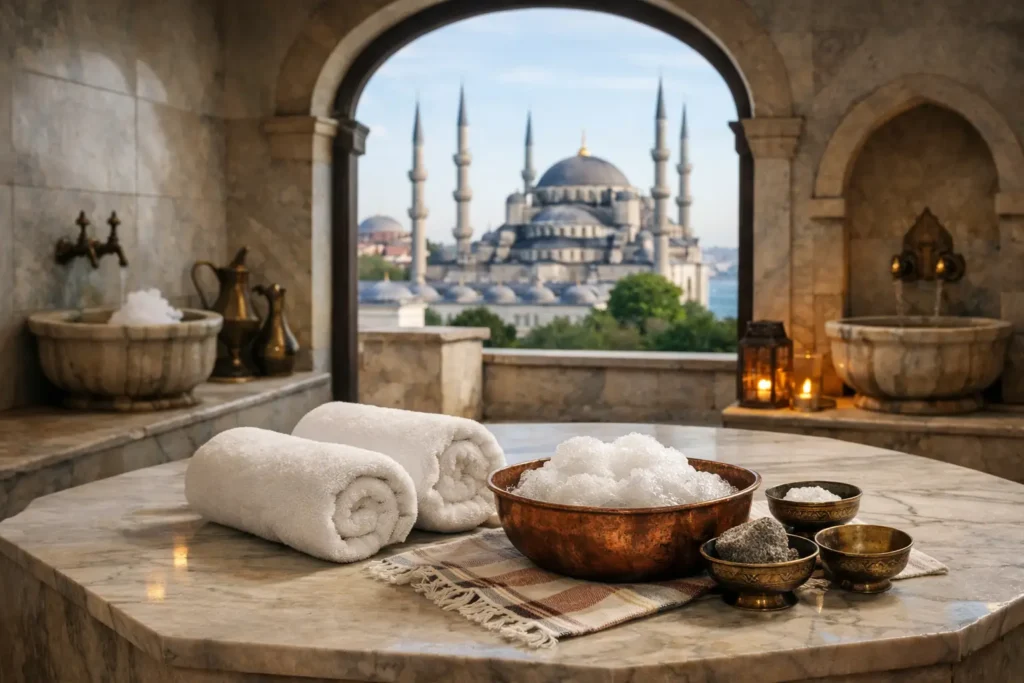
A traditional hammam visit normally begins with time in the sıcaklık, the warm marble room. You rest on the heated göbek taşı, or central stone, allowing the heat and humidity to prepare your skin. The attendant then performs a kese, a firm exfoliation using a textured mitt, followed by a soap massage under large clouds of foam.
Most standard packages include the warm-room time, exfoliation, foam wash, towels, and access to changing facilities. Some include a short oil massage, while others sell it as an add-on. A longer massage is not inherently more authentic. The kese and foam wash are the core hammam experience; oil massage is an optional spa-style extension.
Before confirming, ask these practical questions:
- Is the listed price for a shared area or a private room?
- Does it include the kese and foam wash, or only entry to the bath?
- Are towels, slippers, and disposable underwear provided?
- How long is the treatment, and how much time can you spend resting afterward?
- Are men and women served in separate sections, at separate times, or in private suites?
A reputable hammam should answer directly and show you the full cost before you pay. If a package description is vague, do not assume extras are included.
What to expect with privacy and attendants
Traditional hammam service is hands-on, and the attendant will generally be the same gender as the guest. Bathhouses differ in their layouts and policies: some have separate men’s and women’s sections, some operate different hours, and some offer private rooms designed for couples or families. Confirm this before booking, particularly if you are traveling as a mixed-gender group.
You do not need to be an expert in hammam etiquette. Staff are used to international visitors. Tell them if you prefer a gentler scrub, have sensitive skin, recently had a sunburn, or want to skip any part of the treatment. A strong kese should feel invigorating, not painful. Avoid going immediately after a day of intense sun exposure, and drink water before and after your visit.
Booking tips that protect your time and money
For a popular Sultanahmet hammam, reserve ahead through the bathhouse’s official booking channel or by contacting the venue directly. This matters most for evening appointments, weekends, and any date when you want to combine a hammam with dinner or a sunset walk along the Bosphorus.
Do not rely on a street promoter who says a specific hammam is suddenly closed, fully booked, or offering a “special” cash-only deal elsewhere. This is a common tourist-area tactic, not a sign that Sultanahmet is unsafe. Simply thank them, keep walking, and verify your reservation with the hammam itself. The same rule applies to drivers or shop staff who strongly steer you toward a bathhouse you did not ask about.
Price comparisons need context. A historic hammam with private facilities, a central location, trained attendants, and an extended rest area will cost more than a basic public-bath experience. The cheapest advertised price can exclude the scrub, soap massage, taxes, or extras. Compare the final total and treatment length, not just the first number you see.
It is also wise to keep enough time afterward. Do not schedule a hammam five minutes before a timed museum entry or airport transfer. Plan for the treatment itself, changing, tea or water, and a little time to cool down. Most visitors enjoy the experience more when it is the last major activity of the day.
A simple plan for your Sultanahmet hammam day
Visit major landmarks first, then book your hammam for late afternoon or early evening. You will arrive ready to rest rather than rushing out the door. A sensible sequence is Hagia Sophia, the Basilica Cistern, a relaxed lunch, and a hammam appointment before dinner.
Bring minimal valuables. Most established bathhouses provide a locker or secure changing area, but leave passports, large amounts of cash, and unnecessary jewelry at your hotel when possible. Bring a swimsuit only if the hammam asks you to, or if it helps you feel more comfortable. Many venues provide the traditional wrap, known as a pestemal.
Afterward, avoid treating the day like a fitness challenge. You may feel deeply relaxed, warm, and slightly sleepy. Choose an easy dinner nearby, take a gentle walk, and let the ritual do what it is meant to do: slow down a trip that can otherwise become a race between famous sights.
Is a historic hammam worth it?
Usually, yes, if you choose with clear expectations. A hammam is worth the time when you want more than a massage and are interested in an old Istanbul tradition that still has a practical place in the city. It may not be worth it if you dislike heat, need complete privacy but have not confirmed a private option, or only have a very tight sightseeing schedule.
The smart approach is not to chase a single universal winner. Choose the hammam whose style is transparent, whose service level matches your budget, and whose booking details are clear before you arrive. That is how a potentially confusing tourist decision becomes one of the calmest parts of your Old City visit.
If you want this kind of practical Sultanahmet guidance in one place, the Localada Istanbul Pack includes multilingual audio stories, walking routes, scam-awareness advice, and vetted local recommendations for your group.