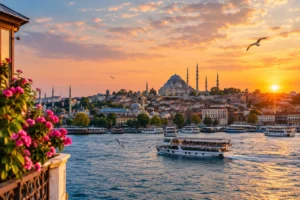

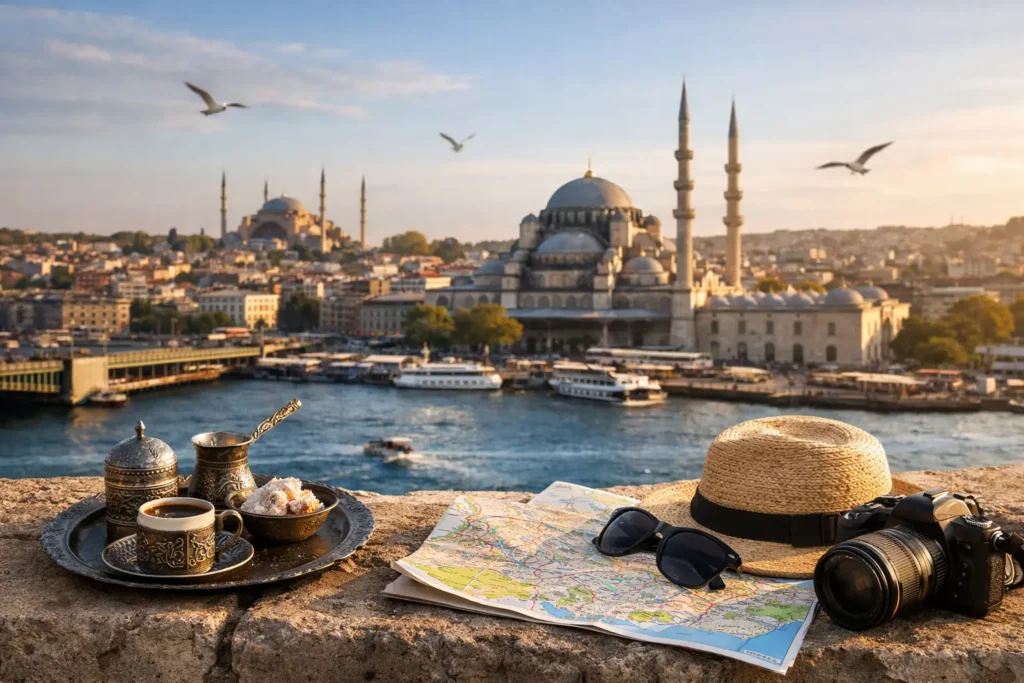
Three days is enough for a well-paced first visit if you group sights by neighborhood instead of crossing Istanbul repeatedly. This Istanbul itinerary 3 days plan gives Sultanahmet two focused days, then leaves room for the Bosphorus, bazaars, and a neighborhood beyond the major monuments.
Essentials for Three Days in Istanbul
- Best base: Stay near Sultanahmet or Sirkeci. Sultanahmet is easiest for major Old City sights; Sirkeci adds better tram and ferry access.
- Main transport: The T1 tram connects Kabataş, Karaköy, Eminönü, Sirkeci, Sultanahmet, and Beyazıt-Grand Bazaar. Buy and reload an Istanbulkart at station machines.
- Mosque dress code: Cover shoulders, knees, and chest. Women need a head covering inside active mosques. Bring a light scarf and wear shoes that are easy to remove.
- Prayer closures: The Blue Mosque and Hagia Sophia restrict tourist access around daily prayers. Friday access is especially limited around midday, and visitors should generally plan mosque interiors after about 2:30 p.m. Check the day’s prayer timetable through Diyanet before setting out.
- Book ahead: Reserve a Bosphorus cruise only if you want a specific departure time. Visit major monuments early, especially Topkapi Palace and the Basilica Cistern.
For practical planning, allow 45 to 60 minutes for Hagia Sophia’s visitor area, 30 to 45 minutes for the Blue Mosque, 90 minutes for the Basilica Cistern, and at least three hours for Topkapi Palace with the Harem. Sultanahmet station on the T1 tram is a 3- to 8-minute walk from the Hippodrome, Blue Mosque, Hagia Sophia, and Basilica Cistern.
Day One: Sultanahmet Monuments
Start at the Basilica Cistern when it opens. Its entrance is about 350 meters, or a 5-minute walk, from Sultanahmet tram stop. Plan around 90 minutes, including the line. The cistern is typically open daily from 9:00 a.m. to 10:00 p.m., with last entry earlier in the evening. Go first because the underground walkways become crowded quickly and are less enjoyable when you are moving shoulder to shoulder.
Walk five minutes to the Hippodrome, now Sultanahmet Square. This open-air stop needs only 20 to 30 minutes. Look for the Egyptian Obelisk, the Serpent Column, and the German Fountain, but do not rush through it as though it were simply the space between attractions. This was Constantinople’s racing and ceremonial center, and it explains why the surrounding monuments stand so close together.
Next, visit the Blue Mosque. It is usually open to visitors from about 9:00 a.m. to 6:00 p.m. outside prayer times, though the exact windows change with the daily prayer schedule. Friday is the least convenient day for this stop because tourist access commonly begins after afternoon prayers. Use the visitor entrance, remove your shoes, speak quietly, and avoid walking in front of people praying.
Hagia Sophia is directly opposite, less than 200 meters away. Foreign visitors enter through the designated visitor entrance rather than the main worship entrance. Visitor hours are generally 9:00 a.m. to 7:30 p.m., with Friday visitor access beginning around 2:30 p.m. The visitor route focuses on the upper gallery and historic fabric of the building. It is still an active mosque, so dress and behavior matter as much as timing.
Finish the afternoon with a slow walk through the lanes toward Gülhane Park, roughly 700 meters from Hagia Sophia. This is a sensible place to pause rather than adding another ticketed attraction on an already full day. For dinner, choose a restaurant with a visible menu and clear prices before ordering. A friendly invitation is normal in Sultanahmet; pressure to enter, vague pricing, or a promise of a “special deal” is a reason to keep walking.
Day Two: Topkapi Palace and the Bazaars
Arrive at Topkapi Palace near opening time. It is about 700 meters from Sultanahmet tram stop, or a 10-minute uphill walk. The palace is closed on Tuesdays. It generally opens at 9:00 a.m. and closes at 6:00 p.m., with final entry before closing, so do not leave this visit for late afternoon.
Give Topkapi at least three hours. The palace is not one compact building: its courtyards, treasury collections, gardens, views, and Harem are spread across a large site. The Harem is included with Topkapi Palace admission rather than requiring a separate ticket, but it has its own entrance and deserves at least 45 minutes. Buy only through the official palace channel or official ticket office. Anyone approaching you outside with an urgent story about closed gates, a temporary shortcut, or a better ticket is not helping you save time.
The Istanbul Archaeological Museums are next door, less than 300 meters from the palace entrance. They are generally open from 9:00 a.m. to 5:30 p.m. and closed on Mondays. If you have the energy, allow 90 minutes. If not, choose between this museum and a longer lunch. Trying to force both the museum and two bazaars into a rushed afternoon makes the day feel like queue management rather than travel.
Take the T1 tram from Gülhane or Sultanahmet to Beyazıt-Grand Bazaar. The Grand Bazaar is closed on Sundays and generally operates from 8:30 a.m. to 7:00 p.m. on other days. It is a working commercial maze, not a museum. Enter with one or two categories in mind, such as ceramics or textiles, and leave when conversations turn uncomfortable. You are allowed to browse without buying.
For a purchase you genuinely want, ask the total price, whether delivery is included, and whether you will receive a receipt before paying. Avoid shops that insist an item is an antique without documentation, claim a product can only be bought “today,” or offer to guide you to a relative’s store. These are sales tactics, not local obligations.
Day Three: Eminönü, the Bosphorus, and Galata
Begin at Eminönü, reached from Sultanahmet in about 10 minutes on the T1 tram. The Spice Bazaar is a 3-minute walk from Eminönü station and is generally open daily from 8:00 a.m. to 7:00 p.m., with shorter Sunday hours. It is smaller and easier to navigate than the Grand Bazaar. Buy food products only when packaging, weight, and total price are clear.
From Eminönü, take a public ferry for a short Bosphorus crossing or book a clearly identified cruise with a published route and departure point. Public ferry terminals are straightforward, busy, and usually the calmer choice for travelers who want the water views without a sales pitch. Keep your Istanbulkart ready and confirm the destination on the electronic board before boarding.
After the water, cross Galata Bridge on foot toward Karaköy. The walk is about 1.5 km and takes 20 to 25 minutes without stops. Karaköy is useful for coffee, small design shops, and a different view of the city, but it is not a reason to abandon your plan if your group is tired. You can instead return by T1 tram and spend the afternoon in Gülhane Park or around Sirkeci.
If you continue, walk uphill from Karaköy to Galata Tower in around 15 minutes. The climb is steep in places. This is a good late-afternoon neighborhood walk, not an essential ticket stop if you have already seen city views from Topkapi or the water. The better choice depends on your energy, weather, and whether your group prefers history, shopping, or simply sitting somewhere with a view.
Transport and Safety Habits 2026
Use trams and ferries for the routes in this itinerary. They are often more predictable than a taxi in heavy traffic. If you use a taxi, ask for the meter to be switched on at the start, follow the route on your own map, and pay attention when notes are handed back. Do not accept an unmetered “fixed price” ride unless you have agreed on it clearly before entering.
In crowded areas, keep phones and wallets in a zipped front pocket or a closed crossbody bag. This is ordinary city awareness, not a reason to worry. The most common friction for visitors is confusion created by people who appear helpful: unofficial guides near monuments, restaurant invitations with no menu, and strangers proposing a drink after a casual conversation. A polite, firm “No, thank you” works.
For emergencies, call 112 for medical assistance and general emergency coordination. The direct numbers commonly used are 155 for police, 110 for fire, and 158 for the coast guard. Save your accommodation address offline before you leave each morning.
Frequently Asked Questions
Is three days enough for Istanbul?
Yes, but it is enough for the Old City, one Bosphorus experience, and one additional neighborhood, not every major district on both continents.
Is Topkapi Palace closed on Tuesdays?
Yes. Schedule Topkapi for Monday, Wednesday, Thursday, Friday, Saturday, or Sunday, and use Tuesday for the bazaars or Bosphorus.
Can visitors enter Hagia Sophia on Friday?
Yes, but visitor access usually starts after Friday prayers, around 2:30 p.m. Plan another attraction for the morning.
Do I need a separate ticket for the Topkapi Palace Harem?
No. The Harem is included with Topkapi Palace admission, though you should allow separate time to see it properly.
How long does the Basilica Cistern take?
About 90 minutes. Go near opening time if you want more space for photos and a calmer walk.
Is the Grand Bazaar open on Sunday?
No. Use Sunday for the Spice Bazaar, waterfront, mosques outside prayer closures, or a ferry ride instead.
If you want this guidance in one place while you are walking, the Localada Istanbul Pack combines narrated stories, mapped routes, scam-awareness tips, and verified local recommendations for a one-time EUR 5 purchase your whole group can use.