
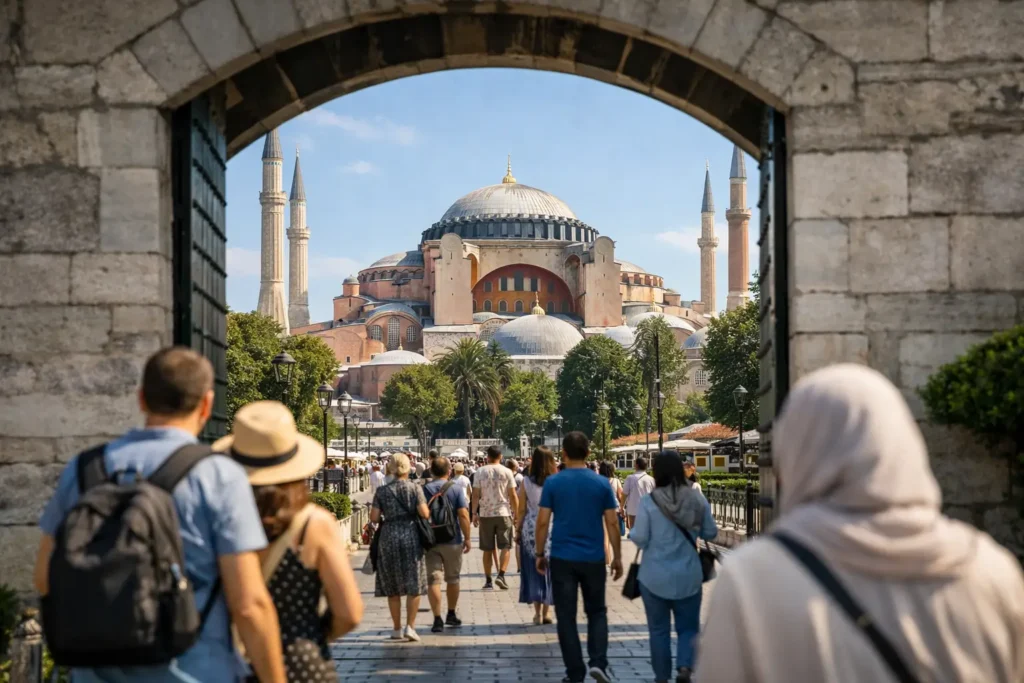
The short answer to is Hagia Sophia free is: it depends on why you are entering and which part of the building you want to see. Hagia Sophia is an active mosque, and worshippers can enter the prayer area without a sightseeing ticket. But international visitors who want to visit as tourists are generally directed to the upper gallery, which requires paid admission.
That distinction catches many people off guard in Sultanahmet. You may see headlines saying Hagia Sophia is free, then arrive expecting to walk through the historic interior at no cost. The current visitor system is different from the old museum setup, so it pays to know the route before you join a line or buy anything from a reseller.
Is Hagia Sophia free for tourists?
For most foreign visitors sightseeing in Istanbul, access to the visitor gallery is paid. This is the route designed for tourists who want to view the interior, see the upper-level mosaics, and understand the building’s history without entering the main prayer space.
The ground floor is used for worship. People entering specifically to pray may use that area without a tourist ticket, subject to mosque rules and access arrangements at the time. It is not a free alternative sightseeing entrance. If you are visiting for architecture, history, or photographs, expect to use the official tourist entrance and purchase the appropriate gallery admission.
Rules, access routes, and visiting hours can change around prayer times, religious holidays, restoration work, and crowd-management needs. Check the official Hagia Sophia visitor information on the day of your visit rather than relying on an old social media post or a fixed price quoted months ago.
Why the visitor route is separate
Hagia Sophia has served as a mosque, a museum, and again as a mosque over its long history. Today, the separate visitor route helps protect worship space while still allowing travelers to experience one of Istanbul’s most significant buildings.
The gallery experience is not simply a distant hallway. From above, you can appreciate the enormous central dome, the layered marble work, and historic details that are easy to miss from ground level. But it is a more structured visit than many travelers expect. You follow a defined circulation route, and the lower prayer area is viewed from the designated visitor spaces rather than explored freely.
What your paid Hagia Sophia visit includes
A tourist admission generally gives access to the designated upper gallery and the visitor route through the building. The exact setup can change, but this is where you can expect to see the interior from above and encounter key historic features, including famous mosaics where they are on display.
Do not assume that a general Istanbul museum pass covers Hagia Sophia’s current tourist admission. The building’s entry system has changed more than once, and different passes have different rules. Confirm coverage directly before buying a pass based on this one attraction.
Also, be careful with anyone approaching you near Sultanahmet Square and offering a “special” ticket, a tour that is supposedly the only way inside, or a warning that the official entrance is closed. Hagia Sophia is a major landmark, so it naturally attracts aggressive sellers. A friendly greeting is normal. Pressure, vague pricing, or a request to follow someone away from the official entrance is your sign to walk on.
Use the official ticket point or official online channel. If you decide a guided visit is worth it, make sure you understand exactly what is included, the meeting point, the language, and whether the guide’s fee is separate from admission. There is nothing wrong with paying for a good guide. The problem is paying for a confusing package when you only wanted entry.
How to visit Hagia Sophia respectfully
The easiest way to avoid friction is to treat Hagia Sophia first as a functioning place of worship and second as a major historic site. Dress modestly: shoulders and knees should be covered, and women may be asked to cover their hair in prayer areas. Bring a scarf if you have one, or use the coverings available when provided.
Shoes are removed when entering carpeted prayer areas. Follow the posted instructions and the guidance of staff, especially if barriers or routes have changed. Keep voices low, silence your phone, and do not block people who are there to pray.
Photography rules can also vary by location and time. In general, avoid flash, do not photograph worshippers closely, and respect any no-photo signs. A quiet, observant visit usually feels far more rewarding than trying to capture every corner on your phone.
Choose your timing carefully
Prayer times affect access and crowd levels. The experience can feel rushed if you arrive just before a prayer period, while arriving during the busiest midday window can mean slower security and ticket lines. If flexibility is part of your itinerary, choose an early or later visiting slot and check the same-day schedule before leaving your hotel.
Friday deserves extra attention because it is the main weekly congregational prayer day. Tourist access may be more limited or temporarily paused around Friday prayers. That does not mean you should avoid Hagia Sophia entirely, but it does mean you should not build a tightly timed Old City itinerary around a single expected entry window.
Plan a little breathing room after your visit. The Blue Mosque sits directly opposite, and the Hippodrome, Basilica Cistern, Topkapi Palace, and Istanbul Archaeological Museum are all nearby. If Hagia Sophia’s visitor route is delayed or temporarily paused, you can switch plans instead of losing half a day standing in a line.
Is the gallery ticket worth it?
For many first-time visitors, yes. Hagia Sophia is one of those places where the scale makes more sense in person. The upper gallery offers a perspective on the dome and interior that photographs rarely communicate, and the historic layers of the building become easier to read when you slow down and look closely.
But the answer depends on your priorities. If you have a very short stop in Istanbul, are traveling with young children who are already at their limit, or mainly want an exterior view and a walk through Sultanahmet Square, you may decide to skip paid gallery access. The exterior, surrounding square, and nearby monuments still make for a meaningful visit.
If Hagia Sophia is high on your list, do not let a changing admission policy put you off. Budget for the official ticket, avoid rushed sellers, and give yourself enough time to visit calmly. That is usually better value than chasing the cheapest option or buying a ticket from someone who cannot clearly explain what it covers.
Practical checklist before you go
Before heading out, confirm the official visitor hours and current admission details, then check prayer times for the day. Wear clothing suitable for a mosque, carry a light scarf if needed, and keep your bag small for an easier security process. Have a backup sight nearby in case access is temporarily adjusted.
Most importantly, separate the two ideas in your mind: worship access and tourist access. Hagia Sophia can be free for worshippers, but a tourist visit to the gallery is usually paid. Knowing that one detail prevents the most common misunderstanding at the entrance.
If you want this guidance, Old City routes, audio stories, scam-awareness tips, and verified local recommendations in one place, the Localada Istanbul Pack is designed for independent travelers exploring Sultanahmet at their own pace.