
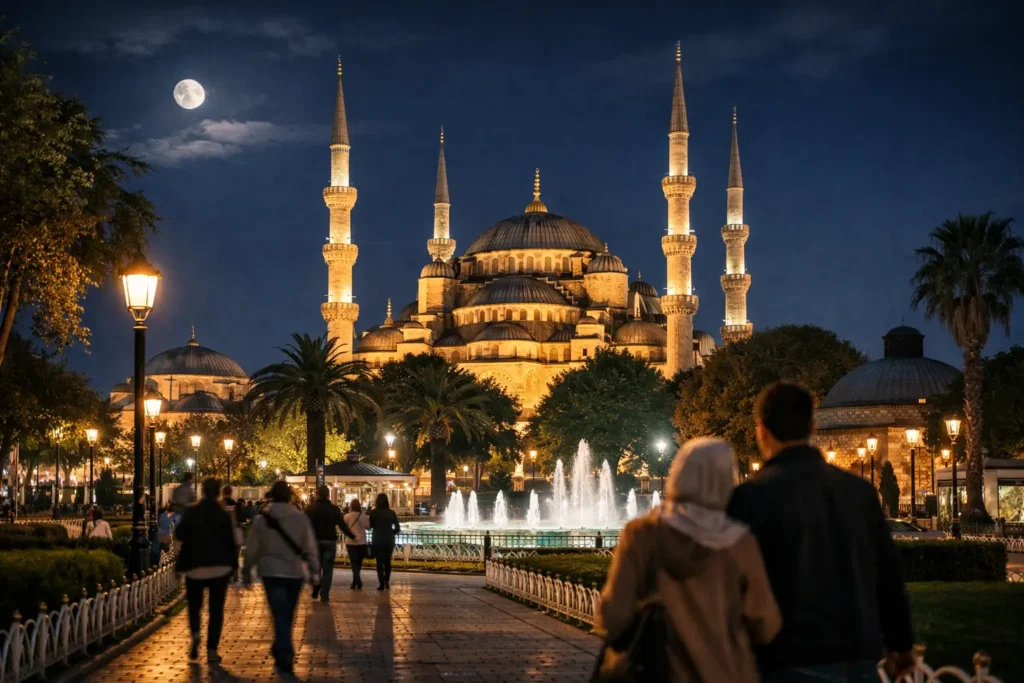
By day, Sultanahmet can feel like an open-air museum with crowds flowing between Hagia Sophia, the Blue Mosque, and the Basilica Cistern. After dark, the pace changes quickly: tour groups leave, many streets become quiet, and restaurant hosts become more noticeable. So, is Sultanahmet safe at night? For most visitors, yes. It is generally a safe and welcoming area to stay and walk in, provided you use the same sensible habits you would in any major city and know where the small hassles tend to happen.
The main concern is usually not serious crime. It is avoiding opportunistic overcharging, overly persistent sales approaches, unmetered taxi problems, and the occasional distraction aimed at a distracted traveler. A little planning lets you enjoy a late dinner, a night walk around the illuminated monuments, or an early morning start without feeling on edge.
Is Sultanahmet Safe at Night for Walking?
Sultanahmet is one of Istanbul’s most visited areas, and its central streets are used to international travelers. Around Sultanahmet Square, the main hotel streets, the tram line, and established restaurants, you will usually find other visitors, hotel staff, and restaurant employees into the evening.
That said, this is not a neighborhood that stays lively everywhere until midnight. The historic monuments are not nightlife venues, and the broad park areas around Hagia Sophia and the Blue Mosque can feel very quiet once the crowds have gone. Quiet does not automatically mean unsafe, but it is a good reason to choose a well-lit, direct route rather than wandering through side streets to save a few minutes.
If you are walking back to a hotel after dinner, stay on main roads and keep your map route visible before you set off. If you need to stop and check directions, step into a hotel lobby, café, or other open business rather than standing alone on a dark corner.
For solo travelers, Sultanahmet is usually manageable at night, especially in the early evening. The practical trade-off is that a late return can feel more isolated than it would in neighborhoods with more local nightlife. If it is very late and you are tired, carrying shopping bags, or walking beyond the central Old City streets, a licensed taxi or a ride arranged by your hotel can be the more comfortable choice.
The Real Nighttime Risks: Scams and Small Frictions
Most unpleasant situations in Sultanahmet are avoidable because they follow familiar patterns. The goal is not to be suspicious of everyone. Turkish hospitality is real, and many people who greet you warmly simply want to help or invite you into their business. The difference is whether you are being given clear information and space to decide.
Restaurant invitations and unclear prices
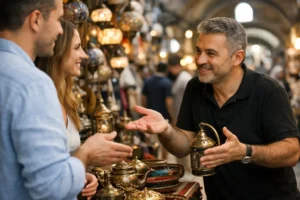
Near major sights, you may hear invitations to see a menu, sit on a terrace, or try a “special” local meal. A friendly invitation is normal. Pressure is the warning sign.
Before sitting down, ask to see a menu with prices. Confirm whether bread, water, appetizers, service charges, or rooftop access carry an additional cost. If a restaurant will not show clear prices, walk away. You do not need to explain or debate. A calm “No, thank you” is enough.
The same advice applies to menus displayed in euros or dollars without clear Turkish lira pricing. International pricing is not automatically a scam, but you should know exactly what you will be charged before ordering.
Taxi issues after dinner
Taxis are often the least predictable part of a late evening, particularly when visitors are leaving restaurants or hotels at the same time. Use a clearly marked licensed taxi and make sure the meter is running. Avoid drivers who offer a fixed price without explanation, claim the meter is broken, or suggest that your destination is unusually far away.
Keep the name and address of your hotel saved on your phone. If possible, ask the restaurant or hotel to arrange the taxi, especially for an early airport departure or a late-night ride. Do not hand over a large banknote until you have checked the change. Confusion over notes and currency is a common traveler problem in busy tourist areas.
The friendly stranger with a sudden plan
A stranger may strike up a conversation, then suggest a specific bar, shop, carpet showroom, or “hidden” place that happens to be owned by a friend. You may also hear claims that an attraction is closed and that they can take you somewhere better instead.
Treat unsolicited changes to your plan as a reason to pause. For attraction hours, tickets, and closures, use official information or ask your hotel. Do not follow someone to a second location because they sound convincing. A genuine local recommendation does not need urgency.
Pickpocketing and distraction
Pickpocketing is not the defining experience of Sultanahmet, but crowded trams, busy restaurant entrances, and tightly packed sightseeing areas are places to keep your belongings close. Use a zipped crossbody bag worn in front, avoid leaving a phone on an outside café table, and do not keep your wallet in an open back pocket.
Be especially alert if someone bumps into you, spills something, creates a commotion, or insists on helping with a bag. These situations are uncommon, but simple awareness is easier than trying to recover lost cards while traveling.
Getting Around Sultanahmet After Dark
The T1 tram is useful for connecting Sultanahmet with areas such as Sirkeci, Eminönü, Karaköy, and Kabataş. But service hours can change, and public transit is not a plan to leave until the last possible minute. Check the current timetable before an evening out, and have a backup route in mind.
Walking is often the easiest option within the Old City. From Sultanahmet Square, nearby hotels and restaurants are generally close enough to reach on foot. Wear shoes with grip: Istanbul’s stone paving, slopes, and uneven sidewalks are more likely to cause a problem than the people around you, especially after rain.
If you plan to visit a neighborhood across the Golden Horn for dinner, think about the return trip before you go. Crossing back on foot can be pleasant in the early evening, but it is less appealing when you are exhausted or the streets have emptied. Decide whether you will take transit, use a taxi, or return before service winds down.
A Smart Night Routine for Couples, Families, and Solo Travelers
You do not need an elaborate security plan. A few habits will make the night feel easier.
- Choose restaurants with posted menus and enough recent activity to show they are operating normally.
- Carry the address of your accommodation and a charged phone, but keep a backup battery if you will be out for hours.
- Tell a travel companion where you are going if you split up, and agree on a clear meeting point rather than relying only on mobile signal.
- Keep passports and most cash secured at your hotel. Carry only what you expect to use that evening.
- Use main streets for your return walk, even if a map suggests a slightly shorter route through quiet lanes.
- Trust discomfort early. If a conversation becomes pushy, an offer becomes confusing, or a street feels too isolated, leave without apologizing.
Families should also plan for the neighborhood’s physical layout. Strollers can be awkward on cobblestones, and small children may find a long post-dinner walk tiring. A restaurant close to your hotel can be worth more than a distant view when everyone is ready to sleep.
What to Do If Something Goes Wrong
If you lose a bank card, contact your bank immediately and ask your hotel for help finding the nearest appropriate service point. If you feel unsafe, move into an open hotel, restaurant, or shop and ask staff to help you call a taxi or emergency services.
Turkey’s emergency number is 112. Save it before your trip. For a non-emergency dispute, such as an unclear bill, stay calm, keep any receipt, and ask your hotel for practical advice afterward. Do not let a minor argument turn into a long public confrontation, particularly late at night.
Sultanahmet rewards travelers who are relaxed but not careless. Enjoy the quieter streets, the call of gulls near the water, and the rare chance to see the Old City’s landmark silhouettes without daytime crowds. Just choose clear prices, direct routes, and transport that does not leave you guessing.
If you want this kind of practical safety guidance, mapped walking routes, and vetted local recommendations in one place, the Localada Pack for Istanbul is designed for independent travelers who want to explore Sultanahmet with fewer surprises.