
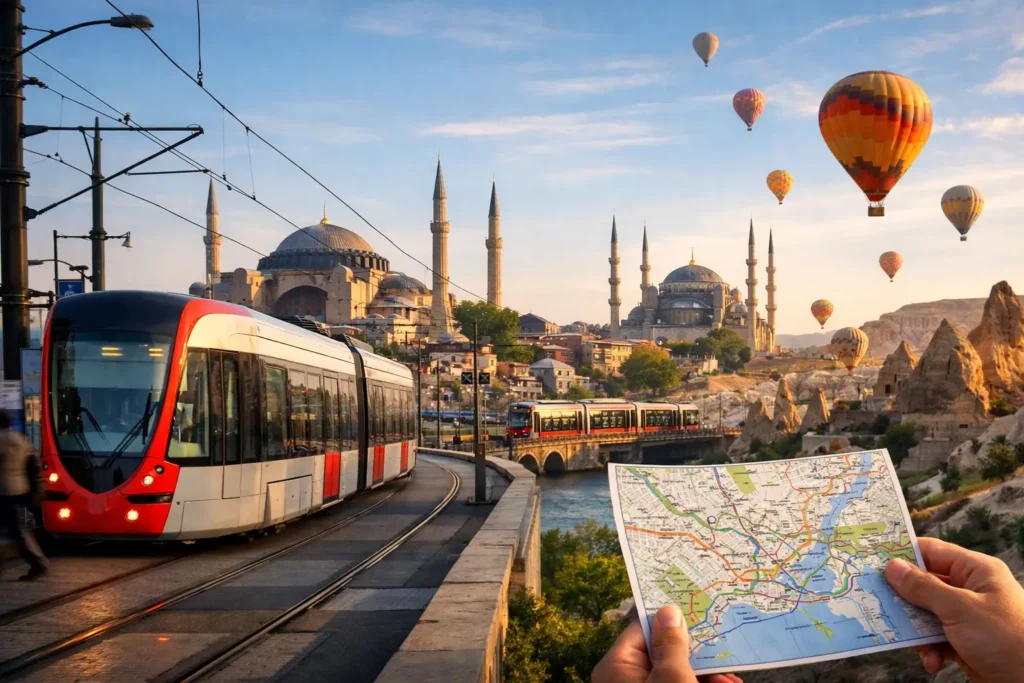
The T1 tram is often the fastest answer when you want to navigate Istanbul tram routes easily and avoid bargaining with a taxi driver after a long flight. For most first-time visitors, it connects the places that matter most: Sultanahmet, the Grand Bazaar, Eminönü, Karaköy, and Kabataş. Learn a few stop names before you leave your hotel, and Istanbul’s historic center becomes far less complicated.
Start with the T1: Istanbul’s most useful visitor tram
The T1 line runs between Kabataş on the Bosphorus side of Beyoğlu and Bağcılar in western Istanbul. You do not need to memorize every stop. What matters is knowing the handful that serve the Old City and the routes you are likely to use.
For Sultanahmet, get off at Sultanahmet station. It is the stop for Hagia Sophia, the Blue Mosque, the Hippodrome, and the Basilica Cistern. The platform can be busy, especially in late morning, but the major landmarks are a short walk away.
For the Grand Bazaar, use Beyazıt-Kapalıçarşı. For the Spice Bazaar, Galata Bridge, and ferry docks, use Eminönü. Gülhane is useful for the Istanbul Archaeological Museums and the edge of Topkapı Palace grounds. Sirkeci connects you with Marmaray rail services, while Karaköy is practical for the Galata Tower area and ferries. At the western end, Kabataş is the transfer point for the funicular toward Taksim.
The direction on the platform is simple once you identify your destination. Going from Sultanahmet toward Eminönü, Karaköy, and Kabataş? Follow signs for Kabataş. Going from Sultanahmet toward the Grand Bazaar and beyond? Follow signs for Bağcılar.
The stop names worth saving on your phone
A screenshot of these names will save time when signs, maps, and crowds compete for your attention:
- Sultanahmet – Hagia Sophia, Blue Mosque, Basilica Cistern
- Gülhane – Topkapı area and Archaeological Museums
- Sirkeci – Marmaray connection and station district
- Eminönü – Spice Bazaar, ferries, Galata Bridge
- Karaköy – Galata area and waterfront connections
- Kabataş – funicular transfer toward Taksim
- Beyazıt-Kapalıçarşı – Grand Bazaar
- Çemberlitaş – Column of Constantine and nearby Old City hotels
How fares and payment work
The easiest option is an Istanbulkart, the rechargeable transit card used across much of the city’s public transportation. You tap it at the gate before entering the tram platform. Buy and reload one from official machines at major stations, using the language options on screen if needed.
Keep the card with you until you have cleared the gate. Do not buy a used card from someone hanging around the machine or accept help from a stranger who insists the machine is broken. Most people offering help are harmless, but there is no reason to hand over cash or your bank card when the machine instructions are clear.
Fares and transfer rules can change, so check the current information shown at official stations rather than relying on an old blog post. Load a little extra credit if you are traveling as a family or group. One card can be convenient for multiple riders in many situations, but each person must tap separately, and transfer benefits may not apply in the same way. If you expect to use transit frequently, separate cards can be simpler.
The easiest routes from Sultanahmet
Sultanahmet to the Grand Bazaar
Take the T1 toward Bağcılar and get off at Beyazıt-Kapalıçarşı. The ride is short, and walking is also reasonable if the weather is pleasant and you want to pass through the Old City. The tram is better when you are carrying shopping bags, traveling with small children, or saving your energy for the bazaar itself.
Do not let anyone near the station tell you the Grand Bazaar is closed and offer to guide you to a “better” shop. The bazaar has scheduled closing times, but a stranger’s urgent alternative is usually an invitation to an overpriced sales pitch. Check the entrance yourself.
Sultanahmet to Eminönü and the Spice Bazaar
Board a Kabataş-bound tram at Sultanahmet and exit at Eminönü. From there, the Spice Bazaar, ferry docks, and Galata Bridge are within easy walking distance. This is one of the most useful short rides in the city, particularly at sunset when the waterfront is lively and road traffic slows down.
At Eminönü, pause before following anyone who offers a private Bosphorus cruise at a suspiciously low price. Look for the official ferry signage if you simply want public transport across the water. For tours, compare what is included, the departure point, and the total price before paying.
Sultanahmet to Karaköy and Galata
Stay on the T1 past Eminönü to Karaköy. From the station, you can walk uphill toward Galata Tower or connect with ferries and buses. The hill is steep, so this is a good moment to decide honestly whether you want the walk. A taxi for a very short uphill journey may not be worth the effort or possible traffic, while public transit plus a walk is often more predictable.
Sultanahmet to Taksim
Take the T1 toward Kabataş, then transfer to the F1 funicular for Taksim. Follow the transfer signs rather than leaving the station area too quickly. It is a straightforward connection, but it can feel crowded during commuting hours.
This route is usually more dependable than taking a taxi from Sultanahmet to Taksim at peak traffic times. If you have large luggage, though, consider whether stairs, station corridors, and crowded platforms will make a direct car ride more comfortable. Convenience depends on the hour and what you are carrying.
Make transfers without guesswork
Istanbul transit maps can look intimidating because trams, metro lines, Marmaray trains, ferries, and funiculars overlap. You do not need to understand the whole network. Plan one leg at a time: your nearest station, the line direction, your transfer point, and your final stop.
At major interchange stations, follow the official colored signs and line letters. Leave enough time for a walk between platforms. A transfer is not always cross-platform, and stations such as Kabataş can be especially busy on weekends.
If a route-planning app gives you two options, favor the one with fewer transfers when you are new to the city. A route that saves five minutes but requires three station changes is rarely worth it after a full day at Topkapı Palace or the Grand Bazaar.
Timing, crowds, and practical tram etiquette
The T1 is busiest around weekday commuting periods and can be packed near Sultanahmet in the middle of the day. If you can, visit headline attractions early, then use the tram before lunch or later in the afternoon. You will have more room and less pressure when boarding.
Stand clear of the doors as passengers exit. Keep bags in front of you in crowded cars, especially around tourist-heavy stops. This is ordinary big-city awareness, not a reason to worry. Istanbul is welcoming and easy to enjoy when you keep your belongings close and stay aware of your surroundings.
Trams are generally accessible at stations, but platform gaps, crowds, slopes, and elevator availability can vary. Travelers using strollers, wheelchairs, or heavy luggage should allow extra time and avoid assuming every transfer will be effortless.
Avoid the small mistakes that waste an afternoon
The biggest mistake is boarding without checking the direction. Look at the end destination displayed on the tram or platform sign: Kabataş in one direction, Bağcılar in the other. If you miss your stop, get off at the next station, cross safely using the marked access points, and ride back. It is inconvenient, not a disaster.
The second mistake is treating the tram as a sightseeing tour with no walking involved. The T1 gets you close to major sights, but Sultanahmet’s lanes, museum entrances, and waterfront paths still require walking. Wear shoes that can handle cobblestones and allow extra time for security lines at attractions.
Finally, do not rely on a taxi driver’s claim that the tram is too difficult, broken, or far away. Service disruptions can happen, but official station notices and local transit signs are more reliable than unsolicited advice. If a tram route is not practical that day, choose a metered taxi, verify the meter is running, and keep the trip short and clear.
If you want this guidance, Old City walking routes, cultural stories, and practical scam-awareness tips in one place, the Localada Pack is designed for independent Istanbul travelers who prefer to explore with confidence.