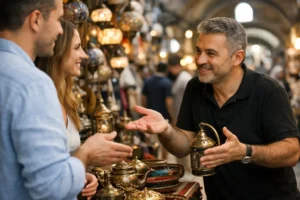

A hand-painted lamp catches the light. A seller offers tea. Someone says the price is only good “for you.” This is the moment when Grand Bazaar shopping scam tips matter most – not because every shop is dishonest, but because the bazaar is designed to be persuasive. With more than 4,000 shops and a constant flow of visitors, it is easy to confuse warm hospitality, energetic salesmanship, and a genuinely good deal.
The goal is not to shop with suspicion. It is to shop with enough information that you can enjoy the conversation, compare options, and walk away when the price or product is not right for you.
Know the Difference Between Bargaining and a Scam
Bargaining is normal in many Grand Bazaar shops, particularly for carpets, ceramics, lamps, leather goods, jewelry, and souvenirs. A seller naming a high opening price is not automatically a scam. It is an invitation to negotiate.
A problem begins when the information you need to make a choice is hidden or changed. That can mean a price quoted in one currency and charged in another, a claim that an item is handmade when it is factory-produced, an unexpected shipping fee, or pressure to pay before you have seen the full terms.
A fair transaction gives you time to inspect the item, ask questions, compare prices, and decline. If a seller will not state the final price clearly, including any delivery or card charges, you have your answer: do not buy.
Grand Bazaar Shopping Scam Tips Before You Enter
The easiest money to save is money you never feel pressured to spend. Before entering the covered lanes, decide what you are actually looking for and set a comfortable maximum budget. The bazaar has beautiful items, but it is not the only place in Istanbul to buy Turkish ceramics, textiles, spices, or jewelry.
Bring a small amount of Turkish lira for modest purchases and transportation, but do not carry all your travel cash. Cards are widely accepted in established shops, although some smaller vendors may prefer cash. If you use a card, ask whether the displayed price is the final card price before it is processed.
It also helps to take a photo of an item and note the shop name or location before agreeing to anything. The Grand Bazaar is a maze of streets, and “I will come back later” only works if you can find the store again.
Do not follow a stranger to a “special” shop
You may be approached outside the bazaar or near Sultanahmet by someone who starts a friendly conversation, says they work nearby, or offers to show you a family store. The person may be charming and the shop may be real, but the arrangement can involve commission-driven selling and inflated prices.
You do not need to argue or explain. A simple “No, thank you, I’m just looking” is enough. Walk into shops you choose yourself. That one decision gives you more control over the pace and price of your visit.
Be cautious with “closing today” and “last chance” claims
The Grand Bazaar is generally closed on Sundays, while individual shop hours can vary. Beyond that, dramatic claims about a shop closing forever, a customs deadline, or a one-hour-only deal are usually sales pressure, not useful information.
A quality item will still be a quality item after you take ten minutes to think. If it will not, it was never a safe purchase.
Ask Questions That Make Prices Clear
Before you begin negotiating, ask for the price and currency. Then ask whether that amount includes tax, card processing, packaging, shipping, insurance, and any certificate the seller says is required. Do this before handing over your card or cash.
For larger purchases, write the agreed total in your phone or ask the seller to write it on a receipt. If the item is shipped, the document should identify the exact item, the final amount paid, the delivery address, estimated delivery date, carrier, and who is responsible if it is damaged or never arrives.
Be particularly careful when a seller says an item is priced in euros or dollars but offers to charge your card in Turkish lira at an unclear exchange rate. You can ask to be charged in the local currency and let your card provider handle the conversion. Do not approve a payment screen you cannot read, and keep the merchant receipt.
Inspect the Product, Not the Story
The Grand Bazaar sells everything from thoughtful artisan work to mass-produced souvenirs. Neither is inherently bad. The issue is paying artisan prices for something described inaccurately.
For ceramics, ask whether the piece is hand-painted, hand-thrown, or produced in a workshop. Look for consistent glaze quality, a stable base, and any visible cracks. For lamps, check the wiring, the weight of the metalwork, and whether replacement bulbs are easy to source. For textiles, ask about fiber content and care instructions rather than relying on labels alone.
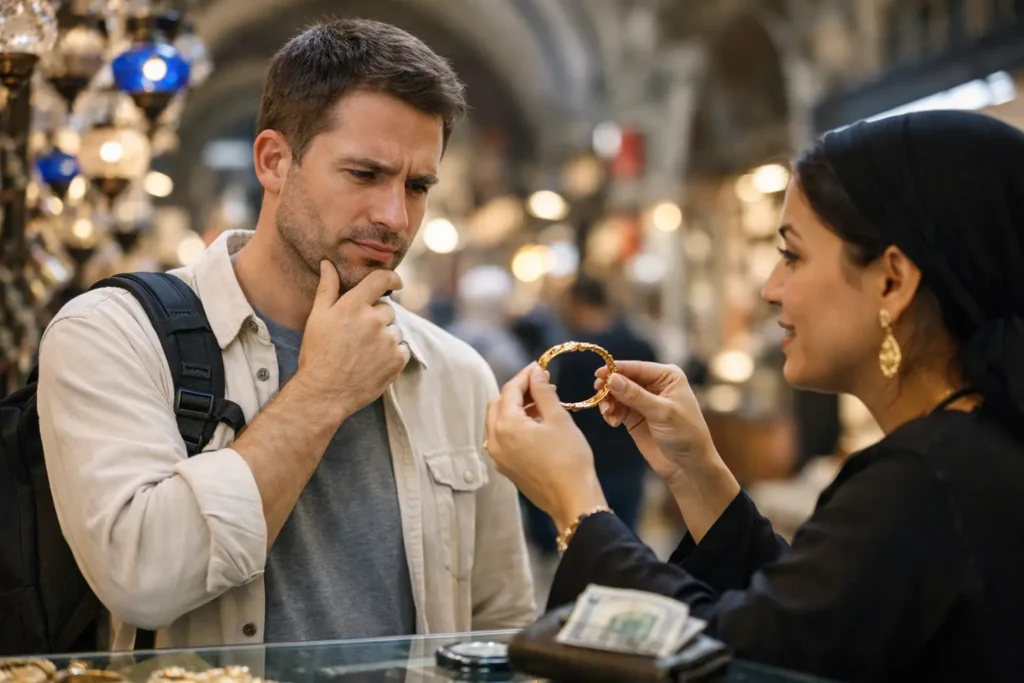
Jewelry deserves extra caution because the numbers can be significant. Ask for the metal purity, weight, stone details, and total price separately. A reputable seller should be comfortable providing a detailed receipt. If you are considering an expensive gold, diamond, or antique purchase, compare with established jewelers outside the bazaar and do not make the decision on the first visit.
Carpets require time. Claims about age, knot count, natural dyes, silk content, or regional origin can be difficult for a first-time buyer to verify on the spot. Enjoy a carpet demonstration if you are interested, but do not treat tea and hospitality as an obligation to buy. For a high-value carpet, get every representation in writing and avoid relying solely on a verbal promise of resale value or investment potential.
Watch for These Pressure Tactics
Most uncomfortable purchases begin with urgency, not with a dramatic trick. Pause if you hear any of these familiar lines or situations:
- “This is my final price” followed by repeated new discounts when you try to leave.
- “You cannot find this anywhere else” for an item that appears in multiple nearby shops.
- A request to pay a deposit before the final price, delivery terms, or product details are confirmed.
- A seller taking your card out of sight or asking to run it again without showing why the first payment failed.
- A claim that you must buy because tea, a demonstration, or a long conversation has already taken place.
The response is straightforward: slow the interaction down. Ask for the information in writing, check your banking app if a payment is involved, and leave if the mood changes when you ask reasonable questions.
How to Bargain Without Making a Bad Deal
Start politely and be prepared to decline. A useful approach is to decide what the item is worth to you, offer below that amount without being insulting, and move upward only if you remain happy with the purchase. There is no universal “correct” discount because prices, materials, craftsmanship, and demand vary widely.
Do not negotiate simply because you feel you should. If the price is outside your budget, say so and walk away. If a seller accepts your offer, treat it as a commitment. Renegotiating after agreement is as frustrating for the seller as a surprise fee is for you.
Comparison shopping is your best leverage. Visit several shops, inspect similar items, and notice how clearly each seller explains pricing. The lowest price is not always the best value. A shop that provides accurate details, a proper receipt, and calm service may be worth more than a bargain that comes with unanswered questions.
If Something Feels Wrong After You Pay
Check your receipt before leaving the shop. Confirm the item, quantity, currency, total, and payment method. If a card payment is incorrect, raise the issue immediately while you are still at the counter and keep all documents.
For a serious dispute, preserve evidence: receipts, payment confirmations, written shipping terms, product photos, and the shop location. Contact your card issuer promptly if you believe there was an unauthorized or misleading charge. If you need local assistance, ask your hotel, your consulate, or a trusted travel support service for guidance on the appropriate next step.
Do not let embarrassment stop you from acting. Tourist-focused pressure works partly because travelers are busy, tired, or worried about causing a scene. Asking for a clear receipt and leaving an uncomfortable shop are normal consumer choices.
The Grand Bazaar is at its best when you have time to wander, ask about craftsmanship, and choose one item you will be glad to carry home. Keep your pace, keep your proof of purchase, and let curiosity – not pressure – decide what comes home with you.