
















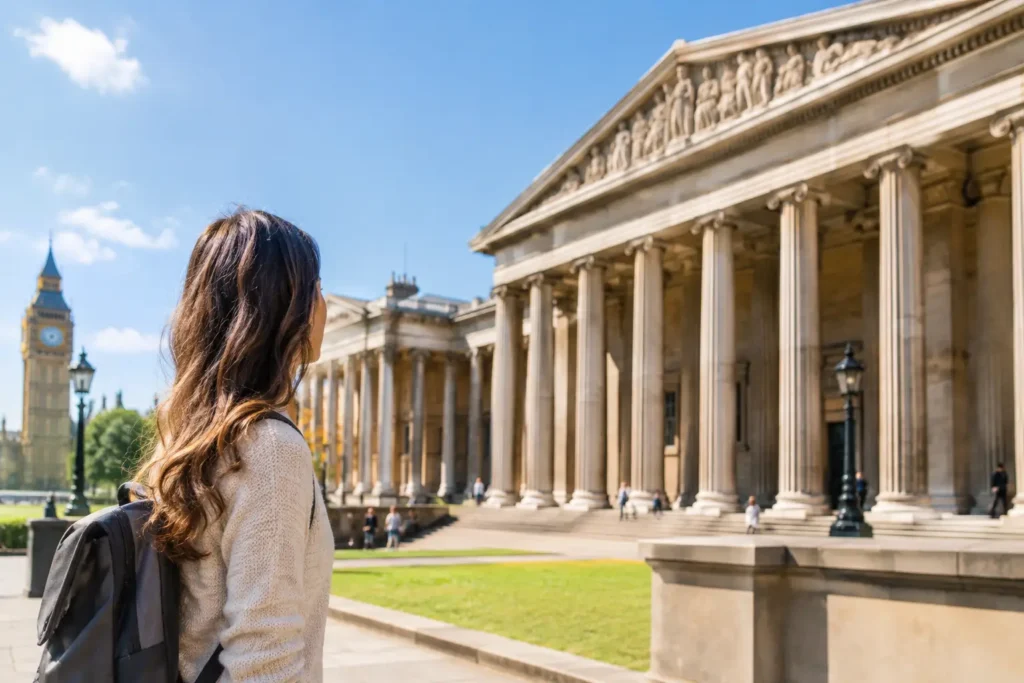
London’s major museums are free to enter for their permanent collections, so you can build an excellent day around the British Museum, National Gallery, Victoria and Albert Museum, and more without buying an admission ticket. This london free museums guide helps you choose a route that fits your time instead of spending half the day crossing the city or standing in the wrong line.
Essentials at a glance: Allow 2 to 3 hours for one major museum, or 45 to 90 minutes for a focused visit. Most museums have free permanent galleries but charge for temporary exhibitions, which usually need a timed ticket. Smart casual clothing is fine everywhere; bring a light layer, as galleries can feel cool. The nearest Tube station is rarely more than a 5- to 12-minute walk away, but exits matter, so check the station name before you travel. Confirm same-day changes on each museum’s official website and use TfL Journey Planner for live Tube closures.
London Free Museums Guide Essentials 2026
Are London museums really free?
Yes, but “free” normally means free entry to the permanent collection, not every room or event. Major national museums receive public funding and do not charge for their core displays. Special exhibitions, guided tours, talks, cloakrooms, and some family activities may have a charge or require advance booking.
You can usually walk in, pass a bag check, and enter the permanent galleries. On school holidays, weekends, and rainy afternoons, a free pre-booked entry slot can save uncertainty where a museum offers one. Do not pay a reseller simply to access a permanent collection that is normally free. Check the museum’s own website first.
What should I book ahead?
Book temporary exhibitions, popular evening events, and any free general-entry time slot offered for a busy date. For a first visit, the British Museum and the Natural History Museum are the places most likely to feel crowded, especially from late morning through mid-afternoon.
Permanent-gallery entry is often available without booking, but this can change for security or crowd management. If you are traveling with children, a stroller, or a group that needs a reliable schedule, reserving a free slot when available is sensible.
Central London Museum Route
Which free museums are closest together in London?
The National Gallery, National Portrait Gallery, and British Museum make the easiest central pairing. Start at the National Gallery on Trafalgar Square, walk about 0.6 km to the British Museum in Bloomsbury, then continue only if your energy is still good. Trying to add South Kensington on the same day usually creates more Tube time than most visitors expect.
The National Gallery is open daily from 10 a.m. to 6 p.m., with Friday hours extended to 9 p.m. It is closed January 1 and December 24 to 26. Charing Cross station, served by the Bakerloo and Northern lines, is about a 3-minute walk; Leicester Square on the Northern and Piccadilly lines is about 5 minutes away.
What should I see at the National Gallery in one hour?
Choose a period rather than attempting the whole collection. A practical route is the Renaissance rooms, the Dutch masters, then the French Impressionists. The gallery’s layout rewards slow looking, but one hour is enough for a satisfying highlights visit if you avoid trying to find every famous painting.
The museum is indoors, accessible, and requires no special dress. Friday evening is especially useful if you want to keep daytime free for outdoor sights, though it can be busier around the most recognizable works.
How long do I need at the British Museum?
Allow 2 to 3 hours for a first visit, or about 75 minutes for a tightly focused route. The museum is open daily from 10 a.m. to 5 p.m., with Friday opening until 8:30 p.m. It is closed January 1 and December 24 to 26. Tottenham Court Road station, on the Central, Elizabeth, and Northern lines, is around a 10-minute walk; Russell Square on the Piccadilly line is around 8 minutes away.
Go early for the Rosetta Stone, Parthenon sculptures, Egyptian galleries, and the Great Court. These are genuinely important collections, but they also draw the largest crowds. A better approach is to pick two regions or periods and leave before museum fatigue takes over. Large bags may slow your entry, and security checks are normal.
South Kensington Museum Cluster
Can I visit the V&A and Natural History Museum in one day?
Yes, but it depends on whether you want highlights or depth. The Victoria and Albert Museum and Natural History Museum sit roughly 0.4 km apart, a 5- to 7-minute walk. Add the Science Museum only if you have a full day, children who are keen on hands-on displays, or a specific exhibition in mind.
South Kensington station is served by the Piccadilly, District, and Circle lines. From the station, allow about 8 to 12 minutes on foot depending on which museum entrance you use. The underground pedestrian tunnel can be useful in rain, but signs and crowds can make it slower than walking above ground.
What are the V&A opening hours and best sections?
The V&A is open daily from 10 a.m. to 5:45 p.m., with Friday opening until 10 p.m. It closes December 24 to 26. Allow 2 hours for the highlights, or longer if fashion, design, sculpture, or medieval art interests you.
Start with the Cast Courts, Jewelry Gallery, or fashion galleries rather than wandering without a plan. The V&A is enormous, and its strength is variety. Friday late opening is a good lower-pressure option for adults, but check the official museum calendar because gallery access and programming can vary.
Is the Natural History Museum free to enter?
Yes, but temporary exhibitions and some events may require tickets. The museum is open daily from 10 a.m. to 5:50 p.m. and closed December 24 to 26. Allow 90 minutes for a highlights visit and 2 to 3 hours with children.
The dinosaur galleries and Hintze Hall are the most sought-after areas. Arrive close to opening if they are priorities, particularly during school breaks. The building itself is part of the experience, but it is also one of London’s busiest free museums, so do not schedule a rushed lunch reservation immediately afterward.
Modern Art and Smaller Collections
Is Tate Modern free and worth visiting?
Yes. Tate Modern’s collection displays are free, while exhibitions may be ticketed. It is generally open Sunday through Thursday from 10 a.m. to 6 p.m., and Friday and Saturday from 10 a.m. to 10 p.m. It closes December 24 to 26. Blackfriars station, on the District and Circle lines, is about a 10-minute walk; Southwark on the Jubilee line is about 12 minutes away.
Allow 90 minutes for the main collection. The Turbine Hall and riverside setting make it a strong choice for travelers who want art without the formal pace of a traditional museum. Cross Millennium Bridge afterward for a 0.5 km walk toward St. Paul’s Cathedral, but expect wind and crowds on the bridge.
Which free museum is best for a quieter afternoon?
The Wallace Collection is a good choice when you want a more intimate visit. It is open daily from 10 a.m. to 5 p.m. and closed December 24 to 26. Bond Street station, served by the Central, Jubilee, and Elizabeth lines, is around a 7-minute walk.
Give it 60 to 90 minutes for paintings, armor, decorative arts, and a calmer pace than the biggest national institutions. Its smaller scale makes it particularly practical if you have an evening reservation in Marylebone or Oxford Street nearby.
Crowd Management and Museum Etiquette
What is the best time to visit free museums in London?
The first hour after opening is usually the calmest, followed by late afternoon on weekdays. Friday evening openings at the National Gallery, British Museum, V&A, and Tate Modern can be useful, but check which galleries remain open before making the trip.
Keep your route geographically tight. A common mistake is visiting the British Museum in the morning, going to South Kensington after lunch, then returning to central London for Tate Modern. Each museum is free, but your time is not. Choose either Bloomsbury and Trafalgar Square, or South Kensington, for a half-day.
Are bags and photos allowed in London museums?
Usually, yes, but bag searches are standard and rules differ by gallery. Small daypacks are easiest. Photography is commonly allowed in permanent galleries for personal use, but flash, tripods, selfie sticks, and photography in temporary exhibitions may be restricted. Follow signs and staff instructions rather than assuming one museum’s rule applies to another.
For help while traveling in London, call 999 in an emergency for police, fire, or ambulance services. Call 101 for non-emergency police matters. London is straightforward to explore independently when you keep valuables close in crowded entrances, stations, and gallery spaces.
Frequently asked questions
Do I need a ticket for London’s free museums?
No. Permanent collections are generally free, though some museums offer optional or recommended free timed-entry reservations on busy days.
Are temporary exhibitions free too?
No. Temporary exhibitions commonly require a separate paid ticket, even when the permanent collection is free.
Can I visit the British Museum and National Gallery in one day?
Yes, but plan about 4 to 5 hours including the 0.6 km walk, security checks, and a break.
Which London museum is best with children?
The Natural History Museum is usually the easiest choice, especially for dinosaur and wildlife displays, but arrive near opening during school vacations.
Are London museums open on Mondays?
Yes, most major free museums are open on Mondays, unlike many museums in other European cities. Check official calendars for holiday closures.
How long should I allow for Tate Modern?
About 90 minutes. Add another 30 minutes if you want to walk along the Thames or cross Millennium Bridge afterward.
If you want this guidance in one place while you walk, Localada’s free London audio guide combines routes, practical visiting details, and cultural context for independent travelers.
Sources and official information
Opening hours, prices and rules change. These are the primary sources behind this guide; check them before you go.
- UK Foreign Office travel advice: Turkey safety and security: Government guidance on crime, unofficial taxis and drink spiking in Turkey.
- UK Foreign Office travel advice: getting help in Turkey: Confirms 112 as the emergency number for ambulance, fire and police.
Questions answered in this article
- Are London museums really free?
- What should I book ahead?
- Which free museums are closest together in London?
- What should I see at the National Gallery in one hour?
- How long do I need at the British Museum?
- Can I visit the V&A and Natural History Museum in one day?
- What are the V&A opening hours and best sections?
- Is the Natural History Museum free to enter?
- Is Tate Modern free and worth visiting?
- Which free museum is best for a quieter afternoon?
- What is the best time to visit free museums in London?
- Are bags and photos allowed in London museums?
- Do I need a ticket for London’s free museums?
- Are temporary exhibitions free too?
- Can I visit the British Museum and National Gallery in one day?
- Which London museum is best with children?
- Are London museums open on Mondays?
- How long should I allow for Tate Modern?
Summarise this guide with AI: ChatGPT · Claude · Perplexity