
















Localada’s free Istanbul audio guide covers 14 stops: 6 sights, 2 places to eat, 2 shops and 4 experiences, narrated in 15 languages. Seeing all 6 sights takes roughly 7–10.5 hours of visiting time, before travel between them. 14 of the 14 stops come with a Localada perk, such as 5% off GetYourGuide tickets or a discount at a verified local restaurant or shop.
Opening hours, perks and visit times below come from the live Localada app and were last checked on 30 October 2026. Always confirm on the day: hours can change for holidays and prayer times.
Open the free Istanbul guide →
Istanbul audio guide stops at a glance
| # | Stop | Type | Time to allow | Hours | Closed | Today | Localada perk |
|---|---|---|---|---|---|---|---|
| 1 | Hagia Sophia | Church | 1–2 hours | 09:00–17:00 | — | — | 5% OFF |
| 2 | Blue Mosque | Mosque | 30–45 min | 08:30–18:30 | — | — | 5% OFF |
| 3 | Basilica Cistern | Cistern | 30–45 min | 09:00–18:30 | — | — | 5% OFF |
| 4 | Hippodrome | Landmark | 30–45 min | Open 24 hours | — | — | 5% OFF |
| 5 | Topkapi Palace | Palace | 3–4 hours | 09:00–17:00 | — | — | 5% OFF |
| 6 | Archaeological Museum | Museum | 1.5–2 hours | 09:00–18:30 | — | — | 5% OFF |
| 7 | Grand Bazaar | Store | 1–3 hours | 08:30–19:00 | — | — | 5% OFF |
| 8 | Rumeli Grill Kebab House | Restaurant | — | 08:00–02:00 | — | — | 10% OFF |
| 9 | Serbethane Cafe & Restaurant | Restaurant | — | 10:00–01:00 | — | — | 10% OFF |
| 10 | Bilgin's Turkish Handcraft Store | Shop | — | 09:00–20:00 | — | — | 10% OFF |
| 11 | Cagaloglu Hammam | Experiences | — | 09:00–22:00 | — | — | 5% OFF |
| 12 | Sifa Hammam | Experiences | — | 10:00–22:00 | — | — | 5% OFF |
| 13 | HodjaPasha Whirling Dervishes | Experiences | — | 17:00–19:00 | — | — | 5% OFF |
| 14 | Turkish Mosaic Lamp Workshop | Experiences | — | 09:00–18:00 | — | — | 5% OFF |
How much time do you need in Istanbul?
- Highlights only (about 2–3.5 hours): Hagia Sophia, Blue Mosque and Basilica Cistern.
- Every sight in the guide (about 7–10.5 hours): all 6 sights in route order; split across 2 days at a comfortable pace.
- Add food, shopping and experiences: 8 more stops, from verified restaurants to workshops and shows, listed below.
Sights in the Istanbul audio guide
Hagia Sophia
Full Hagia Sophia audio guide →
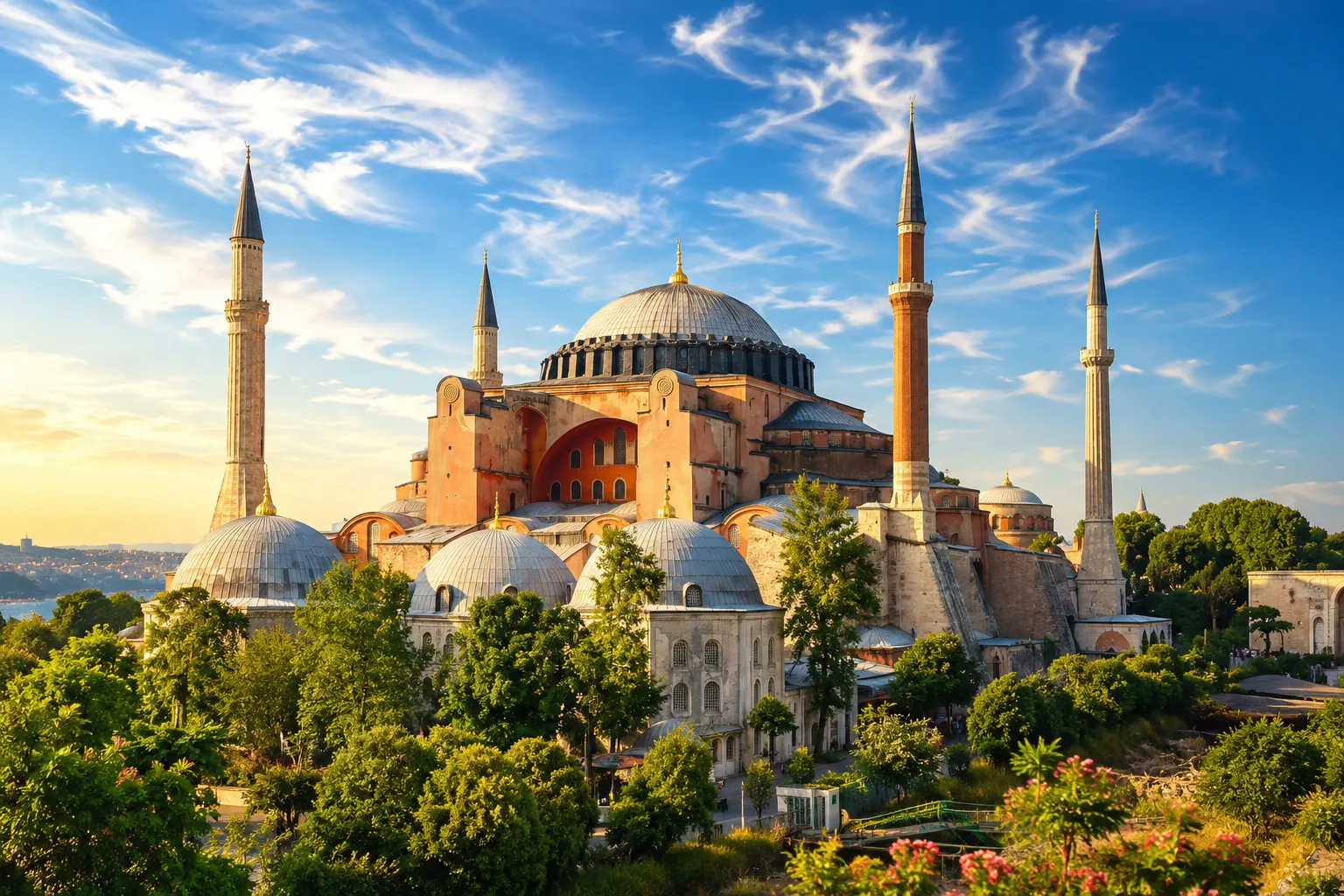
The Building That Changed Architecture Forever
The building in front of you has been the most important structure in Istanbul for almost 1,500 years. Emperor Justinian I built it in 537 AD — in just five years — as the greatest cathedral in the Christian world. Its dome was an engineering impossibility at the time: 31 metres wide, floating 55 metres above the ground, with 40 windows at its base that flood the interior with light. Medieval visitors described it as "heaven come down to earth."
For nearly a thousand years it was the world's largest cathedral. Then in 1453, the Ottomans conquered Constantinople, and Sultan Mehmed II rode straight here. He converted it to a mosque, added minarets, and covered the Christian mosaics — not destroyed, just covered. Many survived beneath the plaster.
- Time to allow: 1–2 hours
- Hours: 09:00–17:00 (open daily)
- Address: Ayasofya Meydanı No:1, Sultanahmet
- Localada perk: 5% OFF – Book your skip-the-line ticket below and walk straight in.
- 💶 Foreign visitors: €25 per person
- 👶 Children under 8: Free (passport required)
Local tips
- ⏰ Go early morning or late afternoon — the midday crowds are the worst in all of Sultanahmet.
- 🖼 The Deesis mosaic in the upper gallery is the highlight — don't leave without finding it.
- 🕌 Avoid Fridays before 14:30 — tourist entry is suspended during noon prayers.
- 👗 Dress modestly — shoulders and knees covered. Headscarves available free at the entrance.
- 🚫 Tourists are not permitted on the ground floor (reserved for worshippers).
Blue Mosque
Full Blue Mosque audio guide →
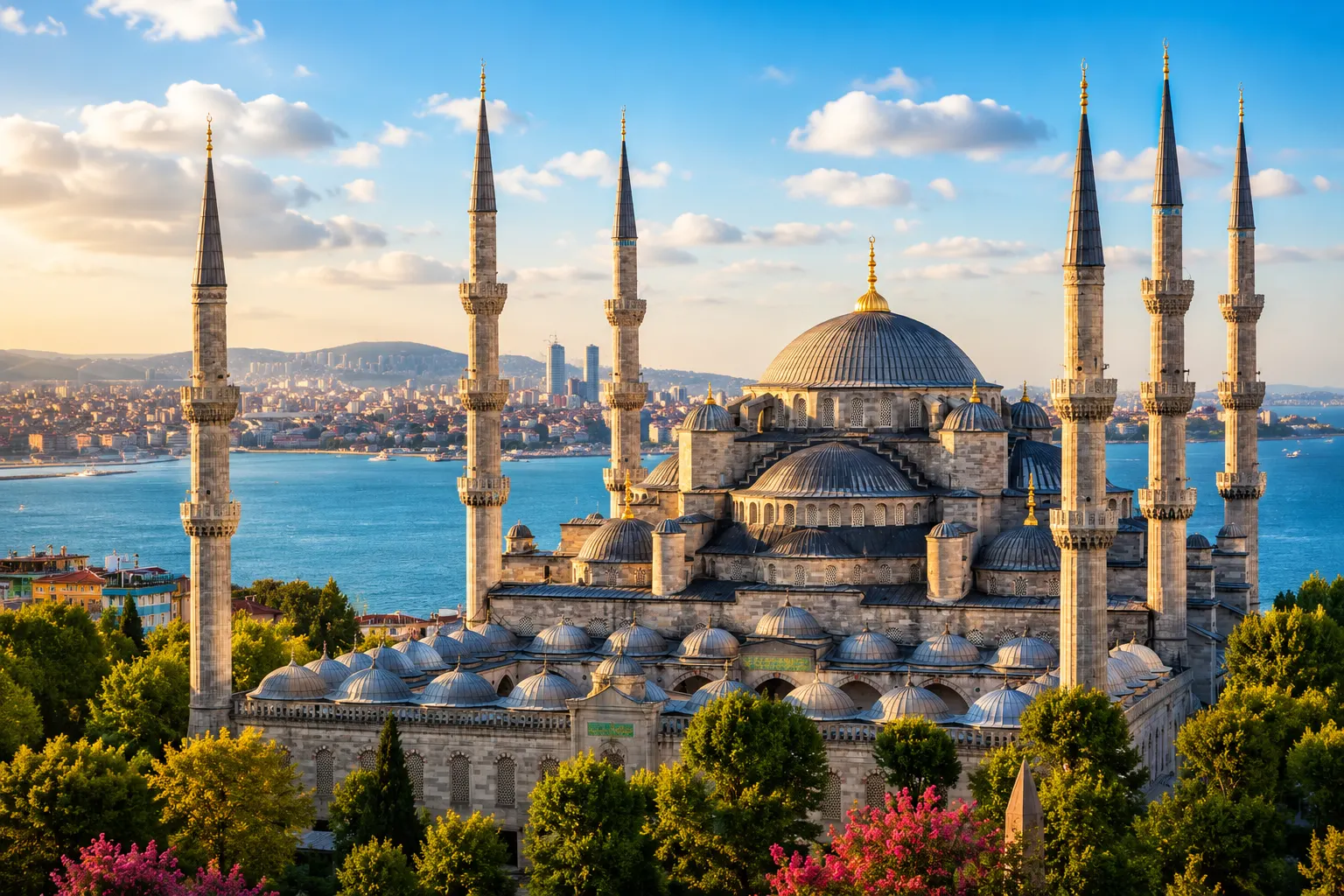
The Mosque That Caused a Scandal
In 1609, a 19-year-old sultan named Ahmed I decided to build a mosque that would rival Hagia Sophia — standing right across from it, on the Hippodrome.
He commissioned six minarets. This immediately caused a scandal. At the time, only the Grand Mosque in Mecca had six minarets — and having the same number felt like a challenge to the holiest site in Islam. The religious authorities objected.
Ahmed's solution: he paid for a seventh minaret to be built at the Grand Mosque in Mecca, so it would always stand apart. Crisis resolved.
Inside, the architect covered the walls with over 20,000 hand-painted İznik tiles in cobalt blue — giving the mosque its Western nickname. Ahmed I died in 1617, aged 27, the year it was completed. His tomb is in the garden outside.
- Time to allow: 30–45 min
- Hours: 08:30–18:30 (open daily)
- Address: Sultan Ahmet Mahallesi, Atmeydanı Cd. No:7, Sultanahmet
- Localada perk: 5% OFF – 🆓 Free entry — no ticket, no booking needed.
- 🕌 Closed to tourists during prayer times (5× daily, ~30–90 min each)
- 👗 Dress code strictly enforced — shoulders and knees covered for all visitors
Local tips
- ⏰ Visit early morning (08:30–10:00) or late afternoon — midday is the most crowded.
- 🧦 Don't wear sandals if you want to avoid the sock situation — wear trainers or closed shoes.
- 🏛 The courtyard outside is worth five minutes even if the mosque is closed for prayer — the view of the domes from inside the courtyard is one of the best in Sultanahmet.
- 📅 Friday: tourist entry only from 14:30 onwards
Basilica Cistern
Full Basilica Cistern audio guide →
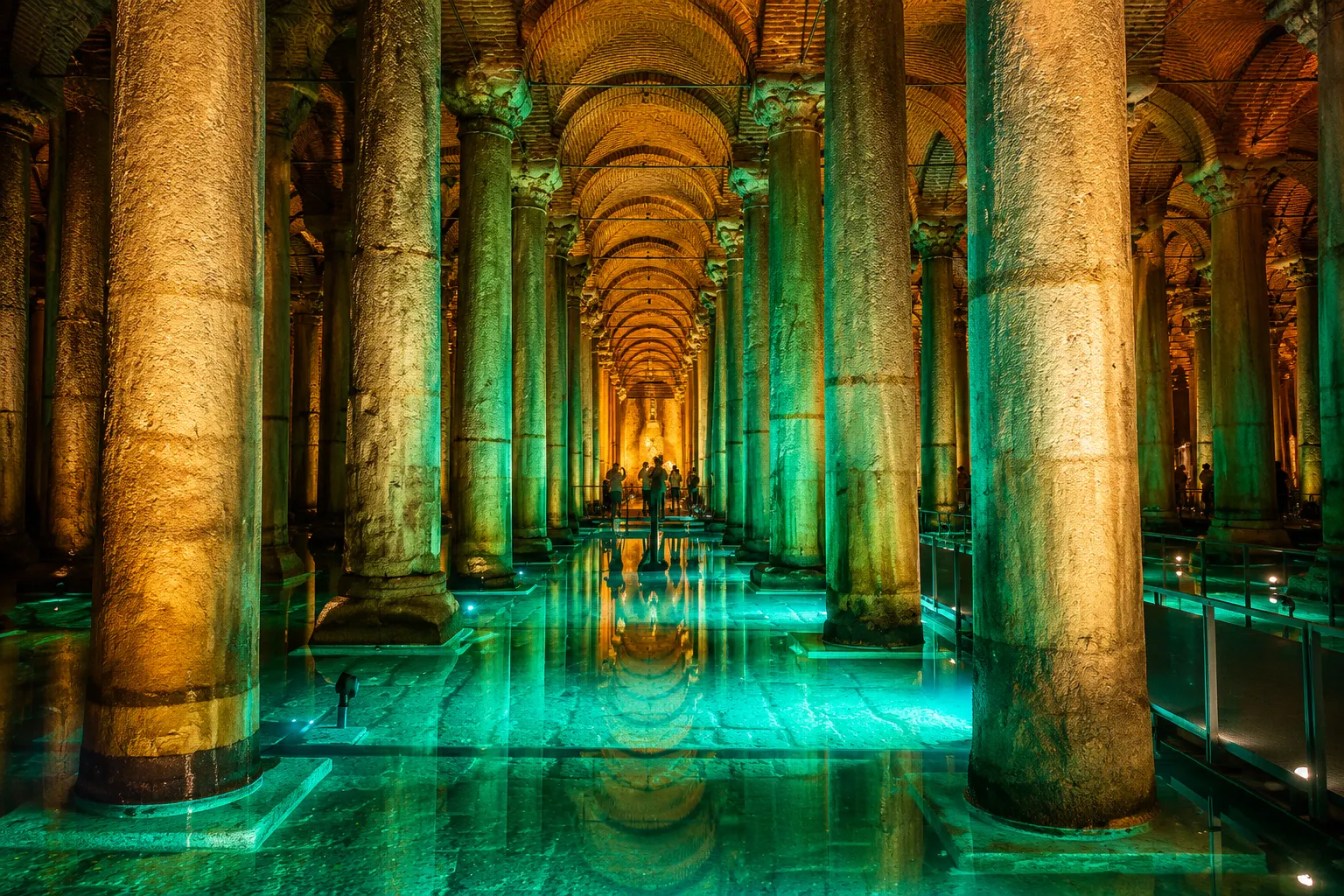
The Palace Beneath Your Feet
You're standing above one of the best-kept secrets of the ancient world. Right beneath Sultanahmet's streets lies a vast underground palace — built not for kings, but for water. In 532 AD, Emperor Justinian I ordered the construction of this cistern to supply Constantinople's Great Palace. 336 marble columns, each 9 metres tall, hold up the ceiling in silent rows.
For centuries after the Ottoman conquest, locals had no idea it was here — they just lowered buckets through holes in their basement floors to fetch water. Some even fished in it. A Dutch traveller rediscovered it in 1545.
Today, two million people visit every year. Descend the stairs and see for yourself.
- Time to allow: 30–45 min
- Hours: 09:00–18:30 (open daily)
- Address: Yerebatan Caddesi 1/3, Sultanahmet
- Localada perk: 5% OFF – 💡 Don't wait in line — the queue at the door can run 60–90 minutes in peak season. Book your skip-the-line ticket below and walk straight in.
- 💶 Foreign visitors ~ € 45
- 👶 Children under 7: Free
Local tips
- ⏰ Come right at opening (09:00) or after 16:30 — midday is the most crowded.
- 🧥 It's cool inside year-round — a light jacket helps even in summer.
- 🐍 The Medusa heads are in the far left corner — don't leave without finding them.
Hippodrome
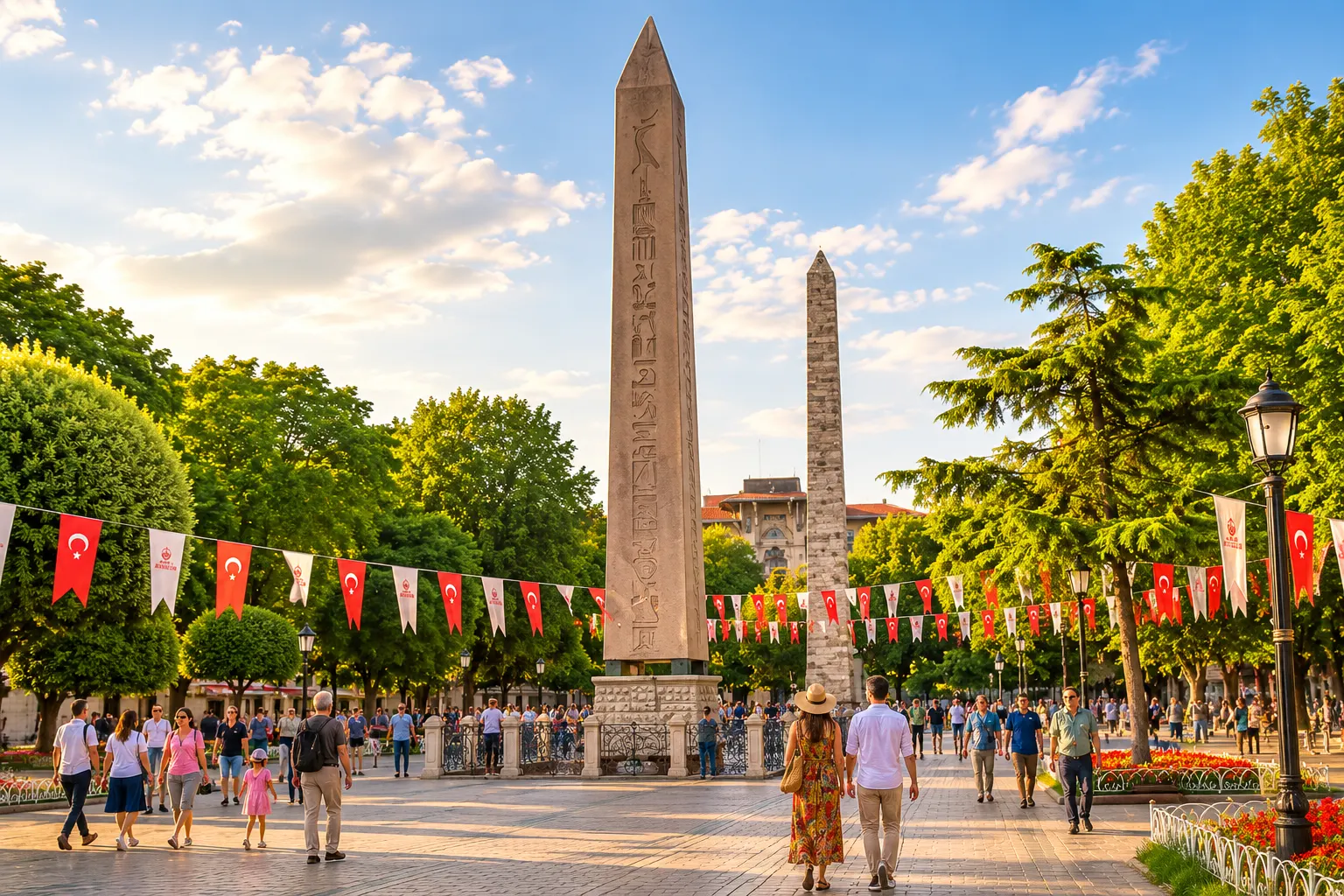
100,000 People Once Stood Here
The square you're walking through was once the centre of the most exciting city in the medieval world.
The Hippodrome of Constantinople — built in the 3rd century, expanded by Emperor Constantine in 330 AD — was a chariot racing track that held 100,000 people. To put that in perspective: the city's total population at the time was around 500,000. One in five people could fit inside.
The emperors watched from an imperial box connected directly to the Great Palace next door. They controlled the crowd, the races, and the city's political mood from that box. When the Nika Riots broke out in 532 AD, it was here — 30,000 people died in this square in a single day.
- Time to allow: 30–45 min
- Hours: Open 24 hours
- Address: Atmeydanı Cd., Sultanahmet
- Localada perk: 5% OFF – 🆓 Free entry — open public square, no ticket required.
- 🏛 Three ancient monuments on site: Egyptian Obelisk (1450 BC), Serpent Column (479 BC), Walled Obelisk
- 📍 The square follows the exact dimensions of the ancient chariot racing track
Local tips
- 🔍 Look at the marble base of the Egyptian Obelisk up close — the relief carvings of Emperor Theodosius are extraordinary and almost nobody stops to read them.
- ⚡ The Serpent Column is from 479 BC — older than Alexander the Great. Take a moment with it.
- 🌅 Best photos: early morning, before the tour groups arrive — the square faces east, beautiful light at sunrise.
Topkapi Palace
Full Topkapi Palace audio guide →
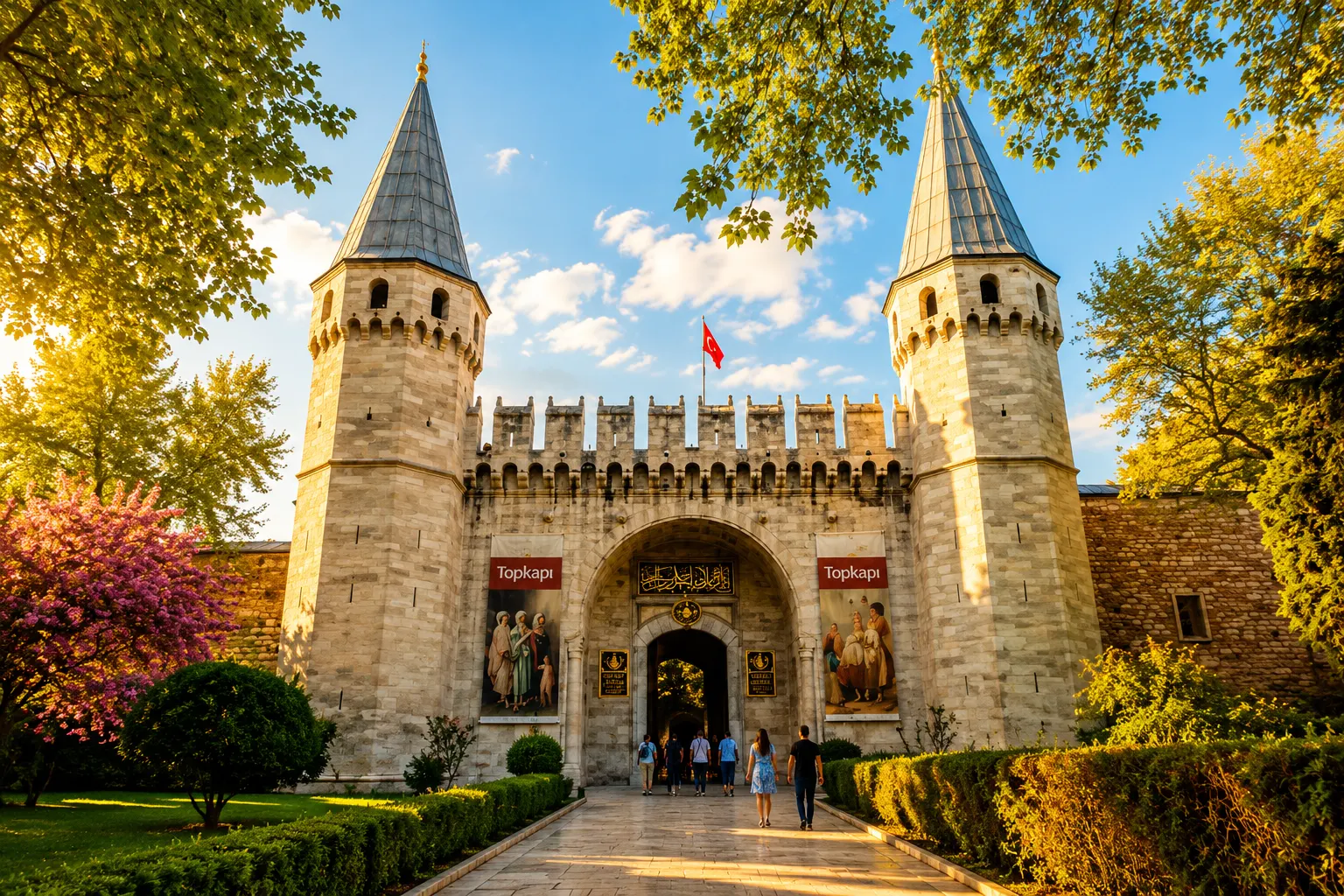
The City Within a City
In 1453, Sultan Mehmed II conquered Constantinople and rode straight to Hagia Sophia. Six years later, he began building his palace on the hill above — the highest point of the city, where the Bosphorus meets the Golden Horn and the Sea of Marmara.
For the next 400 years, Topkapi Palace was the heart of the Ottoman Empire — home to more than 30 sultans, thousands of servants, 300 concubines in the Harem, and treasures that still take your breath away. The 86-carat Spoonmaker's Diamond. The Topkapi Dagger with emeralds the size of eggs. The sword and cloak of the Prophet Muhammad.
In 1856, the last sultan moved out to a European-style palace on the Bosphorus. In 1924, Atatürk turned Topkapi into a museum. Today, over 3 million people visit every year. Allow at least 3 hours — there is more here than most people expect.
- Time to allow: 3–4 hours
- Hours: 09:00–17:00 (open daily)
- Address: Cankurtaran Mahallesi, 34122 Fatih, İstanbul
- Localada perk: 5% OFF – 💡 Don't wait in line — book your skip-the-line ticket below and go straight in.
- 💶 Foreign visitors: ₺2,750 (~€55)
- 👶 Children under 6: Free (passport required)
- ❌ Closed every Tuesday
Local tips
- 🏃 Head straight to the Harem when you arrive — it fills up fast and entry can queue separately.
- 💎 The Treasury and Holy Relics Room are in the Third Courtyard — don't stop too long in the first two or you'll run out of time.
- 🌊 The Fourth Courtyard terrace has the best Bosphorus view in all of Sultanahmet — save it for the end.
- 🕐 Last entry 30 minutes before closing — arrive by 16:00 to see everything
- 📵 No photography in the Holy Relics Room — strictly enforced
Archaeological Museum
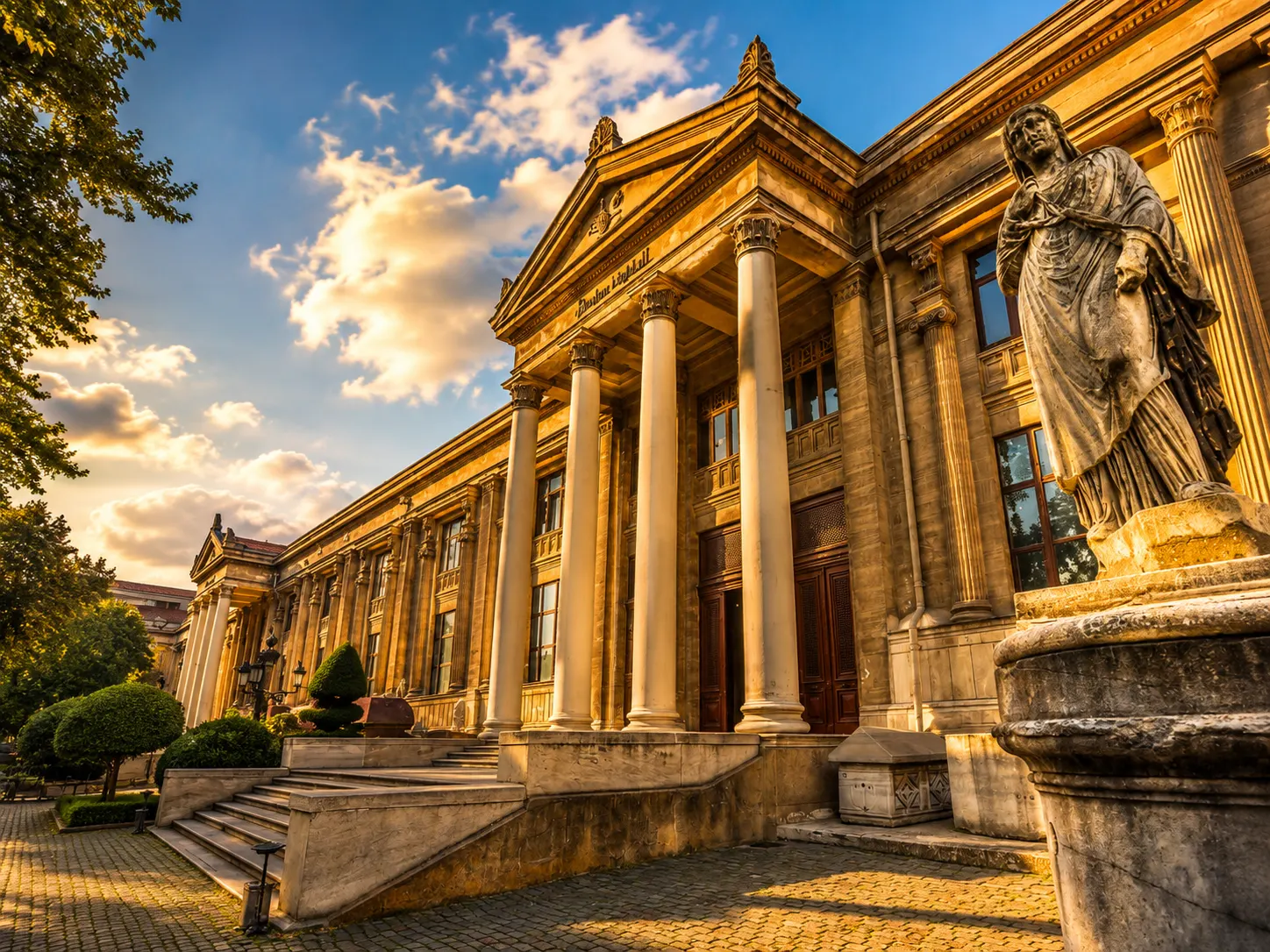
The Man Who Tied Himself to a Sarcophagus
In 1887, an Ottoman painter named Osman Hamdi Bey was excavating a royal necropolis in Sidon — modern-day Lebanon. He uncovered four extraordinary marble sarcophagi, the finest of which was decorated with battle scenes so detailed and so well-preserved that they seemed almost alive.
The problem: getting them to Istanbul. No shipping company would take responsibility for objects this heavy and this valuable. When a cargo ship finally agreed, and the Alexander Sarcophagus was being loaded, Osman Hamdi Bey did something extraordinary — he tied himself to it. If the sarcophagus went overboard, so would he.
It arrived safely. Today it stands in this museum, just a few minutes' walk from Topkapi Palace. It is widely considered the most significant artefact in the Istanbul Archaeological Museums — and most visitors to Sultanahmet never see it.
- Time to allow: 1.5–2 hours
- Hours: 09:00–18:30 (open daily)
- Address: Osman Hamdi Bey Yokuşu, Gülhane, Fatih, İstanbul
- Localada perk: 5% OFF – 💡 Don't wait in line — book your skip-the-line ticket below and walk straight in.
- 💶 Foreign visitors: €15 per person
- 👶 Children under 12: Free
Local tips
- 🏺 Go straight to the Alexander Sarcophagus first — it's in the main hall as you enter. Give it 10 minutes. It deserves it.
- 🌙 Visit after 17:00 in summer — fewer crowds, cooler inside, open until 22:00. One of Istanbul's best-kept secrets.
- 🌿 The museum garden has ancient column capitals and fragments scattered around — worth a slow walk before or after.
Where to eat: verified local picks
Rumeli Grill Kebab House
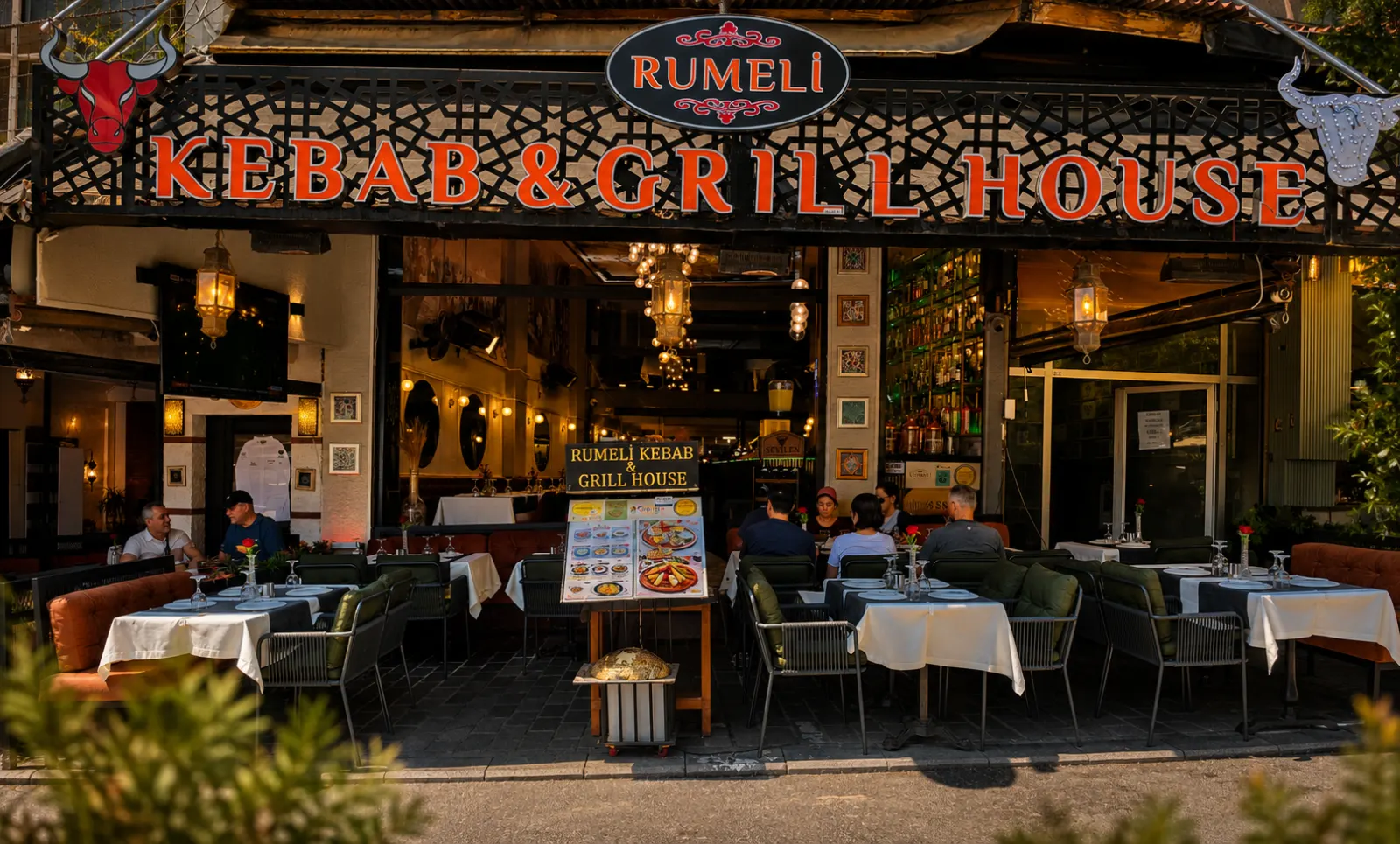
Eat Turkish Food the Way It's Meant to Be Eaten
Rumeli Grill Kebab House sits right in the heart of Sultanahmet, and it's the kind of place where you can try real Turkish cuisine safely, without wondering what you're paying for.
Start with a shared meze plate — hummus, haydari, stuffed vine leaves, a little of everything. Then move to the main event: the kebabs. Rumeli is known for its Adana kebab and its mixed kebab plates, grilled over open flame the traditional way. If you're travelling with others, the Rumeli Special Mixed Kebab for three is built exactly for sharing.
There's also steak, fresh fish, pasta, and a full vegetarian menu — so whoever you're eating with, there's something here for them.
- Hours: 08:00–02:00 (open daily)
- Address: Divanyolu Cad. Ticarethane Sk. No: 11, Sultanahmet, İstanbul 34410, Türkiye
- Localada perk: 10% OFF – 🎁 10% off your bill — exclusively for Localada guests. ☕ A complimentary Turkish tea or coffee is included after your meal.
- 🍽 Full Turkish cuisine menu — kebabs, mezze, steak, seafood, and more
- Just show your discount code to your server — no other proof needed
Local tips
- 🍖 Try the Adana kebab or a mixed kebab plate — a Rumeli specialty.
- 🫓 Start with a shared meze plate before your main course.
- ☕ Stay for the complimentary tea or coffee — a nice way to end the meal.
Serbethane Cafe & Restaurant
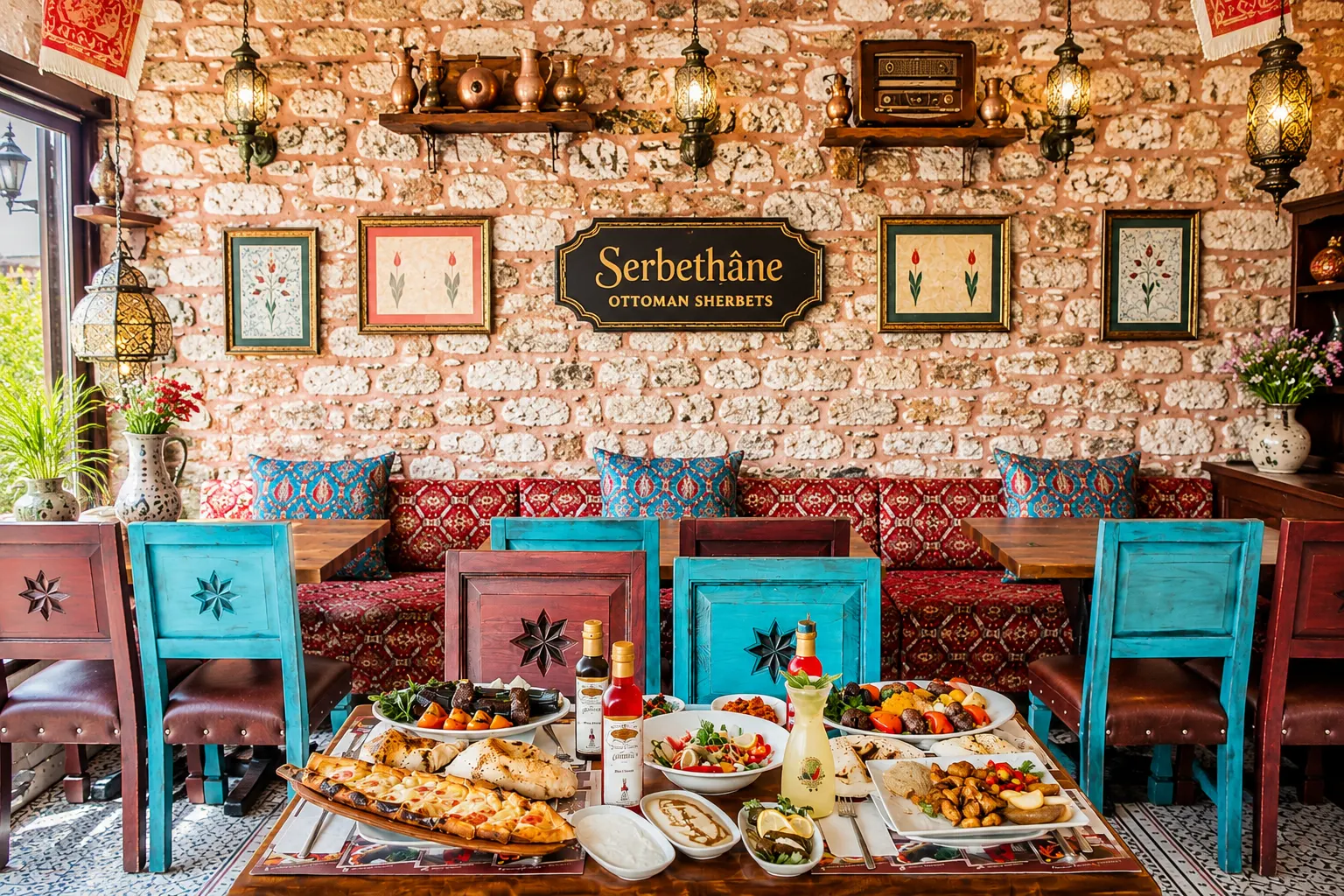
Taste a Tradition That Almost Disappeared
Şerbethane sits inside a genuine Ottoman şerbethane — a historic building once dedicated entirely to the art of şerbet, the sweetened fruit and flower drinks that Ottoman palaces served to guests centuries before lemonade or soda ever existed.
Come here to try that tradition for yourself. The rose şerbet, the tamarind şerbet, and the house "Sultan" blend are all made the traditional way — and they're unlike anything you've tasted before.
Beyond the şerbets, this is a full Turkish restaurant: kebabs, mezze, pasta, pizza, seafood, and Ottoman classics like testi kebabı, cooked and served in a sealed clay pot cracked open at your table.
Expect to spend around 25 to 35 euros per person for a full meal. As a Localada guest, you get 10% off your bill — just show your discount code to your server, no need to say anything else. And once you're finished, a complimentary Turkish tea is on the house.
- Hours: 10:00–01:00 (open daily)
- Address: Sultanahmet Mahallesi, Arasta Çarşısı Sokağı No:98, 34122 Fatih, İstanbul
- Localada perk: 10% OFF – 🎁 10% off your bill — exclusively for Localada guests. 🍵 A complimentary Turkish tea is included after your meal.
- 🍹 Try the traditional Ottoman şerbets — Rose, Tamarind, or Sultan blend
- Just show your discount code to your server — no other proof needed
Local tips
- 🌹 Try the rose şerbet first — the most iconic of the traditional flavors.
- 🍯 Save room for künefe or baklava — both made fresh here.
Shops: verified local picks
Grand Bazaar
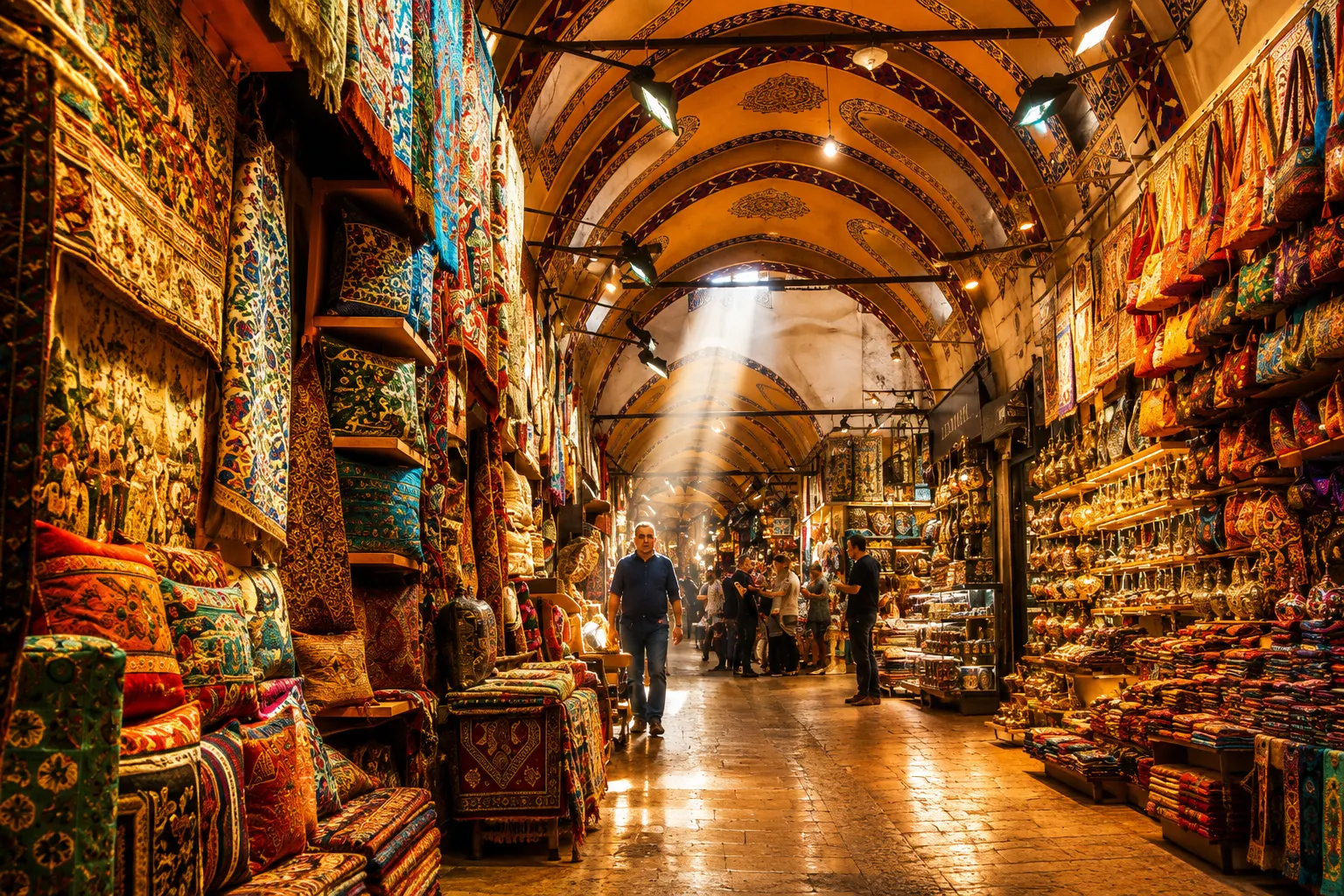
The World's Oldest Shopping Mall
In 1455, two years after conquering Constantinople, Sultan Mehmed II ordered the construction of a covered market for textiles and precious goods. He called it the Cevâhir Bedestan — the gem market.
It grew. For 500 years it kept growing. Fires burned it down, earthquakes shook it, empires came and went — the bazaar was always rebuilt. Today it covers 61 streets, contains over 4,000 shops, and attracts more than 91 million visitors a year — more than the Eiffel Tower, more than Disneyland.
Entry is free. There is no map that truly helps. The best approach: walk in, let yourself get lost, and see what finds you.
- Time to allow: 1–3 hours
- Hours: 08:30–19:00 (open daily)
- Address: Beyazıt, Kalpakçılar Cd. No:22, Fatih, İstanbul
- Localada perk: 5% OFF – 💡 See beyond the tourist surface — most visitors only see the first few streets. A guided tour reveals the hidden courtyards, the 15th-century bedestens, and the stories behind the trades. Book a guided Grand Bazaar tour below.
- 🆓 Free entry — no ticket required, just walk in through any of the 21 gates
- ❌ Closed every Sunday and on the first day of religious holidays
Local tips
- 🚶 Walk past the main entrance shops — the best goods are deeper inside, where the tourist foot traffic thins out.
- ☕ Accept the tea — you are not obligated to buy anything, and the conversation is usually worth it.
- ⏰ Arrive before 10:00 or after 17:00 — midday is chaotic. Early morning is a different bazaar entirely.
Bilgin's Turkish Handcraft Store
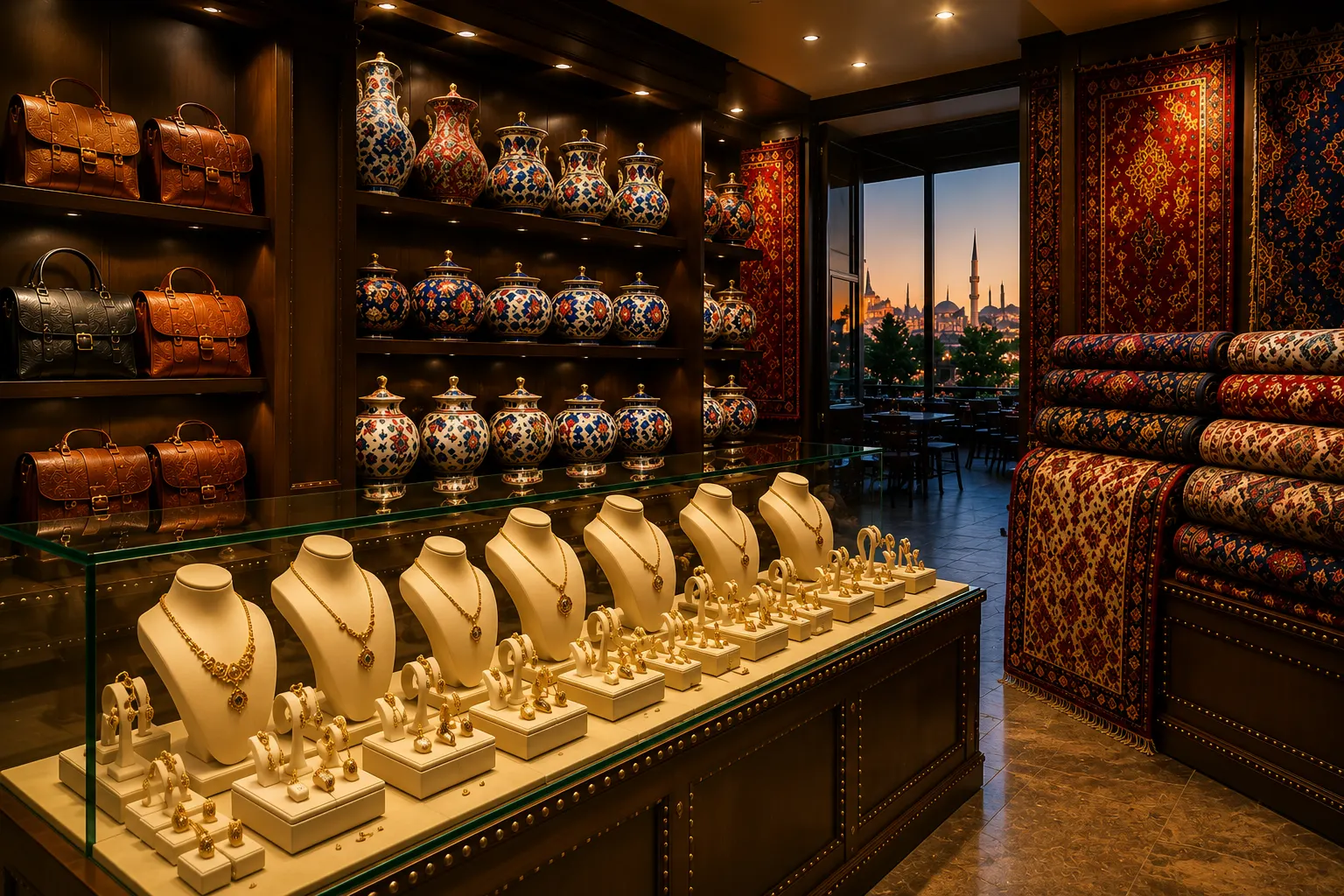
The Stone That Changes Color With the Light
Bilgin's is a single stop for genuine Turkish craftsmanship — leather, fur, jewelry, ceramics, and hand-woven Turkish carpets, all under one roof, just steps from the Grand Bazaar.
The centrepiece of the jewellery section is zultanite — a gemstone found in only one place on Earth: a remote mountain range in Anatolia. It's not dyed or treated in any way. It genuinely shifts color depending on the light around it — kiwi green in daylight, warm champagne indoors, and a soft raspberry-pink by candlelight. Legend even says a zultanite ring was once gifted by Suleiman the Magnificent to Hürrem Sultan herself.
Alongside it, look for the Andalu collection — pieces inspired by motifs from across the world, reimagined through a Turkish lens.
- Hours: 09:00–20:00 (open daily)
- Address: Molla Fenari, Bab-ı Ali Cd. No:5, 34120 Fatih, İstanbul
- Localada perk: 10% OFF – 🎁 10% off — exclusively for Localada guests. ☕ A complimentary tea or coffee is waiting at the rooftop café — Hagia Sophia & Bosphorus view included.
- 🎁 Show your discount code at the jewelry counter, right when you walk in
- 💎 Home to zultanite — a color-changing gemstone found only in Turkey
- 🎨 Occasional in-store workshops — ask staff if one is happening during your visit
Local tips
- 💎 Ask to see zultanite under different light — it changes color right in front of you.
- 🌍 Look for the Andalu collection — world motifs reinterpreted through Turkish craftsmanship.
Experiences and activities
Cagaloglu Hammam
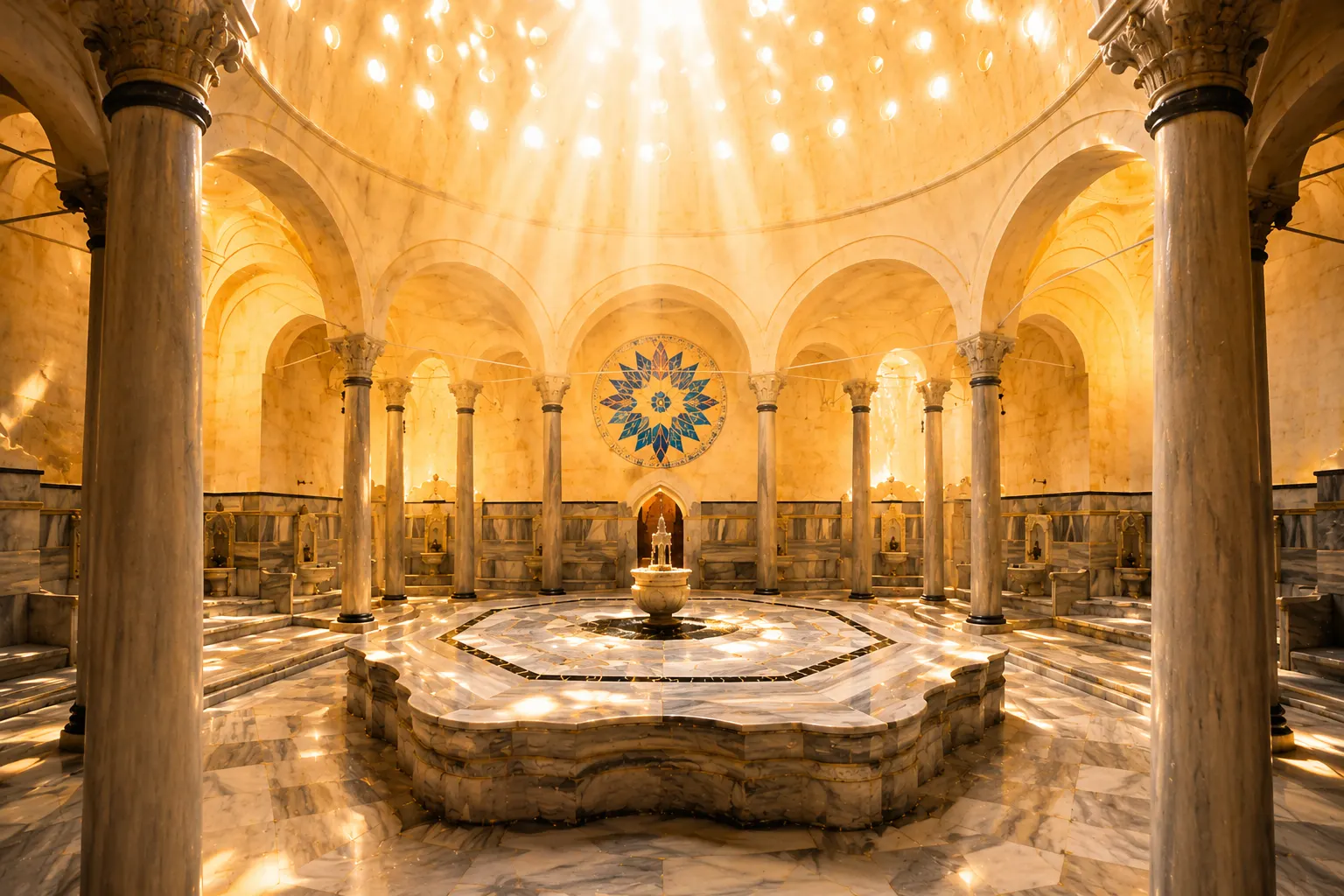
The Last Imperial Bath of the Ottomans
Step inside Cağaloğlu Hamamı and you're entering the last great bathhouse the Ottoman Empire ever built. Finished in 1741 under Sultan Mahmud I, it was created to raise revenue for the Sultan's library over at Hagia Sophia — so every scrub and steam here once helped keep books on the shelves next door.
What makes this place special is that it was never fully restored. The marble halls, the soaring central dome, the warm stone beneath your feet — this is more or less what visitors saw nearly three centuries ago. It's the last grand hamam of its kind: after 1768, the construction of great baths like this was halted, and none ever matched it again.
- Hours: 09:00–22:00 (open daily)
- Address: Alemdar Mah. Profesör Kazım İsmail Gürkan Cad. No: 34, 34110 Fatih, İstanbul
- Localada perk: 5% OFF – 🎟 Reserve your Turkish bath session below and skip the wait.
- 🚻 Separate sections for men and women (a traditional "çifte" double bath)
- 📍 A short walk from Hagia Sophia and Sultanahmet Square, or take the T1 tram to Sultanahmet
Local tips
- 🎟 Reserve a few days ahead through the link — walk-ins often wait or miss out in peak season.
- 🧖 Pestemal wrap, slippers, and a locker are provided — bring a swimsuit if you prefer
- 🔥 The heat is intense and the scrub is vigorous — it's authentic tradition, not a gentle spa
- 🍵 Don't rush out afterwards — resting with a tea in the cool room is half the ritual.
Sifa Hammam
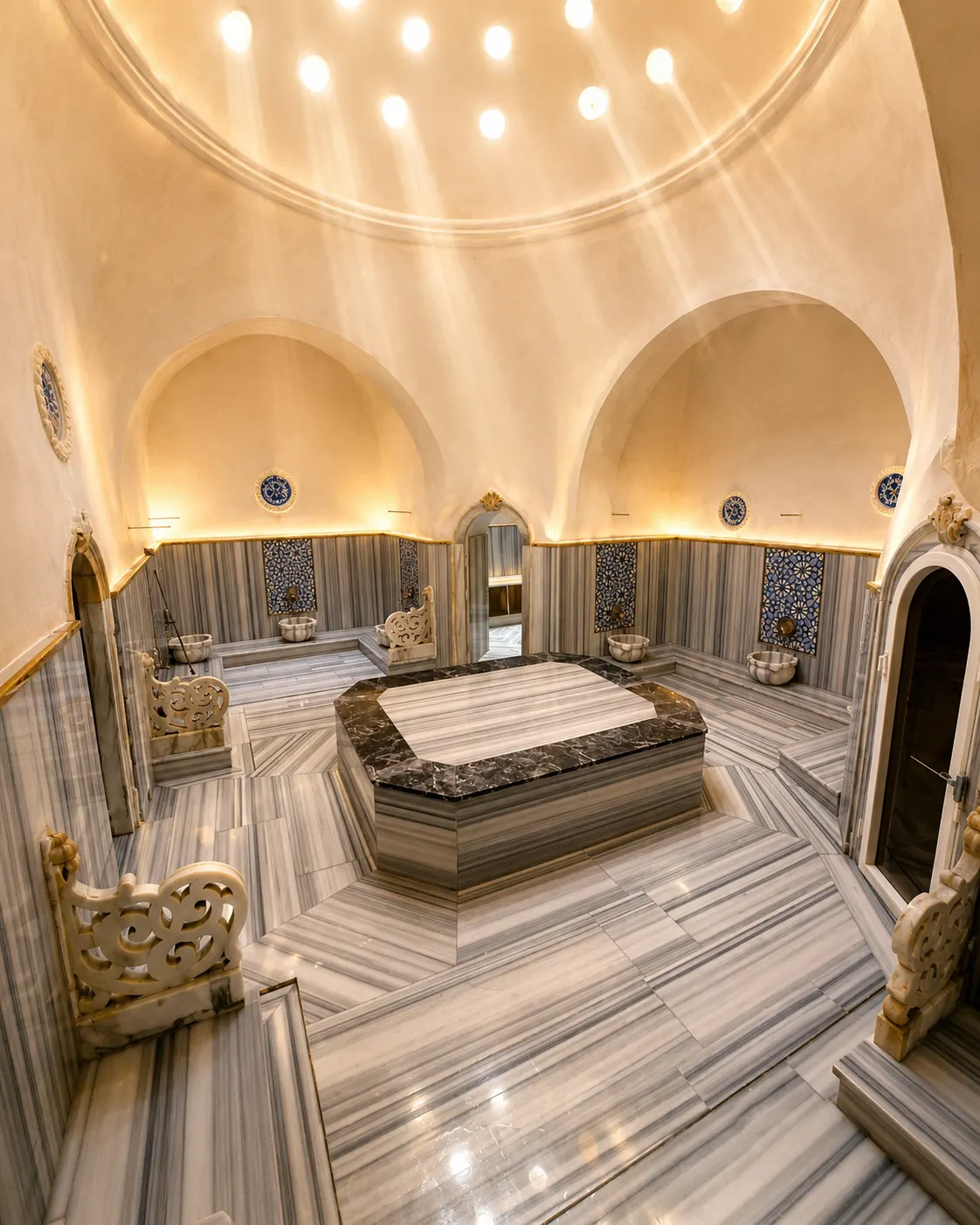
An Ottoman Bath You Can Share
Şifa Hamamı has been welcoming bathers since 1777, right in the heart of Sultanahmet — just steps from the Blue Mosque and Hagia Sophia. Step through its doors, marked by the big red "Historical Turkish Bath — Since 1777" sign, and you're inside a genuine 18th-century Ottoman bathhouse: elegant domes, marble halls, and rising steam, much as it was over two centuries ago.
What makes Şifa special is rare in Istanbul. Most historic hamams keep men and women in separate sections — but here, you can share the same bathing space, so couples, friends, and groups can experience the ritual together. Comfort and tradition are both looked after: female therapists attend to women, male therapists to men.
- Hours: 10:00–22:00 (open daily)
- Address: Sultan Ahmet, Şifa Hamamı Sk. No:12, 34122 Fatih/İstanbul
- Localada perk: 5% OFF – 🎟 Reserve your Turkish bath session below and skip the wait.
- 👫 One of the few historic hamams with a mixed-gender shared bathing space — ideal for couples and groups
Local tips
- 🏛 Built in 1777 — an authentic Ottoman hamam, operating continuously ever since
- 🧴 Pestemal wrap, slippers, towel, and locker provided — a swimsuit underneath is optional
- ⚠️ Not recommended if you're pregnant or have a heart condition, due to the heat; under-18s need an adult
- 📍 Just steps from Sultanahmet Square — one of the best-located hamams in the Old City
- 📅 Especially busy in summer — booking a few days ahead is recommended
HodjaPasha Whirling Dervishes
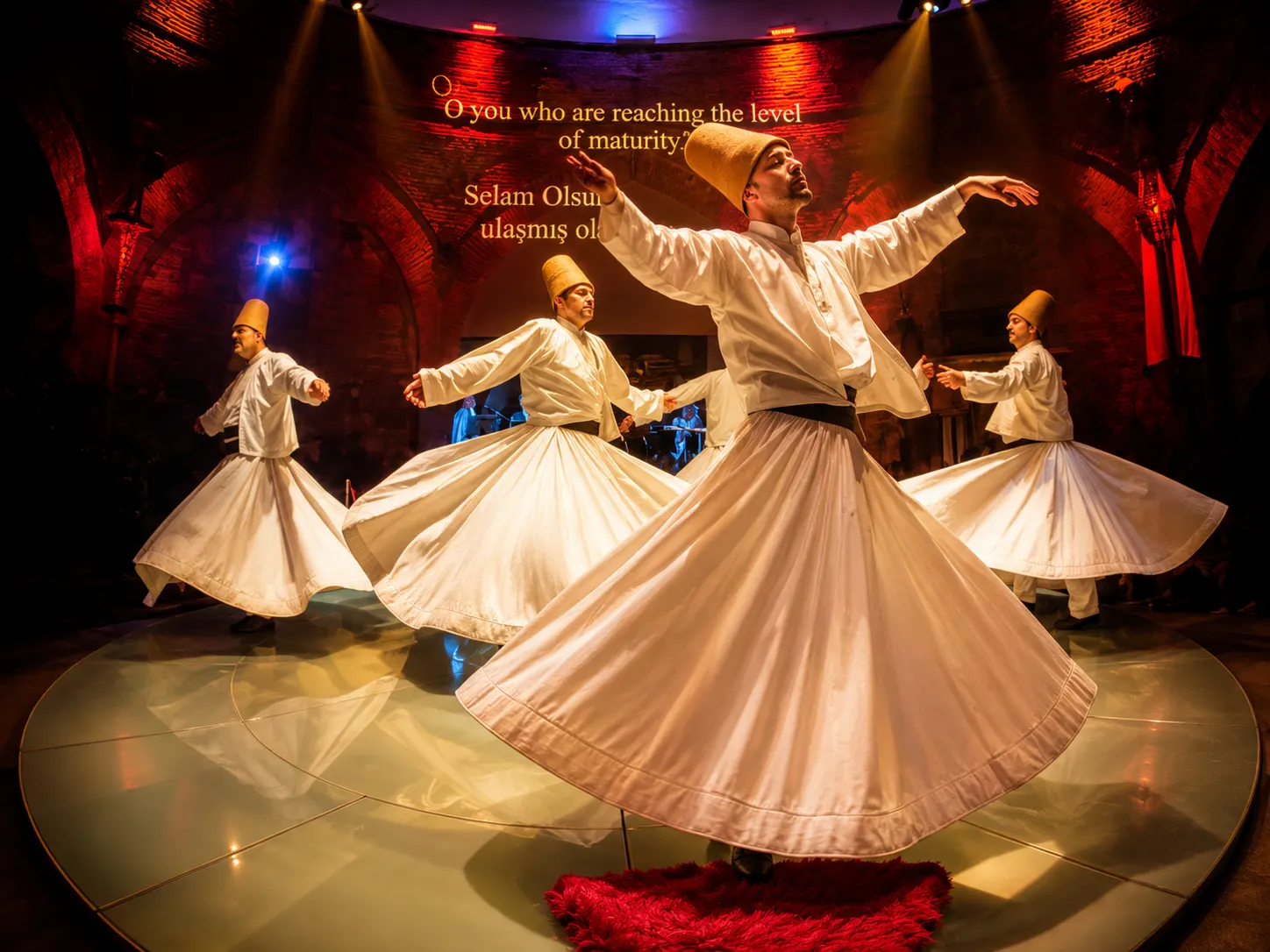
The 800-Year-Old Dance of the Dervishes
Some experiences you watch — this one you feel. The Mevlevi Sema is a whirling meditation, a spinning prayer that dates back some 800 years to the poet and mystic Rumi. At the HodjaPasha Culture Center, you witness it inside something remarkable: a 550-year-old Ottoman Turkish bath, right in the heart of the Old City between Sultanahmet and Sirkeci.
The evening opens with a classical Turkish music concert. Then the sheikh and dervishes take their places, honoring the Prophet, before the drum sounds and the Sema begins. In seven parts, the dervishes spin in their long white gowns — arms unfolding, one hand to the sky, one to the earth — a movement said to represent the birth and spiritual journey of humanity. The ceremony closes with a prayer for all souls.
- Hours: 17:00–19:00 (open daily)
- Address: Hoca Paşa Mah. Ankara Cad., Hocapaşa Hamamı Sk. No:3 D:B, 34110 Fatih/İstanbul
- Localada perk: 5% OFF – 🎟 Reserve your Sema ceremony seat below and secure your spot.
- 🕔 Two show times only: 17:00 and 19:00 — plan your evening around them
Local tips
- 🌀 The Mevlevi Sema — an 800-year-old whirling meditation rooted in the tradition of Rumi
- 🏛 Held inside a 550-year-old Ottoman Turkish bath, between Sultanahmet and Sirkeci
- 📖 An explanatory booklet is provided so you can follow each part of the ceremony
- 🤫 This is a solemn religious ceremony, not a stage show — quiet and respectful attention is expected
- 📅 Seats are limited and fill up — booking ahead is recommended
Turkish Mosaic Lamp Workshop
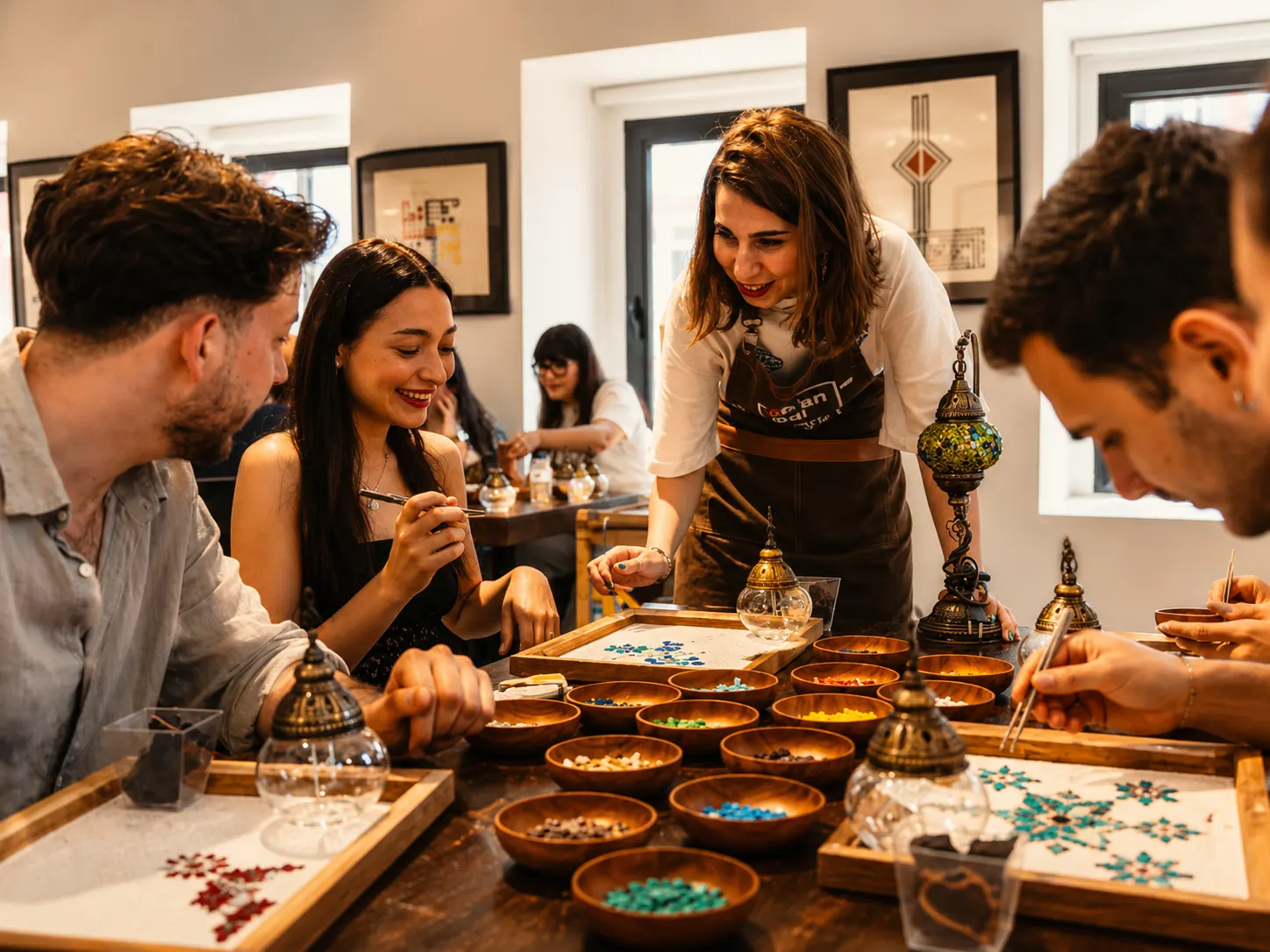
Make Your Own Piece of Istanbul
You've seen them glowing in every bazaar and café — those jewel-colored mosaic lamps in cobalt, turquoise, ruby, and saffron. At this hands-on workshop near the Blue Mosque, you don't just buy one. You make it yourself.
It starts with a short presentation on the history of the craft and its place in Turkish culture — a tradition drawing on centuries of Ottoman glasswork. Then you get to work: place a geometric template on a glass sphere, and build your own design from over 45 colored mosaic stones and glass beads. Every piece is your choice, so no two lamps ever come out the same.
While your creation dries, you settle in with Turkish tea or coffee and freshly baked cookies, hearing about Istanbul's landmarks and hidden gems. Then you assemble the final pieces and your lamp is yours to take home — packed in a protective bag, complete with a US adapter so it's ready to glow the moment you're back.
- Hours: 09:00–18:00 (open daily)
- Address: Sultanahmet / Old City — a 5–6 minute walk from Hagia Sophia and the Blue Mosque (exact meeting point sent on booking)
- Localada perk: 5% OFF – 🎟 Reserve your workshop spot below and make your own lamp to take home.
- 🕐 Four daily start times: 09:00, 12:00, 15:00, and 18:00 — pick the slot that fits your day
Local tips
- ⏱ About 2.5 hours, including the history presentation, crafting, and a tea break while it dries
- 👨👩👧 Beginner-friendly and family-friendly — no experience needed, templates and guidance provided
- 🎨 Pick one dominant color with a couple of contrasting accents — it's the easiest way to a striking lamp.
Istanbul travel guides on the Localada blog
- How to Identify Official Istanbul Ticket Channels
- Turkish Hammam Etiquette Guide for First Visits
- Sultanahmet Family Itinerary for One Full Day
- Hagia Sophia Versus Topkapi Palace for One Day
- How to Check Istanbul Attraction Closures
- Istanbul Museum Highlights Worth Your Time
- Istanbul Museum Closures and Opening Days 2026
- Istanbul Hammam Experience Review: What to Expect
More Istanbul experiences
- Bosphorus cruises: sightseeing, sunset and dinner cruises between the European and Asian shores.
- Istanbul Hamam: book a traditional Turkish bath at historic hamams across the Old City.
- Çamlıca Tower: tickets for the observation decks of Istanbul’s tallest structure, on the Asian side.
- Cistern of Theodosius: a quieter Byzantine cistern a short walk from Sultanahmet.
Istanbul audio guide: frequently asked questions
Is the Istanbul audio guide free?
Yes. Localada’s Istanbul guide is free: create a free account and open it in your browser, no app download needed. It includes 14 stops, audio and written stories, a route map and scam-awareness tips. Tickets for paid sights are bought separately; booking through Localada’s GetYourGuide links gives 5% off.
How many stops are in the Istanbul audio guide?
There are 14 stops: 6 sights, 2 places to eat, 2 shops and 4 experiences.
How long does it take to see the main sights in Istanbul?
Visiting all 6 sights in the guide takes about 7–10.5 hours, not counting travel between them. Topkapi Palace needs the most time (allow 3–4 hours).
Are Istanbul sights open every day?
All 6 sights in the guide are listed as open seven days a week, though hours can change on public and religious holidays.
What time do Istanbul sights open and close?
The earliest opening in the guide is 08:30 (Blue Mosque) and the latest closing is 18:30 (Blue Mosque). Each stop’s hours are in the table above.
Are there discounts with the Istanbul guide?
14 stops include a Localada perk, for example Hagia Sophia (5% OFF), Blue Mosque (5% OFF), Basilica Cistern (5% OFF), Hippodrome (5% OFF), Topkapi Palace (5% OFF) and Archaeological Museum (5% OFF). Show the code in the guide at verified restaurants and shops; ticket discounts are applied at GetYourGuide checkout.
What can I do in Istanbul on a rainy day?
8 stops in the guide are indoors, including Hagia Sophia, Blue Mosque, Basilica Cistern, Topkapi Palace, Archaeological Museum and Cagaloglu Hammam.
What is open in the evening in Istanbul?
These stops in the guide stay open late: Rumeli Grill Kebab House (until 02:00), Serbethane Cafe & Restaurant (until 01:00), Cagaloglu Hammam (until 22:00) and Sifa Hammam (until 22:00).
Which Istanbul sights can I see if I am short on time?
These sights need under an hour: Blue Mosque (30–45 min), Basilica Cistern (30–45 min) and Hippodrome (30–45 min).
How do I get between the stops in Istanbul?
The Istanbul route is designed to be walked: the stops sit close together and the map shows the walking order.
Which languages is the Istanbul audio guide available in?
Narration and text are available in 15 languages: English, Turkish, German, French, Spanish, Italian, Portuguese, Dutch, Polish, Russian, Arabic, Persian, Chinese, Japanese and Korean.