















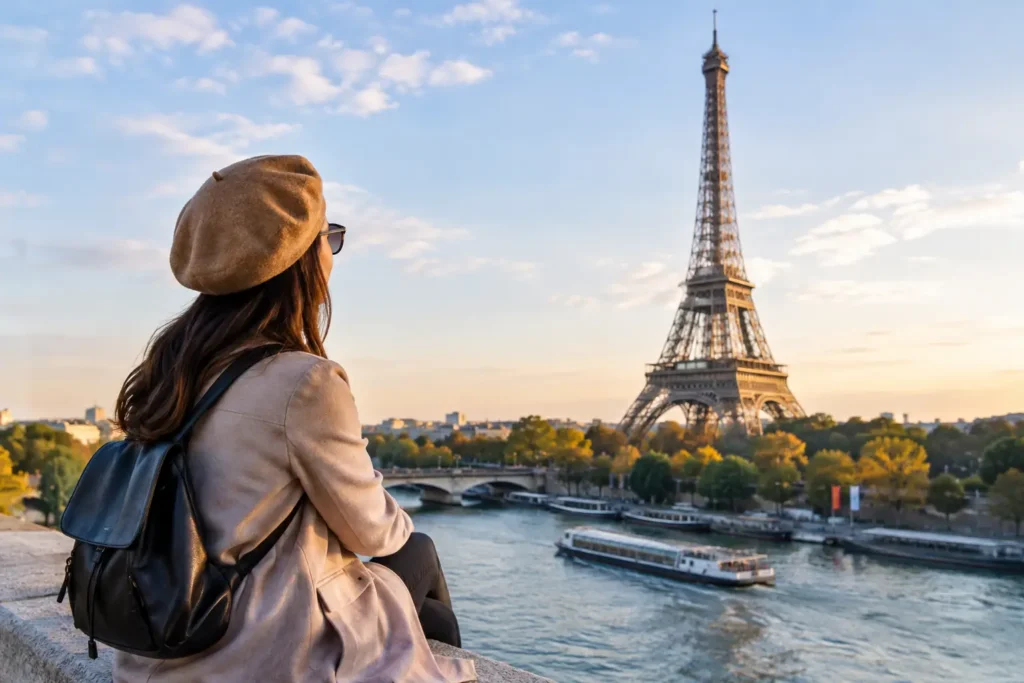
Paris is safe for independent travelers who use the same awareness they would in any major city. Paris safety is mostly about preventing pickpocketing and avoiding small tourist scams, not avoiding neighborhoods or changing your plans.
Paris trip essentials
- Time to allow: Three full days covers the major central sights at a comfortable pace. Add a fourth day for Versailles, Montmartre, or a slower museum day.
- Museum closing days: The Louvre is closed Tuesday. Musée d’Orsay is closed Monday. Château de Versailles is closed Monday. The Louvre is generally open 9:00 AM to 6:00 PM, with later opening on Wednesday and Friday; Musée d’Orsay generally opens 9:30 AM to 6:00 PM, with later Thursday hours.
- Dress code: There is no general dress code in Paris. For churches such as Notre-Dame, Sainte-Chapelle, and Sacré-Cœur, wear clothing that covers shoulders and knees and remove hats inside.
- Central transit: Palais Royal-Musée du Louvre on Metro lines 1 and 7 is about a two-minute walk from the Louvre entrance. Châtelet-Les Halles is a major Metro and RER interchange, around a 10-minute walk from the Louvre.
- Book ahead: Reserve timed entry for the Louvre, Eiffel Tower, Sainte-Chapelle, and Versailles before the day you want to go. Use official attraction channels or a trusted booking partner, not sellers approaching you outside.
Paris Safety Basics for 2026
Is Paris safe for first-time visitors?
Yes. Central Paris is busy, well connected, and used to international visitors. Most trips pass without a serious problem, especially when travelers keep phones and wallets secure in crowded places and use licensed transport. The situations that cause stress are predictable: a distraction near a landmark, an unattended bag, a too-helpful stranger at a ticket machine, or a late-night walk through an unfamiliar quiet street.
Use normal city habits. Keep your bag closed and worn in front of you in crowds. Put your phone away before a train arrives rather than holding it loosely near the doors. Carry only what you need for the day, and keep a backup bank card and passport separate from your daily wallet. A crossbody bag with a zipper is practical, but awareness matters more than any one bag style.
Paris is enjoyable after dark in popular areas with restaurants, theaters, and active transit. If a street feels empty late at night, choose the next busier street, take the Metro only while it is still operating, or use a licensed taxi or reputable ride-hailing service. Do not accept rides from people soliciting passengers outside airports, stations, or tourist sites.
Which areas need extra attention?
The places to be most alert are crowded rather than inherently unsafe. Pickpockets look for distracted visitors at the Eiffel Tower, around the Louvre and Sacré-Cœur, on Metro platforms, inside packed train cars, and at major stations such as Gare du Nord and Châtelet-Les Halles. Keep your attention up when boarding and exiting, when everyone compresses around a door, and when someone starts an unexpected conversation close to you.
Montmartre deserves a balanced approach. It is a worthwhile neighborhood to visit, including in the evening when the main streets are lively. Around the Sacré-Cœur steps and Place du Tertre, simply decline unsolicited bracelets, petitions, games, or requests to sign something. A firm no and continuing to walk is enough. Do not argue, explain, or stop to inspect what is being offered.
Metro and Street Awareness
Is the Paris Metro safe at night?
Yes, but it is smarter to travel before the final trains if you are unfamiliar with the system. Metro service usually runs until around 1:15 AM Sunday through Thursday and later on Friday, Saturday, and nights before public holidays. Exact last-train times depend on the line and direction, so confirm your route in the official RATP journey planner before leaving dinner or a show.
Stand away from the platform edge, especially when the train is arriving. On escalators, keep bags in front of you and avoid leaving a suitcase or backpack behind your legs. Once aboard, move away from the doors if the car is crowded. Thieves can grab an exposed phone or bag as doors close, so do not stand at the doorway scrolling.
If you feel uncomfortable in a nearly empty car, get off at the next active station and move to a busier car or platform area. There is no prize for staying put. Families and solo travelers may find buses easier after dark because routes are above ground and stops are visible, though they are slower than the Metro.
How do you avoid ticket-machine scams?
Buy or reload transit tickets yourself at station machines, official counters, or through authorized transport tools. Someone offering help may be genuinely trying to assist, but do not hand over your payment card, reveal your PIN, or let a stranger take control of the screen.
Staff can identify themselves and work from official booths or stations, not by stopping visitors on the sidewalk. If a machine is confusing, step aside, look for marked staff, or use another machine. Avoid anyone who claims a ticket machine is broken and offers a private alternative. Keep your ticket or travel pass accessible until you are fully outside the paid area, as inspections do occur.
Common Paris Scams
What scams should visitors recognize quickly?
The most useful rule is simple: no legitimate attraction, transit employee, or charity needs to pressure you on a sidewalk. The following situations are easy to leave when you recognize them early:
- A person asks you to sign a petition, often claiming to support a cause. Decline and keep walking.
- Someone offers a friendship bracelet, braided string, flower, or small souvenir, then demands payment after placing it in your hand or on your wrist. Do not accept it.
- A stranger points to a ring or wallet they say they found and tries to start a conversation. Do not engage.
- Someone offers discounted entry, a faster line, or a special ticket outside an attraction. Use the official entrance and your existing reservation instead.
- A person creates a distraction by bumping into you, dropping something, or asking for help while an accomplice reaches for a bag or pocket.
These encounters are unpleasant, but they are usually brief. Keep moving, say no clearly, and do not worry about seeming impolite. Your time and attention are valuable when you are navigating an unfamiliar city.
Are restaurants and taxis safe to use?
Yes, with ordinary checks. Choose restaurants with a posted menu and prices, then confirm what you are ordering if a server recommends an item not listed. Ask for the bill before paying and review it while you are still at the table. This is not distrustful behavior. It is a sensible habit anywhere visitors may be rushed.
For taxis, use an official taxi rank, ask your hotel or restaurant to call one, or book through a reputable app. At airports and major rail stations, follow official taxi signs rather than people offering rides inside the terminal or concourse. Never get into an unmarked car because someone says the taxi line is long.
Documents, Money, and Emergency Help
What should you carry around Paris each day?
Carry one payment card, a limited amount of cash, your phone, and a photo or secure copy of your passport. Leave your original passport in a locked hotel safe when you do not need it, unless your accommodation specifically requires you to carry it or you are traveling onward. Keep a second card separately so a lost wallet does not stop the trip.
Set a screen lock on your phone and save essential details offline: accommodation address, travel insurance contact, card issuer number, and the phone number of a traveling companion. If your phone is stolen, contact your bank promptly, use its location and remote-lock tools if available, and file a report with police when needed for insurance or document replacement.
Which emergency numbers work in Paris?
Call 112 for the Europe-wide emergency number. For police, call 17. For fire and rescue, call 18. For medical emergencies, call 15. These numbers are for genuine urgent situations, not lost-property reports or routine travel questions.
If you lose a passport, contact your embassy or consulate during its published emergency process. If a theft has just happened, move to a safe, public place first. Cancel payment cards before spending time reconstructing exactly what happened.
Frequently asked questions
Is Paris safe for solo female travelers?
Yes, but the same practical rules apply: stay aware in crowds, avoid isolated streets late at night, and use licensed transport. Central areas are well used by travelers, residents, and workers throughout the day and evening.
Should I carry my passport while sightseeing?
No. Carry a secure copy unless you need the original for a specific purpose. Keep the original locked at your accommodation and store a second digital copy separately.
Is tap water safe to drink in Paris?
Yes. Paris tap water is safe to drink. Refill a reusable bottle where available and keep it secured inside your bag rather than in an open outer pocket.
Can I use the Metro with luggage?
Yes, but many stations have stairs, narrow gates, and busy platforms. For a large suitcase, allow extra time and avoid the peak commuter periods when possible.
What should I do if my phone is stolen on the Metro?
First, move somewhere safe, lock the device remotely if you can, contact your bank if payment apps are active, and report the theft to police if required for insurance.
Are the areas around Gare du Nord safe?
Yes, but keep your belongings close and stay purposeful, especially when arriving or departing with luggage. Use the station’s marked exits and official taxi area rather than following unsolicited offers.
If you want this guidance in one place while you walk, Localada’s free Paris audio guide combines landmark context, Metro basics, scam-awareness tips, and verified local picks for independent travelers.
Sources and official information
Opening hours, prices and rules change. These are the primary sources behind this guide; check them before you go.
- Paris Police Prefecture: Staying safe in Paris (PDF): Police guidance for visitors on theft, scams and how to report them.
- Musée du Louvre: hours and admission: Official opening hours, closing day and ticket rules.
- UK Foreign Office travel advice: France safety and security: Government guidance on theft on the Paris Metro, RER and at major stations.
- UNESCO World Heritage Centre: Paris, Banks of the Seine: World Heritage listing for central Paris along the Seine.
- RATP: tickets and fares: The Paris transport operator’s official ticket and fare information.
Questions answered in this article
- Is Paris safe for first-time visitors?
- Which areas need extra attention?
- Is the Paris Metro safe at night?
- How do you avoid ticket-machine scams?
- What scams should visitors recognize quickly?
- Are restaurants and taxis safe to use?
- What should you carry around Paris each day?
- Which emergency numbers work in Paris?
- Is Paris safe for solo female travelers?
- Should I carry my passport while sightseeing?
- Is tap water safe to drink in Paris?
- Can I use the Metro with luggage?
- What should I do if my phone is stolen on the Metro?
- Are the areas around Gare du Nord safe?
Summarise this guide with AI: ChatGPT · Claude · Perplexity