
The Göreme Open Air Museum is not a single building you rush through between breakfast and a balloon flight. It is a hillside monastic complex of rock-cut churches, chapels, kitchens, and living spaces, where faded frescoes still hold their color in the dimness. This Goreme Open Air Museum guide helps you plan the visit properly, understand what you are seeing, and avoid paying for confusion rather than culture.
Set aside enough time. The site rewards slow looking, especially if this is your first encounter with Cappadocia’s carved landscape.
What the Göreme Open Air Museum actually is
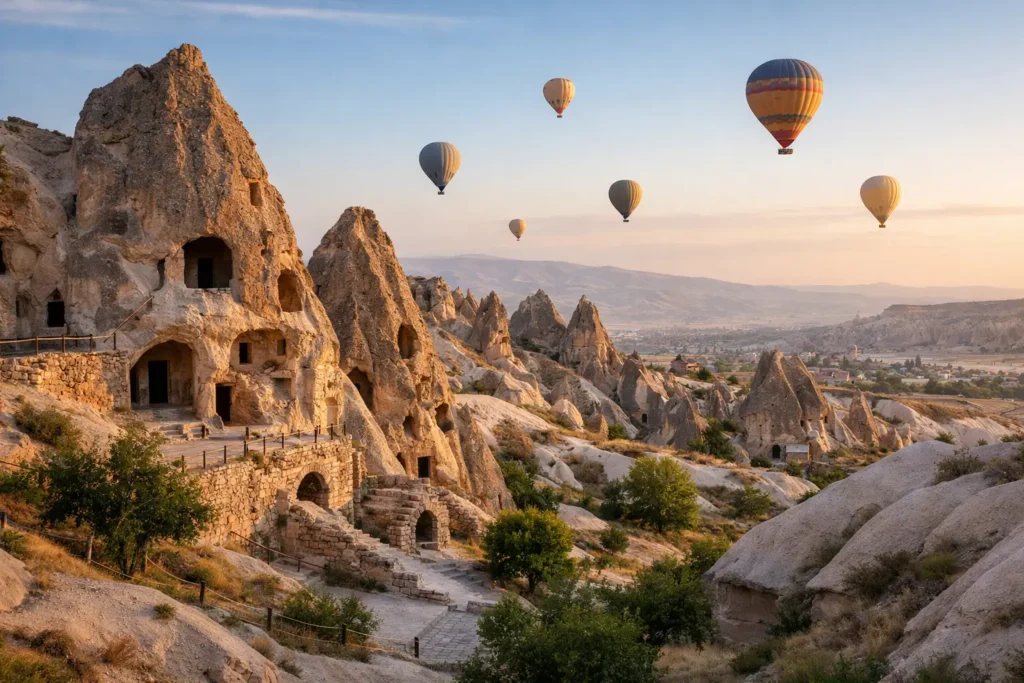
The museum preserves a cluster of medieval monastic spaces carved into Cappadocia’s soft volcanic rock. Between roughly the 10th and 12th centuries, Christian communities created churches and communal rooms here, then decorated many interiors with painted biblical scenes.
The setting matters as much as the individual churches. Outside, the rock looks weathered and almost sculptural. Inside, a small doorway can lead to a surprisingly intimate room with a domed ceiling, carved columns, or vivid fresco fragments. The contrast is why this is one of Cappadocia’s essential historic stops.
Do not expect a conventional museum with display cases and long wall labels. You will be walking outdoors along marked paths, entering compact spaces one by one. Some interiors are dark, narrow, or temporarily closed for conservation. That is normal, not evidence that the site is “closed” or that you need to buy a different ticket from someone outside.
Plan the timing before you arrive
For most independent travelers, allow around two hours. Give yourself closer to two and a half hours if you enjoy history, photography, or want time to sit with the frescoes rather than moving with the crowd. Families with young children may move faster through the churches but need more time on the uneven paths.
Morning is usually the calmer choice, particularly in the warmer months. You will also have more energy for the steps and sun exposure. Late afternoon can be pleasant, but do not arrive close to the final entry time and assume you can see everything without rushing.
Opening times, closure days, access rules, and ticket prices can change by season and by conservation needs. Check the museum’s official channels shortly before your visit. That is more reliable than a years-old blog post, a taxi driver’s estimate, or a reseller’s printed sign.
Getting there from Göreme
The museum sits just outside central Göreme, roughly a short drive or a longer walk from town. Walking is possible for travelers comfortable with roadside stretches and changing terrain, but it can feel hot after sunrise in summer and less appealing after rain or snow.
A local taxi is the simplest option if you want to save your legs for the site itself. Before getting in, confirm that the meter will be used or agree on the fare clearly in advance. If you are driving, use the designated parking area and keep valuables out of sight. For an organized tour, confirm whether the museum entrance is included in the tour price or must be paid separately. Never assume.
The churches worth slowing down for
You do not need an art-history degree to appreciate the museum, but a little context changes the experience. Look for the difference between simpler painted decoration and more detailed narrative frescoes. Notice how artists worked with the shape of the rock rather than against it.
The Dark Church is often the highlight for visitors because its limited natural light helped preserve the paintings. It may require a separate admission charge from the main museum entry, so decide based on your interest and time. If you care about frescoes, it is generally worth considering. If you are on a tight schedule, the main complex still gives you a meaningful visit.
The Apple Church, Buckle Church, and other named spaces each have their own character, but do not turn the visit into a checklist. The names are helpful navigation points, not a ranking system. A smaller, quieter chapel may be the room you remember most.
In each church, give your eyes a moment to adjust. Then look upward. Scenes often continue across ceilings and curved walls, and details become clearer after the first glance. Keep voices low, both out of respect for other visitors and because these were places of worship and communal life, not decorative backdrops.
Tickets, guides, and the traps to skip
Buy entry through official museum channels or a trusted, clearly identified seller. Do not hand cash to someone outside who says the ticket office is shut, the line is impossible, or a special ticket is required to enter. These claims are common tourist-pressure tactics in busy places. The museum is straightforward once you reach the official entrance.
A licensed guide can add real value if you want detailed context, but a guide is not mandatory. Be wary of anyone who approaches aggressively, creates urgency, or refuses to state the total price before starting. Ask these questions first: Are you licensed? How long is the tour? Is the museum ticket separate? What is the full price for our group?
Audio guidance is a good middle ground for independent travelers. It lets you move at your own pace without losing the story behind the rooms. The best option depends on whether you prefer detailed interpretation, have limited time, or are traveling with children who may not want a long explanation at every stop.
Respect the frescoes and protect your visit
Many of the painted interiors are fragile. Follow photography signs closely, especially where flash photography or photography of any kind is restricted. Do not touch walls, lean on carved surfaces, or step beyond barriers for a better photo. A small amount of contact from thousands of visitors causes real damage over time.
Wear shoes with grip rather than sandals with smooth soles. Paths can be dusty, worn, or slick after wet weather, and some entrances involve low ceilings or steps. Bring water, sunscreen, and a light layer in spring or fall. The sun can feel strong outside while the church interiors are cool.
Accessibility varies throughout the complex. Some areas involve stairs, uneven ground, and narrow entryways, so travelers with limited mobility should plan for a partial visit rather than expecting every church to be accessible. That is not a reason to skip the museum, but it is worth knowing before you commit to a rushed schedule.
Build a sensible Cappadocia day around the museum
The museum works best as one major stop, not the entire day. Pair it with a relaxed walk through a nearby valley, a viewpoint, or time back in Göreme for lunch. Trying to combine it with an underground city, a long-distance valley hike, Uçhisar Castle, and a sunset tour can leave you seeing a lot but absorbing very little.
If you have a balloon flight booked for the morning, keep the rest of that day flexible. Early starts, weather-related schedule changes, and post-flight fatigue are all real factors. Visit the museum after breakfast if you still feel energized, or schedule it for another morning when you can give it proper attention.
Also resist the idea that every Cappadocia experience must be arranged through the first person who offers. Compare what is included, ask for the total cost in writing, and keep payment records. Most local businesses are welcoming and professional. A little clarity simply prevents avoidable misunderstandings.
The Göreme Open Air Museum makes more sense when its stories, routes, practical advice, and local recommendations are in one place. If you want that guidance during your trip, the Localada Cappadocia Pack is designed for independent travelers who want to explore with more context and fewer surprise conditions.