
The Basilica Cistern best time to visit is usually at opening, before the first large tour groups reach Sultanahmet. This is one of Istanbul’s most atmospheric landmarks, but its narrow walkways, low lighting, and limited space mean a crowded visit feels very different from a calm one. Plan your timing well and you will have room to absorb the columns, water reflections, and Medusa heads without spending your morning in a ticket line.
For most independent travelers, aim for the first entry of the day. If an early start does not fit your plans, late afternoon is the next-best option. The exact opening hours and ticket rules can change by season or special operations, so check current details before you leave your hotel rather than relying on an old screenshot or a taxi driver’s suggestion.
Basilica Cistern Best Time to Visit by Hour
Arrive at opening for the quietest experience
Be at the entrance 15 to 25 minutes before the site opens. You may still find a short line, particularly in spring and fall, but this is normally the least congested period inside. Early entry is especially worthwhile for photographers, families with young children, and travelers who prefer to move at their own pace.
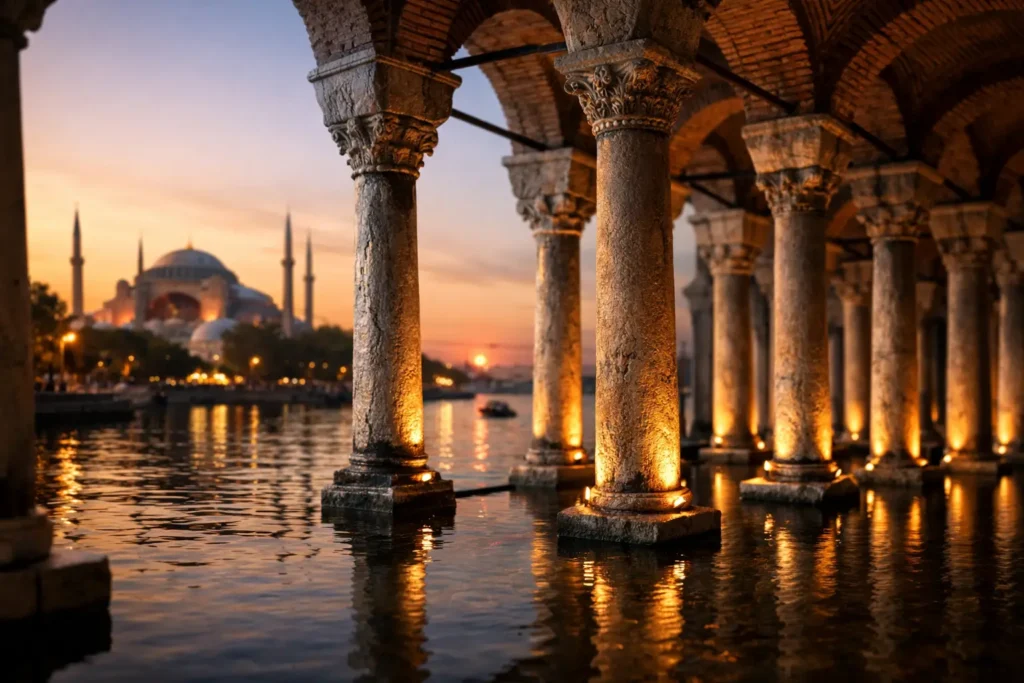
The cistern is dim by design. Arriving before the crowds gives you more time to adjust to the low light, read the displays, and stop at the Medusa column bases without feeling pressured by people behind you. It also makes the experience more comfortable if you are sensitive to enclosed, busy spaces.
There is a trade-off: an early visit means a faster start to your Sultanahmet day. That is usually a good exchange. Visit the cistern first, then walk to Hagia Sophia, the Blue Mosque, or the Istanbul Archaeological Museums while the district is still relatively calm.
Late afternoon is your practical backup
If you are not an early riser, try the last two hours before closing rather than the peak lunchtime window. Many organized groups visit between late morning and mid-afternoon, often after Hagia Sophia or Topkapi Palace. By late afternoon, some of that pressure eases.
Do not wait until the final minutes. Ticket sales or entry access may stop before the published closing time, and you do not want to rush through a place built for slow looking. Give yourself at least 45 minutes inside, plus time for security and ticketing.
Evening visits can be appealing because the lighting feels more dramatic, but they are not automatically quiet. In high season, evening can be busy with travelers fitting the cistern in after a Bosphorus cruise, dinner, or a full day of sightseeing. Choose evening for mood, not as a guaranteed crowd-avoidance strategy.
When Crowds Are Highest
The busiest period is generally from about 10:30 a.m. to 3:30 p.m., when Sultanahmet is full of day tours, cruise passengers, and visitors moving between the area’s major landmarks. In summer, the heat pushes people underground too, making the cistern an even more popular midday stop.
Rainy days bring another predictable surge. The Basilica Cistern is an obvious indoor alternative when outdoor plans change, so a wet forecast does not necessarily mean a peaceful visit. If rain is expected, prioritize the cistern at opening and save another indoor attraction for later.
Weekends are often busier than weekdays, but do not assume Tuesday or Wednesday will be empty. Istanbul is a year-round global destination, and group itineraries run every day. Your arrival hour matters more than the day of the week.
The surrounding streets can also become crowded around Friday prayers at nearby mosques. The cistern itself is not a mosque and follows its own visitor operations, but allow extra walking time around Sultanahmet and use a calm, respectful route through the district.
Best Season for a Basilica Cistern Visit
March through May and September through November offer the most comfortable balance of weather and visitor volume. Istanbul is pleasant for walking, and the city is generally less intense than peak summer. October and November can be particularly good for travelers who want fewer family vacation crowds without winter temperatures.
June through August is the busiest period. The cistern’s cool, subterranean setting is a genuine relief from the sun, but that appeal is exactly why it fills up. During these months, opening time is not just a preference – it is the smart move.
Winter can be a strong choice if you do not mind shorter days and occasional rain. You may encounter smaller crowds, except during holiday periods and weekends. Build flexibility into your plan: if the weather turns wet, many visitors will have the same indoor idea.
How Much Time Should You Allow?
Most visitors need 35 to 60 minutes inside the Basilica Cistern. A quick visit is possible, but it misses the point. The scale is striking because the space reveals itself gradually: rows of columns disappear into shadow, water catches the lights, and the architectural details reward a second look.
Allow extra time if you are visiting with children, use a stroller, take photos, or want to listen to an audio guide. The walking route can slow down when busy, and it is better to have a relaxed buffer than to run late for a timed palace entry or restaurant reservation.
For a simple Sultanahmet morning, schedule the cistern first, followed by a nearby landmark with a later entry window. Avoid stacking several fixed-time tickets too tightly. Security lines, crowd flow, and a necessary coffee break can all take longer than expected in this neighborhood.
Tickets, Lines, and What They Really Mean
Buying a ticket in advance can reduce uncertainty, particularly in high season, but it does not always mean walking straight inside. You may still need to pass security or join an entry flow at the door. Treat any claim of “no line” carefully and check what it actually covers before paying more.
Use official or verified booking channels and confirm the ticket type, date, cancellation terms, and any required meeting point. Be cautious if someone approaches you outside the attraction saying the cistern is closed, sold out, or available only through their special ticket office. These claims can be designed to steer visitors toward overpriced tours or unrelated shops.
A good rule in Istanbul’s Old City: make ticket decisions before you reach the entrance. Last-minute pressure is where confusing offers and inflated prices thrive. Localada can help travelers keep attraction details, walking routes, and verified booking options in one place, so you are not making rushed choices on the sidewalk.
A Better Visit for Families, Couples, and Solo Travelers
Families should choose the first entry of the day whenever possible. The low light and dramatic setting fascinate many children, but narrow areas can feel tiring once the crowds build. Keep younger children close, explain that the floor may be damp, and do not count on the cistern as an easy stroller stop without checking current access arrangements.
Couples may prefer late afternoon or evening for the moodier atmosphere, especially if the visit is part of a slower Sultanahmet date night. Just accept that atmospheric lighting does not equal empty walkways. Opening time remains the better choice if you want unobstructed photos.
Solo travelers can visit at any time with normal city awareness. The attraction is centrally located and heavily visited, but keep your wallet and phone secure in dense entrance lines, where distraction is easier. Wear shoes with a decent grip. The interior can be humid, and the route may feel slippery in spots.
Small Details That Make a Big Difference
Wear comfortable shoes, bring a light layer if you get cold easily, and keep your camera settings ready for low light. Flash can spoil the atmosphere for others and may be restricted, while tripods or larger equipment may not be practical in a crowded space. A phone with night-mode capability is often enough for personal photos.
Use the restroom before you enter, keep large bags to a minimum, and do not plan on a long break once inside. Most importantly, resist the urge to race through it because another attraction is waiting. Stand still for a minute near the water and look down the forest of columns. The Basilica Cistern is one of those places that becomes more memorable the moment you stop treating it like a box to check.