
A friendly stranger offers to show you a “better” entrance to Hagia Sophia. A taxi driver says the meter is broken. A restaurant host promises a bargain meal, then the bill arrives with items you never ordered. Knowing how to avoid tourist scams Istanbul visitors commonly encounter is not about being suspicious of everyone. It is about making a few calm, informed choices before money changes hands.
Istanbul is warm, busy, and deeply welcoming, especially around Sultanahmet, the Grand Bazaar, and the waterfront. Most people you meet are simply getting on with their day. The small number who target visitors tend to rely on confusion, pressure, and the assumption that you will feel too rushed or embarrassed to say no.
How to Avoid Tourist Scams in Istanbul: Use the Pause Rule
The simplest protection is to pause when an offer appears unexpectedly. You do not need to explain, argue, or be rude. A clear “No, thank you” and continuing to walk is enough.
Scams often begin with a conversation that feels harmless: “Where are you from?”, “My cousin has a shop,” or “The museum is closed today.” Someone may be genuinely helpful, but do not make a purchase, accept a ride, or change your plans based only on a stranger’s claim.
Before agreeing to anything, ask yourself three questions: Did I seek this out? Can I verify it independently? Do I know the full price? If the answer is no, keep walking and check official information yourself.
Avoid Fake Guides and Attraction Misinformation
Around major landmarks, unofficial guides may approach you with stories about long lines, special entrances, closures, or tickets that are “only available right now.” This is especially common near Hagia Sophia, Topkapi Palace, the Basilica Cistern, and the Blue Mosque.
Some people offering tours are licensed professionals. The problem is not that every guide who approaches you is dishonest. The problem is that a visitor cannot reliably verify credentials in a rushed sidewalk conversation.
Use official ticket desks, clearly identified attraction entrances, or a trusted booking provider. If you want a guide, arrange one before arriving or confirm their credentials and the total tour cost first. Do not hand over cash because someone says the official line will take hours. Lines vary by day, season, security procedures, and prayer times.
Be especially careful with “closed today” claims. A site may have adjusted hours, a temporary restricted area, or a real religious-service schedule. That does not mean a stranger’s alternative tour is your only option. Check the attraction’s posted information at the entrance before changing plans.
Take Taxis Only With a Clear Price or Meter
Taxi problems are among the most frustrating visitor experiences because they often happen when you are tired, carrying luggage, or arriving late. Common issues include drivers refusing to use the meter, taking an unnecessarily long route, claiming a large banknote was a smaller one, or naming a flat fare far above the normal rate.
Before you get in, confirm that the meter will be used. If the driver refuses, choose another taxi. This can feel inconvenient, but it is easier than negotiating after the ride. For airport transfers, late-night arrivals, and trips with children or heavy bags, a prebooked transfer with a confirmed total price can be worth the extra cost for clarity.
When paying cash, say the denomination aloud as you hand it over. Keep smaller notes available and wait for your change before stepping out. If a driver becomes aggressive or insists you gave a different amount, do not escalate inside the car. Take a photo of the license plate if safe, leave in a public place, and use a reputable ride option for your next journey.
Check Menus Before You Sit Down
Istanbul has excellent food at every price point, from neighborhood soup kitchens to polished rooftop restaurants. The warning sign is not a restaurant in a tourist area. It is a restaurant that avoids showing prices, pulls you in with a vague promise, or adds unclear extras later.
Ask to see a menu with prices before ordering, particularly around Sultanahmet, Istiklal Street, and busy waterfront areas. Confirm the price of fish, meze platters, drinks, and any item sold by weight. If someone brings appetizers, bread, water, or a “complimentary” starter, ask whether it is included before eating it.
At the end of the meal, request an itemized bill. Check it while you are still seated, not after you have paid. A service charge may be legitimate if clearly disclosed, but surprise charges deserve a calm question. You are entitled to understand what you are paying for.
The same rule applies to bars and nightlife venues. Avoid following promoters to an unfamiliar bar, particularly if they promise free drinks or introduce themselves as your new best friend. Choose places you have researched, know the drink prices before ordering, and keep your card in sight when paying.
Shop Without the Pressure at the Grand Bazaar
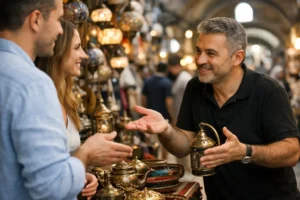
Bargaining is part of the shopping culture in many Istanbul markets, but it should still feel good-natured. You can browse, ask questions, and leave without buying. If a seller becomes insulting, blocks your path, or insists that you have wasted their time, walk away.
Be wary of claims such as “handmade” or “antique” when there is no clear provenance. A beautiful souvenir can still be worth buying if you like it and the price feels fair to you. Just do not pay an antique-level price because a story sounds convincing.
For rugs, jewelry, leather, ceramics, and branded goods, comparison shop before committing. Ask what materials are used, whether shipping is included, and what happens if an item arrives damaged. Keep the receipt and any written details of the sale. If a deal requires a decision immediately, it is usually not a deal you need.
Keep Your Card, Phone, and Personal Space Secure
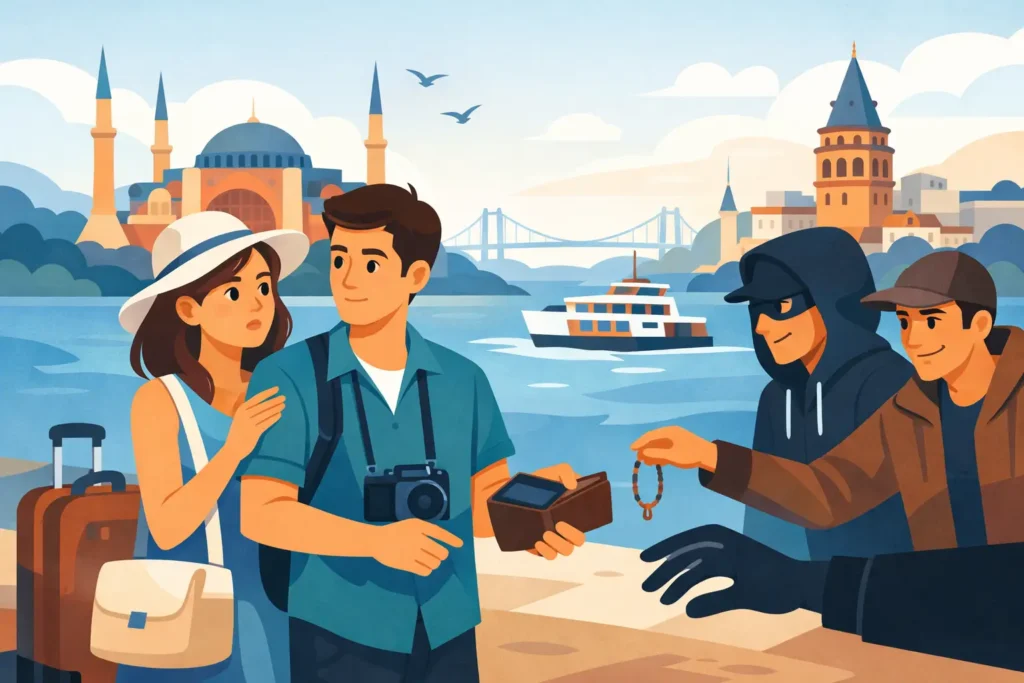
Crowded trams, ferry terminals, markets, and attraction queues are ideal places for opportunistic theft. This is less dramatic than a scripted scam, but it can ruin a day quickly.
Carry only what you need. Keep your passport secured at your accommodation unless you need it for a specific purpose, and use a crossbody bag with zippers closed in crowded areas. Do not place your phone loosely on a café table near a busy sidewalk. When using an ATM, choose one attached to a bank, cover the keypad, and decline help from anyone hovering nearby.
If someone spills something on you, bumps into you repeatedly, or creates a distraction, check your belongings first. The right response is not panic. Move to a more open area, secure your bag, and continue on your way.
Know the Classic Shoe-Shine Approach
One well-known Istanbul setup involves a shoe shiner “accidentally” dropping a brush near you. When you return it, they may offer to clean your shoes as thanks, then demand payment afterward. Sometimes the interaction is harmless, but the safest choice is to keep walking rather than begin a transaction you did not request.
This is a useful reminder for every unexpected favor. A gift, drink, photo, or service can become expensive when the terms are not stated upfront. Friendly does not always mean free.
What to Do If Something Feels Wrong
You do not need perfect local knowledge to protect yourself. You need an exit plan. Step into a hotel lobby, museum entrance, pharmacy, or busy café if someone is pressuring you. Ask staff to help you call a taxi or point you toward the nearest police presence if necessary.
For disputes involving a bill or purchase, stay calm and avoid threats. Ask for the itemized total, take photos of receipts and posted prices, and keep any relevant details. Credit-card chargebacks can be possible in some situations, but preventing a disputed payment is far easier than resolving one after you leave Türkiye.
A trusted city guide can also reduce the guesswork. Localada brings practical attraction details, verified booking options, safety guidance, and vetted local recommendations into one place, so you can make decisions before someone on the street makes one for you.
Istanbul rewards curiosity. Follow it toward a quiet courtyard, a neighborhood bakery, or a lesser-known museum, but let clear prices, verified information, and your own pace set the terms. The best local experiences never require pressure.