
The call to prayer is fading over Sultanahmet Square, and the line outside Hagia Sophia is already building. That is the moment an Istanbul Old City 2 day itinerary either saves you hours or leaves you spending the morning circling ticket desks, queues, and tour sellers. The Old City is compact on a map, but its headline sites have different entry systems, prayer considerations, security lines, and opening patterns. Two days is enough to see it well if you group stops by location and leave room to slow down.
Before You Start: Plan for Entry, Not Just Distance
Sultanahmet is walkable, so you do not need to cram it with taxi rides. The real variable is entry time. Security queues at major landmarks can grow during the middle of the day, and museum schedules, visitor routes, and ticket rules can change. Check the official websites shortly before your visit, especially for Hagia Sophia, Topkapi Palace, and the Basilica Cistern.
Dress respectfully for active religious sites. At the Blue Mosque and Hagia Sophia, shoulders and knees should be covered, and women may need a head covering in prayer areas. Bring a light scarf rather than relying on last-minute purchases near the entrance. These are living places of worship, not just photo stops, so expect visitor access to pause or change around prayer times.
Buy only through official channels or clearly identified, established operators. A person offering a special shortcut, a closed-site alternative, or an urgent deal near an attraction is often selling confusion rather than value. Türkiye is welcoming and straightforward to travel in, but the busiest visitor areas reward a calm, prepared approach.
Day 1: Sultanahmet’s Essential Landmarks
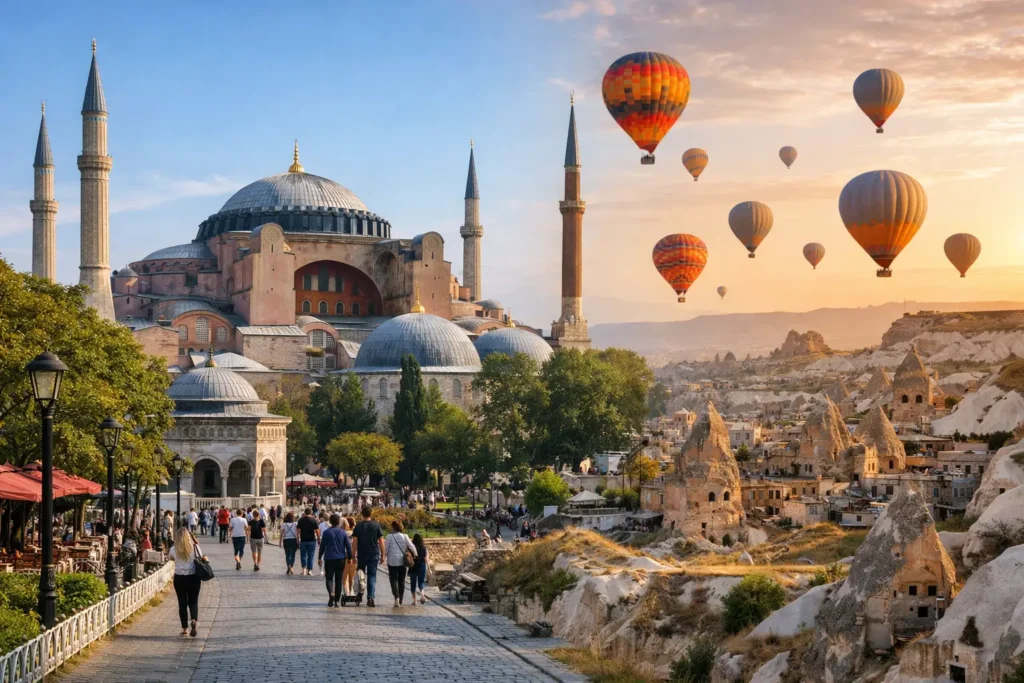
Start early at Hagia Sophia. It has served as a church, mosque, and museum across nearly 1,500 years, and its scale is hard to understand until you stand beneath the dome. Visitor access and routing have changed in recent years, so do not assume an old blog post has the current arrangement. Arrive near opening, follow posted rules, and allow at least an hour for the visit and security process.
Walk across Sultanahmet Square to the Blue Mosque, officially Sultan Ahmed Mosque. Its interior is smaller than Hagia Sophia’s but rewards a quieter visit. Avoid treating it as a quick checkbox: look up at the blue Iznik-style tilework, then step back into the courtyard to appreciate the six minarets and the relationship between the two mosques across the former Hippodrome.
The Hippodrome itself is easy to miss because it is now an open square rather than a building. Walk south through it and look for the Egyptian Obelisk, the Serpent Column, and the Walled Obelisk. This was once Constantinople’s arena for chariot racing and public ceremony. It is a useful reminder that Istanbul’s layers are often in plain sight, not behind a ticket gate.
For lunch, leave the square by a street or two rather than choosing the first menu presented to you beside a landmark. Look at prices before sitting down, confirm whether water, service, or appetizers are charged separately, and ask for a menu if one is not offered. A restaurant with a friendly host is not automatically a problem. The issue is pressure, vague pricing, or a menu that appears only after you have ordered.
Spend the afternoon at the Basilica Cistern. Its low lighting, columns, and shallow water create a completely different mood from the mosques above ground. It is popular, so later afternoon can still mean a wait. If the line is long, visit the nearby Istanbul Archaeological Museums first or swap the two depending on their official opening hours.
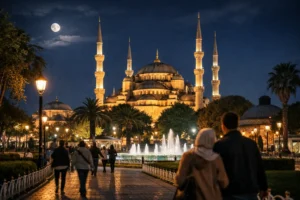
The Archaeological Museums are worth more than a rushed 20-minute stop, particularly if you want context for the civilizations that shaped the city. The collection can be dense, so choose a few galleries rather than trying to absorb everything. By evening, return to the square for a second look at the monuments after the tour groups thin out. The exterior views are free, and the atmosphere is often better than during the midday rush.
Day 2: Topkapi, the Bazaar, and a Slower Old City
Begin day two at Topkapi Palace, the Ottoman imperial residence overlooking the Bosphorus, Golden Horn, and Sea of Marmara. Plan at least three hours if you want the palace to feel meaningful rather than exhausting. The courtyards unfold gradually, and the views alone justify taking your time. Some sections may have separate access rules or tickets, so check official guidance before arrival instead of relying on bundled offers from street sellers.
Topkapi’s strength is not one dramatic room. It is the sense of how an empire organized daily life, ceremony, education, and power within a series of guarded courtyards. Audio context helps here, because labels cannot always explain why a gateway, pavilion, or collection mattered.
From the palace, walk downhill toward Gülhane Park for a breather before continuing west. Then make your way to the Grand Bazaar. It is large, historic, and genuinely enjoyable, but it is not the place to shop on autopilot. Think of it as an experience first and a purchase opportunity second.
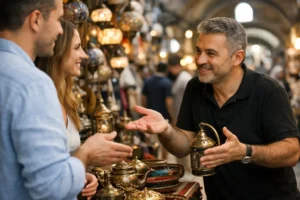
If you want ceramics, textiles, lamps, jewelry, or spices, compare quality and prices at several shops. Ask what an item is made of, whether it is handmade, and whether shipping or taxes add costs. Bargaining is normal in many independent shops, but it should stay relaxed. A firm no is enough. Do not feel obliged to buy tea, gifts, or anything else after accepting hospitality.
The Grand Bazaar is usually closed on Sundays, and individual shops and hours can vary, so confirm your travel dates. If your second day falls on a closure day, shift the bazaar visit to day one or spend more time at the Archaeological Museums and the surrounding streets instead.
Make Time for Süleymaniye if Your Energy Allows
If you still have energy after the bazaar, walk uphill to Süleymaniye Mosque. It sits outside the tightest Sultanahmet cluster, but the walk gives you a more lived-in view of the historic peninsula. The mosque is another active place of worship, so use the same respectful dress and prayer-time awareness as you did on day one.
This is a good place to end your sightseeing rather than adding another paid attraction. The courtyard and hillside views create a quieter finish, especially if the pace of Sultanahmet Square has felt intense. If you are traveling with children, older relatives, or anyone managing mobility needs, use this as an optional stop. Istanbul’s hills are real, and a shorter day is better than a rushed one.
Practical Habits That Protect Your Time and Budget
Keep your route simple, but protect the details that cause trouble. Use a contactless transit card for trams and ferries rather than negotiating short taxi rides. If you do take a taxi, make sure the meter is running and avoid drivers who insist their meter is broken or offer an unexplained fixed price. For short Old City distances, walking is often easier anyway.
Be equally cautious around unofficial guides. Some will approach with a convincing story: the museum is closed, the ticket line is impossible, or their friend can get you in immediately. Check the attraction’s official information yourself before changing plans. A real closure can happen, but it does not automatically mean the person standing outside has the solution.
Carry a small amount of cash for minor purchases, but ask before paying by card if a shop mentions a minimum spend. Always review the amount on the terminal before confirming it. For food, choose places where prices are visible and where you can comfortably decline extras. None of this requires suspicion – just the same awareness you would use in any major tourist district.
How to Pace This Two-Day Route
This itinerary works best for first-time visitors who want the core landmarks without trying to see every museum in Istanbul. If you love history, give Topkapi and the Archaeological Museums more time and treat the Grand Bazaar as a short walk-through. If shopping and food matter more, shorten the museum visits and linger in the bazaar and nearby streets.
Do not schedule every hour. Prayer times, weather, security lines, and your own energy will shape the day. The best adjustment is usually simple: keep one indoor site and one outdoor site flexible, then switch them if a queue becomes unreasonable. You will see more by making one smart change than by trying to force a rigid plan.
If you want the routes, cultural stories, official-ticket guidance, scam-awareness tips, and vetted local recommendations in one place, the Localada Pack is a practical companion for exploring Istanbul’s Old City at your own pace.