

This Istanbul travel guide in English gives you a practical two-day plan for Sultanahmet, including the major sights, tram stops, mosque rules, and common tourist traps. Two full days are enough for the Old City if you book the busiest paid attractions ahead and avoid trying to see every museum in one afternoon.
Old City Essentials 2026
- Best visit length: Two full days in Sultanahmet. Add a third morning if you enjoy museums, shopping, or a hammam.
- Nearest transport: Take the T1 tram to Sultanahmet for the Blue Mosque, Hagia Sophia, Hippodrome, and Basilica Cistern. Gülhane is the better T1 stop for Topkapi Palace and the Istanbul Archaeological Museums. The walk between the two stops is about 650 meters, or 8 to 10 minutes.
- Book ahead: Book Topkapi Palace through its official sales channel, especially if you want the Harem. Book the Basilica Cistern ahead during weekends and school holidays. Hagia Sophia visitor access has a separate tourist entrance and ticket requirement.
- Dress code: For mosques, cover shoulders and knees. Women should bring a headscarf. Shoes come off before entering the prayer carpet area. Avoid shorts, sleeveless tops, and see-through clothing.
- Prayer closures: The Blue Mosque and Hagia Sophia are active mosques. Tourist access pauses around the five daily prayer times, with the longest restriction on Fridays. At Hagia Sophia, foreign visitors generally enter after Friday prayers, usually from 2:30 p.m. onward.
Carry an Istanbulkart for trams, metro lines, buses, and ferries. Buy and reload it only at official machines or staffed transport points, not from someone approaching you outside a station.
Sultanahmet Route for Day One
Start at Hagia Sophia, opposite Sultanahmet Square. Tourist visiting hours are generally 9:00 a.m. to 7:30 p.m., except Friday access begins after the main prayer period. The tourist route uses the upper gallery, where you can see the building’s vast interior, Byzantine mosaics, and the central prayer space below. Allow 45 to 60 minutes, plus time for the security line.
Do not let anyone outside persuade you that Hagia Sophia is closed, that a special entrance is required, or that an unofficial guide is necessary to enter. If access is temporarily paused for prayer, wait nearby, visit the Hippodrome, or switch the order of your day.
Walk 250 meters across Sultanahmet Square to the Blue Mosque. The walk takes about four minutes. It is free to enter, but worshippers have priority during prayer times. A realistic visit takes 30 to 45 minutes, including shoe removal and the visitor route. The mosque is particularly busy between late morning and midafternoon, so arrive close to opening or later in the day if you prefer more room.
The Hippodrome is immediately outside and needs no ticket. Give it 20 minutes to find the Obelisk of Theodosius, the Serpent Column, and the German Fountain. This is a useful stop when mosque access is paused, not an attraction that needs a long guided visit.
After a lunch break, walk about 450 meters, or six minutes, to the Basilica Cistern. Standard visiting hours are commonly 9:00 a.m. to 10:00 p.m., though temporary closures can occur for maintenance or events. Allow 45 minutes inside. The walkway is level but can be damp, and the lighting is intentionally low, so keep children close and wear shoes with decent grip.
Finish the day in the Grand Bazaar, a 1.1 km walk uphill from the cistern, taking about 15 minutes. It is generally open Monday through Saturday from 8:30 a.m. to 7:00 p.m. and closed on Sundays and major religious holidays. Go with a purpose: ceramics, textiles, lamps, jewelry, and leather are all available, but quality varies widely.
A friendly invitation for tea is normal. Pressure to visit a relative’s shop, claims of a final-day sale, or an offer to ship goods before you have inspected them are reasons to leave politely. Ask for the full price, confirm whether shipping and taxes are included, and photograph the item and receipt before paying.
Topkapi Palace and Museum Day Two
Take the T1 tram to Gülhane and walk 400 meters uphill to Topkapi Palace in about six minutes. Topkapi is closed on Tuesdays. It generally opens at 9:00 a.m.; closing is earlier in winter than summer, with final entry before the posted closing time. Arrive at opening, because the palace grounds, Treasury rooms, and Harem can take longer than expected.
Plan at least three hours for the palace. The Harem requires a separate ticket from the main palace admission and is worth adding if you are interested in court life, architecture, and the private spaces of the Ottoman dynasty. Skip it only if you have less than two hours total or are traveling with young children who are already tired from queues.
After Topkapi, walk downhill for about five minutes to the Istanbul Archaeological Museums. The complex is typically open daily, with longer hours in the warmer months and shorter hours in winter. Allow 90 minutes for the Archaeology Museum and the Museum of the Ancient Orient. If time is tight, prioritize the Alexander Sarcophagus and the Treaty of Kadesh tablet displays rather than rushing through every gallery.
For both Topkapi and the Archaeological Museums, use official ticket channels or trusted booking partners named by the institutions. Street sellers and aggressive “skip the line” offers can mean a marked-up ticket, a tour you did not want, or no valid entry at all.
Istanbul Transport and Walking Distances
Sultanahmet is compact, but its hills and stone paving make a route feel longer than it looks on a map. The walk from Sultanahmet Square to Topkapi Palace is about 1 km and takes 15 minutes. From Sultanahmet to Eminönü is about 1.8 km downhill, around 25 minutes. Use the T1 tram when your feet need a break, but do not take unmetered taxis for short Old City journeys.
If you need a taxi, ask the driver to start the meter before the car moves. Keep your hotel address saved in Turkish and use cash carefully: state the banknote you are handing over, then wait for your change. For urgent help, call 112 for emergency services. Turkey’s direct emergency numbers are 155 for police, 110 for fire, and 158 for the coast guard.
Pickpocketing is not a reason to avoid Istanbul, but crowded tram platforms, market entrances, and queue areas deserve normal city awareness. Keep your phone and wallet in a zipped front pocket or crossbody bag, and do not place valuables on a café table near the street.
Food, Hammams, and Shopping Choices
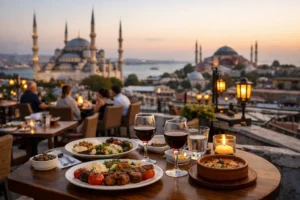
Around Sultanahmet, menus with photographs and staff calling from the sidewalk usually signal a tourist-focused experience, not necessarily bad food. Compare menus before sitting down, confirm whether service is included, and decline extras you did not order. For Ottoman-style dishes, look for restaurants that clearly list ingredients and prices and do not pressure you to enter.
For a traditional hammam, choose an established venue with a clear service menu, separate changing arrangements, and staff who explain the sequence before payment. A hammam is relaxing, but it is not the right place to accept vague add-ons after you are already inside. Ask what is included before changing clothes.
Frequently Asked Questions
Is two days enough for Istanbul’s Old City?
Yes, but only if you focus on Sultanahmet and book your highest-priority ticketed sights in advance. Add another day for the Bosphorus, Galata, Kadıköy, or museums beyond the historic peninsula.
Is Hagia Sophia free for tourists?
No. Worship remains free for worshippers, while foreign tourist visitors use a separate entrance and require a ticket for the visitor route.
Is the Blue Mosque open on Fridays?
Yes, but visitor access is limited around Friday prayers. Visit after the main prayer period or choose another stop first.
Is Topkapi Palace closed on Tuesdays?
Yes. Plan Topkapi for Wednesday through Monday and arrive near its 9:00 a.m. opening time.
How long does the Basilica Cistern take?
About 45 minutes. Add extra time if there is a security or entry line.
Can I use a credit card in the Grand Bazaar?
Usually, yes, especially in established shops, but confirm the final total before payment and keep the receipt for any purchase you may need to question later.
If you want this guidance in one place while you walk, the Localada Istanbul Pack gives your group narrated stories, map routes, practical scam awareness, and vetted local recommendations for a one-time EUR 5 purchase.