

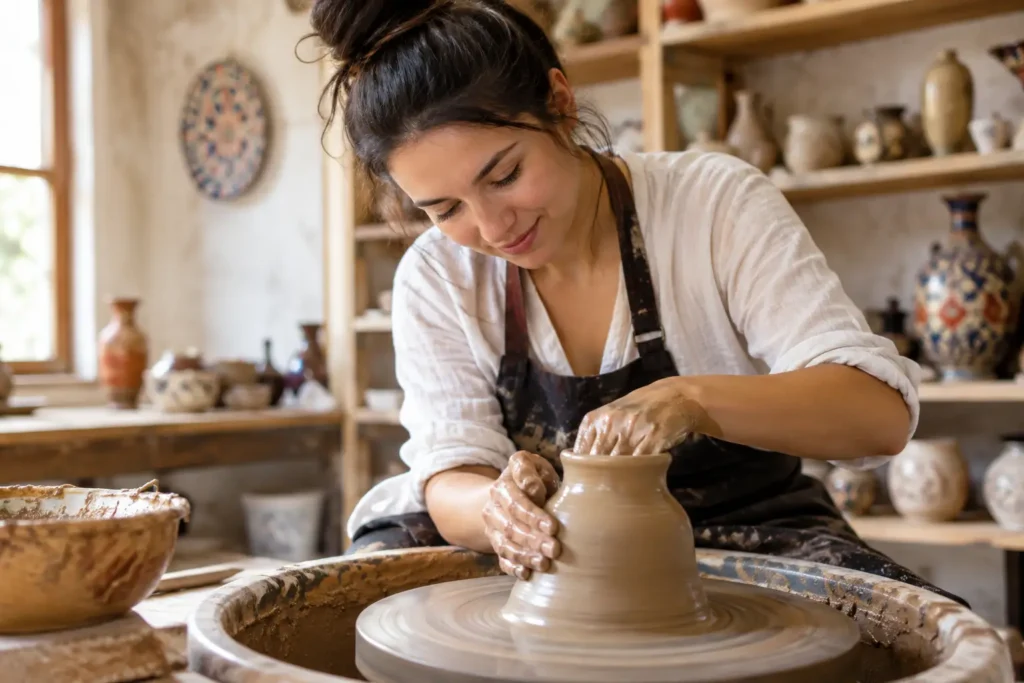
The best Avanos pottery workshops are the small, working studios where you can watch a master potter, try the wheel yourself, and leave without pressure to buy expensive ceramics. For most independent travelers, a pre-booked hands-on session in central Avanos is better than a large tour-stop demonstration.
Essentials for Avanos Pottery Workshops 2026
Allow: 45 minutes for a demonstration and showroom visit, or 1.5 to 2 hours for a proper wheel-throwing workshop.
Closed days: There is no universal closing day. Many studios operate daily, but family-run workshops can close for private groups, holidays, or seasonal reasons.
Dress code: Wear comfortable clothes you do not mind getting dusty. Clay usually washes out, but avoid white linen, long loose sleeves, and valuable rings. Tie back long hair.
Getting there: Avanos has no tram or metro. From the central Avanos bus stop, most riverside and old-town studios are a 5 to 15-minute walk. Avanos is about 12 km from Goreme and about 15 km from Urgup. Local minibuses connect the towns, although schedules are less frequent in the evening.
Book ahead: Reserve ahead if you want to use the wheel, need an English-speaking instructor, are traveling with children, or have only one afternoon in Cappadocia. A walk-in visit is usually enough for a short demonstration.
Avanos Pottery Traditions
Avanos has been associated with pottery for generations, helped by its location beside the Kizilirmak, or Red River. The river’s red-toned clay has long been part of the area’s ceramic identity. That history is the reason a pottery visit belongs on a Cappadocia itinerary, not simply because it provides a souvenir stop between valleys.
A worthwhile workshop explains what you are seeing: how clay is prepared, why it must be centered on the wheel, how a piece dries before firing, and why painted ceramics are a separate skill from throwing. You do not need a technical lecture. Ten clear minutes from a working potter can make the bowls and plates in the showroom feel far more meaningful.
The trade-off is time. Large demonstrations can move quickly and fit easily around a tour schedule, but they often end in a sales room. Smaller studios may require a reservation and can be harder to find, yet they usually offer more time at the wheel and a more personal exchange.
The Best Avanos Pottery Workshop Types
There is no single workshop that is best for every visitor. Choose the format that matches what you want from the visit, then confirm the exact activity before you go.
Hands-On Wheel Sessions
This is the best choice for couples, families, and anyone who wants a memory rather than another object to pack. A potter generally shows you how to center and lift the clay, then helps you shape a small bowl, cup, or vessel. Expect your first attempt to look imperfect. That is normal, and it is part of the fun.
Ask one practical question before booking: will you take home the item you make, or will it need drying and firing first? Fresh clay cannot go straight into a suitcase. Some studios can fire and ship pieces later, while others give you the experience but not the finished object. Get the shipping method, timing, and responsibility for breakage in writing before paying for delivery.
Short Studio Demonstrations
A demonstration works well if you have less than an hour or do not want to get your hands dirty. You will usually see a potter create a form quickly on a kick wheel or electric wheel, followed by a look at finished pieces and sometimes the kiln area.
This can be a good introduction, especially for travelers with a packed day in Goreme. The weaker version is a demonstration that turns immediately into a long sales presentation. You are free to watch, say thank you, and leave. Do not feel obliged to buy because someone has spent time showing you their craft.
Ceramic Painting Sessions
Painting sessions suit travelers who prefer a calmer activity and children who may find wheel throwing frustrating. These usually involve decorating a prepared ceramic item rather than making one from raw clay. The instructor should explain whether the piece will be glazed and fired afterward, and whether collection is possible during your stay.
This option is less about Avanos’s wheel tradition, but it can still be enjoyable on a cold or rainy afternoon. It is also easier for groups with different confidence levels because everyone starts with a ready-made surface.
Working Potter Visits
The most culturally rewarding option is a visit to a small workshop where the potter is actively producing pieces, not only demonstrating for visitors. These visits can be informal and may not follow a fixed program. They are ideal if you care about process, materials, and conversation more than taking a class.
Respect the fact that it is a workplace. Ask before taking close photographs, keep children away from tools and shelves, and avoid touching unfired pieces. A friendly studio visit should feel welcoming, but it should not interrupt someone’s production day.
Workshop Quality Checks
Before you commit time or money, ask what is included in the activity. A clear workshop can tell you whether the session is hands-on, how long it lasts, whether an instructor stays with you, and what happens to the item afterward. If those answers remain vague, treat it as a demonstration rather than a class.
Look for evidence of making, not just selling. Clay stains, drying shelves, tools, kilns, and works in progress are normal signs of a real studio. They do not guarantee artistry or fair dealing, but they give you a better sense that you are visiting a craft space rather than a generic souvenir showroom.
If you plan to buy ceramics, inspect the piece in good light. Check the rim, handle attachment, glaze surface, and base. Ask whether it is decorative or suitable for food use, and whether it can go in a dishwasher or microwave. Hand-painted and metallic details often need gentler care than plain glazed stoneware.
Sales Pressure and Fair Buying
Some Cappadocia tours include a pottery stop. This is not automatically a bad experience, and many travelers enjoy seeing the process. The issue is the pace: a guide may have limited time, and a showroom visit can make it feel awkward to leave without buying.
Keep the decision simple. Watch the demonstration, enjoy it, and buy only a piece you genuinely want. You do not need to explain your budget or negotiate against yourself. A calm “No, thank you, we are only looking today” is enough.
For a purchase you may carry home, ask the seller to wrap it in front of you and show you the condition before it is packed. For shipping, keep the receipt and write down the studio name, contact details, item description, and expected dispatch date. Do not rely on a verbal promise made during a busy group visit.
Avanos Visit Timing
Plan pottery around the rest of your Cappadocia day rather than treating it as an all-day destination. Avanos works particularly well after the Goreme Open Air Museum or before an evening in Urgup. Give yourself enough time to walk by the river and old-town streets, then choose one studio visit instead of rushing through several showrooms.
Late morning and midafternoon are generally the easiest times to visit because workshops are more likely to be actively working and you avoid turning the stop into a rushed lunch break. If you visit after a balloon flight, remember that an early start can make a hands-on class less appealing than a short demonstration.
For transport planning, confirm your return minibus before settling into a longer activity. Taxis can be useful when you are carrying fragile purchases, but agree on the destination and fare method before you get in. In an emergency in Turkey, call 112. Police can be reached on 155, fire services on 110, and the coast guard on 158.
Frequently Asked Questions
Are Avanos pottery workshops worth visiting?
Yes, especially if you choose a working studio or hands-on class rather than treating every showroom stop as a shopping obligation.
Can I make pottery myself in Avanos?
Yes, but reserve a wheel session ahead if making pottery is the main reason for your visit.
Can I take my pottery home the same day?
Usually not. Fresh clay needs time to dry and be fired, so ask whether the workshop offers later collection or shipping.
Are Avanos workshops suitable for children?
Yes, but ceramic painting or a short supervised wheel session is often easier than a full throwing class for younger children.
Do I need cash to buy ceramics?
It depends. Larger studios may accept cards, while smaller workshops may prefer cash, so carry a backup payment method.
How long should I spend in Avanos?
About two to three hours is enough for a riverside walk, one workshop, and unhurried browsing.
If you want this kind of practical Cappadocia guidance in one place, the Localada Cappadocia Pack brings together Avanos planning, Goreme routes, safe booking advice, and locally vetted places for your group.