

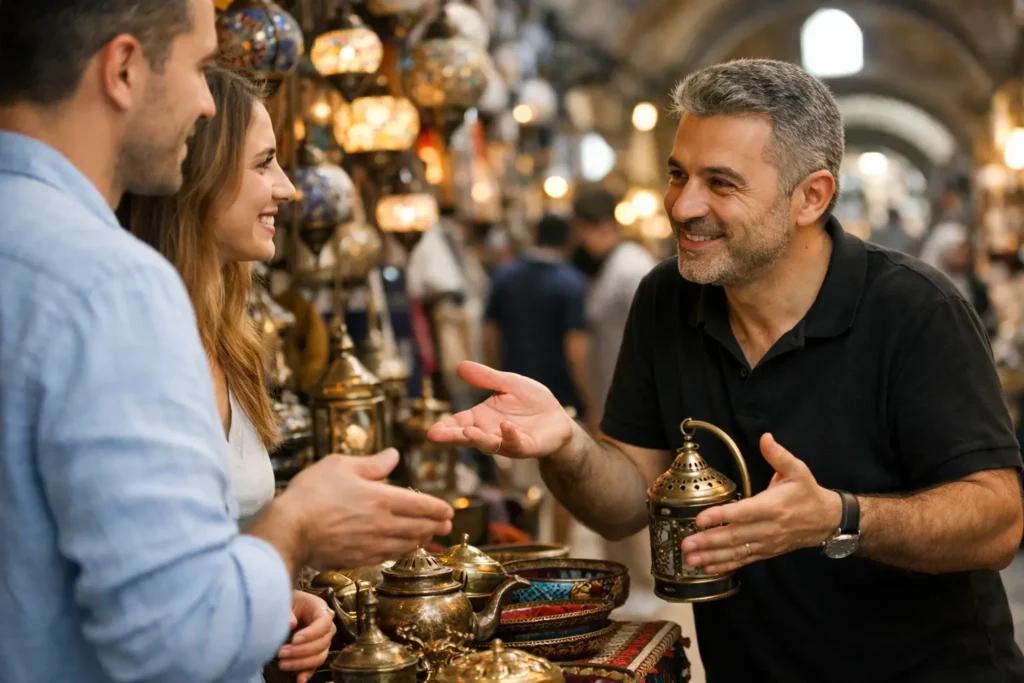
The best Grand Bazaar bargaining tips are simple: decide what an item is worth to you, ask calmly for a better offer, and be fully prepared to walk away. Bargaining is normal here, but it works best as a polite conversation, not a contest you have to win.
Grand Bazaar Essentials 2026
- Typical visit time: Allow 1.5 to 3 hours for browsing and bargaining. Add time if you are shopping for carpets, jewelry, ceramics, or leather.
- Usual opening hours: Monday through Saturday, 8:30 a.m. to 7:00 p.m.
- Closed days: Sundays, plus major religious and public holidays. Confirm same-day holiday arrangements through the Grand Bazaar’s official visitor notices.
- Nearest tram stops: T1 tram line, Beyazıt-Kapalıçarşı stop, about a 2-minute walk to one of the main entrances. Çemberlitaş is about a 5-minute walk.
- Dress code: No formal dress code applies, but comfortable shoes and modest, respectful clothing suit the busy historic center.
- What to book ahead: Nothing. The Grand Bazaar is free to enter and does not require a reservation.
Bargaining Expectations at the Grand Bazaar
Not every purchase should be negotiated in the same way. Bargaining is most common for souvenirs, lamps, scarves, ceramics, leather goods, carpets, jewelry, and items without a fixed label. In shops selling branded goods, packaged food, books, or clearly tagged merchandise, the listed figure may be closer to final.
The key is to treat the first offer as the start of a discussion, not proof that you are being cheated. A shopkeeper may begin high because visitors are expected to negotiate. You may offer lower because you expect the conversation to move toward a number both sides accept. Neither side needs to take it personally.
A fair result is not necessarily the lowest possible figure. It is the amount you are happy to pay for an item you genuinely like, after checking its quality and comparing a few alternatives. If a seller accepts your offer, follow through. Making an offer and then walking away after it is accepted is poor form.
A Calm Bargaining Method
Start by browsing without announcing that you are ready to buy. Ask to see the item, examine it closely, and ask a few useful questions: Is it handmade? Where was it made? What material is it? Is there a maker’s mark? For textiles, ask whether the fibers are cotton, wool, silk, or synthetic. For ceramics, look at the painted details, glaze, and finish rather than relying on a verbal description.
When you are interested, ask, “What is your best price?” You can also use the Turkish phrase “En son ne olur?”, meaning “What is your final price?” The seller may ask where you are from, offer tea, or show you related pieces. This is customary hospitality and salesmanship. Enjoy the exchange, but do not let a long conversation make you feel obligated to buy.
Make your counteroffer politely and without drama. A very low opening offer can end the conversation quickly, especially for handmade work. Instead, offer an amount you would honestly pay, then let the seller respond. If the figure remains above your comfort level, say thank you and leave. The ability to walk away is your strongest bargaining tool because it keeps your decision clear.
Do not negotiate for an hour over a small difference if it no longer feels enjoyable. Your time has value too. If the purchase still feels right, accept the deal, ask for a receipt, and check the item once more before paying.
Quality Checks Before Payment
The Bazaar has thousands of shops, from serious family businesses to stalls selling mass-produced tourist items. That variety is part of its appeal, but it means you should inspect before you commit.
For ceramics, check that the paint is crisp and that there are no cracks, chips, or rough repairs. For lamps, ask whether the electrical fitting is appropriate for use in the United States and whether the shade, mosaic pieces, and metal frame are secure. For leather, look at stitching, lining, zippers, and the smell of the material. Real leather does not automatically mean better craftsmanship.
Carpets deserve extra time. Ask about origin, materials, knotting, age, cleaning, delivery, and return terms before discussing a final figure. A seller may describe a rug as handmade, vintage, silk, or antique, but those are meaningful claims that should be reflected in documentation and condition. If you are not familiar with carpets, do not make a rushed purchase because someone says the item will be gone in ten minutes. There will always be another rug.
For jewelry, ask about metal purity, stone treatment, weight, warranty, and receipt details. Do not rely on a verbal promise that an item is gold, silver, or a particular gemstone. Buy only when the documentation and the item itself give you confidence.
Grand Bazaar Bargaining Tips for Groups
Couples and families can accidentally weaken their position by debating loudly in front of the seller. Decide privately who will speak and what your spending limit is. One person can ask questions while the other compares quality or takes a quick photo of the label, with permission.
If you are shopping for several small items from the same store, ask for a combined offer near the end. This is often more natural than bargaining aggressively over each piece. It also gives the seller a reason to make a concession while letting you leave with items you chose deliberately.
Do not feel pressured by comments such as “my last one,” “only for you,” or “my manager will be angry.” These phrases are part of familiar sales theater. Smile, stay friendly, and repeat your limit. A respectful “No, thank you” is enough.
Payment and Delivery Safeguards
Before handing over cash or using a card, confirm the final agreed amount, the exact item, and what is included. If shipping is discussed, ask for the delivery address, estimated dispatch date, tracking details, insurance terms, and the store’s contact information in writing. Keep a photo of the shop sign and your receipt.
Be especially careful when someone approaches you outside the Bazaar and offers to take you to a “special” store. You do not need to follow a guide, driver, or new acquaintance to find good shops. Enter stores that interest you, compare freely, and leave when you want.
Card payment can be convenient, but look at the payment terminal before confirming. If you choose to pay in cash, count it calmly at the counter and keep larger notes out of sight while walking through crowded lanes. Use an ATM attached to a bank rather than accepting help from strangers with currency exchange or withdrawals.
The Grand Bazaar is generally busy, welcoming, and manageable with normal city awareness. Keep bags zipped and worn in front in dense sections, especially near entrances. For an emergency in Türkiye, call 112. Traditional direct emergency numbers are 155 for police, 110 for fire, and 158 for the coastguard, though 112 is the primary number to use.
Timing and Shopping Pace
Arrive earlier in the day if you want room to browse and compare. The lanes become more crowded from late morning onward, particularly in peak travel periods. If you have a specific purchase in mind, spend your first hour looking without buying. Notice the range of styles, workmanship, and opening offers before returning to the shop you preferred.
The Bazaar is about 0.7 km from the Spice Bazaar on foot, usually a 10- to 15-minute downhill walk depending on your exit. They offer different shopping experiences: the Grand Bazaar is larger and more varied, while the Spice Bazaar is more focused on food, tea, spices, Turkish delight, and smaller souvenir stalls. Do not assume an item should cost the same in both places.
Frequently Asked Questions
Is bargaining expected in every Grand Bazaar shop?
No. Bargaining is common for many souvenir and artisan-style items, but clearly labeled products may have a fixed figure or limited room for discussion.
Should I name my budget first?
Usually not. Ask for the seller’s best offer first, then make a calm counteroffer based on what you are willing to pay.
Can I walk away after making an offer?
Only if your offer has not been accepted. Once a seller agrees to your stated figure, it is respectful to complete the purchase.
Is it safe to use a credit card in the Grand Bazaar?
Yes, but use established shops, verify the amount on the terminal, and keep your receipt until you have checked the purchase.
How long should I allow for a carpet shop visit?
About 45 minutes. Allow longer if you are seriously comparing materials, documentation, delivery conditions, and several rugs.
Can I visit the Grand Bazaar on Sunday?
No. The Bazaar is normally closed on Sundays, so plan your shopping for Monday through Saturday.
If you want this guidance in one place, the Localada Istanbul Pack brings together practical Old City routes, scam-awareness advice, cultural stories, and vetted local recommendations for your group.